Muğla Travel Guide: Where to Stay, Eat & Explore in Luxury
There is a corner of the Turkish Aegean where the coastline appears to have been designed by someone who genuinely couldn’t decide between jagged pine-covered cliffs, translucent turquoise bays, ancient ruins half-swallowed by wild herbs, and one of the most quietly sophisticated food scenes in the Mediterranean – so simply included all of them. That place is Muğla. The European Riviera has its glamour. The Amalfi Coast has its drama. The Greek islands have their mythology. But Muğla has something that none of them quite manage: the rare combination of genuinely wild, unhurried landscape and a culinary and cultural depth that could hold your attention for a fortnight without once repeating itself.
The question of who Muğla is for is almost too easy to answer – because the honest answer is: almost everyone, provided they have the good sense to stay in a private villa rather than a hotel corridor. Families who want privacy, a pool, and space for children to exist loudly without disturbing anyone will find no better base in the eastern Mediterranean. Couples marking a milestone – an anniversary, a significant birthday, a honeymoon that deserves more than a beachfront room with a complimentary fruit basket – arrive here and tend not to leave when planned. Groups of friends who’ve outgrown package holidays but haven’t quite agreed on where to go next consistently find Muğla’s breadth solves the argument before it starts. And an increasing number of remote workers have discovered that high-speed connectivity, dramatic scenery, and a work-from-the-terrace lifestyle are not mutually exclusive – particularly when your “office” looks out over the Gulf of Gökova. Wellness-focused guests, meanwhile, are drawn by the olive groves, the clean Aegean air, the hiking trails through national park terrain, and the meditative quality of a place that hasn’t surrendered entirely to the demands of the tourist calendar.
Getting Here Without the Faff (Which Is More Achievable Than You’d Think)
Muğla Province is large – genuinely, sprawlingly large – and which airport you use depends rather significantly on where within it you’re headed. For Bodrum and the northern Aegean peninsula, Milas-Bodrum Airport (BJV) is the obvious choice, with direct flights from London, Frankfurt, Amsterdam, and a number of other European hubs during the summer season. For Marmaris, Dalaman Airport (DLM) serves you better – it’s roughly an hour’s drive to the town centre and handles a high volume of international routes. For Fethiye, Ölüdeniz, and the southern Turquoise Coast, Dalaman is again your entry point.
Turkish Airlines operates year-round domestic connections from Istanbul to both Bodrum and Dalaman, which is worth knowing if you’re travelling from further afield or catching a connecting international flight. Transfer times from airport to villa vary wildly depending on your destination – from a brisk 45 minutes to a more scenic two hours along coastal roads that are, in fairness, part of the experience. Private airport transfers are widely available, sensibly priced, and strongly recommended over rental cars if your villa comes with a driver or concierge service. If you do rent a car – and for exploring the region independently, it’s hard to argue against it – the roads in Muğla are generally well maintained, if occasionally spirited in their interpretation of lane discipline. Getting around between the various bays, towns, and peninsulas is half the pleasure. The other half is stopping whenever something looks interesting. Budget accordingly.
What’s on the Plate: Muğla’s Food Scene Is Having a Very Good Moment
Fine Dining
The arrival of the Michelin Guide to Turkey has confirmed what anyone who has eaten well along this coastline already suspected: Muğla Province is producing food of genuinely serious international calibre, and it is doing so with an authenticity that many established European dining destinations have long since traded for spectacle.
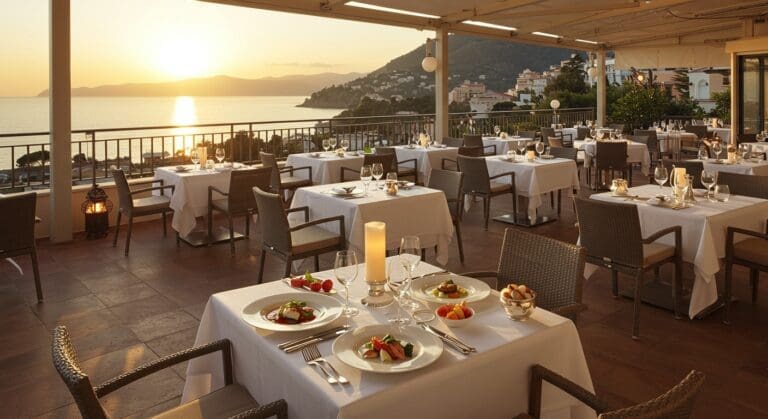
In Yalıkavak, Kitchen by Osman Sezener at The Bodrum Edition holds a Michelin star and represents one of the most compelling arguments for farm-to-table cooking in Turkey. Chef Sezener was championing local, seasonal produce before it became a philosophical position rather than simply a practical one – and the results are dishes of clean, confident flavour that let the Aegean landscape do most of the talking. The setting, on a perfect bay where sea and sky blur at the edges, does not hurt matters.
Maçakızı in Bodrum is, frankly, an institution – one of those rare restaurants that has been adored by a devoted, artistically inclined crowd for decades and has somehow managed to earn a Michelin star without losing the slightly bohemian spirit that made it special in the first place. Chef Aret Sahakyan’s cooking has elevated the restaurant’s gastronomic standing considerably, but the sense that you’ve stumbled into somewhere genuinely individual persists. It remains cult status for good reason.
Perhaps the most extraordinary dining experience in the province, however, belongs to Mezra Yalıkavak – a restaurant that has collected a Michelin star, a Michelin Green Star, and the 2025 Young Chef Award, which is the kind of haul that even chefs with considerably more name recognition would find difficult to argue with. Set amid working gardens, livestock, and a functioning farm just outside Yalıkavak, Chef Serhat Doğramacı builds his tasting menus around more than 150 geographically marked Turkish products and ancestral techniques – wood fire, fermentation, marination – that feel genuinely alive rather than reverentially preserved. The bread course alone, made from local wheat varieties and different yeasts, is worth the journey. Mezra is one of those places that makes you quietly reconsider your assumptions about what a tasting menu can actually be.
Where the Locals Eat
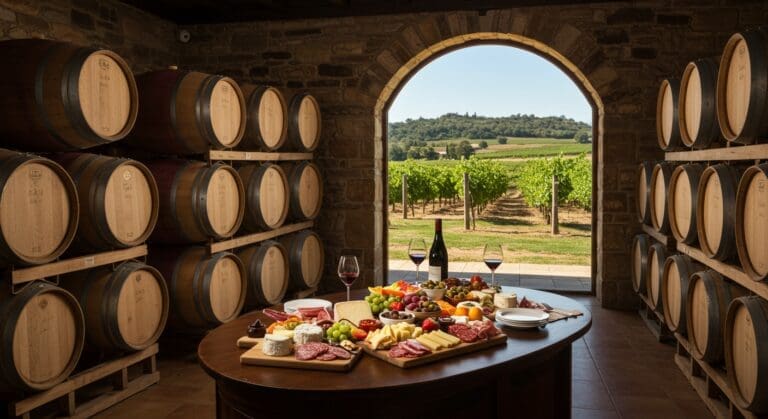
Step away from the headline restaurants and Muğla reveals its other, arguably more important, culinary identity: a region with extraordinary raw ingredients and the quiet confidence of people who have been cooking them well for generations. The local markets – particularly the Bodrum Tuesday market and the covered bazaar in Muğla city itself – are the real pantry of the province. Olives preserved in every conceivable style, hand-made tulum cheese, wild thyme honey from the interior mountains, fat fig varieties you won’t find anywhere outside this latitude, and the sort of vine-ripened tomatoes that make supermarket versions seem like a different vegetable entirely.
Along the harbour fronts of smaller towns like Datça, Akyaka, and Göcek, family-run meyhanes serve meze and grilled fish with the kind of unhurried warmth that doesn’t require a Michelin inspector’s visit to maintain. Order the local mezes – particularly any dish featuring fresh herbs, grilled courgette, or the coastal variety of wild greens known as ot – and let the kitchen decide what’s best that day. This is not a region where the chef’s tasting menu is necessarily superior to whatever the owner’s mother was preparing in the back kitchen from this morning’s catch.
Beach clubs in Bodrum and along the peninsula have become increasingly sophisticated, blending strong drinks, good music, and surprisingly capable kitchens into long Mediterranean afternoons that have a habit of extending well past sunset without anyone quite agreeing to this. The better ones source locally and cook with genuine care. The less good ones are, in all honesty, not that difficult to spot.
Hidden Gems Worth Seeking Out
One of the most unexpected dining discoveries in the province is Agora Pansiyon at Lake Bafa in Milas – a family-run guesthouse in a traditional stone building that has quietly accumulated both a Michelin Green Star and a Bib Gourmand. Chef Özgün Serçin’s approach to minimising waste, growing ingredients and sourcing seasonally predates the green gastronomy movement by some years. The food is deeply, specifically of this landscape – flavours shaped by the brackish lake, the ancient olive trees, the wild herbs of the surrounding hills – and served with the kind of unceremonious hospitality that makes the experience feel like an exceptionally lucky discovery rather than a reservation you planned in advance. It is the sort of place you tell people about quietly, slightly hoping they won’t actually go so that your table remains available.
The Lay of the Land: A Province That Rewards the Curious
Muğla Province covers approximately 13,000 square kilometres of southwestern Turkey – a fact that takes on real meaning the moment you begin exploring it. This is not a single resort destination with a beach and a high street. It is an entire world of geological and cultural variety compressed into a coastline that twists and folds with magnificent indifference to easy categorisation.
The Bodrum Peninsula juts westward into the Aegean with characteristic swagger – a place of whitewashed villages, wind-scoured hills, lavender fields, and the sort of social scene that attracts a genuinely international crowd without having entirely surrendered its soul to them. The town of Bodrum itself, clustered around the Crusader Castle of St Peter, has managed the difficult trick of being simultaneously historic, fashionable, and liveable. Yalıkavak, on the peninsula’s northwestern tip, has become one of the most desirable addresses on the Turkish coast – its marina and restaurants drawing a yachting crowd of some distinction.
Moving south and east, Marmaris occupies a deep natural harbour surrounded by pine-forested hills and serves as the undisputed capital of the Turkish charter sailing scene. Inland from Marmaris, the extraordinary Datça Peninsula stretches 70 kilometres toward the Greek island of Symi, becoming progressively wilder and more atmospheric as it goes – culminating at Knidos, the ancient city at its tip, which combines ruined amphitheatres, a double harbour, and the kind of end-of-the-road solitude that feels almost unreasonably earned.
Fethiye and the Turquoise Coast in the south bring a different character again – the Ölüdeniz lagoon, the ghost town of Kayaköy, the extraordinary Butterfly Valley, and the long natural harbour backed by mountains that make sunsets here something of an event. Lake Bafa in the north of the province is perhaps the least visited of Muğla’s major landscapes and, consequently, among the most rewarding – a vast shallow lake fringed by ancient ruins, wild fig trees, and a silence that feels actively restorative after the coastal high season.
Things to Do: From the Unmissable to the Pleasantly Unexpected
A luxury holiday in Muğla is not, in any meaningful sense, a passive experience. The region’s geography alone generates a natural agenda: boat trips through channels that reveal new bays around each headland, drives along coastal roads that demand frequent stopping, markets and ruins and hot springs that require only a small amount of initiative to enjoy. But it is worth being deliberate about a few things.
The Blue Voyage – a traditional Turkish gulet cruise – remains one of the genuinely iconic ways to experience Muğla’s coastline, and for good reason. Sailing between Marmaris, Datça, Bozburun, and the island-scattered waters toward Fethiye on a private or chartered wooden vessel, anchoring in bays accessible by road only to the most determined, is an experience that is difficult to replicate by other means. Gulets range from simple and cheerful to extraordinarily well-appointed; the latter category is very much worth the investment.
On land, the Datça Peninsula rewards slow driving, with stops at the Knidos ruins, the old town of Eski Datça with its stone houses and trailing bougainvillea (we nearly typed “nestled” there – old habits), and the small producers of Datça almonds and locally pressed olive oil that populate the road between them. The Akyaka district on the Gulf of Gökova has developed a reputation as something of an eco-conscious alternative to the more developed coastal towns – with a well-preserved village centre, river beach, and a gentle pace that suits those who find the Bodrum marina somewhat exhausting.
Day trips from Bodrum to the Greek island of Kos run with efficient regularity in summer – an hour by ferry and a different country entirely, which is the kind of itinerary flexibility that tends to surprise first-time visitors to the region. The ruins of Halicarnassus – the ancient city on which Bodrum sits – include the site of the Mausoleum, one of the original Seven Wonders of the Ancient World, which sounds as though it should be more prominent in the tourist literature than it currently is.
For Those Who Like Their Holidays With a Side of Mild Adrenaline
Muğla offers an almost unreasonable variety of outdoor and adventure activities for a coastline that also contains three Michelin-starred restaurants. The two things are not incompatible – they are, in fact, the point.
Paragliding from Babadağ Mountain above Ölüdeniz is one of the most celebrated aerial experiences in the world, and it earns that status. The tandem flights launch from 1,900 metres and deposit you on the beach below via a route that takes in the Ölüdeniz lagoon, the Blue Lagoon, and an extent of turquoise coastline that makes the whole enterprise feel somewhat surreal. The mountain offers some of the most consistent paragliding conditions on the planet, which is why the World Air Games have been held here. First-timers tend to emerge from the experience with an expression that suggests mild recalibration of their relationship with the concept of altitude.
Kitesurfing in Akyaka has attracted a dedicated following drawn by the reliable meltemi winds that funnel through the Gulf of Gökova from June to September – consistent, predictable, and ideally suited to both beginners and experienced riders. The town has grown a small but serious infrastructure of schools and equipment rental around the activity without sacrificing the agreeable low-key character that makes it worth visiting in the first place.
Diving in the waters around Bodrum and along the Datça Peninsula reveals underwater topography of considerable interest – ancient amphora fields, Byzantine wreck sites, sea caves, and the vivid marine life of a coastline that benefits from the cleaner, deeper Aegean waters. Visibility here regularly exceeds 30 metres in summer, which tends to make divers who’ve spent their careers in the English Channel slightly emotional. Hiking trails through the Taurus foothills and along the Carian Trail offer multi-day trekking through pine forest, ancient ruins, and traditional stone villages at a pace that the scenery seems specifically designed to encourage.
Why Muğla Works Beautifully for Families
The private villa proposition is nowhere stronger than for families with children, and Muğla understands this. The combination of calm, shallow-entry bays, warm Aegean water from May through October, and the generous space of a private property with its own pool removes most of the friction that tends to make family holidays more logistically complex than they need to be.
Children who grow up swimming in the bays around Bodrum, Gökova, and Fethiye tend to develop opinions about the sea at a young age – and not inaccurate ones. The water really is that colour. The warmth and clarity make it accessible for young swimmers without the powerful currents or steep shelf drops that make some coastal destinations less appropriate for small children. Many of the region’s beaches are organised with shallow gradients and lifeguard cover during peak season.
Beyond the water, families discover that Muğla’s mix of approachable ancient ruins, boat trips, market visits, and the sheer spatial generosity of a large private villa creates the kind of holiday where children and adults are genuinely satisfied by different aspects of the same place – which is, frankly, the gold standard. Boat trips to sea caves and isolated bays are universally popular regardless of age. The Bodrum Underwater Archaeology Museum, housed within the Castle of St Peter, is the kind of museum that doesn’t require parental enthusiasm-manufacturing to engage younger visitors. And the local food culture – broad, flavourful, and largely accommodating of children’s preferences without being designed around them – means eating well as a family is not the compromise it can be elsewhere.
History Written in Stone (Quite Literally, in Several Places)
Muğla Province sits on one of the most historically layered landscapes in the Mediterranean. This is Caria – the ancient kingdom whose people spoke their own language, built their own architectural traditions, and produced Mausolus, the ruler whose tomb became so celebrated that it gave the English language the word “mausoleum.” Bodrum, ancient Halicarnassus, was his capital. The site of his tomb – one of the Seven Wonders of the Ancient World – remains in the modern town, partially excavated and considerably more moving than its modest current profile might suggest.
The Castle of St Peter in Bodrum harbour, built by the Knights Hospitaller in the early 15th century from the stones of the Mausoleum itself (repurposing on a considerable scale), is one of the best-preserved Crusader castles in the eastern Mediterranean and now houses the Museum of Underwater Archaeology – a collection of artefacts recovered from Bronze Age, Greek, and Byzantine shipwrecks that is genuinely world-class by any standard.
At Knidos on the tip of the Datça Peninsula, the ruins of the ancient city spread across a dramatic headland at the meeting of the Aegean and Mediterranean seas – a location chosen by its founders with evident geographic ambition. The ancient theatre, the harbour installations, and the site of the original Aphrodite of Knidos (the first life-size female nude in classical sculpture, now lost, but whose influence on Western art is incalculable) can all be visited with a level of solitude that would be impossible at comparable sites in Greece or Italy.
Stratonikeia near Yatağan is a Roman city that has been continuously inhabited – by families, not historians – well into living memory, giving it an atmosphere entirely different from the manicured archaeology parks of better-known sites. At Labranda, high in the mountains above Milas, a Carian sanctuary to Zeus occupies a remote hillside with a quality of atmosphere that is difficult to attribute to the ruins alone. The province’s traditional culture survives in folk music, village festivals, the production of pine honey (for which this region is internationally recognised), and the distinctive embroidery traditions of the mountain villages.
Shopping: What to Buy and Where to Find It
Muğla is not the place to come in search of international luxury retail, and this is entirely to its credit. What it offers instead is considerably more interesting: a region producing genuinely distinctive local products that are difficult or impossible to find elsewhere.
Pine honey from the forests of Marmaris and the surrounding hills is produced when pine bark aphids excrete a substance called honeydew that bees collect – a process that sounds considerably less appealing than the result, which is a dark, complex honey with a resinous depth quite unlike its floral equivalents. Turkey produces approximately 90% of the world’s pine honey, and much of that comes from Muğla Province. Buying it directly from a market producer is one of the more straightforward luxury decisions available in the region.
The Bodrum Tuesday market is the most famous in the province – a sprawling weekly event covering everything from hand-embroidered linens and kilims to fresh produce, local cheeses, and the sort of ceramic work that tests luggage allowance discipline. Datça’s small market offers dried local almonds, olive oils from single-estate groves, and a selection of preserved olives that would embarrass most specialist delis. Muğla city’s covered bazaar is less tourist-oriented than its coastal equivalents and considerably more interesting for it.
In Bodrum and Yalıkavak, a cluster of independent boutiques stock locally designed clothing, jewellery, and homeware with a Aegean sensibility – light fabrics, natural materials, clean lines – that travels well. The work of local silversmiths in the traditional designs of the Bodrum Peninsula is worth seeking out. Art galleries in Bodrum have proliferated in recent years, reflecting a creative community that has always existed here and is currently in vigorous health.
The Practical Bits That Actually Matter
Turkey’s currency is the Turkish lira (TRY), and exchange rates have historically been favourable for visitors travelling from United Kingdom and the Eurozone – making Muğla a destination where a genuine luxury experience is achievable at a price point that would be impossible on the Spainish coast or in the south of France. This is not, to be clear, a reason to holiday here – the destination earns its own merits – but it is a fact that regularly surprises first-time visitors.
The best time to visit depends on what you want from the experience. June and September are widely considered the sweet spot: warm enough for swimming, genuinely hot without the midsummer intensity of late July and August, and with slightly lower visitor numbers at the most popular sites and restaurants. July and August are peak season in every sense – busier, hotter, and correspondingly more energetic; they suit those who want the full summer Mediterranean experience. May and October are for those who prefer the region at a gentler register – cooler mornings and evenings, green landscapes (May particularly), and the particular satisfaction of having the best beaches largely to yourself.
English is widely spoken in the main tourist areas, coastal restaurants, and villa management companies. Turkish is spoken everywhere else, and attempting a few phrases – merhaba (hello), teşekkürler (thank you), lütfen (please) – is received with warmth that feels genuine rather than professionally managed. Tipping is customary at around 10-15% in restaurants and appreciated across service industries. The culture is hospitable, socially conservative outside the major tourist centres (dress codes in mosques and traditional markets are worth respecting), and generally safe by any comparative measure. Tap water is not reliably potable – bottled water is inexpensive and universally available.
Why a Luxury Villa in Muğla Is Simply the Better Decision
There is a version of Muğla that involves a hotel room, a shared pool with a reservation system, and a lobby restaurant. It is a version that is, with genuine compassion for everyone involved, best avoided – not because the hotels are inadequate (some are very good), but because the private villa experience here is so specifically and perfectly suited to the landscape that choosing anything else requires a degree of self-denial that seems difficult to justify.
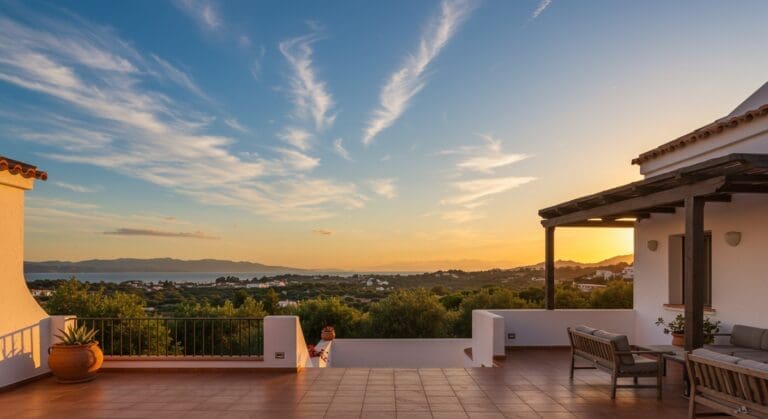
Muğla’s coastline was made for private property. The bays are intimate. The views are directional – you want them from your own terrace, not a shared one. The pace is languid in a way that benefits from a private pool rather than a timetable. A luxury villa in Muğla means waking to the Aegean without negotiating a breakfast buffet, swimming before the rest of the world has had coffee, and eating lunch at a table that is unambiguously yours for the duration of a fortnight.
For families, the advantages are simply mathematical: space, privacy, a pool that belongs to you, and the ability to keep children’s schedules without reference to hotel policy. For groups of friends, the communal living that a large villa enables – shared meals on wide terraces, the natural gathering that a generous living room creates – is something a hotel corridor never manages. For couples on milestone trips, the seclusion of a hillside villa above a private bay is a form of luxury that no room category, however elevated, can quite replicate. For remote workers, an increasing number of Muğla’s premium villas are equipped with high-speed fibre internet and, in some cases, Starlink connectivity – making the work-from-paradise arrangement entirely functional rather than aspirational. And for guests whose holiday focus is wellness, the combination of a villa with a private pool, outdoor fitness space, a kitchen supplied by local markets, and the clean Aegean air provides the structural conditions for genuine restoration rather than spa-menu tourism.
Concierge services at the villa level in Muğla have matured considerably – private chefs, in-villa massage and yoga instruction, yacht and gulet charter arranged door to dock, private transfers, restaurant reservations at places that don’t advertise availability to walk-ins. The infrastructure for a well-supported private holiday here is, in short, comprehensive.
Excellence Luxury Villas holds a collection of properties across Muğla Province – from Bodrum Peninsula villas with infinity pools above the Aegean to secluded Fethiye retreats backed by pine forest. If you’re ready to do this properly, explore our luxury holiday villas in Muğla and find the one that fits your version of the perfect week.
More Muğla Travel Guides
- Best Restaurants in Muğla: Fine Dining, Local Gems & Where to Eat
- Muğla Food & Wine Guide: Local Cuisine, Markets & Wine Estates
- Muğla with Kids: The Ultimate Family Holiday Guide
- Best Time to Visit Muğla: Month by Month Weather, Crowds & Tips
- Muğla Luxury Itinerary: The Perfect 7-Day Guide
- Romantic Muğla: The Ultimate Couples & Honeymoon Guide
What is the best time to visit Muğla?
June and September are the near-perfect months – warm enough for swimming and outdoor dining, considerably less crowded than midsummer, and with a quality of light that makes the landscape look its best. July and August are peak season: hotter, busier, and more energetic – ideal for those who want the full summer coastal experience. May and October are excellent for those who prefer cooler temperatures, greener landscapes, and the quiet satisfaction of a destination between seasons. Winter is mild by northern European standards but most coastal businesses operate seasonally; the interior towns of Muğla city and Milas are year-round propositions with their own appeal.
How do I get to Muğla?
There are two main airports serving Muğla Province. Milas-Bodrum Airport (BJV) is the closest to the Bodrum Peninsula and Yalıkavak, with direct international flights from London, Amsterdam, Frankfurt, and multiple other European cities during the summer season. Dalaman Airport (DLM) serves the southern province – Marmaris, Fethiye, Ölüdeniz, and the Turquoise Coast – and similarly handles a large volume of direct European routes. Turkish Airlines operates year-round domestic connections from Istanbul Atatürk and Istanbul Sabiha Gökçen to both airports, making connections from long-haul routes straightforward. Private airport transfers are widely available and recommended over rental cars for those staying in a single location; a rental car is worth considering if you plan to explore multiple areas of the province.
Is Muğla good for families?
Exceptionally so. The combination of calm, shallow-entry bays, warm Aegean water from May through October, and the space and privacy of a private villa with pool removes most of the friction that makes family holidays logistically complicated. Children thrive here – in the water particularly, which is warm, clear, and generally gentle. Boat trips, accessible ancient sites, a food culture that accommodates young tastes without being built around them, and the sheer variety of the landscape across Muğla Province mean families with a range of ages and interests tend to find their own rhythms without too much negotiation. The Bodrum Underwater Archaeology Museum is particularly engaging for older children.
Why rent a luxury villa in Muğla?
Because the private villa experience here is specifically suited to the landscape in a way that hotel stays are not. Muğla’s bays are intimate, the views are directional, and the pace rewards private space. A luxury villa means a private pool, a terrace with uninterrupted sea or mountain views, and the freedom to structure days without reference to hotel schedules. For families, the space and privacy are simply superior. For groups, communal living in a well-appointed villa creates a social dynamic that no hotel corridor manages. For couples, seclusion is the luxury. Many premium villas also offer private chef, concierge, and in-villa wellness services – a staff-to-guest ratio that hotels rarely match outside their most expensive suites.
Are there private villas in Muğla suitable for large groups or multi-generational families?
Yes – and the selection is genuinely impressive. The luxury villa market in Muğla Province includes properties sleeping anywhere from four to twenty or more guests, often with separate wings, multiple bedroom suites, and in some cases guest annexes or staff accommodation that provide privacy within the larger group. Private pools are standard at the premium level. Many larger villas include outdoor dining areas, cinema rooms, games spaces, and multiple living rooms that allow different generations or friend groups to share a property without living in each other’s pockets. Professional villa management services can arrange private chefs, childcare, and dedicated concierge support for the duration of the stay.
Can I find a luxury villa in Muğla with good internet for remote working?
Increasingly, yes. High-speed fibre connectivity has reached a significant proportion of the luxury villa market in Muğla’s main areas, including Bodrum, Yalıkavak, and the more developed parts of Fethiye and Marmaris. In more remote or rural locations – hillside villas above quieter bays, properties on the Datça Peninsula – Starlink satellite connectivity has become a practical solution and is offered as standard by a growing number of premium properties. It is worth confirming connectivity specifications directly when booking, particularly if reliable high-bandwidth access is a working requirement rather than a casual preference. Most luxury villas at the premium end also offer dedicated workspace or study areas distinct from the living spaces.
What makes Muğla a good destination for a wellness retreat?
Several things working in combination. The Aegean climate offers clean air, strong natural light, and warm water swimming from May to October – the baseline conditions for physical restoration that many purpose-built wellness destinations attempt to manufacture. The landscape supports serious outdoor activity: hiking through national park terrain, sailing, diving, kitesurfing, paragliding – movement that feels exploratory rather than medicinal. The local food culture is rooted in fresh Mediterranean ingredients, olive oil, wild herbs, and seasonal produce – genuinely nourishing without requiring a detox menu. Premium villas frequently include private pools, outdoor yoga and fitness spaces, and the option to arrange in-villa spa treatments, private yoga instruction, and Pilates sessions. The pace of life here – unhurried, unhurried, and once more unhurried – does the rest.