Nouvelle-Aquitaine Food & Wine Guide: Local Cuisine, Markets & Wine Estates
What would French cuisine look like if it had to make a case for itself in court? Exhibit A would probably be Nouvelle-Aquitaine. This is the region that produces Bordeaux – arguably the world’s most coveted wine – along with Périgord truffles, Bayonne ham, Arcachon oysters, duck confit, foie gras, Armagnac, and flaky canelés that make Parisian pâtisseries look like they’re not really trying. It is, in short, an embarrassment of riches. The kind of region where a roadside market stall on a Tuesday morning can make you reconsider your entire relationship with cheese. If you’ve ever wondered whether food can genuinely change how you feel about a place, spend a week eating your way through the Périgord and Basque Country and come back to us with your answer.
The Soul of the Regional Cuisine
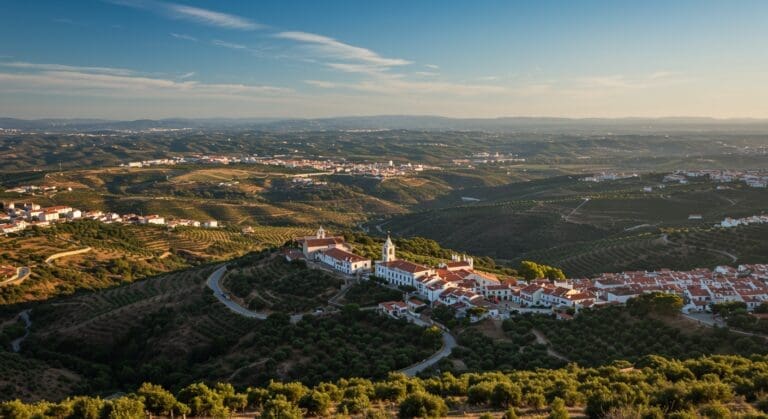
Nouvelle-Aquitaine is France’s largest region, and it eats accordingly. This is not a cuisine built on restraint or minimalism. It is built on fat, fire, land, and sea – and the deeply held conviction that flavour is more important than fashion. The cooking here divides broadly into three overlapping traditions: the rich, truffle-laden cuisine of the Périgord; the Atlantic seafood culture of the Charentes and the Basque coast; and the robustly spiced, fiercely independent food culture of the Pays Basque, which follows its own culinary rulebook with characteristic stubbornness.
Duck is central to everything inland. Confit, magret, rillettes, foie gras – the duck here is not merely an ingredient but an institution. The fat rendered from duck legs is used to cook potatoes in the way that other regions use butter or oil, and the result, it must be said, is difficult to argue with. Alongside duck, pork dominates in the form of jambon de Bayonne – a cured ham with protected geographical status that has been produced in the foothills of the Pyrenees for centuries. Slice it thin, eat it with nothing but good bread, and consider the life choices that brought you here.
Along the coast, the character shifts entirely. Fresh Atlantic fish, clams, mussels, and the extraordinary flat oysters of Arcachon Basin define the table. The Basque influence bleeds in through the southern border: espelette pepper – a mildly fruity dried chilli grown in the village of Espelette – appears in everything from omelettes to chocolate, and piperade (a Basque pepper and tomato stew often served with eggs or ham) is the kind of simple, honest dish that reminds you why French home cooking is still the benchmark.
Wines of Bordeaux and Beyond
Any serious nouvelle-aquitaine food & wine guide: local cuisine, markets & wine estates would have to begin here. Bordeaux sits at the top of the regional wine hierarchy with the quiet confidence of someone who has never had reason to doubt themselves. The Left Bank produces Cabernet Sauvignon-dominant blends of almost mythological reputation – the names Pauillac, Saint-Émilion, Margaux, and Pomerol read less like place names and more like a pantheon. The Right Bank, centred on Saint-Émilion and Pomerol, deals in Merlot-led wines of extraordinary plushness and depth. Visiting the châteaux here is an experience unto itself: the architecture alone would justify the trip, and that’s before you’ve been led through a candlelit cellar by someone who can explain tannin structure in a way that actually makes sense.
But Bordeaux is not the only wine story in the region. Bergerac, to the east, produces underrated reds and some of France’s finest sweet whites under the Monbazillac appellation – honeyed, complex, and significantly more affordable than Sauternes, which is something Bordeaux never quite forgave them for. Further south, Madiran produces structured, grippy reds built around the Tannat grape, which tastes exactly as robust as its name suggests. And then there is Armagnac – France’s oldest distilled spirit, produced in the chalky hills of the Gers, rougher-edged and more characterful than Cognac, and considerably more interesting at dinner.
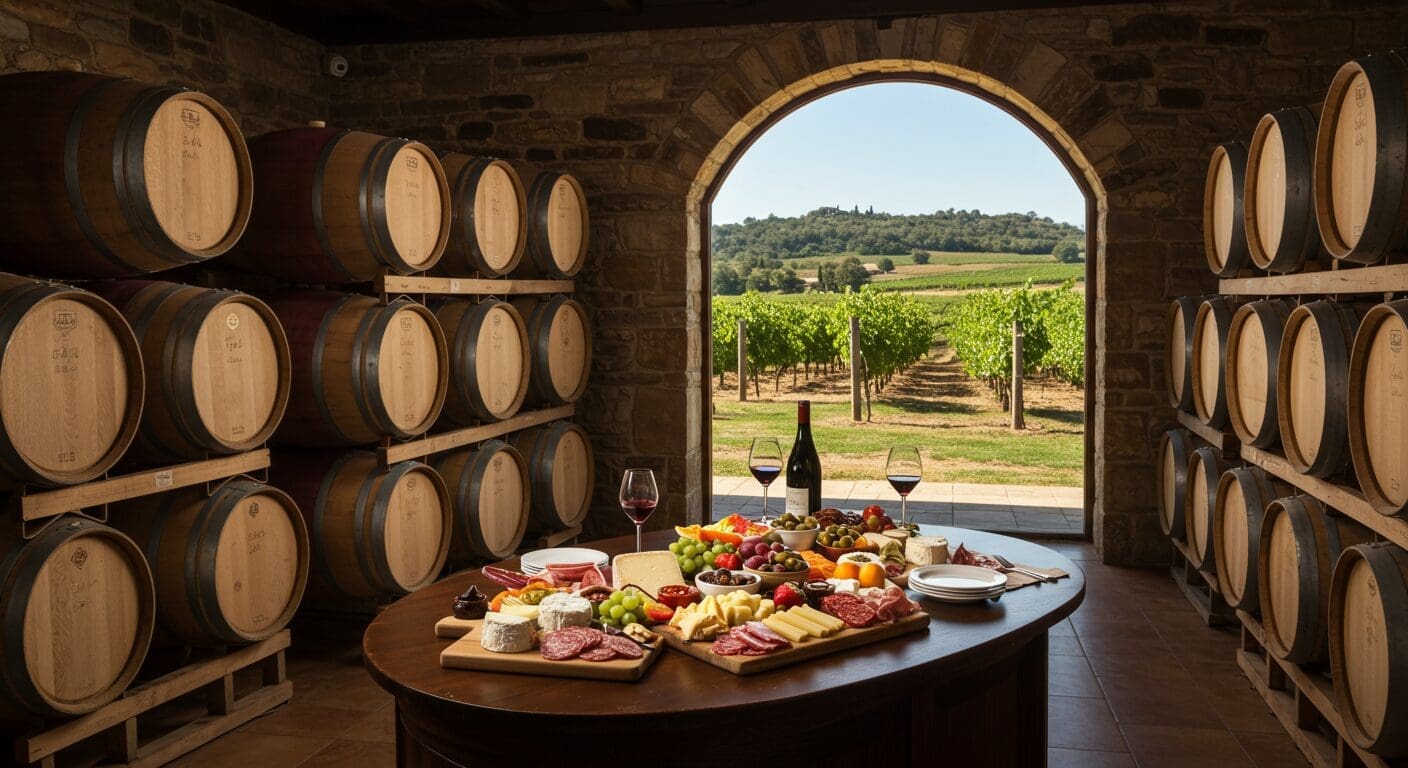
For wine estate visits, the Médoc and Saint-Émilion routes are well-worn for good reason. Many of the grands châteaux offer private tastings and cellar tours by appointment – this is not the kind of region where you turn up unannounced and expect a welcome. Book ahead, dress appropriately, and resist the urge to use words like “oaky” in front of the winemaker.
Markets Worth Rearranging Your Itinerary For
The covered market at Les Halles de Périgueux operates daily and is one of the finest indoor food markets in France. The building is worth visiting in its own right, but the real draw is what’s inside: stalls laden with walnuts and walnut oil, aged cheeses, local charcuterie, fresh foie gras, and – in season – truffles, laid out with the reverence of museum exhibits and priced accordingly. The Saturday truffle market in Périgueux, held between November and March, is a genuinely singular experience. Dealers and producers arrive early, the transactions are brisk and largely impenetrable to outsiders, and the smell – warm, earthy, faintly indecent – is unlike anything else on earth.
In the Basque Country, the market at Bayonne is a revelation in red and white. The covered halls deal in everything from Ossau-Iraty sheep’s cheese to piment d’Espelette hung in bright red ropes, while the surrounding streets host specialist chocolate shops that have been operating since the 17th century, when Bayonne was the first city in France to receive and process cacao. The Saturday market in Sarlat-la-Canéda, in the Dordogne, is one of the most atmospheric in the southwest – the medieval town centre fills with producers, and the emphasis is resolutely local. This is not a market designed for tourists, which is why tourists love it.
Truffle Hunting in the Périgord
The Périgord Noir produces both black truffles (Tuber melanosporum, harvested December to March) and the lesser-known but more summer-accessible white truffle. A proper truffle hunt – conducted with a trained dog through oak woodland, usually in the early morning when the air is cold and the light is still low – is one of those rare experiences that is simultaneously educational, theatrical, and genuinely moving. There is something quietly extraordinary about watching a dog locate something invisible underground using nothing but its nose, and then being handed a small, knobbly, soil-covered object that costs more per gram than most things you will ever own.
Private truffle experiences can be arranged through local producers and specialist guides in the Dordogne and Lot-et-Garonne departments. The best ones include a morning hunt, a demonstration of how to clean and grade the truffles, and a lunch prepared around whatever was found – truffle omelette, truffle on toast with excellent butter, truffle folded through scrambled eggs in a manner that is almost aggressively good. It is an extravagance. It is worth every cent.
Cooking Classes and Hands-On Food Experiences
Cooking schools in the region range from casual afternoon sessions to serious multi-day immersions. In the Basque Country, classes focused on traditional Basque cuisine – pintxos, marmitako (a tuna and potato stew), and the making of proper piperade – are offered by local chefs and in some cases by producers themselves. Learning to make confit de canard in a farmhouse kitchen, using ducks raised on the same property, is a different proposition entirely from watching it done on a screen, and the gap between the two is measurable in the quality of the finished dish.
For more formal gastronomic education, Bordeaux is an obvious base. The city has a wine and food school culture that takes itself seriously without taking itself too seriously – wine blending workshops, cheese and wine pairing sessions, and market-to-table cooking experiences are widely available and bookable through luxury concierge services. Some villa rentals in the region can arrange private chef experiences where the chef sources directly from local markets and producers, cooking in the villa and explaining the provenance of each ingredient as they go. This, frankly, is the ideal.
The Best Food Experiences Money Can Buy
At the top end, the food experiences available in Nouvelle-Aquitaine are exceptional even by French standards. A private dinner at a Bordeaux grand château – served in the chai or the formal dining room, with library vintages drawn from the estate’s own cellar – is an experience with essentially no equivalent elsewhere. Several of the classified growths offer these evenings by arrangement, and the price, while significant, is rarely regretted.
A privately guided tour of the Arcachon Basin with a local oyster farmer, followed by a boat-side dégustation with white Graves or Entre-Deux-Mers, is the kind of thing that requires almost no embellishment. Standing in the estuary, eating oysters that were in the water an hour ago, drinking cold white wine from a tumbler – this is the Nouvelle-Aquitaine that stays with you. Similarly, a day spent moving between small Armagnac producers in the Gers – tasting vintages from specific years, understanding the difference between Bas-Armagnac and Haut-Armagnac, leaving with bottles that cannot be bought in any shop – offers an intimacy with place and process that is increasingly rare in modern food travel.
Foie gras producers in the Dordogne and Lot-et-Garonne departments also welcome visitors for private tours and tastings, and a terrine tasting alongside Monbazillac – the classic local pairing – served in the producer’s own kitchen, is the kind of experience that makes restaurant dining feel slightly beside the point. For a complete picture of the region’s food culture and wider attractions, the Nouvelle-Aquitaine Travel Guide covers everything from the Atlantic coast to the Pyrenean foothills.
Where to Stay While You Eat Your Way Through the Region
A great food journey requires a great base. The finest way to experience this region – the markets, the wine estates, the truffle hunts, the private dinners – is from a property with a serious kitchen, a well-considered cellar, and enough space to breathe after a long and particularly generous lunch. Explore our collection of luxury villas in Nouvelle-Aquitaine to find the right property for the kind of trip this food guide is quietly encouraging you to take.