Nouvelle-Aquitaine Travel Guide: Where to Stay, Eat & Explore in Luxury
Here is a confession: Nouvelle-Aquitaine is the largest region in France, and most people who visit it think they are somewhere else. They say they are going to the Dordogne, or Bordeaux, or the Basque Country, or Biarritz – as though these places exist in their own sovereign territories rather than forming part of a single, extraordinary landmass roughly the size of Portugal. The names are more romantic, admittedly. Nobody sits at a dinner party and says, “We’ve booked a luxury villa in Nouvelle-Aquitaine.” But they should. Because when you understand what is actually contained within these borders – the vine-striped river valleys, the prehistoric cave paintings, the Atlantic surf, the oyster beds, the mountain passes, the truffles, the foie gras, the three-Michelin-starred seafood, the medieval hilltop bastides turning gold at six o’clock – you realise this is not a region at all. It is an argument for France.
Who is Nouvelle-Aquitaine for? The honest answer is: almost everyone who matters in the world of considered travel, which is why it rewards the effort of understanding it properly. Families seeking genuine privacy – the kind that a hotel lobby never quite delivers – will find it here in vineyard manor houses and converted farmsteads where children can roam and adults can actually relax. Couples celebrating milestone birthdays or anniversaries will discover that the region balances extraordinary food and wine culture with a pace of life that doesn’t feel performative about it. Groups of friends, particularly those who have long outgrown the all-inclusive resort, are well served by larger properties where the pool belongs to you and nobody is arriving at 8am to reserve a sun lounger. Remote workers – increasingly, a legitimate traveller type rather than a euphemism – will find that reliable connectivity is easier to come by than the rural setting suggests, with many premium villas offering high-speed fibre or Starlink as standard. And those in pursuit of genuine wellness, the kind grounded in nature and good food rather than green juices and guided breathing, will find the region’s landscape does most of the work before you’ve even unpacked.
Getting Here Without Making It an Ordeal
The good news is that Nouvelle-Aquitaine has excellent air access from most of Europe, and a few airports that most people irrationally ignore in favour of Paris. Bordeaux-Mérignac is the obvious gateway – a well-connected airport with direct flights from London, Dublin, Amsterdam, Brussels, and a reasonable number of other European cities. Biarritz Airport, officially Biarritz Pays Basque, is smaller but genuinely useful if your destination is the southwest coast or the Basque Country, and it receives direct flights from the United Kingdom and several European hubs. Pau-Pyrénées Airport serves the Pyrenean foothills nicely. Limoges and Bergerac both receive budget airline traffic from the UK, which makes them popular with those heading into the Périgord and Dordogne valley.
Eurostar travellers can reach Bordeaux directly from London St Pancras in around two hours on the TGV from Paris – a journey so smooth it borders on the suspicious. Within the region, a hire car is essentially non-negotiable. Public transport exists and the trains between major cities are perfectly serviceable, but Nouvelle-Aquitaine’s pleasures are distributed across a landscape that rewards wandering. The département roads are good, the signage is generally honest, and there is something deeply right about arriving at your villa down a long gravel drive. Hire at the airport, take the scenic route, and accept that being slightly lost here is rarely a problem.
Eating Your Way Through France’s Largest Larder
Fine Dining
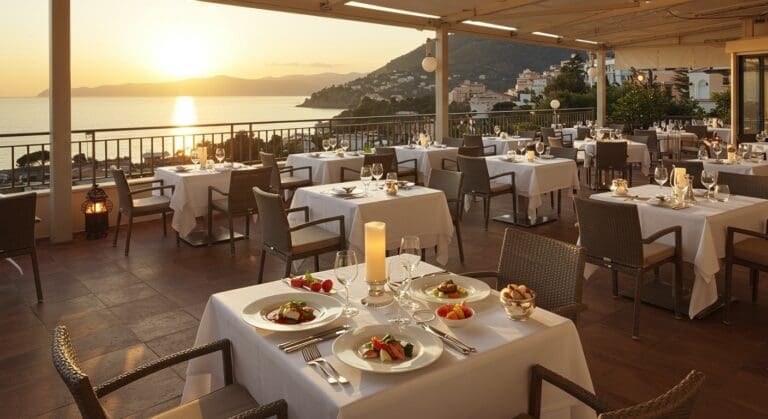
The region punches at a level that would embarrass many European capitals, and the 2025 Michelin Guide has done nothing to contradict this. The supreme example is Christopher Coutanceau in La Rochelle – three stars, full stop, end of argument. The restaurant sits overlooking the Plage de la Concurrence, and the sign above the door reads “Christopher Coutanceau, chef and fisherman,” which tells you everything you need to know about the philosophy. Fishing is a family inheritance here, and Coutanceau campaigns seriously for sustainable marine practices. His cuisine has the scent and honesty of the Atlantic itself – unfussy, precise, deeply flavoured. It is one of those rare experiences where the Michelin stars feel like an understatement rather than an inflation. Book well ahead. Well ahead.
In Bordeaux, Philippe Etchebest’s Maison Nouvelle has become one of the most talked-about restaurant experiences in the southwest. Housed in an old residence in the Chartrons district, the experience begins in a downstairs bar where guests are eased into the evening with drinks and early bites before being walked through the house and into the kitchen itself. It earned its first Michelin star in March 2022, barely three months after opening, and its second in March 2025 – a trajectory that suggests Etchebest has something to prove. The mushroom ravioli and his reinterpretation of Entrecôte Bordelaise are the dishes people talk about, but the real achievement is making two-star dining feel like being invited to a friend’s home. An extremely talented friend, admittedly, but still.
For those whose idea of a perfect setting includes vines on three sides and one of Bordeaux’s greatest wine estates on the label, La Grand’Vigne at Les Sources de Caudalie in Martillac delivers exactly that. Chef Nicolas Masse holds two Michelin stars with the quiet confidence of someone who knows the produce they’re working with is extraordinary – Pyrenean lamb, Aquitaine caviar, vegetables grown close enough to smell from the kitchen. The wine list is not so much extensive as geological in its depth, and the service has the particular quality of making you feel the whole evening was arranged specifically for you. L’Observatoire du Gabriel in Bordeaux, where Chef Bertrand Noeureuil claimed his second Michelin star in 2025, is another essential stop – a former apprentice of serious pedigree bringing real rigour to an already iconic address.
Where the Locals Eat
Step away from the starred world and Nouvelle-Aquitaine rewards you generously for being curious. The Tuesday and Saturday markets at Périgueux are the real introduction to Périgord cuisine – foie gras, truffles in season, walnut oil, preserved duck, cheeses that require a firm commitment. Bordeaux’s Marché des Capucins, the city’s great covered market, runs every morning except Monday and is the kind of place you go for an hour and leave two and a half hours later. The wine bars of Bordeaux’s Saint-Pierre quarter serve natural and regional wines by the glass alongside plates of local charcuterie without any of the ceremony the city’s viticultural reputation might lead you to expect. Bayonne, in the Basque south, has pintxos bars that hold their own against anything on the other side of the border in Spain. The Basques, it should be noted, are essentially indifferent to which country they are technically in when it comes to the important matter of eating well.
Hidden Gems Worth Seeking Out
The real pleasures are often farmhouse restaurants – known locally as fermes-auberges – where a single family produces almost everything on the table: duck confit from their own birds, salads from the kitchen garden, walnut tart to finish. They are not easy to find online, which is precisely the point. Your villa concierge will know at least one. The oyster shacks along the Arcachon Basin, particularly around Cap Ferret, operate on a model of admirable simplicity: you sit on a wooden bench, you eat oysters pulled from the water that morning, you drink cold white Bordeaux, and you consider that most things in life are unnecessarily complicated. The truffière restaurants of the Périgord Noir are seasonal gold: from November to March, when the black Périgord truffle comes into its brief and extravagant moment, small restaurants throughout the Vézère valley offer menus that would make a Parisian chef quietly envious.
The Shape of the Region – Eight Landscapes in One
One of the reasons people keep accidentally referring to Nouvelle-Aquitaine by its constituent parts is that the region is genuinely not one place. It is twelve départements that were merged in 2016, and the landscape shifts so dramatically between them that driving from one corner to another can feel like crossing several countries in an afternoon.
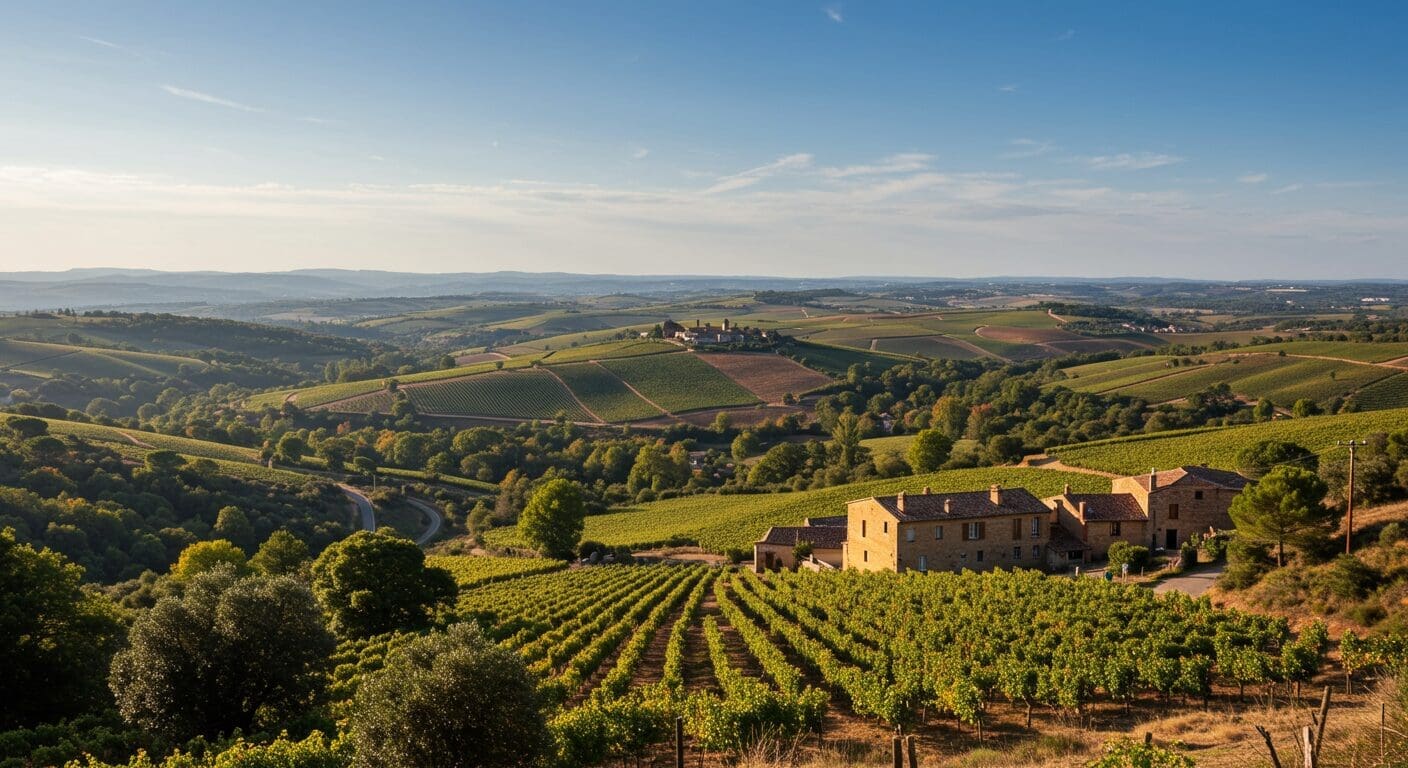
The Gironde anchors everything around Bordeaux – the city itself, the Médoc peninsula with its famous châteaux lined up along the D2 road like dignitaries awaiting inspection, and the Arcachon Basin to the south, where Europe’s tallest sand dune (the Dune du Pilat, which at over 100 metres is genuinely spectacular and genuinely exhausting to climb) rises improbably from the pine forest. East of Bordeaux, the Dordogne river winds through a valley of medieval villages, prehistoric caves, and markets that have been operating in essentially the same form since the Hundred Years War. The Lot-et-Garonne sits south of this, quieter and less visited, growing plums and strawberries and producing enough Armagnac to account for some of the region’s most convivial evenings.
Further south, the Landes is a vast, flat territory of Atlantic-facing pine forest and beach that goes on for a distance that defies easy comprehension. The surf here is serious – this is not a Mediterranean paddle – and the towns along the coast from Hossegor to Capbreton have built an entire culture around waves, boards, and a certain studied nonchalance about the whole thing. Then comes the Basque Country, which is its own weather system, its own cuisine, its own architectural language of white walls and red shutters, and its own attitude toward the rest of France that can be characterised as warmly tolerant. Biarritz sits at the elegant end of this coastline; the hilltop villages of the Pyrenean foothills at the contemplative end.
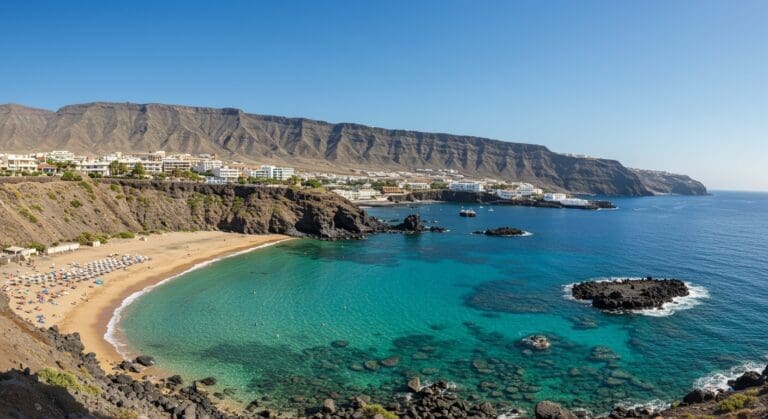
Inland and east, Béarn and the Hautes-Pyrénées deliver mountain scenery of real drama: passes above 2,000 metres, the spa town of Pau with its views across to the peaks, the pilgrimage city of Lourdes (which attracts five million visitors annually and has, to put it delicately, a very particular retail environment). And up in the northern reaches, the Charente and Charente-Maritime give you La Rochelle’s Atlantic harbour architecture, the Cognac cellars of the Charente valley, and islands – the Île de Ré and Île d’Oléron – that offer a quieter, more subtle version of French coastal life than the surfing towns of the Landes.
What to Actually Do – and There Is Quite a Lot
Wine tourism in Nouvelle-Aquitaine is an entire holiday category unto itself, and the wine estates of the Médoc, Saint-Émilion, Pomerol, and Sauternes offer everything from straightforward cellar door tastings to multi-hour immersive tours with private sommeliers. Saint-Émilion, the medieval hill town that has grown up entirely around viticulture, is one of the more justifiably visited villages in France – the underground monolithic church carved directly into the limestone, the narrow streets, the classified growths beginning barely outside the town walls. A private wine tour from your villa, designed around your actual preferences rather than a fixed itinerary, is the way most discerning visitors now approach this.
The prehistoric sites of the Vézère valley – a UNESCO World Heritage Site – are among the most remarkable in the world. The caves of Lascaux, whose original paintings are now so fragile that the replica (Lascaux IV) has taken over as the visitor attraction, represent 17,000 years of human artistic endeavour concentrated in a single hillside. The Font-de-Gaume cave and the Cap Blanc rock shelter still allow limited, ticketed visits to genuine prehistoric art. These are not experiences for the squeamish or the impatient, but for anyone with an interest in what it means to be human, the Vézère valley is quietly extraordinary.
Canal and river cruising on the Canal du Midi, which enters Nouvelle-Aquitaine from the east, offers one of the more civilised ways to spend a week – progress measured in plane-tree-lined kilometres and lunchtime mooring stops. The coastline from the Île de Ré down to the Basque Country has cycling infrastructure that ranges from good to excellent, and the region’s greenway network (the Voie Verte) means serious distances are possible without sharing tarmac with cars. Cookery schools, truffle hunting expeditions in winter, hot air balloon flights over the Dordogne valley, and cheesemaking workshops all exist in the kind of numbers that suggest the region has done its homework on experiential tourism without making it feel manufactured.
The Active Case for Nouvelle-Aquitaine
The Atlantic coastline from Hossegor to Hendaye is Europe’s premier surfing destination, full stop. The beach breaks here produce consistent, powerful waves that have attracted professional surfers for decades and generated a gravitational pull on the kind of traveller who won’t be satisfied watching waves from a terrace. Hossegor hosts the Quiksilver Pro and Roxy Pro World Surf League events annually, and the town has built its identity around the sport with a seriousness that is entirely in proportion to the quality of the surf. Beginners are well served by schools throughout the region; experts know where to go without being told.
Inland, the Pyrenees offer proper hiking in summer – the GR10 long-distance route crosses the entire chain from the Atlantic to the Mediterranean, and the section through the Basque Country and Béarn is considered among the most beautiful. The Pyrenees are also an underrated road cycling destination: the passes that feature in the Tour de France – the Col d’Aubisque, the Col du Tourmalet (technically just over the border in Hautes-Pyrénées but easily accessible) – are available to anyone willing to pay in suffering for the view from the top. Mountain biking trails in the Dordogne and the pine forests of the Landes are extensive and well-maintained.
Kitesurfing at Arcachon, sea kayaking around La Rochelle’s islands, and paddleboarding on the Dordogne river are all established pursuits. For those whose idea of adventure runs more to a long day’s truffle hunt followed by armagnac beside a fire, the region is equally accommodating. Nobody is here to judge.
Why Families Come and Why They Come Back
Nouvelle-Aquitaine works exceptionally well for families with children of almost any age, and the private villa model is a significant part of why. A self-contained property with a pool, outdoor space, and a kitchen means that the rhythms of family life – the early risers, the late lunchers, the toddlers who crash at 7pm and the teenagers who don’t surface until noon – can operate on their own terms without the friction of hotel schedules and communal dining rooms.
The practicalities are good: the beaches are long and safe, particularly along the Landes and Charente-Maritime coasts, with many having Blue Flag status and supervised swimming in summer. The Périgord’s prehistoric caves fascinate children in a way that is hard to manufacture elsewhere – the idea that someone painted horses on a cave wall 17,000 years ago tends to cut through even the most screen-habituated attention span. Medieval castles are abundant and many have family-oriented programming in peak season. The Bioparc de Doué-la-Fontaine, though technically in the Loire, is within a day trip for northern parts of the region.
Family cycling along the Voie Verte from Soulac to Lacanau, canoeing on the Dordogne between Argentat and Beaulieu-sur-Dordogne, and oyster tasting at Arcachon (children are surprisingly game for this, in our experience) all provide the kind of activities that look considerably better in the memory than they did in the planning. A villa with a private pool and a garden essentially solves the middle portion of every family holiday day – the bit between lunch and dinner that hotels tend to leave awkwardly unresolved.
History, Art, and the Weight of Centuries
Nouvelle-Aquitaine has been at the intersection of European history for long enough to have accumulated an extraordinary density of cultural significance per square kilometre. The Romans were here – Bordeaux’s Palais Gallien is the largest Roman amphitheatre still visible in France. The Visigoths followed, then the Carolingians, then several centuries of conflict with the English crown during which much of the Dordogne and Périgord changed hands with such frequency that the landscape fills with bastide towns – planned medieval settlements built by both sides – whose geometry still defines the street plan today.
The Hundred Years War left its mark everywhere: fortified churches, ruined châteaux, towns that were English for a century and a half and have strong opinions about it to this day. Bordeaux’s extraordinary 18th-century urban fabric – the crescent-shaped Place de la Bourse reflecting in the Garonne, the grand allées and merchant houses of the Chartrons – reflects the city’s wealth as Europe’s primary wine export hub. The Cité du Vin, opened in 2016, is an architecturally bold wine museum that manages the remarkable trick of making viticulture genuinely interesting to people who arrived only for the tasting. The Musée d’Aquitaine covers the full sweep of the region’s history with considerable intelligence.
The Basque Country adds a cultural layer unlike anything else in France – a language that predates Indo-European languages and shares roots with nothing else in Europe, festivals of genuine peculiarity (pelota, the traditional ball game, is played with an intensity that suggests the stakes are higher than recreation), and an architectural tradition immediately identifiable by its red and green colour palette. The Fêtes de Bayonne in late July is one of France’s largest festivals – 100,000 people in white linen and red sashes, which either appeals to you enormously or suggests a different week for the visit.
Bringing Something Home – Markets, Craft and the Question of Luggage
The most obvious purchase in Nouvelle-Aquitaine is wine, and the challenge is not finding good wine but exercising the restraint not to buy so much that airline check-in becomes an expensive negotiation. Most serious châteaux will ship directly, which is a sensible arrangement. The Bordeaux wine merchants (négociants) of the Chartrons district have been in the business of selling wine to foreigners for three hundred years and are very good at it.
Beyond wine, the region offers Cognac and Armagnac in various ages and presentations that make genuinely distinguished gifts – the smaller Armagnac producers in particular offer bottlings at single-vintage level that are unavailable in most export markets. Basque linens (the traditional striped linen from which table cloths, towels, and espadrilles are made) are sold throughout the Pays Basque and are both durable and authentically local. Pottery from the Périgord, foie gras and confit in sealed jars for the luggage (technically fine for checked baggage), and salt from the salt marshes of the Charente-Maritime are all worth considering.
The markets are the place to start any shopping expedition: the Saturday market at Sarlat-la-Canéda is one of the best in the southwest, and the truffle markets at Périgueux and Sainte-Alvère (the latter every Monday morning from November to March) are genuinely specialist occasions that reward early rising. The surf towns of the Landes have produced a small but credible streetwear and board-sports retail culture that younger travellers tend to find more interesting than the heritage produce shops their parents are enthusiastic about. Both needs can usually be met in the same afternoon.
What You Actually Need to Know Before You Go
The currency is the euro and tipping, while appreciated, is not the charged transaction it represents in the United States. Rounding up or leaving five to ten percent at a restaurant is perfectly normal; anything more elaborate is unnecessary and may provoke mild confusion. French is the language throughout, with Basque (Euskara) spoken and displayed alongside it in the Pays Basque. The majority of restaurant and hospitality staff in tourist areas will have workable English, though making an effort with basic French is received well – not because the French are aggressively about linguistic purity in tourist contexts, but because it is polite and tends to produce warmer service.
The best time to visit depends entirely on what you are here for. July and August are peak season along the coast – hot, busy, school holiday crowds, and prices at their maximum. Genuinely beautiful, but not what you would call tranquil. June and September offer the same warmth with dramatically thinner crowds and, in September’s case, the harvest in the vineyards, which is one of the better times to be alive in this part of France. Spring – April through June – is excellent for the interior: the Dordogne in blossom, the truffle season still lingering into early spring, temperatures mild enough for cycling without being demanding about it. Winter in the Basque Country has its own character: the storms coming in off the Atlantic are spectacular from the terrace of a warm villa, and the pintxos bars are at their most authentically local when the summer visitors have gone home.
Health and safety considerations are minimal in the way they are throughout western France – standard travel insurance, European Health Insurance Card for EU and UK travellers, sensible sun protection in summer. The rip currents along the Atlantic beaches are real and worth understanding: always swim at supervised beaches where the coloured flag system is in operation. Red flag means no swimming, and on the Atlantic coast it means it. The waves are not making a suggestion.
Why a Private Villa Is Simply the Better Option Here
There is a version of Nouvelle-Aquitaine that involves a very nice hotel in Bordeaux, day trips, and scheduled departures. It is perfectly fine. Then there is the version that involves a private villa – a manor house in the Médoc with its own vineyard view, a stone farmhouse in the Périgord with a saltwater pool and an outdoor kitchen, a Basque villa above Biarritz with the Atlantic on the horizon – and it is not a comparable experience. It is a different category of holiday entirely.
The practical advantages are obvious enough: the privacy of a property that is yours alone, without the lobby, the breakfast buffet, or the adjacent room’s television. The space that a larger group or multi-generational family actually needs – separate wings, multiple bedrooms, outdoor areas that absorb children without audible distress. The private pool that does not require a 7am towel operation. But the less obvious advantage is that a villa anchors you to a place rather than just visiting it. You shop at the local market because your kitchen is waiting. You sit on the same terrace twice, three times, long enough to notice what changes between morning and evening light. You develop, without quite meaning to, an attachment to a particular landscape.
For remote workers, the best villa properties in Nouvelle-Aquitaine now offer fibre broadband or Starlink connectivity as standard – genuinely fast, genuinely reliable, available in locations that look like they belong in a different century. For those focused on wellness, the combination of a private pool, access to the region’s extensive network of hiking and cycling routes, and the particular quality of eating and sleeping that comes with good air and good wine is more effective than most structured programmes. For couples on a milestone trip, there is something about having a beautiful property entirely to yourself – the candlelit dinner on the terrace, the long morning, the absence of any particular agenda – that hotels struggle to replicate regardless of star rating.
Excellence Luxury Villas offers an extensive collection of properties across the region, from coastal retreats on the Atlantic to vineyard estates in the Gironde and stone-built manor houses in the Périgord. Browse the full range of luxury holiday villas in Nouvelle-Aquitaine and find the property that makes this extraordinary region entirely your own.
More Nouvelle-Aquitaine Travel Guides
- Best Restaurants in Nouvelle-Aquitaine: Fine Dining, Local Gems & Where to Eat
- Nouvelle-Aquitaine Food & Wine Guide: Local Cuisine, Markets & Wine Estates
- Nouvelle-Aquitaine with Kids: The Ultimate Family Holiday Guide
- Best Time to Visit Nouvelle-Aquitaine: Month by Month Weather, Crowds & Tips
- Nouvelle-Aquitaine Luxury Itinerary: The Perfect 7-Day Guide
- Romantic Nouvelle-Aquitaine: The Ultimate Couples & Honeymoon Guide
What is the best time to visit Nouvelle-Aquitaine?
It depends on what you want from the region. July and August are warmest and busiest – ideal for beach holidays on the Atlantic coast but crowded and expensive. June and September offer the best balance of warmth, reasonable crowds, and lower prices; September in particular coincides with the vine harvest, which gives the landscape and the wine estates a particular energy. Spring (April to June) is excellent for the interior – the Dordogne and Périgord are at their most beautiful, truffle season is winding down, and the temperature is ideal for cycling and hiking. Winter is quieter throughout but worth considering for the Basque Country, where the coastal towns are atmospheric off-season and the restaurant scene continues at full strength.
How do I get to Nouvelle-Aquitaine?
The main gateway airports are Bordeaux-Mérignac (for Bordeaux, the Médoc, the Dordogne, and the Landes), Biarritz Pays Basque (for the Basque Country and southern Atlantic coast), Pau-Pyrénées (for the foothills and Béarn), and Limoges or Bergerac for those heading into the Périgord. Bordeaux is also served by direct TGV from Paris Gare Montparnasse in just over two hours, and a Eurostar connection from London St Pancras to Paris with an onward TGV makes train travel a genuinely competitive option. Within the region, a hire car is strongly recommended – the distances are significant and the best places are rarely on a bus route.
Is Nouvelle-Aquitaine good for families?
Very. The region offers a wide range of family-friendly activities across different age groups – supervised Atlantic beaches, prehistoric cave sites, medieval castles, river canoeing, cycling greenways, and markets. The private villa model suits families particularly well: a self-contained property with a private pool and outdoor space removes the friction of hotel schedules and gives children the freedom to move. The food culture is accessible and ingredient-led rather than precious, and most areas have good supermarkets and fresh markets for self-catering days. Families tend to return here repeatedly, which is usually the clearest possible indicator of a destination working.
Why rent a luxury villa in Nouvelle-Aquitaine?
A private villa gives you something that even the best hotel in the region cannot: the property entirely to yourself, on your own schedule. For a luxury holiday in Nouvelle-Aquitaine, this means a private pool in a vineyard or clifftop setting, a kitchen stocked from the local market, outdoor space that belongs to your group alone, and a level of privacy that makes the experience genuinely restorative rather than merely comfortable. Many premium villas also offer concierge services – private wine tours, chef experiences, guided excursions – which means the independence of a villa with the service quality of a hotel, minus the lobby and the noise from the adjacent room.
Are there private villas in Nouvelle-Aquitaine suitable for large groups or multi-generational families?
Yes, and the region is particularly well suited to this kind of travel. The stock of larger properties – converted châteaux, Périgord manor houses, Basque country estates – includes numerous options with six, eight, or ten bedrooms, often with separate guest wings or outbuildings that give different family generations or friend groups their own space while sharing communal areas. Private pools are standard at this level, and many larger properties include additional amenities such as tennis courts, outdoor dining structures, and in-house staff. The key is to be specific about what you need when booking: a good villa specialist will match the property to the group rather than simply the headcount.
Can I find a luxury villa in Nouvelle-Aquitaine with good internet for remote working?
Increasingly yes. The assumption that rural France means unreliable connectivity no longer holds at the premium villa level. Many properties now offer fibre broadband or Starlink satellite internet, delivering speeds that are entirely workable for video calls, large file transfers, and the kind of multi-device usage a working stay requires. When enquiring about a property, it is worth confirming the specific connectivity solution rather than relying on a general description of “good WiFi” – and asking about workspace within the property if that matters to you. Several villa managers in the region are used to accommodating guests who are combining remote work with a genuinely good quality of life. This is, it should be said, one of the more rational ways to spend a working month.
What makes Nouvelle-Aquitaine a good destination for a wellness retreat?
The region offers a particularly grounded form of wellness – rooted in landscape, food quality, and a pace of life that is structural rather than manufactured. The Atlantic coast provides daily swimming and surfing; the Pyrenees offer serious hiking and mountain air; the river valleys and pine forests have extensive cycling and walking infrastructure. Thermalism has a long tradition in the region – the spa towns of the Pyrenean foothills, including Dax, have thermal facilities that go well beyond the decorative. At the villa level, private pools, outdoor entertaining spaces, and access to local markets for ingredient-led cooking all contribute to a sense of physical restoration. Les Sources de Caudalie near Bordeaux, with its vinotherapy spa, is one of the most acclaimed wellness hotels in France. The broader point is that in Nouvelle-Aquitaine, the environment does most of the work before you’ve engaged with any formal wellness programme at all.