Best Restaurants in Puglia: Fine Dining, Local Gems & Where to Eat
At some point in the early evening, usually around seven, something shifts in Puglia. The heat eases its grip, the light turns the colour of old honey, and from somewhere nearby – a kitchen window, a doorway left open to the street – comes the smell of garlic softening in olive oil. Not burning. Not raw. Just exactly right. It is, without exaggeration, one of the more reliable indicators that things are going well with your life. Puglia has that effect. And it begins, almost always, with food.
This is a region that has been quietly feeding people extraordinarily well for centuries, largely without making a fuss about it. The cooking here is rooted in what the land gives willingly – sun-stripped tomatoes, grassy olive oil pressed from trees that were old when Rome was young, ears of wheat ground into pasta shapes you won’t find anywhere else in Italy. Cucina povera, they called it once. Poor kitchen. The name has not aged especially well, because eating this way, in the right place, at the right table, feels like anything but poverty. It feels like the point.
What follows is a guide to the best restaurants in Puglia – fine dining, local gems and where to eat for those who take the table seriously. Which, in Puglia, is everyone.
The Fine Dining Scene: Michelin Stars and Masserie Tables
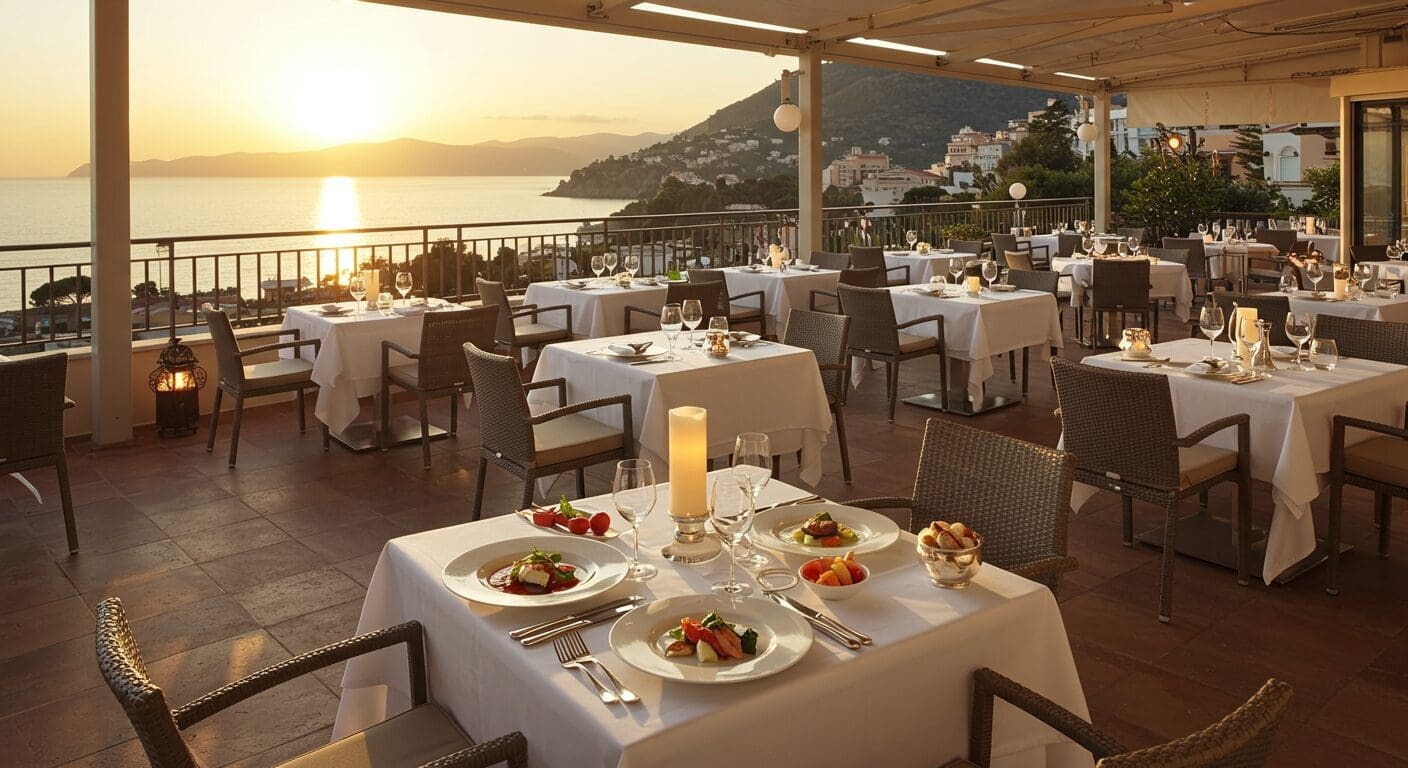
Puglia is not, by temperament, a region that goes in for theatre. The cooking tends to let quality ingredients do the talking rather than showboating with foam and tweezers. But that restraint has not prevented a genuine fine dining scene from emerging – one that earns its stars honestly, by doing fewer things and doing them with uncommon care.
The name at the very top of the conversation right now is Masseria Moroseta, outside Ostuni, which appears in the 2026 Michelin Guide Italia and represents something genuinely special about where Puglian cuisine is heading. This is not a restaurant that happens to be attached to a place to stay – it is a culinary destination in its own right, with a kitchen that draws almost entirely from the masseria’s own farm and kitchen garden. The ingredients walk approximately twenty metres to reach your plate. The result is cooking that tastes of place in the most literal, least clichéd sense of the phrase.
Guests who have eaten at Moroseta Kitchen tend to reach for words like “revelatory” and “perfectly curated,” which can sound like the language of overexcitement but, in this case, appears to be simply accurate. Every dish is beautifully composed, every wine pairing thoughtful, and the setting – all warm stone and considered simplicity – adds its own considerable weight to the experience. Book well in advance. This is not advice dressed up as a suggestion. It is a sincere instruction.
Beyond Moroseta, the broader fine dining landscape in Puglia rewards those willing to look. Several upscale masserie around the Valle d’Itria and the Salento have invested seriously in their dining programmes, with chefs who trained in Milan or Rome and came home with the skills but not the attitude. The cooking at this level is modern and intelligent without losing sight of the specific landscape it belongs to.
The Soul of Puglian Eating: Local Trattorias and Honest Tables
For every Michelin entry in Puglia, there are fifty places that will never appear in a guide but will feed you better than you deserve on a Wednesday lunchtime with no reservation. The backbone of eating here is the trattoria – unpretentious, often family-run, frequently decorated with the kind of framed photographs that suggest the owner’s grandmother would not have approved of any other way of doing things.
In Ostuni, the white city that sits high above the olive groves like a small miracle of civic whitewash, Osteria del Tempo Perso has been earning its reputation one table at a time. Set in one of the town’s winding alleyways, lit with the kind of warm, soft glow that makes everyone look attractive and every dish look like a painting, it manages the considerable feat of being genuinely loved by locals as well as visitors. That is rarer than it sounds. The food, the wine list, the service and the atmosphere all pull in the same direction – which is the direction of a very good evening. Booking is recommended.
In Lecce, the baroque jewel of the Salento, the essential address for those who want to eat as Anthony Bourdain once did – and that remains a useful compass in most cities – is Alle Due Corti. Bourdain visited in 2017 and was characteristically direct about the place: it mattered. The dish to order here, the one the restaurant has built its reputation on, is ciceri e tria – chickpeas slow-cooked with a combination of boiled and fried pasta until the starches have merged into something rich and deeply comforting. It is the kind of dish that makes you want to understand the person who first made it. The burrata, too, is not to be walked past.
Ciceri e tria is the living legacy of Leccese cucina povera – a tradition of making remarkable things from modest ingredients that runs through the DNA of this city. Alle Due Corti keeps that tradition without turning it into a museum piece. Small room, honest food, correct prices. The formula has not required updating.
Also in Lecce, Trattoria Le Zie – which translates, warmly, as “The Aunts” – is exactly what it sounds like: a family-run restaurant on Viale Costadura serving traditional Puglian home cooking in portions that assume you arrived hungry and plan to leave full. No frills, inexpensive by any standards, beloved by locals. The fact that it is consistently packed at lunchtime with people who did not arrive here from a guidebook tells you everything you need to know. Go early, or wait.
Something Lighter: Beach Clubs and Casual Dining by the Sea
The Pugliese coastline – and there is a great deal of it, from the Adriatic to the Ionian – has developed a beach club culture that does casual dining rather better than casual dining usually manages. The formula involves wooden decking, sea views, grilled fish pulled from the water a short distance away, and a reasonable quantity of chilled local white wine consumed at the kind of speed that is acceptable when your feet are sandy.
Along the coast near Otranto and Torre dell’Orso, and on the rocky Adriatic stretches around Polignano a Mare, beach clubs double as dining destinations from June through September. Whole sea bream arrives at the table with lemon and very little else by way of intervention. Crudo – raw fish dressed with olive oil and citrus – is ordered with the casualness that suggests it is not the slightly remarkable thing it actually is. Pasta with sea urchin, ricci di mare, appears on menus here with a frequency that would cause a stir in most other European countries but barely warrants a raised eyebrow in Puglia.
The atmosphere at these places is relaxed to the point where time becomes theoretical. Lunch becomes the afternoon becomes aperitivo becomes dinner in a process that no one quite notices or minds. This is, it should be said, rather the point.
Hidden Gems Worth Seeking Out
In the Lecce area, MINT Cucina Fresca is the kind of discovery that makes you feel briefly smug about finding it, before you realise it has a 4.9 rating on Google and is not especially secret. What makes it worth seeking out is the quality of the thinking behind it: a vegetable-led kitchen run by locals, rooted in genuine Puglian ingredients and tradition, but interpreted with freshness and intelligence. The dishes are plant-based without any of the earnestness that phrase sometimes implies – this is cooking designed for pleasure rather than persuasion. The desserts, the influence of an owner whose husband is a pastry chef, are a particular argument for leaving room at the end. Have the dessert.
Further afield, the trulli country around Alberobello and Locorotondo harbours small restaurants where you can eat fresh orecchiette with turnip tops – orecchiette con le cime di rapa – in circumstances of considerable charm, at prices that feel almost apologetic. These are not places that advertise beyond word of mouth and a handwritten card in the window. They do not need to.
Food Markets: Where Puglian Cooking Actually Begins
To understand the food of Puglia at any depth, spend a morning at a market before you spend an evening at a restaurant. The two experiences are not unrelated. The Mercato di Lecce, held in the streets near the old city, is the right place to encounter the raw materials that make Puglian cooking what it is: fat figs still warm from the tree, bunches of lampascioni (wild hyacinth bulbs with a bitter, earthy flavour that Pugliese cooks use with quiet confidence), crates of ripe tomatoes destined to become sauce, wheels of aged cacioricotta cheese with the texture of compacted time.
Markets in Bari, Gallipoli and Fasano operate on similar principles – local farmers, seasonal produce, minimal packaging, absolute freshness. In Bari’s old city, you may encounter the famous pasta ladies of the Borgo Antico, who sit outside in the street making orecchiette by hand with a speed that makes the whole process look effortless and is conspicuously not. Buy a bag. It will be better than anything you’ve made at home, and there is no shame in that.
What to Order: The Puglian Table in Brief
A few dishes that are worth prioritising wherever you eat. Orecchiette con le cime di rapa – the little ear-shaped pasta with bitter turnip tops – is the region’s most representative dish and as good a test of a kitchen as any. Burrata, which was invented in Puglia and tastes here as it never quite tastes anywhere else – softer, creamier, more urgent. Friselle, hard twice-baked bread soaked in water and topped with tomato and olive oil, which sounds rustic and is magnificent. Taralli, the small savoury rings baked with olive oil and fennel seeds, eaten with wine or without occasion. And pasticciotto leccese – a short pastry case filled with custard cream that is the correct way to begin any morning in the Salento.
Freshly grilled octopus, whole bream roasted with potatoes and cherry tomatoes, tiella (a baked layered dish of rice, potatoes and mussels from Bari) – the list goes on considerably, and is one of Puglia’s stronger arguments for return visits.
Wine and Local Drinks: What’s in the Glass
Puglia produces more wine than any other region in Italy, which is not always obvious from the outside because for many years a significant proportion of it was quietly absorbed by producers further north who needed the sunshine in their blends. That era is largely over, and Puglian wine is now bottled, named and taken seriously on its own terms.
The grape to know is Primitivo – full, rich and deeply coloured, grown most notably in Manduria, where the best examples have a complexity that matches the depth of the local food. Negroamaro, from the Salento, is earthier and slightly more austere, particularly in its most distinguished expression as Salice Salentino. Both are built for the table rather than the cocktail hour, and both reward an opened bottle that has had twenty minutes to settle into itself.
For white wine, Verdeca and Fiano di Puglia are the ones to request. Both have the acidity and freshness to cut through the richness of local cooking. Rosato – rosé, though the Puglian variety tends to be a deeper, more serious colour than its Provençal counterpart – is the summer drink of choice and is taken with great enthusiasm.
Aperitivo culture in Puglia runs on the same principles as the rest of southern Italy: Aperol Spritz for tourists (not a judgment, just an observation), something local and bitter for locals. Look for Primitivo di Manduria dolce naturale as a dessert wine if you can find it – sweet, intense, and the kind of thing you drink slowly while the evening cools and nobody is in any particular hurry to be anywhere else.
Reservation Tips: The Practical Business of Eating Well
A few things worth knowing before you arrive hungry. For the top-tier experiences – Masseria Moroseta in particular – bookings need to be made weeks in advance, sometimes more during high season (July and August). This is not theatrical scarcity. Tables are simply limited and the reputation is well-established.
For more local trattorias, particularly in Lecce and Ostuni, a reservation the morning of is usually sufficient on weekdays; aim for the day before on weekends. Arriving without a booking at 9pm on a Saturday in Ostuni in August is an experiment that does not tend to end well.
Lunch in Puglia is, if anything, the more important meal – longer, slower, less performative than dinner and often better value. Many smaller restaurants offer a fixed menu at lunch that represents extraordinary quality at prices that feel slightly wrong. Order it. Eat slowly. Do not plan anything for the next two hours.
Most restaurants appreciate at least a basic attempt at Italian when you arrive. “Un tavolo per due, per favore” and a genuine smile will take you further than you might expect. This is, to be clear, true of most places in the world.
Staying Well: The Villa Option
The ideal way to experience Puglia’s food culture at full depth is to combine restaurant discoveries with the freedom of your own kitchen – or, more specifically, the freedom of a private chef working in your own kitchen. Staying in a luxury villa in Puglia opens up the possibility of having a local chef source from the markets each morning and cook for you in the evening – an experience that sits somewhere between a private dinner party and a masterclass in regional cooking, and is considerably more relaxed than either. The olive oil is usually from the property’s own trees. The wine comes from just down the road. Everything arrives without a rush.
For more on planning your time in the region, the full Puglia Travel Guide covers everything from the best towns to explore to when to visit and what to do between meals – which, in Puglia, is mostly preparation for the next one.