San Bernardino County Food & Wine Guide: Local Cuisine, Markets & Wine Estates
San Bernardino County Food & Wine Guide: Local Cuisine, Markets & Wine Estates
Here is what first-time visitors to San Bernardino County almost always get wrong: they think they’re just passing through. They’re on the way to Las Vegas, or Joshua Tree, or somewhere that fits more neatly onto a mood board. They stop for petrol, perhaps a coffee, and then they leave – having driven through one of California’s most genuinely interesting food and wine regions without ever knowing it. This is, in its way, quite an achievement. San Bernardino County is the largest county in the contiguous United States, spanning desert floors, mountain forests, and high-altitude valleys that produce wines of real character. The food culture here is equally layered – Indigenous, Spanish colonial, Mexican, and Californian influences folded together over centuries – and the traveller who takes the time to actually eat, drink, and linger is rewarded in ways that no amount of Instagram research could have predicted.
Understanding the Region: Why San Bernardino County Is a Food Story
The geography alone should tell you something. A county that runs from the edge of Los Angeles County to the Nevada and Arizona borders – encompassing the Mojave Desert, the San Bernardino Mountains, the Inland Empire, and the high desert communities of the Victor Valley – is not going to have a single culinary identity. And it doesn’t. What it has instead is a kind of honest, layered food culture that reflects everywhere it has been: the Spanish missions that planted the first vineyards, the citrus ranches that once made the Inland Empire famous, the Indigenous Serrano and Cahuilla communities whose food traditions still shape the regional palate in ways that rarely get acknowledged.
What this means in practice is that eating well here requires some curiosity and a willingness to follow your nose down roads that don’t appear in any glossy listicle. The rewards, when they come, are considerable. This is not Napa. It does not pretend to be. It is somewhere considerably more interesting – a place where a remarkable bottle of Temecula-adjacent Bordeaux blend might be poured by the winemaker himself, and where the best tamale you’ve ever eaten is quite possibly being made by someone’s grandmother in a kitchen attached to a petrol station. Both of these things can be true simultaneously in San Bernardino County. That is, frankly, a point in its favour.
The Regional Cuisine: What to Eat and Why It Matters
Start with Mexican and Mexican-American food, because to do otherwise would be dishonest. The communities of the Inland Empire – San Bernardino city, Ontario, Fontana, Rialto – have a deep and serious Mexican culinary culture. Birria is everywhere, and much of it is exceptional: slow-braised beef or goat, rich with dried chillies, cinnamon, and cloves, served in a consommé that has no business being as good as it is. Birria tacos – the ones you dip in that broth before frying until the edges crisp – have been fashionable elsewhere for about four years. Here, people have been eating them for considerably longer and will continue to do so long after the trend has moved on.
Tamales are a regional language unto themselves. During the winter months, particularly around Christmas, entire communities organise tamaladas – communal tamale-making sessions – and the results end up in homes, at markets, and occasionally in small takeaway windows with no signage whatsoever. If you see a queue forming outside a building that doesn’t obviously look like a restaurant, join it. This is generally good advice in the Inland Empire.
Beyond Mexican food, the region’s mountain communities – Big Bear Lake, Lake Arrowhead, Running Springs – have developed a more alpine-inflected cuisine: hearty, locally sourced, with a bias toward game, trout, and seasonal foraged ingredients. The pine forests of the San Bernardino National Forest yield wild mushrooms in autumn, and some of the better mountain restaurants and private chefs make use of them with real skill. Acorn, once a staple of the Serrano people who have lived in these mountains for thousands of years, occasionally appears in contemporary form at restaurants and markets interested in Indigenous foodways – a development that is both overdue and, when done with proper engagement rather than appropriation, genuinely worth seeking out.
Wine in San Bernardino County: A Serious Conversation
The county has a wine history that predates California statehood by a comfortable margin. The Cucamonga Valley – now part of San Bernardino County’s western edge, sharing the broader Cucamonga AVA with neighbouring Riverside County – was planted with Zinfandel and Mission grapes in the mid-nineteenth century. Some of those old vines are still producing. When you drink a Cucamonga Valley Zinfandel from century-old dry-farmed vines, you are drinking something with genuine historical weight. The flavour profile – intense, earthy, with a wild-herb quality that newer plantings rarely achieve – is its own argument for paying attention.
The Cucamonga Valley AVA sits at an elevation that gives it warm days and cool nights, moderated by Pacific air funnelling through the Cajon Pass. Grapes here develop concentration without losing acidity – the eternal struggle of warm-climate winemaking, and one that the valley’s position helps resolve naturally. Zinfandel remains the signature variety, but Grenache, Mourvedre, and Sangiovese all perform well here. A handful of producers are working with Italian varieties specifically, drawn by the climate similarities to parts of southern Italy and the ability to produce wines of texture and warmth without excess alcohol.
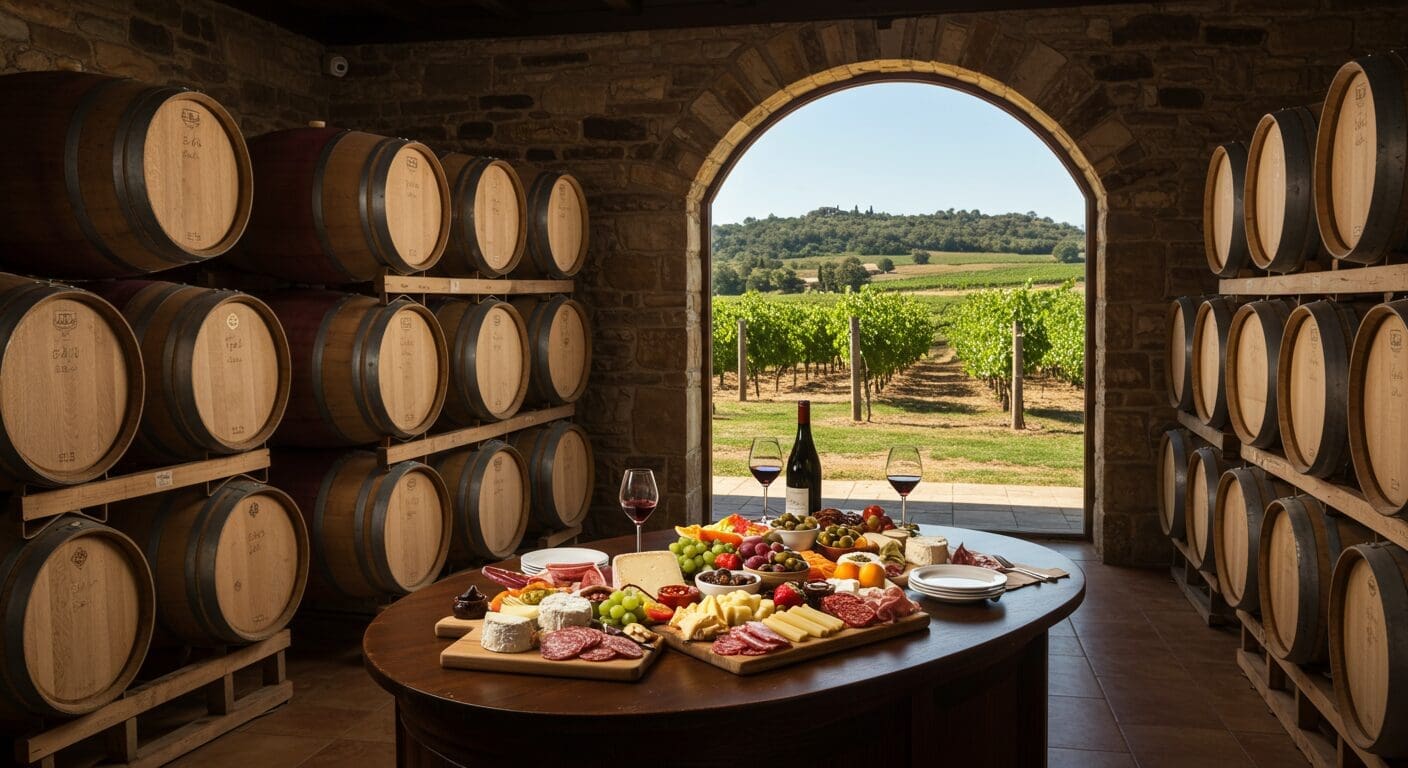
There are wineries within San Bernardino County worth visiting on their own terms – small-production estates where the tasting room might be a converted barn or a simple table under a pergola, and where the person pouring your wine is the same person who made it. This is, in a world of corporate hospitality experiences and curated “brand journeys,” something of a relief. Wine tasting in the Cucamonga Valley and its surroundings tends toward the human and the unpretentious. You are not being performed at. You are simply being given a glass of wine and told what is in it. It is quite pleasant.
Wine Estates and Tasting Experiences Worth Your Time
The serious wine visitor to San Bernardino County will want to plan a half-day or full day in the Cucamonga Valley wine district, working their way through a small cluster of family-owned producers. Tasting appointments at the better estates are advisable – not because the region is overrun with visitors, but because many of these are working farms where the winemaker’s time is finite and personal service is the norm rather than the spectacle.
Look for producers with old-vine designations on their Zinfandel: these are the wines that tell you something a younger vineyard simply cannot. The gnarly, low-yielding vines that survived Prohibition (often by continuing to sell grapes for “home winemaking,” a loophole that was exploited with considerable enthusiasm) produce fruit of extraordinary concentration. The wines are not always elegant in the conventional sense – they are muscular, characterful, occasionally stubborn – but they are entirely themselves, which is a form of elegance that the luxury traveller tends to appreciate once encountered.
Some estates pair their tastings with food in thoughtful ways: regional charcuterie, locally produced olive oil, cheeses from small California producers. Others simply pour the wine and let it do the talking. Both approaches have their merits. The key question to ask at any tasting is always which wine the winemaker themselves is most excited about right now. The answer is almost always more interesting than whatever appears first on the formal tasting menu.
Food Markets: Where the Region Shows Its Hand
Farmers’ markets in San Bernardino County vary considerably in character and quality, which is itself a useful piece of information. The markets in the mountain communities – Big Bear Lake and Lake Arrowhead during summer and autumn – tend toward local produce, honey, preserves, and the kinds of hand-crafted goods that suggest a community with strong maker traditions. The markets in the Inland Empire cities cast a wider cultural net: Latin American produce, fresh tortillas made to order, an extraordinary variety of dried chillies, herbs you will not find in a Whole Foods, and occasionally some of the best fresh fruit in California.
The Inland Empire’s citrus heritage – once the engine of the regional economy before property developers noticed all that flat land – still surfaces at markets in the form of extraordinary navel oranges, Meyer lemons, blood oranges, and rare varieties that specialist growers have preserved almost as an act of defiance against the march of the suburb. If you are self-catering from a villa, a morning at one of the better farmers’ markets here is not a optional activity. It is the foundation of your entire food plan for the week.
Date farms in the high desert communities closer to the Coachella Valley border produce Medjool and Deglet Noor dates of extraordinary quality – soft, caramel-rich, entirely unlike the leathery things that pass for dates in most supermarkets. Roadside date stands in this part of the county operate on an honour-system basis that is either charming or inefficient, depending on your disposition.
Olive Oil and Artisan Producers
California’s olive oil story has largely been told through the lens of the Central Valley and the northern counties, but San Bernardino County has its own quiet tradition. The climate in the lower-elevation parts of the county – warm, dry, with the specific light quality of the inland south – suits olive cultivation well, and a number of small producers are making cold-pressed extra-virgin oils of genuine distinction. The variety mix tends toward Spanish and Italian cultivars: Arbequina, Koroneiki, Picual. Oils from this region tend to have a robust, peppery finish and a green fruitiness that reflects the harvest timing – most serious producers here pick early for intensity rather than volume.
Visiting a working olive grove during harvest (typically October through December) is one of the more quietly remarkable agricultural experiences available in southern California. The activity itself is not glamorous – olive harvesting, mechanised or otherwise, is dusty and repetitive – but the smell of freshly milled olives is something that tends to lodge permanently in the sensory memory. A small number of estates offer harvest experiences for guests, sometimes combined with a tasting of the season’s oil alongside bread and local cheese. This is, in its modest way, one of the best things you can do in San Bernardino County.
Cooking Classes and Culinary Experiences
The cooking class landscape in San Bernardino County is, honestly, less developed than in some of California’s more tourist-facing food regions, which is precisely why the experiences that do exist tend to be genuine rather than theatrical. Classes focused on Mexican and Mexican-American cooking – mole from scratch, hand-made tortillas, traditional tamale construction – are available through community organisations, private chefs, and a small number of culinary schools in the Inland Empire. These are not the kind of cooking classes where you wear a branded apron and pose for photographs with a spatula. They are the kind where you leave with actual knowledge and a reasonable amount of chilli on your clothing.
Private chef experiences, available through villa concierge services and local culinary networks, allow guests to commission meals that reflect the region’s specific character: mountain-foraged mushrooms, Cucamonga Valley wines, desert-grown dates used in ways that aren’t simply dessert. A talented private chef with local sourcing relationships can construct a dinner that amounts to an edible argument for why San Bernardino County deserves more serious culinary attention. This is, for the luxury traveller who prefers discovery to repetition, a more interesting evening than most.
The Best Food Experiences Money Can Buy
If you are going to spend seriously on food and drink in San Bernardino County, here is where that money is best directed. First: a private winery visit in the Cucamonga Valley, arranged through a local specialist, with access to the library wines that never appear in the public tasting room and a conversation with the winemaker that goes considerably beyond the standard patter. Second: a private chef dinner at your villa, built around a market run that morning to the best farmers’ market in the area, with wine pairings from a curated selection of regional producers. Third: a guided half-day in the mountain communities foraging for wild mushrooms (seasonally dependent, late autumn being optimal), followed by a chef-led cooking session using what you’ve found. Fourth: a pre-dawn visit to a working date farm in the high desert, followed by a breakfast spread that demonstrates what this fruit actually tastes like when it hasn’t spent three weeks in a plastic clamshell at an airport.
None of these experiences are the kind that appear on a standard itinerary. All of them require a degree of planning and local knowledge. The gap between what most visitors eat in San Bernardino County and what is actually available to someone willing to look is, frankly, embarrassing. This is a destination that consistently undersells itself at the table, which means that the traveller who brings proper curiosity to it eats and drinks exceptionally well – often at prices that would seem frankly improbable in comparable wine regions anywhere in Europe.
For everything else you need to plan your time here – from the mountains to the desert, the architecture to the natural landscapes – the San Bernardino County Travel Guide covers the region in full and makes an excellent companion to this guide.
Where to Stay: Villas with the Space to Eat, Cook, and Drink Properly
The food and wine culture of San Bernardino County is best engaged from a base with room to breathe – a kitchen worth using, an outdoor dining area that justifies a private chef, a wine fridge that can accommodate a case of old-vine Zinfandel acquired at an estate visit. Hotels in the region are improving, but a villa remains the more sensible arrangement for anyone who intends to eat and drink seriously: you can store what you buy at the farmers’ market, cook with what you forage, and end an evening with a proper meal on your own terms rather than at the mercy of a restaurant’s closing time. Explore our collection of luxury villas in San Bernardino County and find the right base for a culinary trip that goes considerably beyond what most visitors manage.
What wines should I look for when visiting San Bernardino County’s wine region?
The Cucamonga Valley AVA, which falls largely within San Bernardino County, is best known for old-vine Zinfandel – some vines date back over a century and produce wines of intense, earthy character quite different from younger California Zinfandel. Grenache, Mourvedre, and Sangiovese also perform well in the warm, dry climate with its cool-night temperature swings. When visiting tasting rooms, ask specifically about old-vine or dry-farmed designations, and enquire whether there are library or reserve wines available that don’t appear on the standard tasting list. These are typically where the most interesting work is happening.
What is the best time of year to visit San Bernardino County for food and wine experiences?
Autumn – specifically October through December – is the most rewarding season for food and wine visitors. The wine harvest is underway or just completed, meaning visits to estates carry particular energy and access. Wild mushrooms appear in the San Bernardino mountain forests from late October onward. Olive harvest runs through November and into December, with some estates offering pressing experiences. Farmers’ markets in autumn carry exceptional local produce, including pomegranates, persimmons, late-season stone fruit, and the first of the winter citrus. Spring is also pleasant, particularly for visiting the high desert when wildflowers bloom and temperatures are manageable before the summer heat sets in.
Can I organise a private chef or cooking experience at a luxury villa in San Bernardino County?
Yes – private chef services are available in San Bernardino County through specialist culinary networks and villa concierge services. The most rewarding approach is to combine a morning farmers’ market visit (or a stop at a local farm or winery) with an evening chef-led dinner that uses what you’ve sourced that day. This allows the menu to reflect the region’s actual seasonal produce rather than a generic interpretation of California cuisine. Cooking class experiences – particularly those focused on traditional Mexican and Mexican-American techniques such as mole preparation, hand-made tortillas, and tamale construction – can also be arranged privately and make an excellent half-day activity for guests who prefer participation to passive dining.