Sant Josep de sa Talaia Food & Wine Guide: Local Cuisine, Markets & Wine Estates
What would you eat if you had a whole coastline, a wine-producing interior, centuries of trade routes, and the good fortune to be on an island that has long attracted people with excellent taste and sufficient funds to indulge it? The answer, it turns out, is this: unfussy grilled fish eaten at tables that tip slightly on uneven stone floors, wine made from grapes grown in red Ibizan soil that nobody outside the island has quite figured out yet, markets that smell of wild herbs and ripe tomatoes, and the occasional dish so quietly perfect that you set your fork down mid-bite and just think about it for a moment. Sant Josep de sa Talaia – the municipality that encompasses the southwestern corner of Ibiza, including Cala Tarida, Cala Conta, and the salt flats of Las Salinas – is where the island’s food culture is at its most coherent. Less frantic than Ibiza Town, more sophisticated than a beach bar, it occupies that sweet spot that luxury travellers are always chasing: genuinely local, genuinely good.
The Foundation: Understanding Ibizan Cuisine
Ibizan cooking is not Catalan cooking. It is not Spanish cooking in any mainland sense. It is something older and more particular – a Mediterranean cuisine shaped by Phoenician traders, Moorish occupation, the rhythms of fishing and salt harvesting, and a landscape that produces its own herbs, almonds, figs, and olive oil with a quiet persistence. The cuisine of Sant Josep de sa Talaia reflects all of this, and then some.
The cornerstone of traditional Ibizan cooking is sofrit pagès – a rich, deeply flavoured stew of chicken, lamb, and sobrassada (the soft, paprika-cured sausage found across the Balearics) cooked with potatoes and spices. It is festival food, Sunday food, the kind of thing that takes the morning to make and rewards every minute of it. Then there is bullit de peix, a two-course fisherman’s dish that arrives first as a saffron-scented broth ladled over rice, and then as a platter of the fish and vegetables that created it. Economy born of genius, essentially.
Alongside these, look for guisat de rajada (stewed skate), greixonera – a bread pudding made with leftover ensaïmadas that is considerably better than it sounds – and the local herb liqueur hierbas ibicencas, which is poured freely and often without being asked. The island also produces its own salt from the Las Salinas pans, a UNESCO-protected site that falls within the Sant Josep municipality. Salt harvested here has been traded since antiquity. It is used by local cooks with an assurance that makes you wonder why you ever used anything else.
The Wine: Ibiza’s Best-Kept Viticultural Secret
Ibizan wine has spent most of its history being underestimated. The island’s wine production effectively collapsed in the late twentieth century as tourism money arrived and it became easier to import from the mainland than to tend your own vines. What remained was largely for local consumption – honest, rough-edged, and completely uninterested in your opinion of it.
Then something shifted. A small group of producers began to take the island’s indigenous varieties seriously. The primary grapes here are Monastrell, Tempranillo, Merlot, and the white Macabeo, grown in mineral-rich red soils under intense sun and cooled by sea breezes. The result is wine with real character: full-bodied reds with a certain saline edge, whites that are dry and herbal and work brilliantly with the local fish dishes they were, in effect, born alongside.
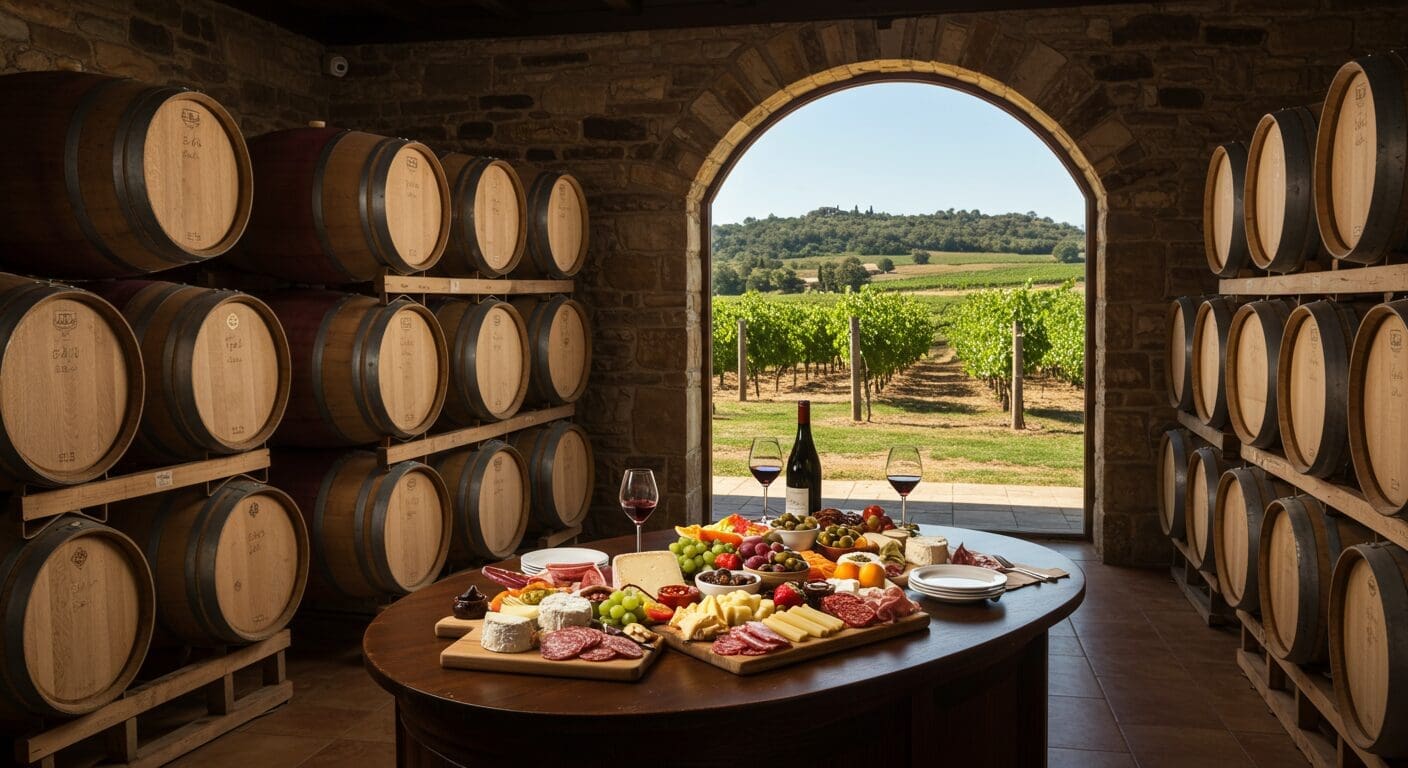
Can Rich is the most established estate in the Sant Josep area and one of the most significant wine producers on the island. The winery sits in the interior, surrounded by old vines and almond trees, and produces a range that runs from approachable everyday bottles to more complex reserves that will make any serious wine traveller pay attention. A visit here – ideally a proper tasting rather than a quick pour and departure – gives context to everything you drink on the island afterwards. Atzaró Agroturismo, though associated more broadly with the island’s agritourism scene, also produces its own oils and wines worth seeking out.
The wine estates of Sant Josep are not Bordeaux châteaux. They are working farms that happen to make excellent wine, and that distinction matters. There is no theatre. There is just very good wine, made with care, in a landscape that earns its place in the glass.
Food Markets: Shopping Like a Local (Almost)
The weekly market in Sant Josep village – held on Thursdays – is one of those markets that has not yet been entirely discovered by the sort of people who buy things they cannot fit in their luggage. Local farmers bring vegetables, herbs, honeys, jams, and the kind of tomatoes that remind you what a tomato is supposed to taste like. There is also sobrassada and local cheese, and frequently a stall selling hierbas ibicencas in bottles that were clearly filled by hand.
For something more theatrical, the hippy markets of the municipality – particularly Las Dalias, which operates near Sant Carles on the northeastern edge of the island but draws sellers and buyers from across Ibiza – provide a context you will not find in any supermarket. The food sections here lean toward the artisanal: jars of local honey, dried herbs from the countryside, handmade pastries, and occasionally a jar of salt from Las Salinas with a hand-written label that you buy immediately and use sparingly for the next eighteen months at home.
Within the Sant Josep area itself, the towns of Sant Agustí des Vedrà and Sant Jordi de ses Salines both have small local markets worth visiting on the right day. Sant Jordi in particular has a Saturday flea and food market that is genuinely local in character – the sort of place where you find excellent produce, slightly eccentric antiques, and the occasional very good pastry. If you go, arrive early. This is not a recommendation anyone makes about a market they have not personally learned the hard way.
Olive Oil: Liquid Gold from Ibizan Groves
Ibiza has been producing olive oil since the Phoenicians planted the first trees, and the groves around Sant Josep – gnarled, ancient, seemingly indifferent to the passage of time – are part of a continuous tradition that most wine regions would find humbling. Ibizan olive oil is not produced at the scale of Andalusia or Tuscany, but what it lacks in volume it compensates for in character: grassy, slightly peppery, with a finish that lingers in a way that encourages you to apply it to everything.
Several small producers in the Sant Josep interior sell directly from their farms, and a visit to one of these – ideally during or just after the October-to-December harvest – is one of those food experiences that fundamentally changes how you use oil in the kitchen. You taste oils pressed from different olive varieties, discuss acidity levels with someone who has been thinking about nothing else for months, and leave carrying bottles you treat with a reverence usually reserved for very good wine. Which is, come to think of it, exactly as it should be.
Look for oil made from the local Arbequina and Empeltre varieties – both are well suited to the island’s climate and produce oils with distinct personalities. Agroturismo properties in the municipality often include olive groves in their grounds and will sometimes offer informal tastings for guests.
Cooking Classes and Culinary Experiences
The best cooking experiences in Sant Josep de sa Talaia are not the ones that hand you a laminated recipe card. They are the ones that begin in a market, involve a conversation about which fish looks best today, and end with you eating what you made at a table outside while someone pours you a glass of local white. That arc – market to kitchen to table – is the structure that all the best culinary experiences here follow, and it is one worth seeking out deliberately.
Several villas and agroturismo properties in the municipality offer private cooking classes led by local chefs or island-born cooks who bring their grandmother’s sofrit pagès recipe to the lesson with the casual authority of someone who has been making it since childhood. These classes are worth prioritising over restaurant visits on at least one evening of your stay – not because the restaurants are bad (they are not) but because cooking Ibizan food once gives you an entirely different relationship with eating it thereafter.
For something more structured, specialist culinary tour operators offer half-day and full-day experiences centred on the Sant Josep area, combining market visits with kitchen sessions and often a winery stop. Some include a tour of the salt flats at Las Salinas, where the connection between landscape and ingredient becomes bracingly clear. Salt looks completely different when you have stood next to the pan it came from. Everything tastes better for it.
The Best Food Experiences Money Can Buy
Luxury, in food terms, is rarely about spending the most. It is about access – to the best producers, the most knowledgeable guides, the tables that are not on any public-facing reservation system. In Sant Josep de sa Talaia, several experiences sit firmly in this category.
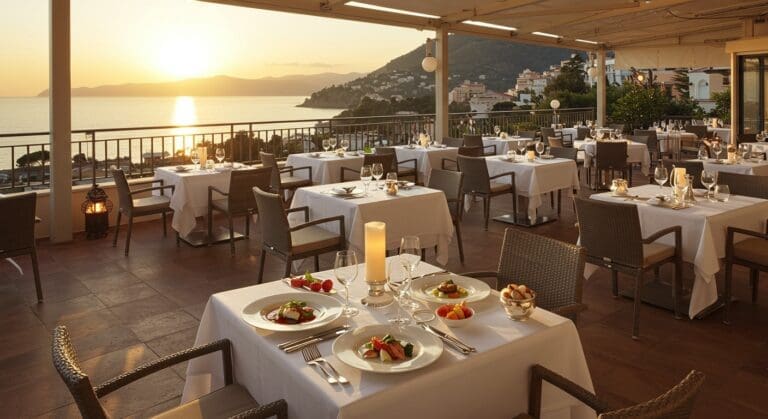
A private dinner on the terrace of a villa in the hills above Cala Tarida, prepared by a chef who sources everything that morning from the Sant Josep market and the fishing boats at Sant Antoni harbour, served as the sun drops into the sea in the particular way it does on the west coast of Ibiza – that is not a restaurant experience. It is better than a restaurant experience, and it is the kind of thing that is entirely achievable when you have the right villa and know the right people.
Wine estate visits with private tastings at Can Rich, conducted outside normal opening hours with someone who actually made the wine, fall into the same category. So does a salt flat tour at dawn with a local guide, ending with breakfast at a farmer’s table somewhere in the interior. And so does a private truffle experience – Ibiza is not a major truffle-producing island, but the black truffle is found in forested areas of the interior, and specialist guides do offer seasonal foraging sessions that combine truffle hunting with a broader understanding of the island’s wild food culture.
The common thread in all of these is that they require local knowledge and, frequently, a local contact. Both are available. You simply have to be staying somewhere that puts you in reach of them. A private villa in Sant Josep, as it happens, tends to do exactly that.
Eating Out: What to Know Before You Book
Sant Josep de sa Talaia has a restaurant culture that spans the full range from genuinely excellent to confidently mediocre – the mediocre ones often occupying the best views, which is a universal law of coastal dining everywhere. The best local cooking is found in smaller establishments in the inland villages rather than the beach clubs, where the food is frequently an afterthought to the service charge.
Look for restaurants serving traditional Ibizan dishes alongside good local wine – the combination signals an owner who is thinking about food as food rather than food as ambiance. The beach bars around Cala Conta and Cala Tarida serve fresh fish with appropriate simplicity, and a long lunch there with a cold white wine from the island is a very reasonable approximation of the good life. Reservations for the better establishments are essential in high season – the kind of thing people discover the first evening and spend the rest of the holiday being sensible about.
For those who prefer their meals prepared privately – whether by a villa chef or a private caterer sourcing from local suppliers – the quality of raw ingredients available in the Sant Josep area is exceptionally high. Arrive with a flexible approach and a willingness to eat what is best today rather than what you planned yesterday. This is, broadly speaking, how Ibizans eat, and there is a reason the local cuisine tastes the way it does.
For a broader overview of the destination, including beaches, activities, and cultural highlights, see our full Sant Josep de sa Talaia Travel Guide.
Plan Your Stay
The food and wine culture of Sant Josep de sa Talaia rewards slow travel – the kind of trip where mornings involve markets rather than poolside menus, and evenings end at a table you found rather than booked three months in advance. It rewards curiosity, a willingness to follow recommendations from people who know the island, and the kind of base that gives you both privacy and proximity to everything worth eating and drinking here.
Explore our collection of luxury villas in Sant Josep de sa Talaia – properties with private kitchens for those evenings you bring the market home, terraces made for long dinners, and the kind of location that puts you within easy reach of wine estates, local markets, and the best fish on the west coast of Ibiza.