Scotland Travel Guide: Where to Stay, Eat & Explore in Luxury
There is a moment, usually somewhere on a single-track road in the western Highlands, where you round a bend and the landscape does something so unreasonably dramatic that you actually stop the car. Not because you planned to. Not because there’s a lay-by with a helpful brown tourist sign. But because your foot simply lifts off the accelerator of its own accord and you sit there in slightly stunned silence while a loch the colour of pewter stretches out beneath mountains that look like they were designed by someone who had recently read too much Romantic poetry. Scotland does this repeatedly and without apology. It is one of the few places in the world that can make you feel simultaneously very small and extremely glad to be alive – often within the same ten minutes.
Why Scotland for a Luxury Villa Holiday
The case for Scotland as a luxury villa destination is more compelling than the country’s reputation for weather might suggest. Yes, it rains. Sometimes enthusiastically. But here is the thing about Scottish weather that nobody in the tourism board quite dares to say out loud: the drama of it is entirely the point. A Highland glen under heavy cloud and shifting mist looks like a painting. The same glen in flat sunshine looks like a nice photograph. There is a difference, and the Scots have known it for centuries.
What a private villa gives you in Scotland that no hotel can match is space – genuine, uninterrupted, often quite spectacular space. The kind where your nearest neighbour might be a red deer rather than a couple from the room next door with different views on breakfast timing. Scotland has some of the most sparsely populated land in Europe, and a private villa lets you inhabit that solitude on your own terms: with a wood-burning stove lit, a good whisky to hand, and nobody to tell you that dinner service ends at nine.
The villa market here has matured considerably. Where once the options were mainly draughty shooting lodges requiring a tolerance for taxidermy and temperamental plumbing, there are now beautifully converted farmhouses, architect-designed retreats with floor-to-ceiling glazing framing loch views, and restored estate properties that manage to be genuinely grand without the faint air of a National Trust property that’s been left unlocked by accident. The United Kingdom has no shortage of remarkable places to stay, but Scotland occupies a particular category: landscape so outsized and unapologetic that the architecture is almost incidental.
The Best Regions in Scotland for Villa Rentals
Scotland divides itself, loosely but usefully, into Highlands and Islands, the central belt, and the south – and each offers something quite different to the villa traveller.
The Highlands is where most people are imagining when they close their eyes and think of Scotland. That instinct is not wrong. From Loch Lomond in the south – the gateway to the Highlands proper, accessible enough to feel civilised, wild enough to feel real – up through Perthshire’s birch and pine-forested river valleys, through the Great Glen and the drama of Glencoe, and north to Sutherland and Caithness where the roads thin and the horizon widens, this is landscape on a scale that recalibrates your sense of what countryside actually means. Villas and estate properties here tend to command loch or glen frontage, which is precisely what you want.
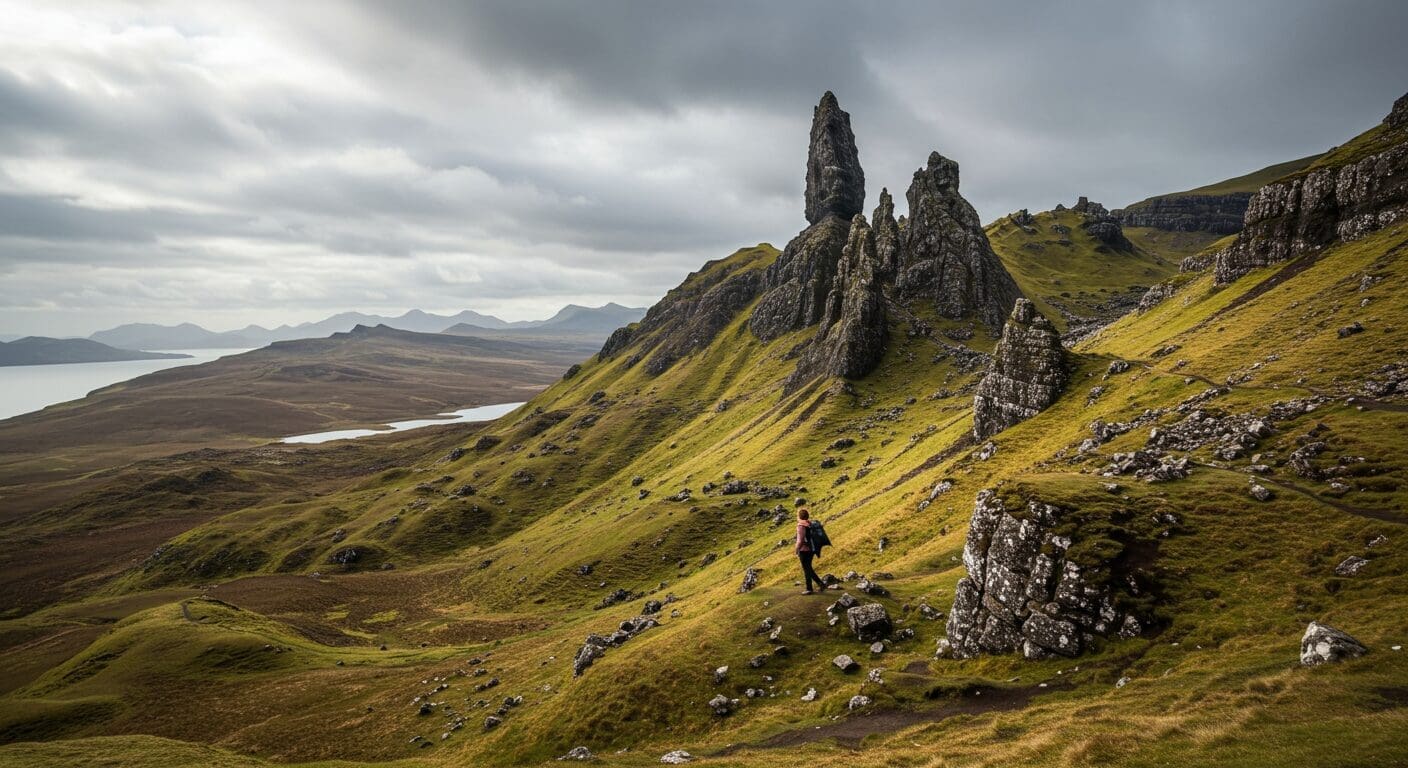
The west coast and its islands occupy their own category entirely. Skye has become so well-photographed that it risks its own mythology, but it earns the attention – the Cuillin ridge, the extraordinary tidal patterns of Loch Coruisk, the otherness of the Trotternish peninsula. The Outer Hebrides – Lewis, Harris, North and South Uist – are quieter, stranger and somehow more profound: vast empty beaches of shell-sand on the Atlantic edge, a quality of light that photographers travel from around the world to find, and a Gaelic culture that still feels like something that belongs here rather than a heritage exhibit. Argyll and its coast – Kintyre, the Cowal peninsula, the islands of Islay and Jura – offer a more wooded, milder version of the west, with some of Scotland’s finest whisky distilleries for company.
The northeast – Aberdeenshire, the Cairngorms – rewards those who look beyond the headline destinations. Royal Deeside has been attracting aristocratic visitors since Queen Victoria decided that Balmoral was just the thing for a Scottish summer, and the area still has an unhurried, well-ordered quality. The Cairngorms National Park is the largest in the United Kingdom, an ancient plateau of sub-arctic moorland, ancient Caledonian forest and excellent skiing that refuses to behave like any other British landscape. And the Scottish Borders – rolling and agricultural, peppered with ruined abbeys and good bookshops – offer a gentler version of Scotland for those who prefer their drama literary rather than geological.
When to Visit Scotland
The conventional wisdom says summer – June, July, August – and the conventional wisdom is not entirely wrong. The days are genuinely extraordinary: at midsummer in the far north, darkness barely falls, and there is something intoxicating about sitting outside at ten in the evening in useable light. Wildflowers cover the machair, the hills are clear, and the sheer length of the days means you can fit an implausible amount of Scotland into a week.
But summer has a footnote, and that footnote is the midge. The Highland midge is a tiny flying insect of approximately zero weight and absolutely catastrophic ambition, and it operates in clouds near standing water on warm, still evenings between May and September. It will not ruin a trip – people have been visiting the Highlands for centuries and have largely survived – but it is worth knowing about in advance rather than discovering at dusk on the shore of Loch Maree.
May and September are, for the independently minded traveller, the secret weapon. Crowds are thinner, accommodation more available, light is beautiful, and the midges are either not yet at full strength or have largely exhausted themselves. May brings late spring colour – bluebells in the ancient woods, gorse blazing yellow on the hillsides. September brings the autumnal shift – birch trees turning gold against the red of the bracken, stags beginning to roar across the glens in the rut, that particular quality of low October light that makes the Highlands look like a Dutch Golden Age painting, if the Dutch Golden Age had been set somewhere considerably more dramatic.
Winter is not for everyone, but for a house party in a large Highland estate with fires blazing and whisky flowing, December and January have their own considerable appeal. The mountains under snow, the extraordinary dark skies – Scotland has some of the lowest light pollution in Europe – and the northern lights, which appear here more often than most people realise, make a strong case for the off-season.
Getting to Scotland
Edinburgh and Glasgow are both well-served international airports with direct connections across the United Kingdom and much of Europe, as well as transatlantic routes from North America. Edinburgh in particular sits at the heart of things with a frequency of flights that reflects its status as one of the most-visited cities in Europe. Inverness Airport serves the Highlands directly with connections to London and several other UK cities – a small airport in the best possible sense, the kind where you can be airside in about seven minutes.
The train journey from London to Edinburgh on the East Coast Main Line is legitimately one of the great rail experiences in England and Scotland combined – four and a half hours through Northumbrian coast and border country, arriving at Waverley station which sits, with characteristic Scottish architectural self-confidence, in the valley between the Old Town and the New. The Caledonian Sleeper from London to various Scottish destinations is worth taking at least once for the romance of it, though its reliability is a topic best approached with the pragmatism of someone who has done it before.
Once in Scotland, a car is not optional for any meaningful exploration north of the central belt. It is the car. The west coast and islands require a willingness to navigate single-track roads with passing places, to follow ferry timetables, and to occasionally reverse for distances that would seem implausible in an urban context. None of this is difficult. It is, in fact, part of the experience – the enforced slowing down, the yielding to sheep, the ferry crossing with a cup of coffee and a view that costs nothing extra.
Food & Wine in Scotland
Scottish food has undergone a transformation so thorough and so sustained over the past two decades that it now sits confidently alongside any food culture in Europe. The building blocks were always there – langoustines fished from west coast waters of extraordinary clarity, beef from Aberdeenshire cattle that would make an Argentine rancher pause respectfully, lamb from hillsides that taste of heather and salt air, game from estates managed for the purpose, soft fruit from Perthshire that arrives in summer in a brief and perfect window. What changed was what Scottish chefs and producers started doing with them.
Edinburgh has a restaurant scene that punches above its size. The city now has multiple Michelin-starred establishments and a broader dining culture – natural wine bars, fermentation-focused kitchens, charcuterie built around Scottish rare breeds – that would not look out of place in any major European capital. Glasgow, characteristically, does things slightly differently: louder, more democratic in spirit, with a hospitality culture that feels genuinely local rather than designed for visitors.
But it is in the Highlands and Islands where the relationship between landscape and plate becomes most direct. Small restaurants with short menus built around what is available today – because the fish came in this morning, because the estate deer were walked off the hill yesterday, because the garden is producing now – operate in places so remote that the journey to reach them is itself part of the experience. There is a distinct pleasure in eating langoustines on the western coast having watched the boat that caught them come in earlier that afternoon.
Whisky, of course, requires a section of its own that this guide cannot fully provide. Scotland has over 140 working distilleries producing single malts of extraordinary range – from the peat-smoke intensity of Islay expressions to the delicate, sherried character of Speyside malts to the maritime quality of island whiskies that taste, not entirely fancifully, of sea air and the inside of an oak barrel that has been somewhere interesting. Visiting distilleries – not as a tourist box-tick but as a genuine engagement with a living craft tradition – is one of Scotland’s particular pleasures. Drink less. Drink better. Scotland will help with both.
Culture & History of Scotland
Scottish history is long, often violent, and consistently more complicated than either side of any given argument tends to suggest. The landscape carries it everywhere: stone circles predating written history, Pictish carved stones whose meanings remain only partially understood, the ruins of Iron Age brochs on Atlantic headlands, medieval castles occupying every strategically advantageous crag from the Borders to Caithness. The Wars of Independence, the Jacobite risings, the Clearances that emptied the Highlands of people to fill them with sheep and profit – all of it is present in the geography, if you know what you’re looking at.
Edinburgh repays serious attention. The Old Town is genuinely medieval in its bones – the Royal Mile running from the castle down to Holyrood, the closes and wynds running off it like ribs from a spine, the layers of story compressed into stone. The National Museum of Scotland on Chambers Street is one of the finest national museums in the United Kingdom: free to enter, exceptional in its collections, and honest about the complexity of Scottish history in a way that feels modern rather than triumphalist.
The Scottish Enlightenment produced a remarkable concentration of intellectual achievement in the eighteenth century – Adam Smith, David Hume, James Watt, James Hutton, whose Theory of the Earth essentially founded modern geology – and Edinburgh still carries something of that tradition. The book festival in August, the Fringe, the International Festival – the city in summer becomes a kind of temporary global village of arts and ideas, and even if you are here primarily for the landscape, encountering it by accident is no bad thing.
Gaelic culture in the Western Isles and parts of the Highlands is not a museum piece. It is a living language – taught in schools, spoken in homes, expressed through a musical tradition of haunting quality. The Mod, the national Gaelic arts festival, moves between different locations each year. Ceilidh dancing – social, inclusive, and rather more athletic than it looks – turns up in village halls across rural Scotland with no particular need for your advance notice or previous experience.
Activities Across Scotland
Scotland has, with characteristic understatement, some of the finest walking in Europe. The West Highland Way – ninety-six miles from Milngavie north of Glasgow to Fort William at the foot of Ben Nevis – is the most popular long-distance route, following a course through Loch Lomond, Rannoch Moor and the Great Glen that introduces a remarkable variety of terrain. The Cape Wrath Trail, considerably less signposted and considerably more demanding, covers approximately two hundred miles of genuinely remote northwest Scotland. Somewhere between the two are the Great Glen Way, the Cairngorms high plateau routes, and approximately infinite variations for the independently minded walker with a decent map.
Cycling has expanded significantly, particularly off-road. The trail centres at Glentress in the Borders, Laggan Wolftrax in the Cairngorms, and Learnie Red Rock near Inverness offer world-class mountain biking that draws visitors from across Europe. Road cycling in the Highlands – where traffic is light and scenery is relentless – is a particular pleasure for those with appropriate fitness and gearing.
Water is everywhere and most of it is accessible. Wild swimming in Scottish lochs is cold in the way that only ancient freshwater can be cold – genuinely, elementally cold, the kind that makes you breathe very deliberately and then feel extraordinarily alive. Sea kayaking on the west coast, particularly in Argyll and around the islands, reveals a coastline that only makes sense from the water – sea caves, white-sand beaches on uninhabited islands, seal colonies watching you pass with professional indifference. Fishing – salmon and sea trout on Highland rivers, brown trout on remote hill lochs – requires permits and, on the best beats, significant advance planning, but the rivers here are in a different category from most of the world.
Golf in Scotland is not merely an activity; it is something approaching a civic religion practiced on ground that invented the game. St Andrews, Carnoustie, Royal Dornoch, Muirfield, Turnberry – the names are familiar to golfers globally, but playing them is a different experience from knowing them. Royal Dornoch in Sutherland, particularly, on a clear September morning with the Firth of Dornoch below and the links turf running hard and fast, is an argument for the sport that even non-golfers might find difficult to counter.
Family Holidays in Scotland
Scotland works extremely well for families, though it rewards some honest matching of expectations to destination. If your family’s collective idea of a holiday involves a beach with warm water and reliable sunshine, Scotland will surprise you in ways not entirely limited to the weather. If your family is broadly curious, reasonably comfortable with waterproofs, and open to the idea that adventure and inconvenience sometimes arrive together, Scotland will give you a week that nobody forgets.
The Cairngorms National Park is a particularly good family base. Highland Wildlife Park near Kingussie puts children in front of polar bears, wolves, snow leopards and European bison in a landscape that actually matches the animals – this is not a zoo in any conventional sense. Landmark Forest Adventure Park near Carrbridge provides more traditional thrills. Walking and cycling trails are graded for younger legs, and the sheer novelty of encountering red squirrels, red kites and possibly red deer in a morning walk has a way of engaging children who claim not to like nature until they are actually in it.
Castles are everywhere and children, it turns out, have always been interested in castles. Edinburgh, Stirling, Eilean Donan on the western shore of Loch Duich, Dunnottar on its sea stack in Aberdeenshire – these are not dry heritage sites but genuinely dramatic buildings in genuinely dramatic settings. The story of Scotland, told through its fortifications, is one that holds attention at most ages. It is also, usefully, largely indoors when the weather requires a change of plan.
A private villa for a family is particularly well-suited to the Scottish context. Self-catering means you are not negotiating breakfast times or restaurant suitability every evening. Space – both indoor and outdoor – means the kind of freedom that hotels simply cannot provide. A large house on the shores of a Highland loch with outdoor space, possibly a boat, fireplaces and a fully equipped kitchen that can accommodate the preferences of everyone from the adults to the firmly opinionated eight-year-old: this is what a family villa holiday in Scotland actually looks like, and it is rather good.
Practical Information for Scotland
Scotland uses pound sterling, shares the British weather forecast infrastructure with the rest of the United Kingdom, and requires no visa for visitors from the European Union, the United States or most other countries for short stays. Driving is on the left. Single-track roads require patience and the understanding that the passing place is not a suggestion. Mobile signal in remote areas can be limited to the point of non-existence, which many people find unexpectedly liberating and some find initially alarming before they adjust.
The Land Reform (Scotland) Act 2003 gave everyone in Scotland the legal right to access most land and inland water for recreational purposes, provided they act responsibly. This means you can, in principle, walk, wild camp and canoe across most of Scotland’s countryside without the concept of trespassing applying in the English legal sense. It is one of the most progressive access rights in the world, and it transforms what Scotland’s landscapes mean in practical terms. You do not need a path. You do not need permission. You need good boots and a map.
Health care is available through the National Health Service for visitors who require it. Travel insurance remains sensible. Pharmacies are widely available in towns, less so in remote areas – bring anything you need regularly. The electrical standard is 230V with British three-pin plugs. Scotland is generally well-connected for high-speed broadband in urban and semi-rural areas, though remote Highland properties may rely on satellite broadband – worth checking with villa providers if connectivity matters to your stay.
Tipping culture is similar to the rest of the UK: ten to fifteen percent in restaurants where service is good, optional elsewhere. No one will be offended by a reasonable tip; equally, no one will make you feel unwelcome for not leaving one. Scottish hospitality – in the Highlands especially – has a directness and genuine warmth that is quite different from the somewhat formal version found elsewhere. People here mean what they say, which is refreshing in ways that become apparent fairly quickly.
Luxury Villas in Scotland
The luxury villa market in Scotland has arrived at something rather fine. The range available – from architect-designed contemporary lodges with views across sea lochs to fully staffed estate houses accommodating large groups in surroundings of genuine historic character – has broadened significantly, and the standard of interiors has risen to match. The old assumption that ‘rustic’ was the only available mode for a Scottish country property no longer holds: there are places here with underfloor heating, rain showers, kitchen equipment that a professional chef would not find wanting, and home cinema rooms for the evenings when the midges or the weather require an indoor alternative.
Location choices matter and are worth thinking about carefully. A west coast property will give you sea views, island ferries within reach, some of the finest seafood in Europe on your doorstep, and a landscape that is wild in a specifically Atlantic way. A Cairngorms lodge puts you in the heart of the largest national park in the UK with year-round activity on offer. A Borders estate offers a more civilised, literary version of Scotland – closer to Edinburgh, quieter in spirit, surrounded by the kind of rolling green country that has been producing good writing and good whisky with equal commitment for several hundred years.
For groups – family gatherings, milestone celebrations, house parties of friends who have decided that this is the year for Scotland – a large private villa is simply the best possible option. The communal experience of a house that belongs, for a week, entirely to your party, with its own grounds and its own kitchen and its own fireside, creates the kind of shared memory that hotel corridors and restaurant tables cannot manufacture. Scotland, with its extraordinary landscapes and its particular quality of solitude, provides the setting. The villa provides the stage.
Browse our full collection of private villa rentals in Scotland and find the property that matches exactly how you want to experience one of the world’s great landscapes.
What is the best region in Scotland for a villa holiday?
It depends entirely on what you want from the week. The Highlands and western coast – particularly around Loch Lomond, Skye, and Argyll – offer the most dramatic landscape and the greatest sense of remoteness. The Cairngorms National Park is ideal for year-round activity holidays, with skiing in winter and exceptional walking, cycling and wildlife in summer. The Scottish Borders suit those who want a gentler, more pastoral Scotland within easy reach of Edinburgh. For sea views, island access and the finest seafood, the west coast and its islands are difficult to match anywhere in Europe.
When is the best time to visit Scotland?
May and September are the best-kept secrets: good weather probability, fewer visitors, beautiful light, and the midge population either not yet at full strength or beginning to decline. June and July offer the longest days – genuinely dramatic at northern latitudes – and reliable access to all areas. August brings the Edinburgh Festival, which is worth building a trip around but does require advance booking for accommodation. Winter visits, particularly December to February, offer dark skies, possible northern lights, snow in the mountains and the particular pleasure of a Highland estate with fires lit and whisky on the table.
Is Scotland good for families?
Genuinely yes, with appropriate expectations. Scotland is not a beach holiday destination in the warm-sea sense, but for families who are broadly adventurous, it offers castles, wildlife, outdoor activities and landscapes that engage children in ways that are difficult to replicate elsewhere. The Cairngorms is an excellent family base with Highland Wildlife Park, forest adventure trails and cycling. Coastal areas offer rock-pooling, kayaking and boat trips. Wild camping – legal in Scotland – is a genuinely memorable experience for older children. A self-catering villa makes family logistics considerably easier than hotel stays and gives everyone the space to actually relax.
Why choose a luxury villa in Scotland over a hotel?
In most destinations the villa versus hotel question has a range of reasonable answers. In Scotland, the case for a villa is particularly strong. The landscapes here are experienced most fully from a position of stillness and privacy – from your own terrace above a loch, from your own grounds bordering a Highland estate, from a kitchen table with a window framing something improbable. Hotels, however good, put you in a managed version of Scotland. A private villa puts you in the actual thing. For groups and families, the practical advantages compound: shared space, your own kitchen, no coordination required at mealtimes, and the particular freedom of a house that operates entirely on your schedule rather than anyone else’s.