South of France Food & Wine Guide: Local Cuisine, Markets & Wine Estates
South of France Food & Wine Guide: Local Cuisine, Markets & Wine Estates
Here is what first-time visitors to the South of France consistently get wrong: they arrive expecting simplicity. They have seen the photographs – the lavender, the rosé, the baguette resting photogenically against a stone wall – and they assume the food will match the aesthetic. Rustic. Uncomplicated. A few olives and a good attitude. What they actually find, if they look properly, is one of the most technically accomplished and wildly varied culinary landscapes in Europe, shaped by centuries of trade, migration, and an almost competitive relationship with the land. The Camargue produces its own salt and its own rice. The Languedoc ages wines that challenge Bordeaux without bothering to apologise. The markets of Provence operate like a masterclass in produce you didn’t know you needed. This is not simple food dressed up for tourists. This is a region that has always eaten extraordinarily well and has never particularly needed you to notice.
The Regional Cuisine: What You’re Actually Eating and Why It Matters
The South of France is not one cuisine – it is several, rubbing shoulders along a coastline that stretches from the Spanish border to the Italian edge of the Riviera. Understanding this geography is the key to eating well here. Provence cooks with olive oil, not butter. The Languedoc has a deeply embedded tradition of slow-cooked meat dishes that owe as much to the high garrigue scrubland as to any restaurant kitchen. The Camargue brings salt marsh lamb, black bulls, and a local rice culture that surprises almost everyone who discovers it.
In Provence, the anchovy is a recurring character – appearing in tapenade, in pissaladière (the onion-anchovy tart that Nice considers a birthright), and in the butter-free sauce anchoïade, which is essentially a vehicle for dipping whatever the garden has produced that morning. Bouillabaisse, perhaps the most famous dish of the region, is a Marseille institution that has been debated, codified, and occasionally ruined by restaurants trying to make it more accessible. Authentic versions use at least four types of local fish – rascasse, grondin, vive, saint-pierre – served in stages with rouille and grilled bread, the broth arriving first with an almost aggressive depth.
Daube de boeuf, the Provençal beef stew braised low and slow with wine, olives, and orange peel, is the kind of dish that makes you wonder why anyone bothers cooking it any other way. Socca – the thin chickpea pancake cooked in wood-fired ovens and eaten standing up – is Nice’s street food answer to the question nobody else thought to ask. Further west, cassoulet from the Languedoc is the dish that separates those who understand serious cooking from those who think duck confit is a garnish.
The Wines of the South: Far More Than Rosé
The rosé, yes. Let us acknowledge it. Provence produces more than half of all the rosé consumed in France, and the pale salmon-coloured bottles stacked in every cave cooperative from Saint-Tropez to Aix are genuinely good – the Grenache-Syrah-Cinsault blends from the Côtes de Provence appellation have a dry minerality that makes them far more interesting than their Instagram presence might suggest. But to come to the South of France and drink only rosé is like visiting the Louvre and only looking at the floor.
The Rhône Valley appellations – Châteauneuf-du-Pape, Gigondas, Vacqueyras – produce Grenache-dominant reds of real authority, wines that carry the garrigue landscape in every glass: wild thyme, lavender, warm stone, dark fruit. Châteauneuf-du-Pape in particular has been producing serious wine since the fourteenth century, which gives it a certain confidence in its own opinions. Further west, the Languedoc-Roussillon is the region that serious wine buyers have been watching for two decades – appellations like Pic Saint-Loup, Faugères, and Saint-Chinian producing structured, age-worthy reds at prices that would cause a Burgundy producer to lie down quietly in a darkened room.
White wine deserves attention too. Cassis – the appellation, not the blackcurrant liqueur – produces some of the South’s finest whites, Clairette and Marsanne giving wines with a saline freshness that are essentially born to accompany bouillabaisse. Roussillon’s white Grenache Blanc expressions are worth seeking out from any good independent producer in the region.
Wine Estates Worth Visiting
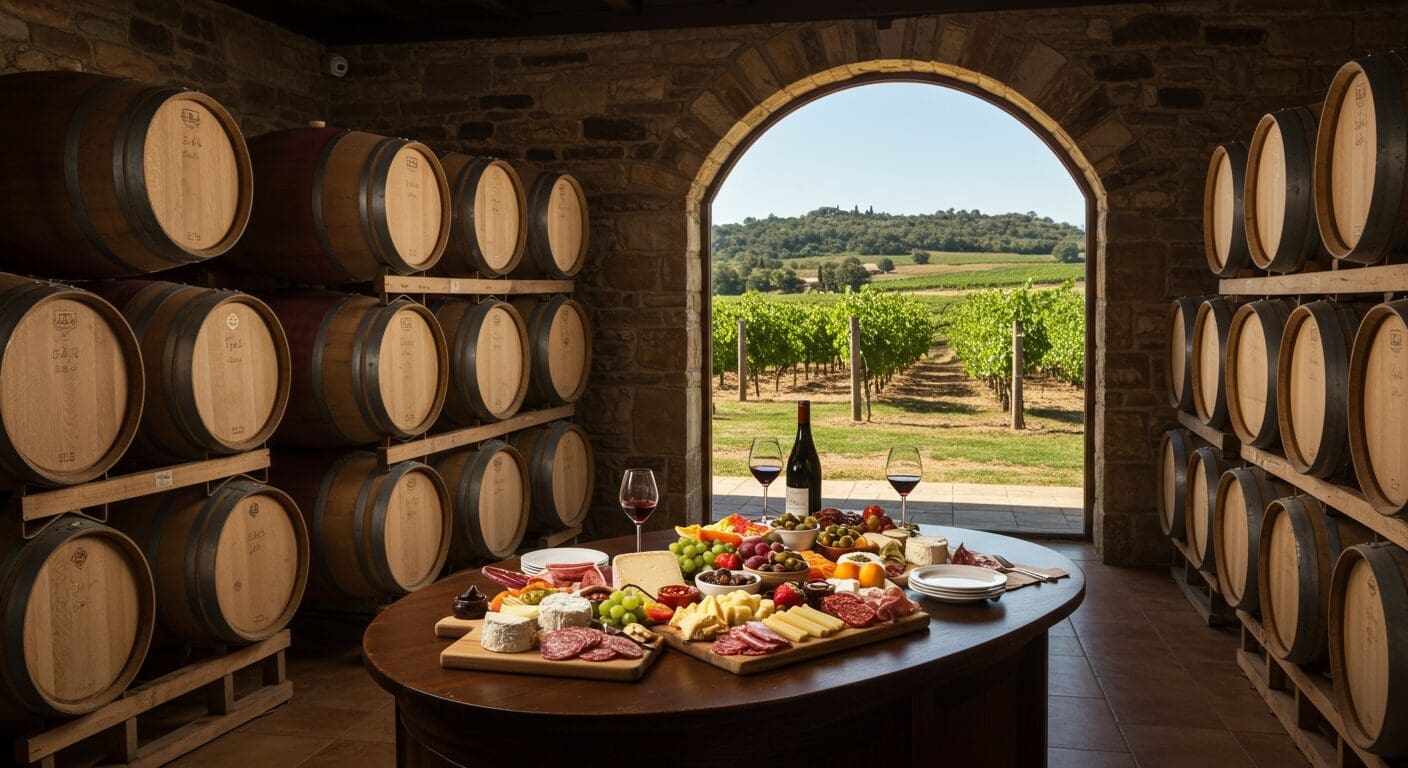
Visiting wine estates in the South of France is a different experience to, say, the formal choreography of a Bordeaux château tour. Things are generally less theatrical and more agricultural, which is entirely to their credit. In Châteauneuf-du-Pape, a handful of domaines offer private visits that go well beyond the standard tasting room experience – you walk the vineyards on the famous galets roulés, those smooth heat-retaining river stones that look like someone has tipped a lorry-load of pebbles across the landscape, and then you taste in the caves with the winemaker rather than an assistant who has been briefed to mention terroir at least six times.
In the Luberon and Côtes du Rhône, boutique organic and biodynamic producers have proliferated in the last fifteen years, many of them run by former city professionals who moved south with conviction and without particularly knowing what they were doing – and then, to everyone’s surprise including their own, began making genuinely exceptional wine. These are the estates worth finding: small production, serious intent, and usually very happy to have someone intelligent taste with them for an afternoon. In the Languedoc, properties around Pic Saint-Loup offer some of the most dramatic estate settings in the South, with the limestone peak rising behind the vines like the punchline to a very long geological joke.
Many luxury villa stays in this region can be arranged with private estate visits and cellar tastings as part of your itinerary – a conversation worth having before you arrive rather than after your third glass of the local cooperative rosé.
The Markets: Where the South Actually Shops
The morning market in a Provençal town is not a tourist attraction. It is where people buy their food for the day. This distinction matters, because it changes how you should behave in one – less photographing, more tasting, and definitely more buying. The markets of Aix-en-Provence, Arles, and L’Isle-sur-la-Sorgue are the most celebrated, and they earn the attention: stalls of violet artichokes, baskets of small black olives cured with herbs, fresh goat’s cheese wrapped in chestnut leaves, slabs of nougat, bundles of dried lavender that you will absolutely buy and then lose somewhere in your luggage.
The truffle markets of winter Provence – Carpentras, Richerenches, and Aups all run markets from November through February – operate on a different register entirely. These are professional transactions conducted in low voices, with weighing scales and serious faces and the particular atmosphere of a commodity being traded that everyone agrees is worth whatever it costs. Richerenches on a Saturday morning in January is one of the most quietly extraordinary food experiences in France. You are not required to buy anything. You are, however, required to take it seriously.
For those travelling in summer, the night markets of the Languedoc coast – particularly those running through the villages of the Hérault and Gard – combine local produce with an informality and energy that the more famous Provence markets occasionally lack. Arrive hungry. Leave later than planned.
Truffle Hunting: The Properly Organised Version
The Périgord gets most of the truffle headlines, but Provence has its own profound relationship with the black truffle – Tuber melanosporum – and the season that runs from November to March turns the northern Vaucluse and the Drôme Provençale into the quiet centre of something genuinely special. Truffle hunting here is an experience that luxury travellers can now access in properly organised, expert-led form – a morning in the oak scrubland with a trained dog (Labradors and Lagotto Romagnolos are the professionals; spaniels participate enthusiastically with more variable results), followed by the weighing, the pricing, and then the inevitable cooking.
Private truffle hunting experiences arranged through quality estate contacts or specialist guides will typically include a morning in the field, lunch prepared around what you find, and the opportunity to bring home a modest quantity of fresh truffle that will make everything you cook for the next two weeks smell like the best version of itself. This is not the kind of thing you can replicate at home with truffle oil. Do not try.
Olive Oil: Liquid Gold, Not a Metaphor
Provence produces Appellation d’Origine Contrôlée olive oils of the highest quality – the Les Baux-de-Provence and Vallée des Baux AOP designations protect oils made from specific cultivars including the nutty, delicate Aglandau and the fruitier Grossane. The difference between supermarket olive oil and a single-estate Provençal oil tasted fresh at the mill is roughly equivalent to the difference between instant coffee and espresso from a very good machine. This is not exaggeration.
Moulin visits – olive oil mills – are at their most interesting during the pressing season from November to January, when you can watch the cold extraction process and taste oil that is barely days old: vivid green-gold, peppery, alive. The Alpilles region around Les Baux and Saint-Rémy-de-Provence has a concentration of quality producers that makes it possible to spend a half day moving between mills with genuine purpose. Outside pressing season, the better moulin operations still offer tastings and will talk knowledgeably about harvest dates, cultivar profiles, and acidity levels – information that will either make you a more discerning cook or a more irritating dinner party guest, depending on your disposition.
Cooking Classes and Culinary Experiences
The cooking class market in the South of France ranges from the genuinely illuminating to the very pretty and not especially educational – a morning in a farmhouse kitchen photographing someone else making tapenade is not the same as learning to cook. The distinction matters if you want to leave with skills rather than content.
The best private cooking experiences in the region are taught by chefs or producers who actually have something to transmit: a morning market visit in Arles or Aix followed by a serious three-hour session working through a Provençal menu in a properly equipped kitchen; a day with a Languedoc winemaker learning to pair the local appellations with the regional dishes that evolved alongside them; a private lesson in making real bouillabaisse, from the market negotiation to the rouille, with a Marseille chef who has opinions. These experiences are bookable privately through the better villa management companies and concierge networks, and they consistently produce the most memorable meals of any trip – largely because you made them.
For a broader context on how to structure your time in the region, the South of France Travel Guide covers everything from the best time to visit to getting around the various sub-regions with some intelligence.
The Best Food Experiences Money Can Buy
If you have arrived at this section, you are not here to discuss the merits of a picnic from the local Carrefour. The South of France offers a range of exceptional food experiences at the upper end of what is possible – and unlike some luxury food markets around the world, what you are paying for here is consistently backed by substance.
A private dinner prepared by a Michelin-starred chef in your villa is available in most of the major luxury markets – Côte d’Azur, Luberon, Saint-Tropez – and represents one of those rare occasions when the experience genuinely exceeds what a restaurant can offer. The combination of a great kitchen, your own table, and a menu designed entirely around your preferences and the day’s market removes every variable except the cooking itself. Which, at this level, is very good indeed.
A chartered yacht lunch along the Calanques between Marseille and Cassis – those vertiginous white limestone inlets dropping into water of an improbable blue – with a private chef and a case of local Cassis white is an experience that earns the word exceptional. A private tour of the Camargue salt flats at Aigues-Mortes, followed by lunch featuring Camargue bull, Camargue rice, and the fleur de sel harvested literally in front of you, is the kind of menu that tells a complete story about a place in a single meal. The four-hands dinner at a top Côte d’Azur property, the sunrise truffle breakfast in the Vaucluse, the long table set in a vineyard at golden hour – these are the moments that the South of France delivers with an almost unfair consistency.
The food here is not a backdrop. It is the main event. The landscape, the light, the architecture – these are supporting cast. This has always been a region that understood its own kitchen, and travelling through it with that understanding changes everything about the experience.
To make the most of this extraordinary culinary landscape, the right base matters considerably. Browse our collection of luxury villas in South of France – from farmhouses in the Luberon with kitchen gardens and private chefs to Côte d’Azur properties minutes from the finest fish markets on the Mediterranean coast. The food is half the reason to come. The villa is where you recover from it.
What is the best time of year to visit the South of France for food and wine experiences?
Spring and autumn offer the most varied and interesting food experiences. Spring brings artichokes, asparagus, and fresh goat’s cheese, along with the start of the rosé season. Autumn is the most rewarding for serious food and wine travellers – the grape harvest runs from late August through October depending on the appellation, olive pressing begins in November, and the truffle season opens from late November through February. Summer is excellent for markets and seafood but crowds and heat make it less suited to serious cellar visits and cooking classes. Winter in Provence, particularly January and February, is arguably the best time for truffle hunters and those interested in the quieter, more authentic side of the region’s food culture.
Which South of France wine regions are worth visiting beyond the well-known Châteauneuf-du-Pape?
Several. The Languedoc appellations of Pic Saint-Loup, Faugères, Saint-Chinian, and La Clape are producing serious wines and are far less visited than the Rhône Valley estates, which means better access to winemakers and more time in the cellar. Bandol, near Toulon, makes some of the South’s most age-worthy reds from Mourvèdre and is worth a dedicated half-day. Roussillon – the area around Perpignan and the Pyrenean foothills – is producing exceptional fortified wines (Banyuls, Maury) and increasingly impressive dry reds and whites from old-vine Grenache and Carignan. The Côtes de Provence rosé estates around Saint-Tropez and Les Arcs-sur-Argens are the most accessible for villa-based travellers and many offer private tastings by appointment.
Can I arrange a private chef or market-to-table cooking experience as part of a luxury villa stay in the South of France?
Yes, and this is one of the most worthwhile additions to any luxury villa stay in the region. Most high-end villa management companies and specialist concierge services can arrange private chefs on either a daily or single-event basis – including chefs with Michelin experience who will work within your villa kitchen. Market-to-table experiences typically involve an early morning visit to a local market with your chef, selecting the day’s produce together, followed by a private cooking session and lunch or dinner at the villa. These need to be arranged in advance, ideally before arrival, to secure the best chefs particularly in peak summer months. Excellence Luxury Villas can advise on the best options depending on your chosen villa location.