Turkey Food & Wine Guide: Local Cuisine, Markets & Wine Estates
Just before eight in the morning, in any Turkish town worth its salt – and Turkey is very much worth its salt – the smell of simit hits you before the baker comes into view. Sesame-crusted, still warm, carried in improbable towers on a tray balanced overhead with casual mastery, it is the smell of a country that has been feeding people extraordinarily well for several thousand years and sees no reason to stop. This is the entry point into understanding Turkey through its food: not through a tasting menu or a Michelin announcement, but through the daily, unhurried ritual of eating things that have been made the same way, by the same families, in the same markets, since before most European cuisines had worked out what to do with a vegetable.
This Turkey food and wine guide covers everything a serious, curious, luxury traveller needs to know – the regional kitchens, the wine estates, the truffle markets, the olive groves, the cooking classes that actually teach you something, and the food experiences that justify the flight entirely. Consider it a companion to our broader Turkey Travel Guide, which covers the full destination in depth.
A Country of Regional Kitchens, Not a Single Cuisine
The first mistake most visitors make is thinking of Turkish food as a single, unified thing. Kebabs and baklava, they say, and leave it there. Turkey is a vast country – geographically and culturally – and its food reflects that with the kind of regional variation that would keep a devoted eater busy for several lifetimes. The Aegean coast cooks with olive oil and wild herbs in a way that feels almost Greek, except that it predates the border. The southeast, around Gaziantep and Şanlıurfa, produces food of such complexity and depth that the city of Gaziantep became only the second city in Turkey to receive UNESCO Creative City of Gastronomy status – and it earned every syllable of it.
In the Black Sea region, corn bread, anchovies, and a ferocious sauce made from butter and hazelnuts dominate. Central Anatolia is the land of slow-cooked lamb, tarhana soup – made from fermented grain and yoghurt and dried in the sun like something prehistoric and delicious – and hand-rolled pasta dishes that predate anything Italy might claim. Istanbul, meanwhile, is the great mixing bowl: not always where you find the most authentic cooking, but reliably where you find the most interesting collision of influences.
For the luxury traveller with genuine appetite, the goal is not to eat Turkish food but to eat the right Turkish food in the right place. These are meaningfully different things.
Signature Dishes Worth Organising Your Itinerary Around
Some dishes simply must be eaten where they were made. İskender kebab in Bursa – thin slices of doner layered over torn pide bread, drenched in tomato sauce and browned butter, finished with yoghurt – is not the same dish in Istanbul. It is a pale facsimile. The same logic applies to Adana kebab in Adana, where the ratio of fat to hand-minced meat, the type of charcoal, and the frankly alarming level of heat are local knowledge not easily exported.
Beyond the kebab category – which is far more varied and serious than most Western diners appreciate – there are dishes that reward real attention. Meze culture is an experience in itself: slow plates of ezme (tomato and walnut paste with heat), muhammara, börek in its many regional variants, stuffed vine leaves braised in olive oil and lemon, slow-cooked white beans with tomato, and çiğ köfte, which in its traditional form involves raw lamb that most modern health authorities prefer you didn’t encounter. Then there is lahmacun, the flatbread scattered with spiced minced meat and herbs that Turks eat folded around pickles and parsley – and that anyone who orders a knife and fork with it will never quite be forgiven for.
For dessert, look beyond baklava. Kazandibi – a caramelised milk pudding with a slightly scorched base that sounds alarming and tastes transcendent – is the dish serious pudding eaters come home talking about. As is künefe: shredded wheat pastry filled with stretchy white cheese, soaked in syrup, and served hot with clotted cream. It is not subtle. It is not trying to be.
Turkish Wine: Older Than You Think, Better Than You’ve Been Told
Turkey has been making wine for approximately eight thousand years. It has spent much of the modern era operating below the radar of the international wine world, which is largely the wine world’s loss. What has emerged in the last two decades is a generation of producers working with indigenous grape varieties – Öküzgözü, Boğazkere, Narince, Emir – that don’t appear in any Western wine education and produce wines of genuine, individual character.
The Thrace region, in European Turkey near the Greek border, produces structured reds and is where many of the country’s most export-ambitious estates are based. Cappadocia, in central Anatolia, is volcanic wine country – the mineral character of wines made from Emir grapes grown in tuff soil is unlike almost anything else you will drink. The Aegean and Izmir regions produce elegant whites from Sultaniye grapes and increasingly sophisticated rosés that work beautifully with the local olive-oil-rich food.
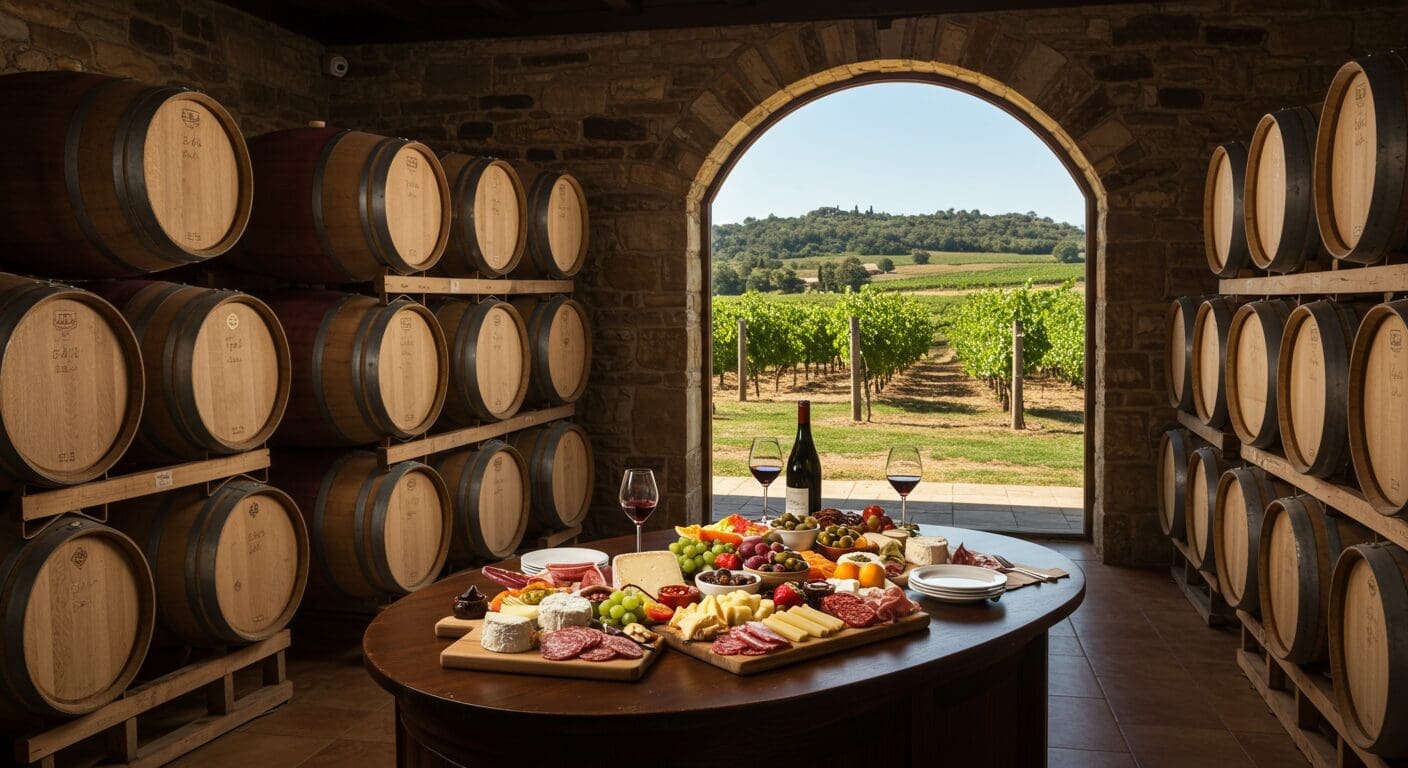
Kavaklidere, one of the oldest producers, offers extensive tastings and estate visits. Doluca, based in Thrace, is another historic name worth knowing. For smaller, more boutique experiences, estates in the Bozcaada (Tenedos) region – a small Aegean island with a winemaking history stretching back to antiquity – offer a combination of wine, seafood, and scenery that constitutes one of the more civilised afternoons available on the planet. Urla Winery, near Izmir, combines serious biodynamic viticulture with beautifully designed hospitality facilities and a tasting experience that converts even dedicated sceptics. Do not arrive in a hurry.
Food Markets: Where the Country’s Appetite Is On Full Display
The Grand Bazaar in Istanbul is not, if you are honest about it, primarily a food market – though it has its pleasures, mostly in the spice corridors. The Egyptian Bazaar (Mısır Çarşısı), also known as the Spice Bazaar, is the real destination for serious buyers: great mounds of dried chillies, bins of saffron sold at prices that make you briefly anxious, stacked discs of dried apricots, candied walnuts in syrup, and herb blends assembled with the kind of institutional knowledge that no algorithm has yet replaced.
Beyond Istanbul, the weekly neighbourhood pazars are where Turkish food culture is most honestly expressed. Every district has its day; every pazar has its regulars. Vendors who have sold the same table olives from the same family farm for twenty years are not performing authenticity – they are simply operating a business that happens to have outlasted several governments. The produce quality at a well-regarded pazar in Izmir, Bodrum, or Antalya is exceptional: heirloom tomatoes in eight varieties, courgettes with their flowers still attached, bundles of herbs whose names you will look up later, and cheese sold from wheels by people who will let you taste everything before committing to a gram.
For the luxury traveller, a private pazar tour with a knowledgeable local guide – followed by a cooking session using what you’ve bought – is one of the most satisfying ways to spend a morning in Turkey. The alternative is buying a refrigerator magnet, but we trust you’re past that.
Olive Oil: Liquid History From the Aegean Groves
Turkey is among the world’s largest olive oil producers, and the Aegean coast – particularly around Ayvalık, Çukurova, and the broader Izmir region – produces oils of extraordinary quality that rarely make it to export markets in meaningful volumes. This is their loss and your opportunity. Estate-produced, early-harvest, cold-pressed oils from centuries-old trees have a grassiness, a peppery finish, and a complexity that supermarket shelves simply cannot accommodate.
Visiting an olive estate during the October-to-November harvest is a genuinely extraordinary experience – the combination of the sound of olives falling into nets, the smell of pressed fruit, and the ritual first tasting on bread that has been torn rather than cut sits somewhere between agriculture and ceremony. Several estates in the Ayvalık region, long recognised for producing some of the country’s finest oil, offer harvest experiences and cellar-door tastings. It is the kind of thing that changes how you cook when you get home. Bring a second suitcase specifically for bottles. You will not regret it.
Truffle Hunting and Wild Food Foraging
The Turkish truffle – primarily the summer black truffle found in the forests of the Aegean interior and parts of central Anatolia – is not the Périgord, but it doesn’t need to be. At its best, Turkish truffle has a distinct earthiness and a fragrance that local chefs have been cooking with for far longer than the truffle hunting tourism industry has existed. Around Balıkesir and the inland Aegean, guided truffle hunts using trained dogs are available through specialist operators, and the experience of watching a dog locate something underground that you cannot smell even when it is in your hand is a reliable reminder of human limitation.
Beyond truffles, Turkey’s wild food culture is rich: foraged greens collected from clifftops and hillsides, dried wild mushrooms from the Black Sea forests, purslane picked from the edges of olive groves and dressed with yoghurt and garlic. A good private chef at a luxury villa – one who knows the local market and the local seasons – will navigate all of this without any assistance from you, which is precisely how it should work.
Cooking Classes Worth Taking Seriously
Turkey’s cooking class market ranges from the deeply excellent to the gently cynical – a spectrum familiar to anyone who has ever attended a “traditional cooking experience” in a tourist zone and emerged having made hummus from a packet. The experiences worth seeking are those run by local women, often out of private homes, where the curriculum is not designed around what foreigners expect to make but around what the family actually eats.
In Istanbul, a handful of serious culinary operations offer market tours combined with hands-on classes focused on meze preparation, yufka (thin pastry) making, and slow-cooked dishes that demand technique rather than simply ingredients. In Gaziantep, where the food culture is a civic pride project as much as a culinary one, cooking programmes rooted in the city’s baklava-making traditions, copper mortar spice blending, and southeastern Turkish lamb cookery are available and frequently life-altering in a way that is difficult to explain to people who weren’t there.
The best classes end with a long lunch at the table you cooked on. Any class that ends with a branded apron and a printed recipe card should be approached with appropriate caution.
The Best Food Experiences Money Can Buy in Turkey
There is a category of food experience in Turkey that sits above simply eating well in a restaurant – though Turkey does that too, with considerable seriousness. These are the experiences that require planning, local knowledge, and frequently a private vehicle and a cook who knows more than you do.
A private meze lunch served on the water in the Turquoise Coast, ingredients sourced that morning from a local pazar and prepared by a chef aboard a gulet or at a coastal villa, is a benchmark experience that resists improvement. A dinner in Gaziantep that moves through the full architecture of the southeastern kitchen – starting with small plates of çiğ köfte and muhammara, moving through a spiced lamb and eggplant tray bake, finishing with kadayıf and kaymak – eaten in a restored Ottoman courtyard building, is the kind of meal people describe in detail ten years later.
A private breakfast in Cappadocia – spread across a low table at a cave house, with local cheese, honey from hives kept in volcanic rock, sucuk (spiced dry sausage), and fresh-baked bread, watched over by hot air balloons floating overhead in the early light – is, by reasonable consensus, one of the finest ways to begin a day available anywhere on earth. We include this not because it is the most sophisticated experience on this list, but because it is the most complete: sensory, cultural, beautiful, and very good to eat.
Plan Your Table Around a Villa Base
The private villa is, in this context, not simply accommodation – it is the platform from which the best food experiences in Turkey become properly accessible. A villa kitchen staffed by a private chef who shops at the local pazar, who knows which olive oil producer’s harvest has come in, who will prepare a full meze spread at noon and a slow-cooked leg of lamb by evening, transforms what this guide describes from aspiration to actual experience. Markets, wine tastings, cooking classes, truffle hunts – all of these are better arranged from a private base where your schedule is your own and your table is already set.
Begin planning with our collection of luxury villas in Turkey – across the Aegean coast, the Turquoise Coast, Cappadocia, and beyond – each chosen with the kind of scrutiny that this food culture deserves from its accommodation.