Romantic Umbria: The Ultimate Couples & Honeymoon Guide
Romantic Umbria: The Ultimate Couples & Honeymoon Guide
What does Italy look like before the crowds arrive – before the selfie sticks, the queue management systems, the restaurants with laminated menus in seven languages? It looks, rather a lot, like Umbria. Landlocked, quietly confident, and entirely unbothered by its own beauty, this small region at Italy’s geographical heart has been quietly outperforming its more famous neighbours for decades. Tuscany gets the press. Umbria gets the romance. And if you are trying to find the right place to mark something that matters – a honeymoon, an anniversary, a proposal, or simply a journey taken together because you finally can – there is a strong argument that Umbria does it better than anywhere else in Europe. This guide will explain why, and precisely where to go when you get there.
Why Umbria Works So Well for Couples
There is a quality of light in Umbria that painters have been chasing for centuries. It falls differently here – softer, more golden, almost conspiratorial in the way it drapes itself over hill towns and olive groves in the late afternoon. It is the kind of light that makes everyone look better, which is, when you think about it, a very good quality in a honeymoon destination.
But light alone does not make a romantic destination. What Umbria offers couples is something rarer: genuine intimacy at scale. Unlike the grand circuit of Tuscany or the relentless theatre of Rome, Umbria asks nothing of you. There is no single unmissable monument demanding your itinerary. Instead there are medieval streets to get pleasantly lost in, wine cellars to descend into without a reservation, hilltop terraces where the view goes on long enough that you forget what you were arguing about. The pace here is slower by design, not accident. Umbrians have always understood that life lived well is not a performance.
For couples specifically, the infrastructure is perfectly calibrated. Private villas are tucked into countryside that feels genuinely remote while remaining within twenty minutes of a town serving excellent food. Restaurants here take the evening meal seriously – as an event, a ritual, a reason to dress up and stay late. And the local Sagrantino wine, grown nowhere else on earth, has a brooding complexity that rewards slow conversation. Consider it mood lighting in a glass.
The Most Romantic Settings in Umbria
Orvieto sits on a plug of volcanic tufa above the surrounding plain as if placed there by someone with a very good eye for drama. Arriving by the funicular railway as the evening light hits the cathedral facade – one of the most elaborately beautiful in Italy – is the kind of moment that requires no staging. It simply arrives. The town itself is compact enough to walk in its entirety, with narrow streets that open without warning into small piazzas where locals are doing what locals do, which is mostly sitting down with something cold and watching tourists try to pronounce things.
Spoleto is the sophisticated alternative – a city that hosts one of Italy’s great arts festivals each summer and carries itself accordingly. The Ponte delle Torri, a medieval aqueduct-bridge spanning a deep wooded gorge, is one of those places that makes you stop mid-sentence. Walking across it at dusk, with the valley below going dark and swallows threading through the arches, is not something you forget easily.
The Piano Grande – the great high plain beneath the Sibillini mountains – deserves special mention. In late spring it becomes a sea of wildflowers in colours that seem slightly implausible. In winter it fills with snow and silence. In every season it has that quality that the best landscapes share: the feeling that you have arrived somewhere that exists on its own terms, regardless of whether you are there or not.
And then there is Assisi. Yes, it is pilgrimage country. Yes, the town fills with groups following guides holding numbered paddles. But come in the early morning or the evening when the crowds have descended to their coaches, and you will find a rose-pink stone town draped over a hillside with views across the valley that feel quietly sacred even to the entirely secular. Particularly to the entirely secular, perhaps.
Romantic Experiences Worth Planning Around
Wine tasting in Umbria is not the reverential, slightly intimidating business it can be in better-publicised wine regions. Turn up at a small Sagrantino producer in the hills around Montefalco and you are as likely to be poured a glass in a working cellar, with the producer’s dog asleep in the corner, as you are to experience anything resembling ceremony. This is, depending on your perspective, either charmingly rustic or exactly what wine tasting should feel like. Montefalco itself – all medieval walls and views across olive-silvered hills – is one of those towns that exists to make couples feel they have discovered something. The feeling is not entirely wrong.
Cooking classes run throughout the region, typically in agriturismos or private kitchens, and they follow a format that works extremely well for couples: you are given tasks, given wine, shown the right way to fold pasta, told you are doing it wrong, shown again, and eventually sit down to eat everything you have made together. The learning curve is gentle. The meal at the end is not. Sign up for one that focuses on truffles if you are visiting in the right season – the black truffle around Norcia and Spoleto is one of Umbria’s great gifts to the table, and watching a local shave it over fresh pasta is a small masterclass in restraint.
Truffle hunting itself is an experience worth seeking out. Early morning, dense woodland, an extraordinarily focused dog, and a local guide who communicates primarily through gestures and satisfied noises when the truffle appears – it is oddly compelling, and the breakfast or lunch that follows, built around whatever was found, has the particular pleasure of food that was recently underground.
Thermal spa experiences are found throughout the region. The hot springs near Città della Pieve and further south towards the Lazio border offer thermal bathing in settings that range from the purposefully luxurious to the agreeably informal. For couples seeking dedicated spa treatments combined with accommodation, several of Umbria’s larger estate hotels offer full wellness programmes. Booking a treatment package together and then doing absolutely nothing for the rest of the afternoon is, it turns out, an extremely good way to spend a day.
Hot air ballooning over the Tiber Valley at dawn is not subtle, but it earns its place here. The experience of floating above a landscape of olive groves, medieval towers, and morning mist while holding a glass of something celebratory is, for the right couple, exactly as good as it sounds.
Where to Eat for a Special Dinner
Umbrian cuisine is honest in the way that is currently fashionable elsewhere but has simply always been true here. The flavours are direct – truffle, pork, legumes, wild herbs, serious olive oil – and the best restaurants know not to complicate them unnecessarily. A dinner in Umbria done properly should feel like an event that begins around eight and ends somewhere around midnight, with nobody having checked their phone since the bread arrived.
The area around Spoleto and Montefalco rewards careful restaurant hunting. Look for places that write their menus by hand or change them weekly – a reliable signal that someone is cooking with what the season and the local market are offering rather than what is cheapest to freight in. Ask your villa management or host for current recommendations; in a region where restaurants change ownership and quality with Italian unpredictability, local knowledge is worth more than any review written more than a year ago.
Orvieto has a strong restaurant culture built partly around its famous white wine, Orvieto Classico, which pairs with almost everything the local kitchen produces. A long dinner in one of the town’s wine cellars – many of which occupy spaces carved into the volcanic rock that the city sits on – has a theatrical quality that requires no effort on your part. The setting does all the work.
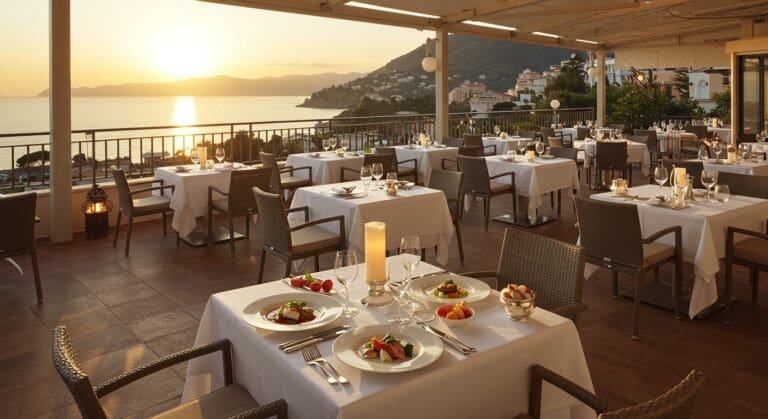
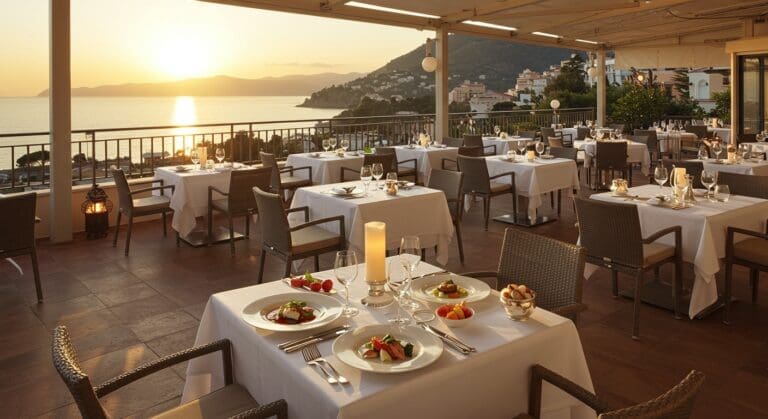
For the most romantic option of all: arrange a private dinner at your villa. A good villa management service can connect you with a local chef who will arrive, produce a menu calibrated to the season and your preferences, cook it entirely, and leave. You remain. The candles remain. The Sagrantino remains. This is, it should be said, an entirely reasonable way to spend an anniversary.
The Most Romantic Areas to Stay
The hills between Spoleto and Montefalco constitute what might be the region’s most quietly perfect patch of countryside. The landscape is varied – olives, vineyards, small farms, the occasional fortified hamlet – and the light in the evening across this particular valley has a quality that is genuinely difficult to describe without reaching for words that this guide has been expressly told not to use. Suffice it to say that it photographs well, and is even better in person.
The area around Todi is popular with couples for good reason. The town itself – a beautifully preserved medieval hill town balanced on a ridge with views in every direction – was once called the most liveable town in the world by an American university study. Umbrians received this information with the polite bemusement of people who already knew. The surrounding countryside offers some of the finest private villa estates in the region, with the privacy and space that honeymoons genuinely require.
Further north, the shores of Lake Trasimeno offer something different: a softer, more horizontal landscape, the largest lake in central Italy, and small islands that can be reached by ferry in minutes. Renting a private boat for the day and crossing to Isola Maggiore – quiet, car-free, home to a handful of permanent residents and a lace-making tradition – is the kind of low-key adventure that the best couples’ holidays are built around.
For the full wildness experience, the Valnerina – the valley carved by the Nera river through the eastern mountains – offers a landscape that feels genuinely untouched. Fewer visitors reach here, partly because the roads require patience. The reward is countryside of considerable power: steep wooded hillsides, medieval villages clinging to rock faces, waterfalls tucked into gorges. The Cascata delle Marmore, one of the tallest waterfalls in Europe, is nearby – controlled, counterintuitively, by a hydroelectric plant, which releases the flow at scheduled times. A rainbow forms in the spray almost every afternoon. Nature, with a timetable.
Proposal-Worthy Spots in Umbria
A proposal needs a backdrop that does the emotional lifting without overshadowing the moment itself. Too grand and the setting becomes the story. Too ordinary and you spend years wishing you had chosen better. Umbria offers that middle ground – places of genuine beauty and resonance that somehow stay out of the way.
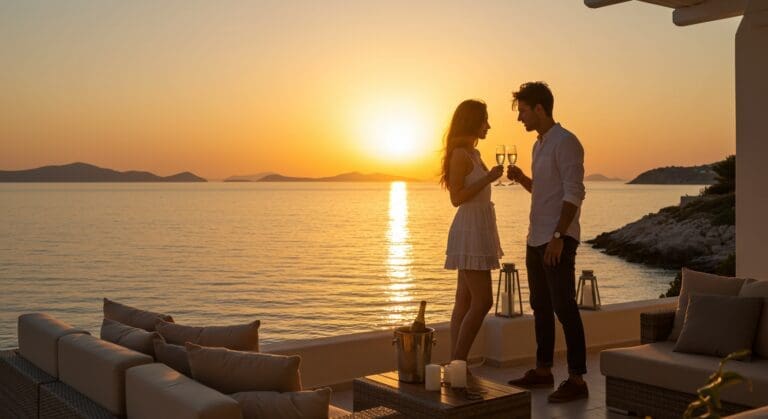
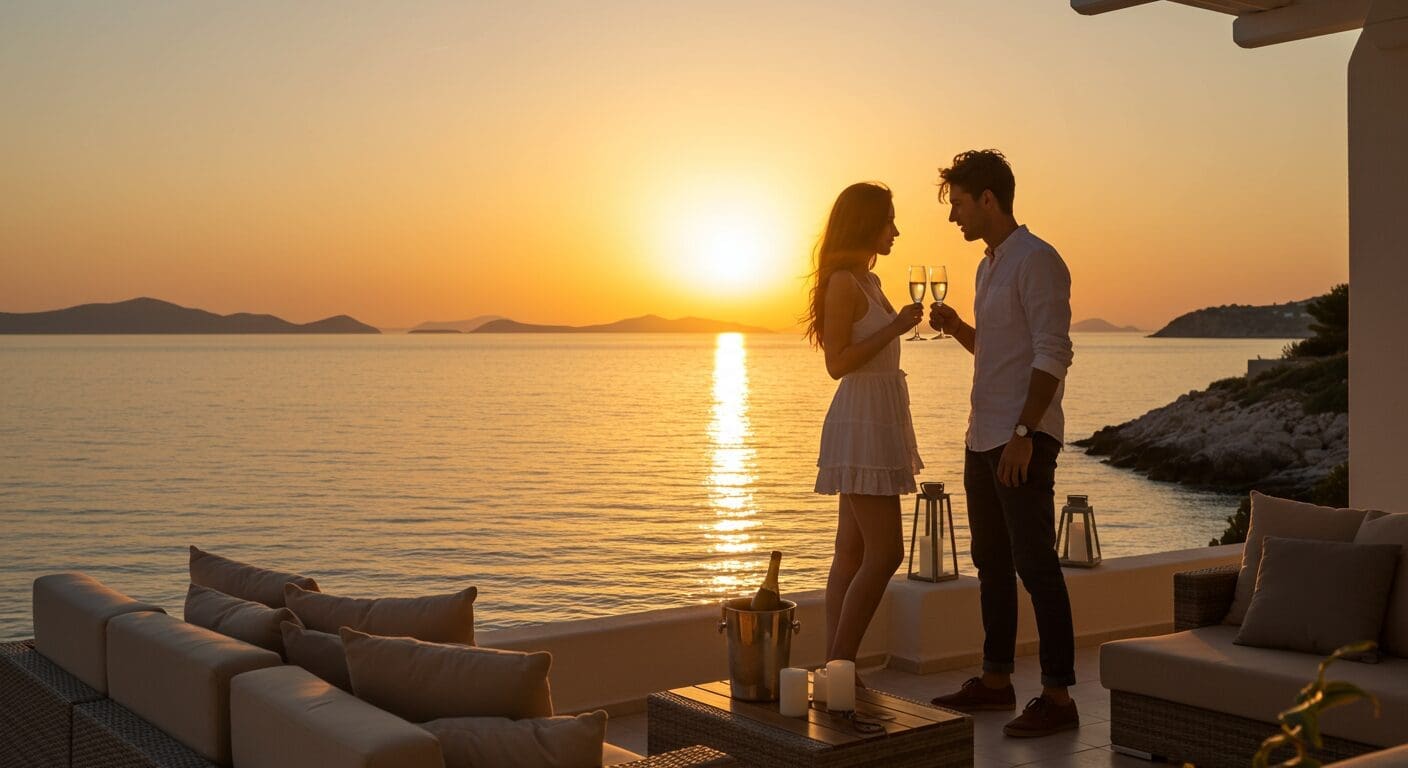
The terrace of any hill town at sunset – Montefalco’s main piazza, the walls of Todi, the belvedere above Spoleto – provides the combination of elevation, light, and relative quiet that proposals tend to require. Choose a weekday in spring or autumn and you will have space and, if you have timed the sunset correctly, something genuinely extraordinary to look at while the relevant words are being found.
Lago di Piediluco, a smaller, less visited lake in the Valnerina, has a stillness and a quality of reflection that is almost operatic in its beauty. A boat, an early evening, and the patience to wait for the light to drop: this is, in the right hands, a proposal setting of considerable power.
The Piano Grande in late May, when the wildflowers are at their height and the surrounding peaks still carry a trace of snow, is the kind of place that removes the need for many words. This is probably helpful in a proposal situation.
Honeymoon Considerations
The best season for a honeymoon in Umbria is the shoulder season – late April through June, and September through October. July and August are warm to the point of ambition, and while the region handles summer better than coastal Italy (the altitude helps, the crowds are smaller), a honeymoon in forty degrees heat with limited shade requires a certain commitment to the bit.
Spring brings the wildflowers, the asparagus, the first Umbrian olive oil tastings of the year, and a green so vivid it seems colour-corrected. Autumn brings truffles, the grape harvest, and the particular quality of October light that artists have been cataloguing here for centuries. Both are, in their different ways, ideal.
For the honeymoon itself, a private villa is not an indulgence – it is a practical decision. Hotels, however good, ask something of you. They require you to be dressed at breakfast, to share a pool, to manage your privacy in corridors. A villa gives you the whole landscape as backdrop, mornings at whatever hour you choose, and evenings that belong entirely to you. Several villas in Umbria come with private pools, outdoor dining terraces, and kitchen facilities for those days when leaving feels like too much of a project. Most also come with access to villa management services that can arrange everything described in this guide without requiring you to send a single email.
For more detail on the region’s geography, history, and practical logistics, the full Umbria Travel Guide covers everything you need to plan your trip intelligently.
Anniversary Ideas That Go Beyond Dinner
Anniversaries benefit from structure – from a day or an experience that has been thought about rather than improvised. Umbria offers the raw material for several genuinely memorable options.
A private truffle hunting morning followed by a chef-prepared lunch at the villa. A morning at a thermal spa followed by an afternoon exploring a hill town you have been meaning to reach for years. A private wine tasting with a producer in Montefalco, arranged in advance, with a case of the wine you liked most shipped home as a lasting marker of the occasion. A sunrise hot air balloon flight, followed by the longest, laziest breakfast of the year.
Or simply this: two days at a private villa with nothing booked, a well-stocked cellar, a view that improves with every hour of the day, and the mutual agreement to go nowhere until you feel like it. Umbria is one of the few places in the world where that is a genuinely excellent plan rather than a failure of imagination.
Your Villa: The Best Base for Romance in Umbria
Everything described in this guide – the truffle mornings, the candlelit dinners, the valley views, the slow wine-coloured evenings – becomes more itself when you have the right place to return to. A luxury private villa in Umbria is the ultimate romantic base: private, unhurried, entirely yours, surrounded by a landscape that has been perfecting the art of the perfect evening for a thousand years. Excellence Luxury Villas offers a carefully selected portfolio of properties across the region, chosen for exactly the qualities that make romance possible – privacy, beauty, location, and the kind of service that arranges things without you having to ask twice. The rest, as they say in Umbria, is at your own pace.
When is the best time of year for a romantic trip or honeymoon in Umbria?
Late April through June and September through October are the ideal windows for couples and honeymooners. Spring brings wildflowers, fresh produce and excellent light, while autumn delivers truffle season, the grape harvest and warm days without the heat of summer. Both seasons offer smaller crowds and the kind of unhurried atmosphere that romantic travel depends on. July and August are perfectly manageable but warmer and busier – if you visit in summer, a villa with a private pool is less a luxury and more a necessity.
What makes Umbria better than Tuscany for a couples’ holiday?
Umbria offers much of what draws couples to Tuscany – medieval hill towns, excellent wine, serious food, beautiful countryside – without the volume of visitors that Tuscany now attracts. The pace is slower, the landscape less extensively documented, and the locals notably unbothered by tourism in a way that translates into more genuine experiences. Sagrantino wine, produced only in Umbria, is one of Italy’s great red wines and largely unknown outside the region. The truffle culture around Norcia and Spoleto rivals anything in France or Piedmont. For couples seeking privacy, authenticity and space to breathe, Umbria consistently outperforms its more famous neighbour.
Is a private villa better than a hotel for a honeymoon in Umbria?
For most honeymooners, yes. A private villa eliminates the compromises that even excellent hotels require – shared spaces, fixed breakfast times, neighbours on the other side of a wall. In Umbria, luxury private villas typically come with their own pool, outdoor terrace or dining space, fully equipped kitchen, and access to villa management services that can arrange private chefs, wine tastings, truffle hunts, spa appointments and restaurant reservations on your behalf. You gain complete privacy within a landscape that is itself extraordinarily beautiful, with the freedom to structure each day around what you actually want rather than what the hotel has scheduled.