Best Restaurants in Wales: Fine Dining, Local Gems & Where to Eat
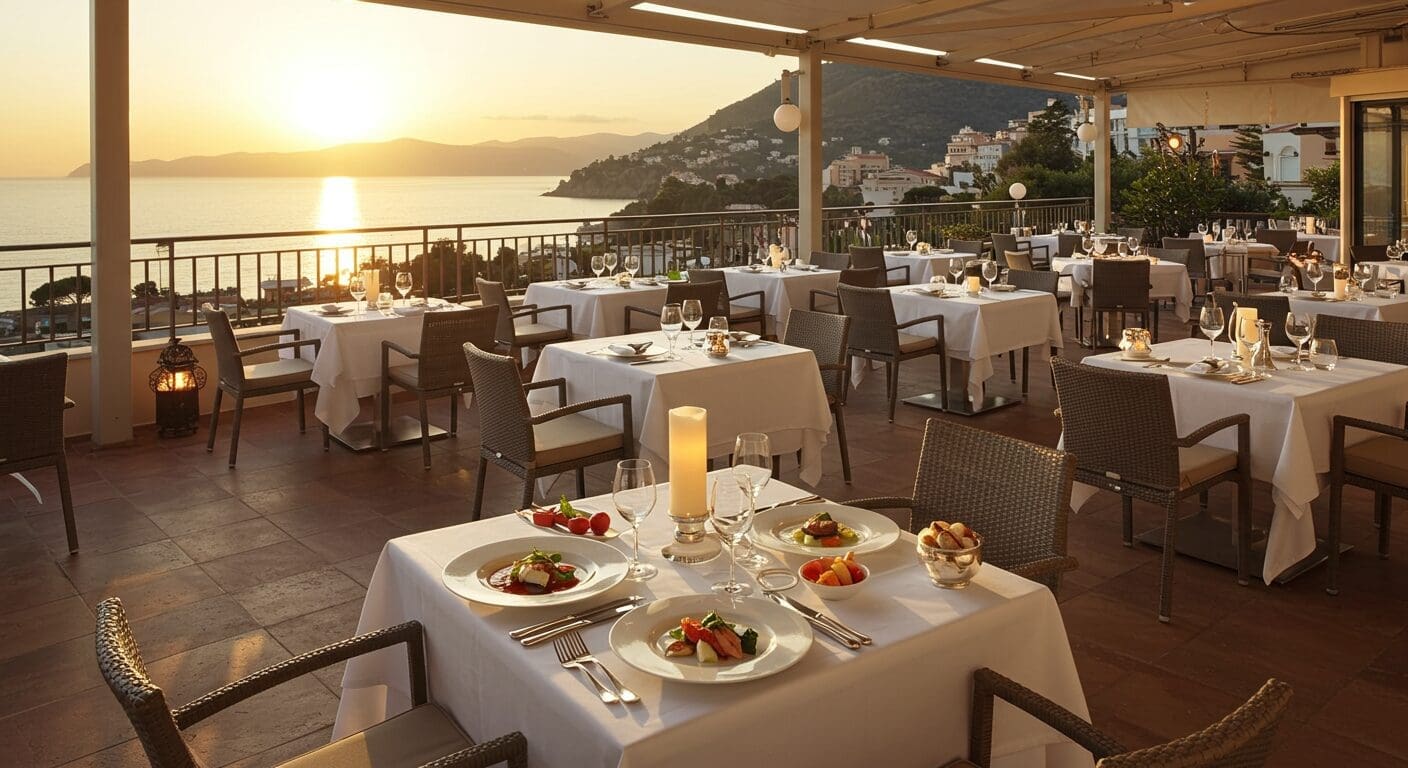
You are sitting at a table with a view you haven’t quite recovered from yet. There are mountains somewhere behind you, a stretch of coastline doing something dramatic in the middle distance, and in front of you, a plate that makes absolutely no apology for being extraordinary. A glass of something cold is already in your hand. The bread arrived warm. The lamb, when it comes, tastes like it was raised on this specific hillside, in this specific weather, for this specific moment – because, in a manner of speaking, it was. Wales has a habit of doing this to people. You come expecting castles and rain (you will get both), and you leave talking about the food.
The Welsh dining scene has undergone something of a quiet revolution in recent years – quiet being relative, because within the food world it has been rather loud. Michelin has taken notice. The Good Food Guide has taken notice. Discerning travellers who once treated Wales as a scenic detour between England and the ferry terminal are now booking tables months in advance and planning entire trips around them. This guide exists to help you eat exceptionally well in Wales, whether that means a two-Michelin-star odyssey in mid-Wales or a bowl of something bracingly good from a farm kitchen in Pembrokeshire.
The Fine Dining Scene: Wales Earns Its Stars
Let us begin at the top, because the top is genuinely remarkable. Ynyshir, in the Dyfi Valley near Machynlleth, is not just the best restaurant in Wales – it is one of the most singular dining experiences in Britain. Chef Gareth Ward has built something here that defies easy categorisation: a multi-course tasting menu that borrows liberally from Japanese technique, obsesses over Welsh provenance, and delivers dishes of an intensity that can leave first-timers slightly speechless. In 2024, Ynyshir became the first restaurant in Wales to be awarded two Michelin stars. This is not a small thing. It is, in fact, a very large thing, and the kind of booking you make before you’ve worked out the rest of your itinerary. The restaurant also offers rooms, which is fortunate, because you will not be in any condition to drive afterwards.
In Cardiff, the fine dining conversation shifted significantly in 2025 when Gorse in Pontcanna became the first Michelin-starred restaurant in the Welsh capital. Chef Tom Waters’ modern Welsh cooking earned not only that star but also the AA Restaurant of the Year for Wales and three AA Rosettes in the same year – an almost unseemly quantity of recognition for a single establishment, and entirely deserved. The menu is rooted in Welsh ingredients but executed with a precision and confidence that feels thoroughly contemporary. Book well ahead. This is not a walk-in situation.
Beyond Cardiff, the fine dining map rewards those willing to venture into the countryside. Head to Abergavenny and you will find The Walnut Tree, one of those rare restaurants that has been excellent for so long it has become part of the landscape. Helmed by the quietly legendary Shaun Hill, it operates as what the guides call a classy country bistro – which rather undersells it while simultaneously capturing something essential about its lack of pretension. The menu follows the market, the welcome is genuine, and the cooking has the kind of confidence that comes from decades of knowing exactly what you’re doing. Shaun Hill is not reinventing anything. He is simply cooking very, very well, which is harder than it sounds.
Hidden Gems and Country Cooking Worth the Journey
Some of the most rewarding meals in Wales happen in places your sat-nav will regard with suspicion. The Whitebrook, tucked into a fold of wooded Monmouthshire in the Wye Valley, is one such place. Chef Chris Harrod has turned this small restaurant-with-rooms into a showcase for what the surrounding landscape actually tastes like. Foraged ingredients appear throughout the menu – not as a trend statement, but because the woodland outside genuinely provides them. The Whitebrook holds a Michelin Green Star alongside its regular star, recognising a commitment to sustainability that goes well beyond the usual gestures. The food has what you might call a sense of place so acute it borders on geographical.
Then there is Paternoster Farm in Hundleton, Pembrokeshire – a name that has been appearing with increasing frequency in the Good Food Guide’s reader recommendations, and not by accident. Chef-owner Michelle Evans runs this exceptional kitchen on a working family farm, producing cooking of a warmth and directness that has readers reaching for superlatives. The produce is local in the truest sense – grown, raised or sourced with the kind of care that shows on the plate – and the atmosphere delivers what one reader called a “wash of warmth and good feeling” on arrival. It is the sort of place that feels like a discovery even when it’s been written about. Getting there is half the pleasure. Booking ahead is strongly advised.
Coastal Eating: Where the Sea Does the Seasoning
Wales has an extraordinary coastline – 870 miles of it – and the fishing and shellfish it produces deserve your full attention. The Pembrokeshire coast in particular provides brown crab, lobster, sea bass and mackerel of a quality that would embarrass certain establishments in London charging twice the price. Seek out small harbour restaurants and quayside fish shacks where the catch arrived that morning and the menu is written on a board in chalk because it changes daily. There is something to be said for eating a whole crab at a table with a sea view, with nothing but bread, butter and a properly cold glass of white wine. Simplicity, occasionally, is the whole point.
The Gower Peninsula and the coastline around Tenby and St Davids both offer solid casual dining options where the emphasis falls heavily on local seafood and unfussy cooking. Beach clubs in the continental sense are not exactly Wales’s signature – the weather, to be diplomatically honest, doesn’t always cooperate – but there are excellent gastropubs and waterfront restaurants that capture something of that relaxed coastal spirit when the sun does make an appearance. And when it does, Wales in summer is genuinely hard to beat.
Food Markets and Local Produce Worth Seeking Out
The food market culture in Wales is thriving and, for the curious traveller, enormously good fun. Cardiff’s Cardiff Market and the capital’s excellent independent food scene provide an accessible introduction, but the real pleasures tend to be found at smaller regional markets where Welsh producers sell directly. Abergavenny hosts one of the finest food festivals in Britain each September – the Abergavenny Food Festival – which transforms this quietly lovely market town into a temporary capital of gastronomy. Chefs, producers, foragers and enthusiastic amateurs descend on it annually, and if your visit coincides, you should absolutely go.
Across Wales, look for laverbread (which is neither bread nor for the faint-hearted, being a preparation of seaweed with a flavour of extraordinary intensity), Welsh lamb – particularly salt marsh lamb from the Gower and Anglesey – Caerphilly cheese, and the many excellent artisan producers who have emerged over the past decade. Welsh beef is extraordinary. Welsh cheese, beyond the familiar Caerphilly, now encompasses a range of small-batch productions that would impress at any table in Europe. Buy some to take home. You will be glad you did.
What to Drink: Welsh Wine, Whisky and the Local Pour
Wales produces wine. This surprises people more than it should. A small but growing number of Welsh vineyards are producing bottles of genuine quality, particularly whites and sparkling wines suited to the climate. The Ancre Hill estate in Monmouthshire is among the most established and worth seeking out if you spot it on a wine list. For something more immediately Welsh in character, reach for a Welsh whisky – the Penderyn distillery in the Brecon Beacons produces single malts of real character and is widely available across the country.
Welsh craft beer has had an excellent decade, with breweries across the country producing ales, IPAs and lagers of consistent quality. Tiny Rebel in Cardiff and a clutch of smaller rural producers offer beers that pair surprisingly well with the local food. And then there is water – Welsh water, which flows off mountains of considerable seriousness and arrives in your glass with a clarity that borders on the theatrical. It is, genuinely, some of the best water in Britain. This may not be the most glamorous recommendation in this guide, but it is an honest one.
Reservation Tips and Practical Advice
The serious establishments in Wales book up faster than their rural locations might suggest. Ynyshir in particular operates with booking windows that reward advance planning – think months rather than weeks if you’re set on the full experience. Gorse in Cardiff and The Walnut Tree in Abergavenny are similarly in demand, especially at weekends and during the summer season. Restaurant websites are your friend here, and most of the starred establishments manage their own booking directly.
For the hidden gems and farm kitchens – Paternoster Farm being the obvious example – call ahead. These are often small operations where a dozen covers is a full house, and turning up unannounced is the kind of thing that only works in films. The Welsh countryside rewards the organised traveller. A little planning means the difference between a meal you’ll remember for years and a very long drive to a closed door.
Tipping culture in Wales follows general UK convention – ten to fifteen percent is standard at restaurants, and genuinely appreciated. Service in the finer establishments is warm and knowledgeable without the stiffness that occasionally afflicts more self-consciously grand dining rooms. The Welsh welcome is not a marketing phrase. It is a real thing.
Eating Well in Wales: The Bigger Picture
What makes the Welsh dining scene particularly interesting to the luxury traveller is its combination of genuine culinary ambition and an absolute refusal to be flashy about it. The best restaurants here are not competing for Instagram aesthetics. They are competing – and winning – on the merits of what’s actually on the plate. That ethos extends from two-Michelin-star kitchens to farm tables in Pembrokeshire. Wales grows and raises exceptional food, and its best chefs know it. The result is a dining culture that feels rooted and purposeful in a way that is increasingly rare.
The landscape itself is, in a sense, the menu. Everything that makes Wales visually arresting – the mountains, the valleys, the long coastline, the wet green fields – is also what makes it taste the way it does. A place this beautiful, it turns out, is also uncommonly delicious. Which is perhaps the most satisfying thing you can say about anywhere.
For the full picture on exploring this remarkable country, our Wales Travel Guide covers everything from the Brecon Beacons to the Llŷn Peninsula. And if you want to make the most of Wales’s extraordinary produce in your own time and on your own terms, a luxury villa in Wales with a private chef option allows you to bring the finest local ingredients directly to your table – with those mountain views still very much included.