
Best Beaches in Balearic Islands
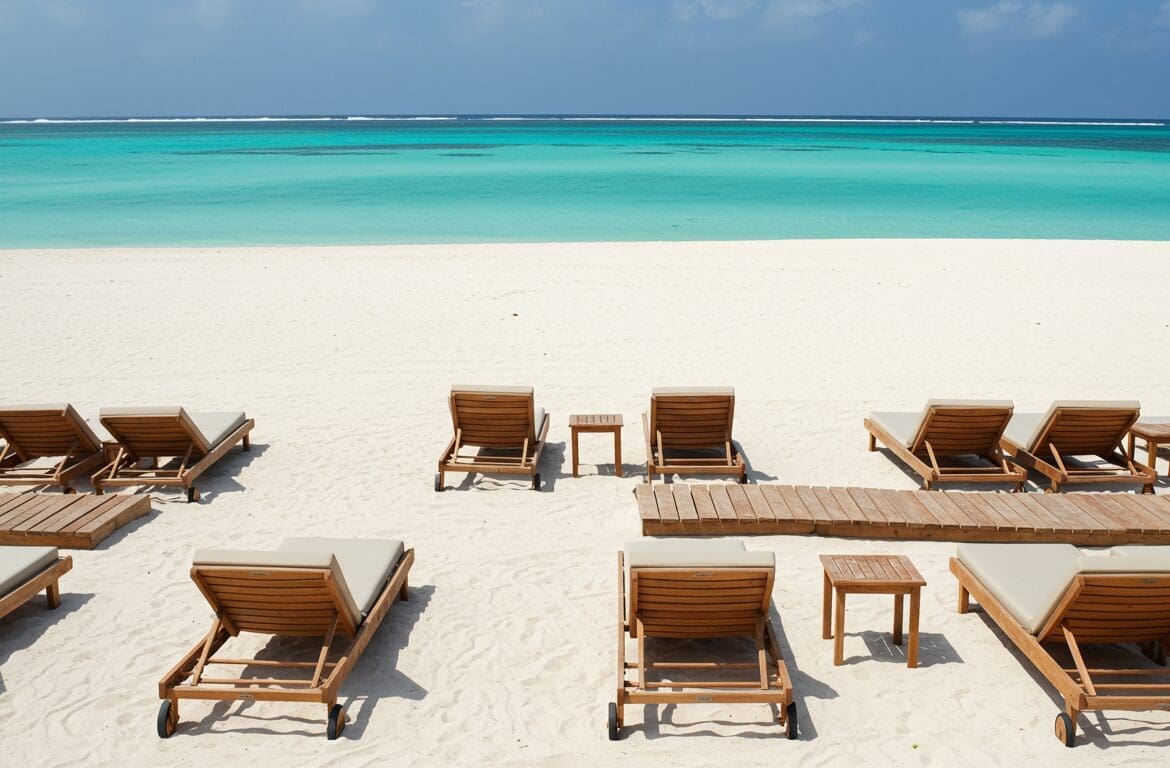
It is early morning on Formentera. The light arrives before the heat, laying itself gently across water so clear you can count the blades of posidonia seagrass ten feet below your hull. A local fisherman is already heading out. A single waiter is arranging chairs at a beach bar that will, by noon, require the social skills of a UN mediator to secure a good table. For now, though, it is just you, the light, and water the exact colour that travel photographers are routinely accused of oversaturating. They aren’t. This is what the Balearics actually look like. You will spend your first morning simply not quite believing it.
The best beaches in the Balearic Islands represent one of Europe’s great geographical windfalls – four distinct islands, each with its own personality, sharing the same extraordinary geological luck. Mallorca brings scale and drama. Ibiza brings energy and an entirely self-conscious sense of its own mythology. Menorca offers something increasingly rare in the western Mediterranean: genuine peace. And Formentera, the smallest and least trumpeted, is quite possibly the finest of them all. Between these four islands you will find turquoise lagoons, ancient pine-fringed coves, long Atlantic-style sweeps of pale sand, and beach clubs where the cocktails cost more than a taxi and are worth every cent. What follows is a guide to navigating all of it, intelligently.
For broader context on planning your trip, our Balearic Islands Travel Guide covers everything from the best time to visit to getting between islands without losing your mind.
Es Trenc, Mallorca – Best for Pure Natural Beauty
Es Trenc is Mallorca’s most discussed beach, which is both its greatest recommendation and its most significant practical problem. Located on the island’s southern coast near Campos, this two-kilometre stretch of pale powdery sand and luminously clear shallow water is what most visitors picture when they imagine the Balearics at their best. It is genuinely that good. It is also, between the hours of 11am and 4pm in August, genuinely very busy. The trick, as with most of Mallorca’s finest things, is timing.
Arrive before 9:30am and you will have the whole long arc of it largely to yourself. The sand is almost white – ground fine by centuries of gentle wave action, with none of the grey grit you find on Atlantic beaches. The water graduates from ankle-deep turquoise to a deep brilliant blue over the offshore posidonia meadows, which are UNESCO-protected and explain why the water quality here remains exceptional. No development has been permitted along the dune system behind the beach, which keeps the backdrop appropriately wild.
Best for: Couples seeking natural beauty, serious swimmers, anyone who wants a Balearic beach experience without a DJ. Facilities: Limited and deliberately so – a handful of chiringuitos, sun lounger hire, basic toilet facilities. Don’t expect a beach club. Access: There is a paid car park roughly a 10-minute walk from the beach, which fills early in high season. Coming by bicycle from Colonia de Sant Jordi is an excellent alternative that makes you feel significantly more virtuous than you probably are. Water quality: Exceptional. Blue Flag consistently. The posidonia meadows are doing their job.
Cala Macarella and Macarelleta, Menorca – Most Secluded
If you were designing a beach from scratch with no budget constraints and an instruction to make it look implausible, you might produce something like Cala Macarella. A deep horseshoe of water in brilliant shades of jade and turquoise, pine trees growing right to the cliff edges, cliffs the colour of warm honey – it has the composed quality of a painting rather than a place. Its smaller sister cove, Macarelleta, accessible via a short scramble along the cliff path, is even more intimate and has long been clothing-optional by informal convention. Menorca operates on its own gentle social codes.
Access requires either a boat or a walk of around 25 minutes through the pine forest from the car park at Cala Galdana – which, it should be said, is not a hardship. The path is beautiful. The walk keeps the more casual visitor from bothering. What you find at the end is one of the genuinely unspoiled coves left in the western Mediterranean, and it should be treated accordingly: take everything out that you bring in, apply reef-safe sun cream, and resist the urge to post the coordinates to social media. Some things deserve to stay quiet.
Best for: Those seeking genuine seclusion, snorkelling, romantic escapes. Water quality: Outstanding – crystal clarity, protected marine environment. Facilities: A small beach bar at Macarella serves cold drinks and simple food. Nothing more, and nothing more is needed. Access tip: The car park at Cala Galdana fills by 10am in July and August. A rental bicycle from Ferreries is a far more sensible approach and leaves you feeling considerably less defeated.
Playa de ses Illetes, Formentera – Best Overall Beach Experience
Ses Illetes regularly appears on lists of Europe’s best beaches, which is one of those claims that is usually followed by mild disappointment in real life. This is not one of those cases. The narrow spit of land that extends north from Formentera’s La Savina end contains water so extraordinarily clear and shallow that you can wade fifty metres from shore and still see your own feet. The colour – and there really is no way of writing this without sounding like a paint catalogue – shifts between aquamarine, turquoise, and a deep impossible blue depending on depth, time of day, and what the light is doing. It shifts constantly. Watching it is not a boring activity.
Formentera’s particular advantage over its larger neighbours is scale. The island simply cannot accommodate the volume of visitors that Ibiza or Mallorca absorbs, which means the beaches remain – against all odds – relatively civilised. Ses Illetes rewards early rising. It also rewards arriving by boat rather than land, both for practical reasons (the single road becomes genuinely chaotic by mid-morning in peak season) and for the pleasure of approaching such a beach the way beaches like this deserve to be approached.
Best for: Absolute beach perfection, shallow safe swimming, those who want Caribbean-quality water without leaving Europe. Water quality: Among the best in the Mediterranean. The posidonia here is some of the most extensive and healthy in the Balearics. Facilities: Several beach bars, lounger hire, the famous Juan y Andrea restaurant just off the beach for serious lunch. Access: Take the ferry from Ibiza to La Savina and hire a bicycle or golf cart. Attempting this by car in August is an exercise in self-punishment.
Cala Comte, Ibiza – Best for Sunset and Atmosphere
Ibiza has dozens of beaches, but Cala Comte has accumulated a reputation that the others quietly envy. A series of rocky coves and small sandy crescents on the island’s west coast near Sant Josep, it faces almost directly into the sunset, which in Ibiza – where the sunset is practically a civic religion – makes it prime real estate. The water is a deep, clear blue over rock and sand, excellent for snorkelling, and the offshore islets create a composition that seems almost architected. It is not. The Balearics simply have good bones.
By late afternoon, the rocks above the coves fill with people who have come specifically for the golden hour. This is not an ironic or cynical thing – it is a genuinely communal experience, the kind that reminds you why travel matters. Someone will inevitably be playing guitar. Several people will be taking photographs that cannot possibly capture it. The Sunset Ashram beach bar, perched above the coves, provides the musical backdrop and cold drinks while all of this unfolds. It is theatrical in the best sense – unselfconscious, warm, Mediterranean.
Best for: Sunset watching, snorkelling, atmosphere, sociable evenings. Water quality: Excellent – rocky bottom ensures clarity. Facilities: Beach bars, lounger hire, boat trips available to the offshore islands. Access: Car park available but fills extremely early on summer afternoons. A taxi from Sant Antoni is a far wiser investment in your evening. Note: The nudist area is to the far north of the coves, which is useful information in both directions.
Playa de Muro, Mallorca – Best for Families
Not every luxury traveller arrives without children, and children have opinions about beaches that don’t always align with the adult preference for dramatic coves requiring 20-minute hikes. Playa de Muro in northern Mallorca is the answer to this particular diplomatic challenge. The beach stretches for eight kilometres along the Bay of Alcúdia – pale sand, shallow water, gentle wave action, and facilities substantial enough that a family can spend an entire day there without logistical crisis. The water deepens gradually, which matters considerably when children are involved.
The northern end near s’Albufera Natural Park retains a pleasantly wild character – dunes, marshland birds, the odd ambitious walker. The southern end near Port d’Alcúdia has more infrastructure: beach bars, watersports hire, bicycle lanes running the full length of the beach road. The Blue Flag flies here year after year. This is not Ibiza’s most glamorous proposition, but it is one of Mallorca’s most reliably excellent, and the car parking situation – unlike most of the island’s best beaches – is actually manageable. A minor miracle.
Best for: Families, first-time Mallorca visitors, those who want facilities without sacrificing beauty. Water quality: Blue Flag. Shallow and calm – ideal for children. Facilities: Comprehensive – restaurants, beach bars, watersports, bicycle hire, showers, accessible facilities. Access: Multiple entry points along the bay. Large car parks. Relatively painless, by Balearic standards.
Cala d’Hort, Ibiza – Best Views
Es Vedrà – the vast volcanic rock that rises from the sea off Ibiza’s southwest coast – is the island’s most magnetic feature, and Cala d’Hort sits directly opposite it. The beach itself is modest: a short stretch of coarse sand between rocky headlands, with a few fishing boats pulled up above the tideline and a couple of terrace restaurants that take full advantage of the view. The water is clear and swimmable. But the draw is the outlook. Es Vedrà is the kind of geological spectacle that makes you feel that the planet has been showing off.
The setting has accumulated no small amount of mythology over the years – ley lines, UFO sightings, Atlantis theories. You can look into all of this if you’re feeling adventurous. Or you can simply sit on the terrace at one of the restaurants above the beach, eat grilled fish that arrived this morning, drink cold white wine, and watch the light move across the rock face as the afternoon advances. Both approaches have merit. One is significantly more comfortable.
Best for: Views, quiet atmosphere, those who want Ibiza without the Ibiza noise. Water quality: Good – rocky seabed keeps it clear. Facilities: Restaurants above the beach, limited lounger hire. Not a full-facilities beach. Access: Winding road from Sant Josep – hire car essential. Park at the top and walk down.
Cala Pregonda, Menorca – Most Remote and Dramatic
Menorca’s Tramuntana coast – the wild, windswept northern shoreline – is largely inaccessible by road, which is precisely why it rewards those willing to reach it. Cala Pregonda is the jewel of this coastline: an almost circular cove of reddish-orange sand, the colour caused by iron-rich rock and sea grass, surrounded by strange volcanic formations and inhabited by almost no one on any given day. Getting here requires a 45-minute coastal walk from Binimel-là – which is itself only reachable by a rough track that will test your hire car’s suspension and your faith in Google Maps.
None of this is a complaint. The remoteness is the point. The water is cold by Balearic standards (the Tramuntana coast catches the north wind) but extraordinarily clear. Bring everything you need. There are no facilities. There is almost complete silence. For a certain kind of traveller – and you probably know if this is you – Cala Pregonda is the finest beach in the archipelago.
Best for: Serious explorers, those seeking total solitude, landscape photography enthusiasts. Water quality: Excellent, cold by Balearic standards. Facilities: None. Pack accordingly. Access: 4WD track to Binimel-là, then 45-minute coastal walk. The track conditions vary; check locally before attempting in anything small.
Beach Clubs Worth Knowing
The Balearics invented the beach club format and have spent several decades refining it into something that other destinations spend considerable energy attempting to replicate. The formula – water access, good food, curated music, thoughtfully uncomfortable furniture that somehow still feels luxurious – has been perfected here in ways that remain difficult to explain until you’ve experienced it.
In Ibiza, Cala Comte’s Sunset Ashram has already been mentioned for its atmospheric sunset credentials. For something more full-service in the north of the island, Cotton Beach Club at Cala Tarida delivers a slick experience: day beds, pool, cocktails, and food that goes well beyond beach bar standard. In Mallorca, the beach clubs attached to the south coast’s luxury resort strip offer increasingly serious dining and design credentials. The trick is booking well in advance in peak season. Turning up and expecting a sun bed at noon on an August Saturday is the act of a hopeless optimist.
After a day on the water, the islands’ restaurant scene provides a compelling reason to stay awake. In Mallorca, Béns d’Avall near Sóller is the standard-bearer: a Michelin-starred restaurant perched high on a cliff above the Mediterranean with sweeping sea views, serving refined Balearic dishes rooted in permaculture and the restaurant’s own garden. Book weeks in advance and consider the drive part of the experience – the road above Sóller requires full attention. In Palma, DINS Santi Taura offers an adults-only tasting menu experience where the chef himself narrates each dish’s provenance at the Chef’s Table – the kind of dinner that rewires your understanding of what Balearic food actually is. If you’re watching the budget while still wanting Michelin credentials, Adrián Quetglas in Palma is consistently described as probably the best-value Michelin-starred restaurant in Europe, which is a sentence worth paying attention to.
On Ibiza, La Gaia by Óscar Molina at the Ibiza Gran Hotel is the island’s most serious dining room – 10 or 14-course menus that combine local Ibizan produce with Japanese and Peruvian influences, delivered in a space where the decor is doing considerable heavy lifting. For something slightly more intimate, The Unic at Hotel Migjorn near Playa d’en Bossa brings French chef David Grussaute’s refined approach to Ibizan ingredients across two tasting menus that treat the island’s produce with the seriousness it deserves.
Water Sports and Active Beach Experiences
The Balearics’ exceptional water quality and reliable winds make them one of the Mediterranean’s premier destinations for water sports, and the infrastructure to support this is well-developed on all four islands. Kitesurfing at Es Trenc in Mallorca takes advantage of the reliable thermal winds along the south coast; the flat, shallow water makes it an ideal learning environment. The Bay of Alcúdia at Playa de Muro offers calmer conditions for paddleboarding and kayaking, with hire operations along the beach front.
In Ibiza, the coves around Sant Antoni are the traditional centre of sailing activity, with charter operations offering everything from half-day excursions to week-long bareboat hire. Formentera, accessed by ferry from Ibiza, offers outstanding snorkelling from its beaches – the posidonia meadows around ses Illetes host an extraordinary variety of marine life that rewards even the most casual snorkeller. For scuba diving, the waters around Menorca’s south coast contain some of the Mediterranean’s most intact marine ecosystems, with several established dive operators in Mahon and Ciutadella providing guided excursions for all experience levels.
Planning Practicalities
The peak season runs from late June through August, during which the most celebrated beaches require genuine strategic thought about timing and access. May, early June, and September offer the best combination of warm water, manageable crowds, and lower prices – the water is still warm in September and the beaches recover something close to their natural dignity. October remains swimmable on Ibiza and Formentera and is perhaps the finest month of the Balearic calendar if your schedule permits it.
Car hire remains the most practical way to reach the better beaches on Mallorca and Ibiza; Menorca is small enough to be manageable by bicycle if you choose your base intelligently. Formentera is best navigated by bicycle or golf cart – the island is effectively designed for it, and the roads are flat enough that the exercise feels optional rather than punitive.
Staying in a luxury villa in Balearic Islands puts the best beaches within easy reach – and more importantly, gives you a private base with a pool to retreat to during the midday heat, which is not a luxury but a necessity once you’ve made the mistake of being on a crowded beach at 2pm in July. Your own kitchen, your own terrace, your own schedule: the beaches become entirely more enjoyable when you can approach them on your own terms, rather than the island’s.