
Croatia Travel Guide: Best Restaurants, Activities & Luxury Villas
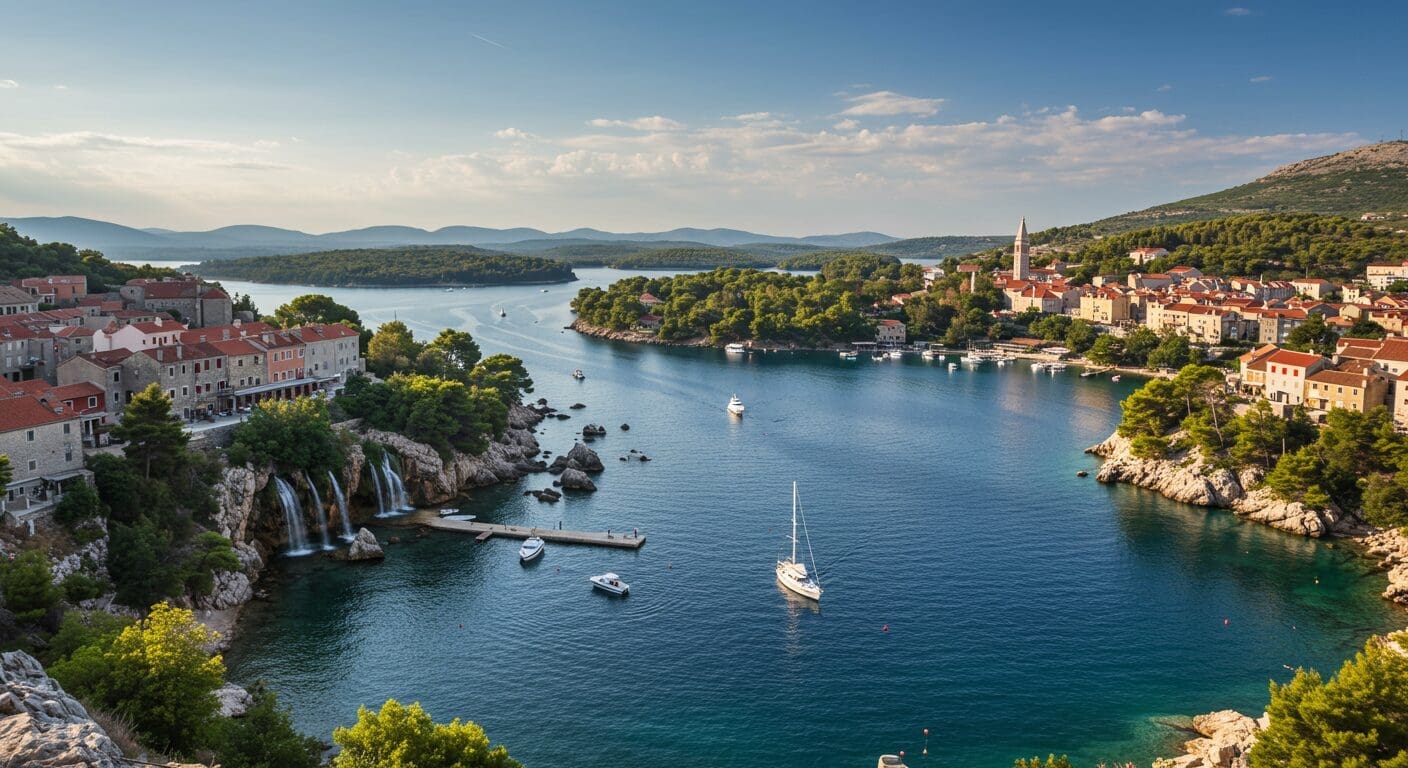
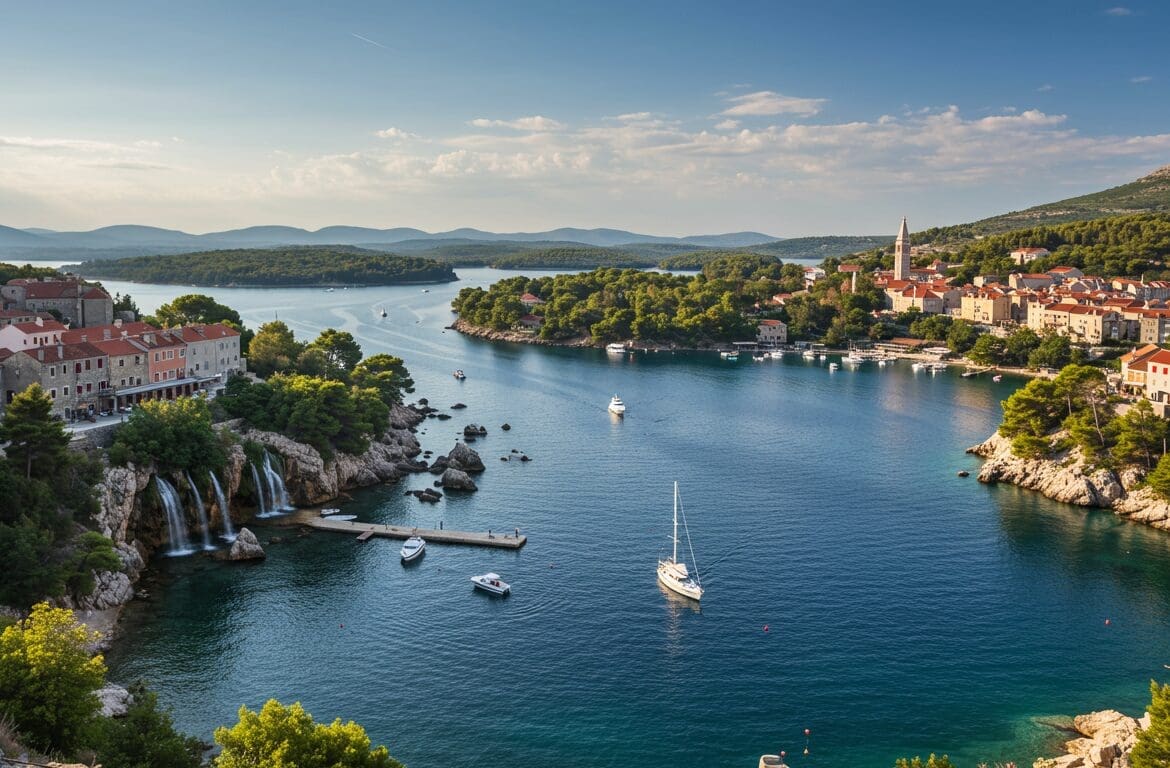
There is a moment, somewhere on the Dalmatian coast, when you realise that Croatia has been quietly winning at this for centuries. The water is a colour that doesn’t quite have a name in English – somewhere between turquoise and the kind of blue you see in Renaissance paintings of the Virgin’s robe. The stone towns look as though they were built specifically to appear on the covers of travel magazines, except they were actually built to last a thousand years, which is arguably more impressive. The islands sit in the Adriatic like punctuation marks in a very elegant sentence. And all of it – the history, the food, the wine, the sheer visual abundance of it – is available to you from the terrace of a private villa, glass in hand, with approximately nobody else in sight. This is the Croatia that rewards the traveller who goes properly.
Why Croatia for a Luxury Villa Holiday
The honest answer is: because it is one of the best-value luxury destinations in Europe, and nobody in Croatia is particularly keen for you to notice that. The country has a coastline that stretches for nearly 6,000 kilometres when you count the islands – and there are over a thousand of them, most barely inhabited – and yet it still feels, outside of July and August, as though you’ve found something that the rest of the world hasn’t quite caught up with yet.
What Croatia offers the villa traveller specifically is a combination that is genuinely rare. You have medieval walled cities within easy reach. You have some of the clearest water in the Mediterranean basin. You have a food and wine culture that is serious without being pretentious. And then you have the villas themselves – stone-built, often centuries old, with private pools that sit above the sea or in the shade of ancient olive trees, offering the kind of privacy that a hotel, however grand, structurally cannot provide.
The other thing worth saying is this: Croatia is remarkably easy. The roads are good. The locals speak English with a confidence that puts most Western Europeans to shame. The currency is the euro since 2023, which removes the mild administrative theatre of exchange rates. It is a country that wants you to have a good time and has, by and large, organised itself accordingly.
The Best Regions in Croatia for Villa Rentals
Istria, in the north, is where Croatia becomes almost Italian – literally, in parts, given the history of Venetian rule. The peninsula has a rolling interior of vineyards, truffle forests and hilltop towns that look like they belong in Umbria. The coast here is less dramatic than Dalmatia but deeply satisfying: long pine-fringed shores, excellent sailing waters, and a food scene that has, rather quietly, become one of the most serious in Central Europe. Villas in Istria tend towards the agricultural – converted farmhouses, stone cottages, properties with working olive groves attached. They are exceptionally good.
Split is the gateway to Dalmatia and a destination in its own right – a city where people have been living inside a Roman emperor’s retirement palace for about 1,700 years, which gives it a slightly unusual energy. The surrounding Dalmatian coast and its hinterland – the Cetina canyon, the Krka waterfalls, the Makarska Riviera – offer some of Croatia’s finest villa territory. Properties here often come with panoramic sea views, easy access to the islands by ferry, and that Dalmatian combination of stone walls and bougainvillea that is, by any measure, extremely good to look at.
Hvar remains the island address – the one that gets spoken of in a particular tone of voice, usually accompanied by a look that implies the speaker has been there and you probably haven’t. The reputation is earned. The lavender fields, the Venetian loggia in the main square, the clarity of the water around the Pakleni Islands – it all holds up. What has also arrived, because Hvar is Hvar, is a concentration of very good restaurants and bars that has made the island the social hub of the Croatian summer.
Dubrovnik is in a category of its own – a walled city of such extraordinary preservation that UNESCO felt moved to protect it, and the tourist industry felt moved to fill it completely in July and August. The trick with Dubrovnik is not to stay inside the city walls but to use them as a day trip, staying instead in the surrounding Dubrovnik Riviera or on the nearby Elaphiti Islands, where the villas offer sea views of almost theatrical quality and the crowds thin out almost immediately.
When to Visit Croatia
June and September are, without much debate, the correct months. The water is warm – genuinely warm, not the euphemistic warm of the Atlantic coast – the crowds are manageable, and the light has that quality that makes everything look as though a professional photographer has preceded you by about ten minutes.
July and August are when Croatia belongs to Croatia. The Dalmatian coast fills up, the roads slow down, and Dubrovnik in August is an exercise in testing your feelings about other people. It is still beautiful – the beauty is simply more collective than you might prefer. If you’re travelling with a villa and a private pool, however, this matters considerably less. You have your own piece of it, undisturbed.
May is excellent for Istria – the landscape is intensely green, the truffle season is winding down elegantly, and the coast is quiet enough to feel like a discovery. October still carries warmth in the south, and the islands take on a different character – emptier, more atmospheric, as though they’ve finally been allowed to get back to being themselves.
Winter on the Dalmatian coast has its advocates – the old stone towns are extraordinarily photogenic in low light, the restaurants are less frantic, and the prices drop significantly. It is not, however, a swimming holiday. This seems obvious, and yet it bears stating.
Getting to Croatia
Croatia is served by direct flights from most major European hubs, and the situation is better than many people expect. Dubrovnik Airport handles significant international traffic and is increasingly well-connected to UK and European cities, particularly in summer. Split Airport is the main hub for central Dalmatia and takes direct flights from London, Manchester, Dublin and most large European cities during the season. Zagreb, the capital, is connected year-round and works well as an entry point for Istria and northern Croatia, though it adds a drive.
Pula Airport is the Istrian option and is well worth considering if your villa is in the north of the peninsula – it handles seasonal flights from a good range of European cities. Hvar itself has no airport, being an island, and is reached by ferry from Split – the ferry being, it should be said, part of the experience rather than an inconvenience.
For those travelling with a group, a private transfer from the airport to the villa is worth organising in advance. Croatian taxi infrastructure in the cities is fine. Between an airport and a hillside villa somewhere on the Pelješac peninsula at eleven o’clock at night, a pre-arranged driver is significantly better than the alternative.
Food & Wine in Croatia
Croatian food is one of the great underrated pleasures of European travel, and the country seems pleasingly unbothered about the fact that not everyone has noticed yet. The cuisine divides broadly along geographical lines. In the interior and in Istria, it is Central European in character – slow-cooked meats, game, wild mushrooms, and truffles of a quality that would make a French chef pretend not to care. On the coast and islands, it becomes Mediterranean: grilled fish, shellfish, olive oil that actually tastes of something, and a lightness that the inland cuisine politely declines to share.
Istria’s truffle scene deserves its own sentence. The Motovun forest produces black and white truffles of genuine distinction, and the local restaurants and producers have been serving them with a matter-of-factness – shaved over pasta, stirred into eggs, eaten with very good local wine – that makes the French approach seem slightly theatrical by comparison. Slightly.
The wine is excellent and dramatically underexported, which is either frustrating or convenient depending on how you look at it. Malvazija Istarska is the white of Istria – aromatic, full, with a mineral quality that makes it one of the better companions for seafood in the Mediterranean. In Dalmatia, Plavac Mali is the indigenous red to seek out: deep, structured, and made from a grape that turns out to be a close relative of Zinfandel, which will surprise no one who has had a glass of it.
Peka – meat or octopus slow-cooked under an iron bell buried in embers – is the dish that defines Dalmatian hospitality. It requires advance ordering, takes several hours to prepare, and arrives at the table with the confidence of something that has absolutely nothing to prove. Order it whenever you see it.
Culture & History of Croatia
The history of Croatia is a long and instructive story about being at the junction of empires. The Romans were here – spectacularly so, as Diocletian’s Palace in Split demonstrates, a vast imperial structure that has since become a living city, its ancient rooms converted into apartments, restaurants and bars with what you might call an admirably pragmatic approach to heritage. The Venetians controlled much of the coast for centuries, leaving behind the loggia, the lion of St Mark carved into city gates, and an architectural vocabulary that gives Dalmatian towns their particular elegance.
Dubrovnik was, for centuries, the independent Republic of Ragusa – a trading city-state that played the great powers against each other with considerable diplomatic skill and built itself, in the process, one of the most perfectly preserved medieval cities in existence. The walls you walk today are largely the same walls that looked out over the Adriatic in the fifteenth century. The scale of the achievement only becomes apparent when you walk them.
Istria‘s complexity is different – the peninsula has been Roman, Byzantine, Venetian, Austro-Hungarian, briefly Italian, Yugoslav and finally Croatian within living memory. The result is a culture of extraordinary layering, visible in the architecture of towns like Poreč and Rovinj, in the bilingual signs, in the food, and in a certain Istrian personality that manages to be simultaneously Italian, Slavic and entirely its own thing.
The country’s more recent history – the 1990s war of independence – is present but not overwhelming. Croatia has rebuilt with purpose, and what exists now is a country with a genuine pride in what it is and where it has arrived.
Activities Across Croatia
Sailing is the defining Croatian activity, and with good reason. The combination of clean water, reliable summer winds, and over a thousand islands to navigate between makes the Adriatic one of the finest sailing grounds in Europe. Chartered yachts can be crewed or bareboat, and a week on the water between islands – stopping at harbours, swimming off the back of the boat at deserted coves – is one of those experiences that people describe as life-changing in a tone of voice that makes you believe them.
Sea kayaking, particularly around the Dubrovnik coast and the Elaphiti Islands, offers a more intimate version of the same idea. The Cetina Canyon near Split is excellent for rafting and canyoning. Plitvice Lakes National Park – a series of terraced lakes and waterfalls in the interior, connected by wooden boardwalks – is one of the more extraordinary natural landscapes in Central Europe, and worth a half-day drive from the coast.
Cycling is increasingly well-organised throughout Istria, where the rolling terrain and the truffle country provide excellent routes. Wine tourism – visiting the vineyards of the Pelješac peninsula, or the Istrian producers around Buzet and Grožnjan – is a perfectly acceptable activity for the entire duration of your holiday. Nobody will question it.
For those who want culture in more concentrated form, the music festival scene in Croatia is serious: the Pula Arena hosts concerts inside a first-century Roman amphitheatre, which is the kind of venue that makes every other concert hall you’ve ever been in feel slightly apologetic about itself.
Family Holidays in Croatia
Croatia is, honestly, one of the better family holiday destinations in Europe, though it works somewhat differently from what the brochure version of a family beach holiday suggests. The beaches are frequently rocky or pebbly rather than sandy – this is the Adriatic coast, not the Caribbean, and the geography is what it is. Children who have grown up with sandy beaches occasionally require a brief period of adjustment. After which, the water – extraordinarily clear, calm in sheltered bays, warm from June to September – tends to resolve the matter entirely.
The practical advantages of a villa for family travel are significant. Private pool access means there is no negotiation over sunbeds. The ability to eat meals on your own terrace, at your own pace, without managing the performance anxiety of restaurant dining with small children, is worth more than it sounds. Kitchens mean that the inevitably strong opinions of younger travellers about what they will and will not eat can be managed without nightly improvisation.
The islands are particularly well-suited to families – the car-free environment of some smaller islands means children have an unusual degree of freedom, and the Croatian habit of welcoming children into restaurants and social spaces without theatre makes the whole thing considerably more relaxed than many Mediterranean alternatives. Older children and teenagers with any interest in history will find Dubrovnik, Split and the Roman remains genuinely engaging. The ones with no interest in history will be fine in the water.
Practical Information for Croatia
Croatia joined the Schengen Area in 2023 and adopted the euro at the same time, which significantly simplified the logistics of travel. EU and UK passport holders travel freely; visitors from most Western countries similarly require no visa for short stays. The bureaucratic complexity that once attended a Croatian holiday has been substantially reduced.
The country is, broadly speaking, very safe. The standard of private healthcare in the main tourist areas is acceptable, and European Health Insurance Cards (EHICs) are recognised for UK citizens in a post-Brexit arrangement that continues to hold. Travel insurance that covers medical costs is, as ever, advisable – the philosophy that nothing will go wrong has a poor historical track record as a substitute for actual insurance.
Driving in Croatia is generally straightforward, with well-maintained toll motorways connecting the major centres and roads that are, outside of the summer coastal traffic, a genuine pleasure. The coastal roads are narrow in places and spectacular throughout; they reward patience and a willingness to pull over and look at the view, which hardly seems like a hardship. Parking in the old towns is essentially a mythological concept – arrange accommodation accordingly.
Tipping is appreciated but not the social minefield it can be elsewhere. Rounding up the bill or leaving ten percent for good service is the general convention. Telephone and data coverage is reliable throughout the main tourist areas and on the major islands. You will, in short, not struggle to manage the logistics of being in Croatia. It is that kind of place.
Luxury Villas in Croatia
The Croatian villa market has matured considerably over the past decade. What was once a collection of converted farmhouses and family-owned coastal properties has become a genuinely sophisticated offer – properties with infinity pools that appear to pour directly into the Adriatic, contemporary architectural statements in the hills above Hvar, centuries-old stone houses in Istria restored with materials and attention to detail that would satisfy the most exacting design sensibility.
The point of a villa in Croatia – beyond the obvious pleasure of having a private pool in a country where the outdoor life is this good – is the access it provides to the quieter version of things. Not the Dubrovnik of the cruise ship itinerary, but the Dubrovnik you drive to on a Tuesday morning, walk the walls before ten, eat lunch at a konoba on the Pelješac peninsula, and return to your terrace in the early afternoon. Not Hvar in peak season, but Hvar experienced from a villa with a view of the Pakleni Islands, where the business of being somewhere beautiful unfolds at entirely your own pace.
There is a version of Croatia that is crowded and expensive and slightly exhausting. And then there is the version available to the traveller who goes properly – with the right property, in the right place, at the right time of year. They are not, experientially, the same country at all.
Browse our full collection of private villa rentals in Croatia and find the property that makes Croatia yours.
Explore Regional Travel Guides
Discover our in-depth regional guides covering the best luxury villas, restaurants, activities and travel tips across each destination.
- Split-Dalmatia County Travel Guide – Luxury villas, restaurants and travel tips for Split-Dalmatia County
What is the best region in Croatia for a villa holiday?
It depends almost entirely on what you’re after. Istria suits those who want excellent food and wine, a quieter pace, and the combination of coast and rolling interior countryside – it’s particularly good for couples and food-focused travellers. Dalmatia and the islands around Split are the heart of the sailing and beach experience, with easy access to multiple islands and a more social atmosphere. Hvar is the address for those who want beauty plus a genuine restaurant and bar scene. The Dubrovnik Riviera offers the most dramatic coastal scenery, best appreciated from a villa in the hills above the city rather than from within the old town walls. First-time visitors to Croatia often do well to base themselves near Split, which puts a remarkable amount of the country within reach.
When is the best time to visit Croatia?
June and September are the months that most experienced Croatian travellers would choose without much hesitation. The sea temperature is warm, the summer crowds have either not yet arrived or have recently departed, and the light and landscape are at their best. May works well in Istria and for those more interested in culture and walking than swimming. July and August are busy – genuinely busy on the Dalmatian coast and in Dubrovnik – but if you’re staying in a private villa with a pool, the crowds affect you considerably less than they would a hotel guest. October is underrated for the south: the Adriatic retains warmth into autumn, the tourist infrastructure is still operating, and the prices and atmosphere are considerably more civilised.
Is Croatia good for families?
Very much so, with a few honest caveats. The beaches are predominantly rocky or pebbly rather than sandy – this is the nature of the Adriatic coast – but the water is exceptionally clear, calm in sheltered bays, and genuinely warm from June through September, which tends to satisfy children reasonably quickly. A villa rather than a hotel makes the logistics of family travel significantly more manageable: private pool access, kitchen facilities, and the space to operate at your own pace rather than around the rhythms of hotel service. Croatian culture is welcoming towards families and children in restaurants and public spaces. Older children with any appetite for history will find Split’s Roman palace and Dubrovnik’s walls genuinely impressive. The car-free environment of some smaller islands gives younger children an unusual degree of freedom that they, and their parents, tend to appreciate considerably.
Why choose a luxury villa in Croatia over a hotel?
The case for a villa in Croatia is stronger than almost anywhere else in Europe, for a specific reason: the country’s greatest pleasures are outdoor and private ones. A private pool above the Adriatic, a terrace with an unobstructed view of the sea, the ability to eat breakfast when you want, swim when you want, and return to your property rather than a hotel lobby after a day on the water – these are not trivial advantages. For groups and families, the value calculation also shifts significantly in the villa’s favour once you compare the cost of multiple hotel rooms against a single property. Beyond the practical, there is the quality of the experience itself: a well-chosen villa in Croatia places you inside the landscape in a way that a hotel, however well-positioned, cannot replicate. The country, quite simply, is best experienced from one.