
Best Restaurants in Faro District
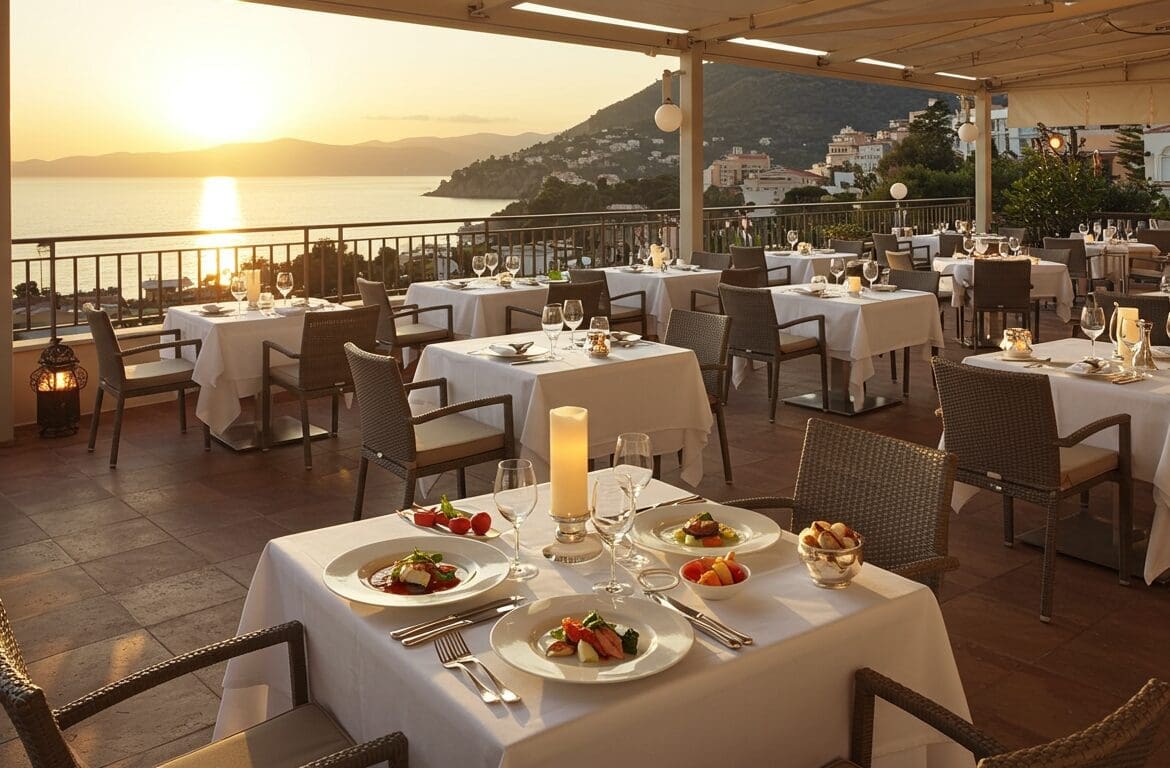
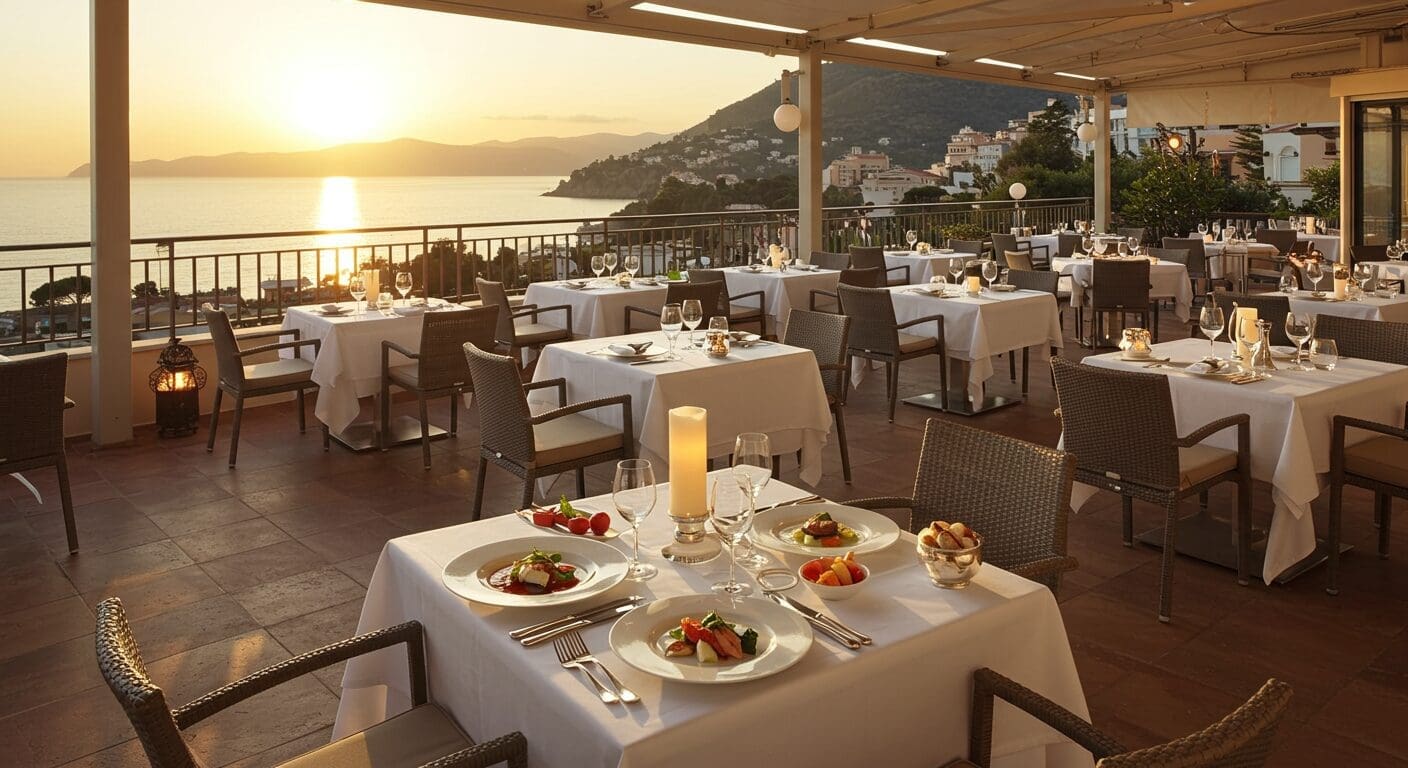
It is late afternoon and you are sitting somewhere you didn’t plan to be, which is, in the Algarve, almost always the right place to be. The sun is doing that particular low-golden thing it does over the Ria Formosa – all shimmer and theatrical restraint – and a bottle of Alentejo white has arrived without much ceremony, cold enough that the glass has already begun to sweat. There is bread. There is good olive oil. Someone across the table has just ordered the cataplana and is already looking pleased with themselves. You are not yet hungry but you are, without question, ready. This is Faro District at the table: unhurried, quietly serious about food, and entirely uninterested in performing for you. It simply gets on with being excellent.
The best restaurants in Faro District span a wider range than most visitors expect – from centuries-old tiled dining rooms concealing Moorish tunnels beneath the floorboards to cavernous converted warehouses where the wine list is longer than your arm and the portions are longer still. Whether you arrive chasing Michelin recognition, hunting a perfect grilled fish, or simply hoping to sit somewhere beautiful with something cold and local in your hand, the district delivers. You just have to know where to look.
Fine Dining in Faro District – When the Region Takes Itself Seriously
The Algarve has, over the past decade, grown into a region that fine dining takes seriously – and more importantly, one that takes fine dining seriously in return. The coast’s proximity to exceptional raw ingredients – Atlantic seafood, sweet Algarve oranges, local almonds, freshly landed shellfish – gives serious kitchens an extraordinary foundation to work from. Several restaurants in Faro District now operate at a level that would turn heads anywhere in Europe.
Among them, Faz Gostos stands as one of the most accomplished dining experiences in the regional capital. Positioned in the Old Town and operating across two spacious halls that somehow manage to feel elegant rather than hotel-banquet-room, this is a restaurant that has mastered the art of scale without sacrifice. Up to 150 diners at a sitting, yet the service remains considered and the cooking remains precise – a feat that deserves more credit than it typically receives. The menu moves through the finest expressions of Algarvian and Portuguese cooking, blending land and sea with the kind of quiet confidence that only comes from knowing your ingredients extremely well. The ancient underground wine cellar is not merely decorative. It is genuinely excellent, and you should let it guide your evening.
For those who prefer their fine dining with a side of genuine theatre, Vila Adentro – housed in a magnificent 18th-century former azulejo factory in Faro’s walled Old Town – provides both. The blue and white tiles that line this room are the real thing: historic, beautiful, the kind that make you put down your fork and simply look for a moment. The cooking is accomplished throughout, with seafood as good as anywhere in the region, but it is the vegetarian cataplana that surprises most – a relative rarity in a coastal menu built around fish and meat, and executed here with real care. Then there is the matter of what lies beneath the dining room floor: a Moorish tunnel, part of a network of passages threading beneath the old city. The staff will, if you ask, show you. It is not something you will find in most restaurants. Anywhere.
Local Institutions – The Places That Have Been Getting It Right for Generations
There is a particular kind of restaurant that only exists when a place has been left alone long enough to become itself. No branding consultants. No concept. Just very good food, served to the same community for a very long time. Faro District has several. You should seek them out before the world entirely catches up.
Adega Nova is the most instructive example in the city. Located in a cavernous converted warehouse near Faro’s train station – not a location that features heavily in glossy travel itineraries, which is precisely the point – this is a restaurant celebrating its centenary in 2025. One hundred years of feeding people. The menu focuses on the direct and the generous: fresh fish cooked with minimum interference, enormous seafood skewers that arrive on the table with cheerful unapologetic abundance, and a Portuguese wine selection drawn from its own cellar, which has had a century to develop some opinions. The atmosphere is convivial in the manner of somewhere that has never needed to engineer conviviality. People here are simply happy to be here. You will be too.
Tertúlia Algarvia occupies a beautiful space in the Old Town and delivers exactly what good traditional restaurants should: fresh fish and seafood, local delicacies prepared with understanding rather than innovation for its own sake, and an atmosphere that feels genuinely relaxed rather than performed. Reviewers consistently describe it as beautiful and unhurried. In a region where some restaurants have discovered that tourists will tolerate quite a lot in a nice setting, Tertúlia Algarvia has chosen a different path. The food is the point. The setting is a bonus.
The Unexpected – When a Coastal Region Does Steak
Not every visitor arrives wanting seafood. Some people – and they are entirely correct – want exceptional meat, cooked with precision, in a restaurant that has thought very hard about where that meat comes from. In a district celebrated almost entirely for its Atlantic fish and shellfish, Faaron Steakhouse represents a bold editorial decision that has paid off handsomely.
Chef Diogo Dias has, since opening in 2015, built Faaron into what can credibly be called the Algarve’s premier destination for serious meat eating. The focus is on aged cuts – both Portuguese national beef and prestigious imports – selected personally by Dias from producers he has researched with the kind of dedication more commonly associated with people who take their work slightly too seriously. Which is, in this context, exactly what you want. The result is a steakhouse that operates at a level you would expect to find in London, Buenos Aires or New York, somewhat improbably positioned in a coastal Portuguese city that mostly eats octopus. It works. Magnificently.
Beach Clubs and Casual Dining – The Other Kind of Perfect
Not every meal in Faro District needs to be an occasion. Some of the most pleasurable eating in the region happens in the loosest possible settings: feet in the sand (or sand adjacent), something grilled arriving without fanfare, a cold beer or a glass of local wine that costs what wine should cost. The beach clubs along the Algarve coast – particularly those accessible by ferry across the Ria Formosa to the barrier islands – offer this in abundance.
The formula is consistent and consistently good: simply prepared fish and seafood, local ingredients treated with the respect of people who eat this way every week rather than once a year on holiday, and a setting that does most of the atmospheric work. Grilled sea bass. Plates of percebes, the barnacles that cling to Atlantic rocks and taste entirely of the sea. Caldo verde arriving as a starter when you didn’t know you needed soup. This is the casual dining scene of the district at its best – uncomplicated, local, and quietly superior to the equivalent experience in most other parts of Europe. It doesn’t make a fuss about any of this, which is rather the point.
Hidden Gems – The Ones the Guidebooks Haven’t Caught Up With
Every destination has them: restaurants operating at a high level in spaces that haven’t yet been discovered by the kind of people who travel with guidebooks. In Faro District, the Old Town neighbourhood and the quieter streets around the marina yield the richest hunting ground. Small family-run operations where the menu changes with the market, where reservations are taken by phone and occasionally forgotten, where the owner will tell you what to order with the bluntness of someone who simply wants you to eat the right thing.
The district’s towns beyond Faro itself – Olhão, Tavira, Estoi, Loulé – are worth exploring specifically for this category of restaurant. Olhão in particular, the fishing town east of Faro, operates a market culture that spills directly into its restaurants. The relationship between what lands in the morning and what appears on tables by lunchtime is more literal here than almost anywhere on the coast. Follow that principle and you will eat very well.
Food Markets – Eating the District From the Ground Up
To understand the cooking of Faro District, spend a morning in its markets before you spend an evening in its restaurants. The Mercado de Loulé – an extraordinary Moorish Revival building that looks like something from a Moorish fairy tale that was subsequently remodelled by someone with very strong opinions about domes – operates as both covered market and food hall, and is among the finest of its kind in southern Portugal. Almond products, local honey, smoked meats, fresh cheeses, shellfish on ice, and the particular orange of the Algarve, which tastes different here and always will.
Olhão’s twin market pavilions, sitting beside the waterfront, operate as the region’s most direct expression of its fishing culture. The fish hall and produce hall together constitute a very compelling argument for staying another week. Even if you are renting a villa with a private chef – and we will return to that thought – a morning in Olhão market followed by a conversation about what to cook that evening is among the more civilised uses of a holiday morning imaginable.
What to Order – The Dishes That Define the District
The cataplana is the essential starting point. This copper clam-shaped cooking vessel – and the dish named for it – appears across the Algarve but finds some of its finest expressions in Faro District. Clams, white fish, chouriço, tomato, peppers, white wine, and enough garlic to make a decision about the rest of your evening: this is Algarvian cooking distilled into one vessel. Order it for two. Consider ordering it for one, then feel slightly embarrassed when it arrives, then eat all of it anyway.
Linguado grelhado – grilled sole – is the dish that reminds you why coastal Portuguese cooking has endured. Simply seasoned, cooked over charcoal until the flesh just separates, served with boiled potatoes and salad: this is a lesson in what fish tastes like when it swam this morning. Amêijoas à Bulhão Pato – clams in white wine, garlic, coriander and lemon – is the dish you order while waiting for everything else. Arroz de lingueirão, razor clam rice, achieves in each mouthful a concentration of ocean flavour that is genuinely difficult to account for without simply accepting that the Algarve knows something about shellfish that the rest of Europe hasn’t fully processed yet.
For those exploring beyond seafood: the local black pork (porco preto) from the Alentejo region just north of the district produces charcuterie that deserves its reputation. And the pastéis de nata, wherever you find them, are never optional.
Wine and Local Drinks – What to Drink and Why
The Algarve produces wine that visitors consistently underestimate and locals consistently drink. The region’s four wine sub-zones – Lagos, Portimão, Lagoa and Tavira – produce whites that pair beautifully with the seafood-heavy cuisine: clean, mineral, with an acidity that cuts through butter and cream sauces in a thoroughly useful way. Look for producers from the Lagoa designation in particular.
Alentejo wines, from just north of the district, are arguably the country’s most exciting region right now and appear on every serious wine list in Faro District. The Alentejo whites can be extraordinary: full-bodied, complex, entirely capable of standing alongside the best of white Burgundy at a fraction of the price. This is, diplomatically, not something that needs to be pointed out too loudly.
Medronho – the local firewater distilled from the arbutus berry – is the post-dinner drink of the region. It arrives in small glasses, often poured by the proprietor, and should be accepted with the understanding that it is stronger than it appears, which is itself considerably stronger than seems reasonable. Ginjinha, the sour cherry liqueur, is the gentler alternative. Local craft beer has also grown considerably in quality across the Algarve in recent years and is worth exploring as an aperitif option.
Reservation Tips – Practical Notes for Getting a Table
The best restaurants in Faro District fill quickly in high season – July and August particularly – and several of the smaller Old Town establishments have very limited covers. Book Faz Gostos and Vila Adentro at least a week ahead during summer; Faaron Steakhouse, despite its capacity, draws a devoted following and deserves the same planning. Adega Nova, pleasingly, operates on a slightly more relaxed timeline, though arriving without a reservation at peak service and hoping for the best is a test of optimism that is not always rewarded.
Shoulder season – May, June, September and October – offers not only easier reservations but arguably better eating. The tourists have thinned, the produce is at its best, and restaurants are cooking for the kind of guests who came for the food rather than the beach. This is, for the record, an excellent way to visit the Algarve and one that the district quietly encourages by being rather good at it.
Lunch service in Portugal runs later than northern European visitors expect – starting properly at 1pm and extending contentedly to 3pm or beyond. Dinner rarely gets going before 7:30pm and peaks around 9pm. Attempting to eat dinner at 6pm is technically possible. It is also something you will never do twice.
For the most seamless dining experience in the district – and the one that requires the fewest reservations – staying in a luxury villa in Faro District with access to a private chef brings the entire conversation to your table. Several of Excellence Luxury Villas’ properties offer private chef options, meaning that morning in Olhão market, that conversation about the catch, that bottle chosen from the cellar: all of it happens on your own terrace, at your own pace, for your own party. The cataplana arrives when you want it. The wine is cold. The evening, as it always is in Faro District, is entirely yours.
For everything beyond the table – history, beaches, boat trips, what to do between meals and whether there is genuinely anything to do between meals (there is) – the Faro District Travel Guide covers the full picture.