
Faro District Travel Guide: Best Restaurants, Sightseeing & Luxury Villas
What if the place everyone flies through on the way to somewhere else turned out to be the destination all along? Faro gets a raw deal in the travel imagination. It sits at the bottom of Portugal, functioning mostly as a gateway – the airport, the hire car queue, the obligatory first night before the real holiday begins somewhere further west along the coast. And yet Faro District, taken seriously and explored properly, is one of southern Europe‘s most quietly extraordinary corners. Ancient walled cities and Roman ruins. A coastline that shifts between golden Atlantic beaches and the otherworldly silence of a UNESCO-listed lagoon. Villages where the pace of life hasn’t been adjusted by the tourism industry because the tourism industry hasn’t quite found them yet. This is a luxury holiday faro district destination that rewards the traveller willing to look past the airport signage. Consider this your invitation to stop rushing through.
Getting Here Is the Easy Part – It’s Leaving That’s Difficult
Faro International Airport is one of Portugal’s busiest, which means excellent connectivity and absolutely no excuse for not coming. Direct flights operate from most major UK and European cities year-round, with journey times from London sitting at around two and a half hours – roughly the same as driving from one end of the M25 to the other, but considerably more pleasant. TAP Air Portugal, easyJet, Ryanair and British Airways all serve the route, with summer seeing additional capacity from dozens of charter operators.
From the airport to Faro city centre takes around fifteen minutes by taxi, and Uber operates reliably throughout the district. If you’re heading further afield – to the western Algarve around Lagos and Sagres, or into the quieter interior – a rental car is the honest answer. The roads are good, parking at a private villa is obviously not an issue, and the freedom to stop at a roadside market selling smoked sausage at nine in the morning is, frankly, one of travel’s small but reliable pleasures.
Within Faro city itself, most of what matters is walkable, particularly in the Old Town. The regional rail line connects Faro to Lagos in the west and Vila Real de Santo António on the Spanish border to the east, running along the coast with views that make you wish the trains went slightly more slowly. For day trips into the Alentejo or up into the Serra de Monchique, the car comes into its own. The district is large – nearly 5,000 square kilometres – and the best of it doesn’t always arrive at your door. You have to go looking.
A Food Scene That Has Been Quietly Getting On With It
Fine Dining
Faro’s restaurant scene has the confidence of somewhere that doesn’t need to try too hard. The ingredients are exceptional – fish pulled from the Atlantic and the Ria Formosa that morning, local wines from the Algarve’s increasingly respected vineyards, olive oil and almonds and figs from the interior – and the best kitchens treat them accordingly.
Vila Adentro is the kind of restaurant that makes other restaurants feel slightly inadequate. Housed in a magnificent 18th-century former azulejo factory within the walled Old Town, the setting alone earns its reputation – the walls are lined with extraordinary blue and white tiles, and the atmosphere manages to feel both historic and genuinely alive. The food delivers on the promise: beautifully executed regional dishes, excellent seafood, and – a genuine rarity in the Algarve – a vegetarian cataplana that actually justifies ordering it. The story beneath the restaurant is literally that: beneath the dining room floor runs an ancient Moorish tunnel, part of a network threading under the old city, and the staff will often offer guests a look. It is, to put it mildly, the most interesting thing that has ever happened under a dinner table.
Faz Gostos, also in the Old Town, handles scale without sacrificing soul. Across two spacious halls seating up to 150 diners, the kitchen turns out some of the finest Algarvian and Portuguese dishes in the city – the kind of land-and-sea combinations that remind you why this cuisine deserves more international attention than it receives. The wine cellar, set in an ancient underground space, is a destination in itself for anyone with a serious interest in Portuguese wine.
Where the Locals Eat
Tertúlia Algarvia is where Faro comes for fresh fish done right. Traditional in spirit but sharp in execution, this is the restaurant that reviewers return to for perfectly grilled seabass and a wine list that has clearly been assembled with care. It’s also notably gluten-free friendly, which matters more than it used to. The atmosphere is lively in the way that genuinely popular local restaurants tend to be – not engineered, just earned.
Adega Nova occupies a converted brick and tile warehouse and has the feel of a place that has always been exactly as it is: convivial, generous, honest. Portions are large, prices are reasonable, and the selection of wines from their own cellar is broad enough to keep you there longer than you planned. Popular with locals and visitors in roughly equal measure, which is usually a reliable indicator of quality.
For something looser and more spontaneous, the municipal market – Mercado Municipal de Faro – is the morning move. Stalls of gleaming fish, seasonal produce and local cheese operate alongside small café counters serving coffee and pastries. It’s the kind of place that makes you briefly consider whether you could just live here. (You probably could, and the cost of living would surprise you pleasantly.)
Hidden Gems Worth Seeking Out
Se7e Pedras is the essential local secret that isn’t quite secret any more, but deserves all the attention it receives. This is the home of petiscos in Faro – Portugal’s answer to tapas, served in an ever-changing menu of creative small plates that rotate with the seasons and the kitchen’s imagination. Slow-cooked pork cheek bao bun. A lentil dish with genuine depth of flavour. Padron peppers. The menu shifts, the quality doesn’t. It is, without qualification, one of the best restaurants in the district – the kind of place you plan a return visit to before you’ve finished eating. Do not skip it.
The Old Town, the Lagoon and the Villages Nobody Told You About
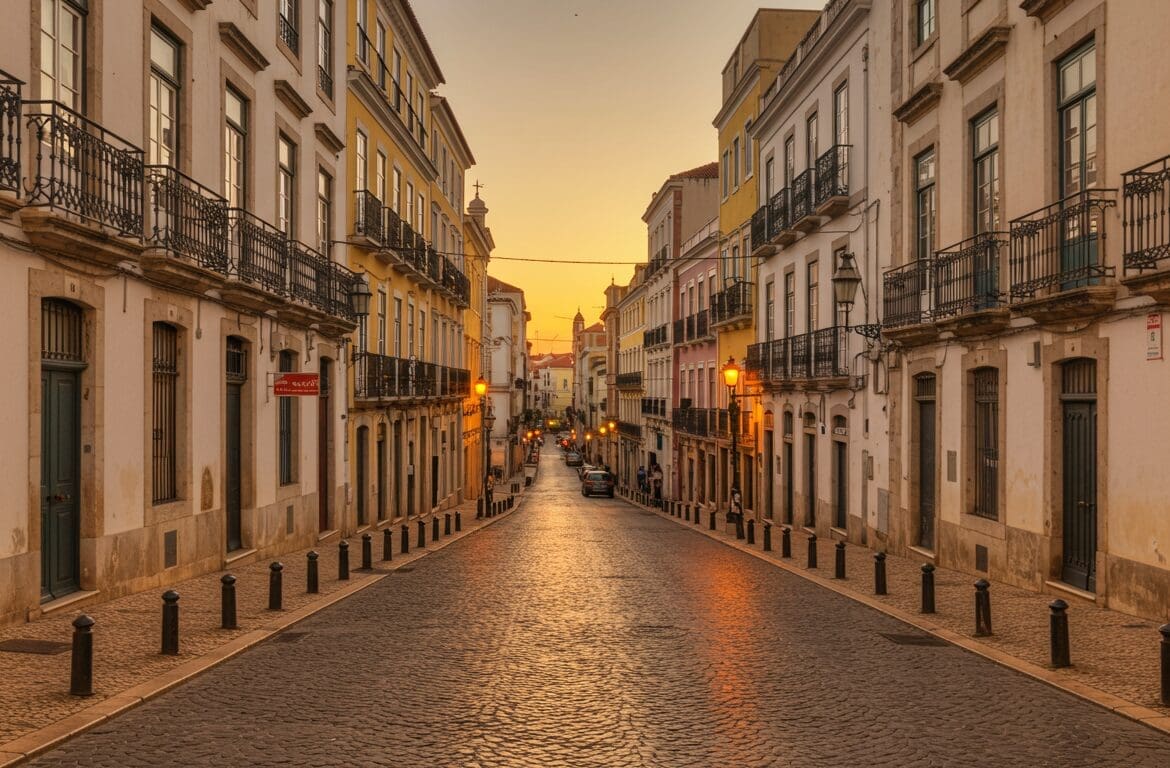
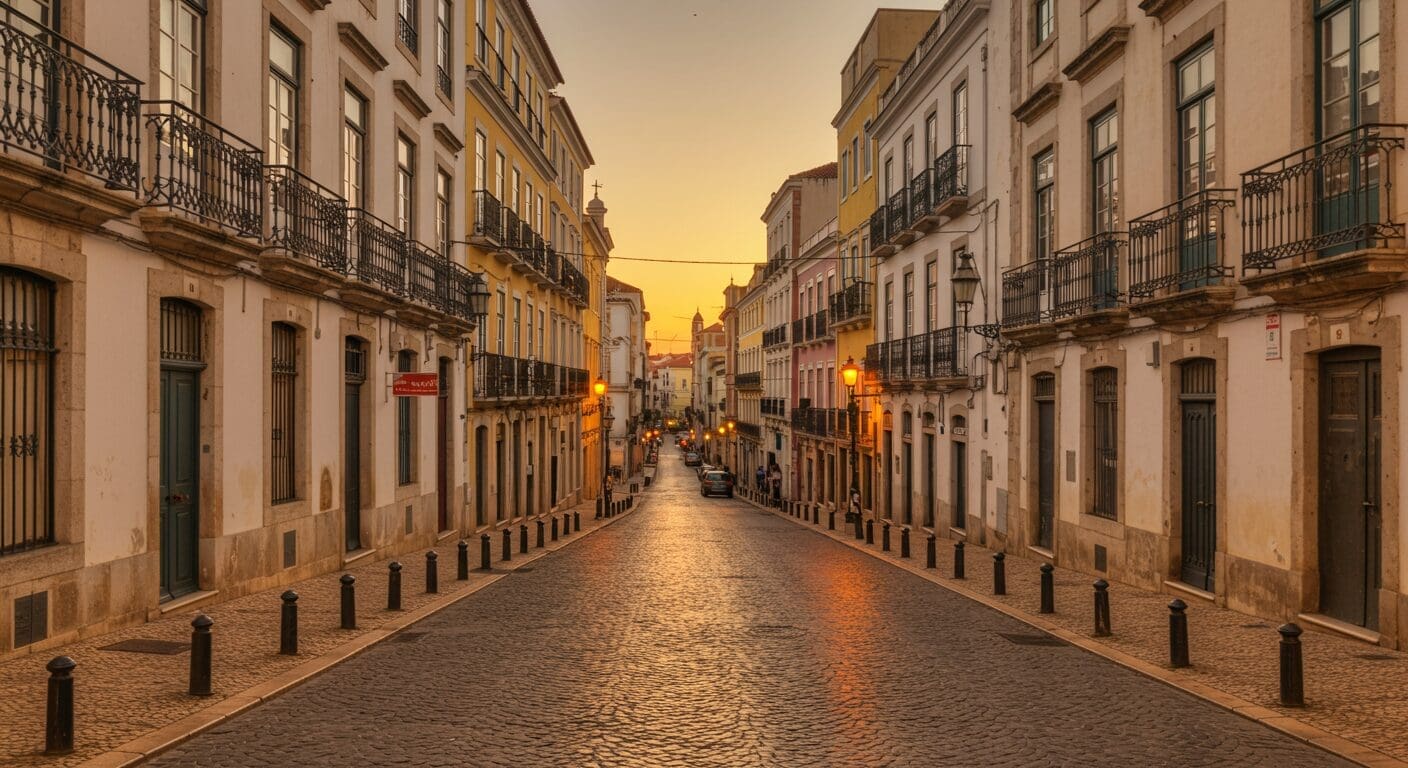
Faro city itself is underappreciated in a way that borders on the unjust. The Cidade Velha – the walled Old Town – is entered through the 18th-century Arco da Vila, a stone gate framing a nesting stork and, beyond it, a medieval world of cobbled lanes, whitewashed walls and bougainvillea erupting from unexpected corners. It is genuinely beautiful in the way that places are when they haven’t been restored to within an inch of their lives and glazed with visitor infrastructure.
The central square, Largo da Sé, anchors the Old Town with its cathedral, bishop’s palace and palms, and has the quality of somewhere that functions as a real civic space rather than a performance of one. Café tables fill it in the evening. Cats occupy it at most other times.
Beyond Faro city, the district reveals itself in layers. Loulé, twenty kilometres north, is one of the Algarve’s most characterful inland towns – a proper working place with a Moorish castle, a covered market of exceptional quality, and a Thursday market in the streets around it that draws the whole region. Silves, further west, has a sandstone castle that dominates the town from above the river Arade with considerable authority. Tavira, to the east, is perhaps the Algarve’s most elegant town: Roman bridges, 37 churches (for a relatively small population – the Portuguese take their architecture seriously), and a quieter pace that the western Algarve sometimes forgets to maintain.
The Ria Formosa Natural Park deserves particular attention. Stretching for sixty kilometres along the coast between Faro and Cacela Velha, this is a lagoon system of salt marshes, tidal channels, barrier islands and bird life of extraordinary variety – over 200 species recorded, including flamingos that have clearly decided Portugal suits them. Boat trips from Faro’s waterfront navigate the channels between the islands, pulling up on beaches that have no road access and therefore no beach bars, no sunbeds and no one trying to photograph their breakfast. The silence, on a weekday in October, is something you want to keep.
Things to Do When the Beach Gets Boring (It Won’t, But Just in Case)
The Algarve’s beach reputation is, for once, completely warranted. The district has them in almost comical variety – long Atlantic-facing strands like Meia Praia near Lagos if you venture west, the quieter barrier island beaches of the Ria Formosa accessible only by ferry, and the dramatic cliff-backed coves of the Barlavento coast. Praia de Faro, a narrow sand bar separating the lagoon from the sea, is the city’s own beach and reaches a pleasing ten kilometres of mostly uncrowded sand once you get more than fifty metres from the car park.
The golf is, objectively, some of the best in Europe. The district contains over thirty courses, ranging from resort layouts catering to the high-handicapper on a corporate trip to genuinely world-class tests of the game. Quinta do Lago and Vale do Lobo between them house several championship courses and operate at a standard that justifies the green fees, which is not something that can be said of every premium golf destination.
Boat tours through the Ria Formosa are available in various forms – guided wildlife trips, private cruises to island beaches, kayak self-guided exploration for those who prefer their nature at their own pace. The birdwatching is excellent at any time of year, and genuinely extraordinary during the winter months when migrating species use the lagoon as a staging post. Cycling routes thread through the interior and along the coast, with dedicated infrastructure improving steadily. Jeep tours into the Serra do Caldeirão – the rolling hills of the northern interior – reveal a version of the Algarve that most visitors never encounter: cork oak forests, shepherd’s villages, the kind of landscape that makes you realise the south of Portugal is larger and more varied than its reputation allows.
Adventure on the Water, in the Air and Along the Cliffs
The Atlantic here is not decorative. It is a functioning adventure resource, and the operators who work with it are serious. Kitesurfing conditions along the Algarve coast are exceptional, particularly between September and April when the winds arrive with proper conviction. Meia Praia near Lagos is one of southern Europe’s premier kitesurfing locations, and there are schools operating throughout the district at varying levels of experience and commitment.
Surfing is available along the western coast where the Atlantic swell hits without the protection of the Ria Formosa system. Sagres and the Costa Vicentina to the northwest – technically Beja District but easily reached from a Faro base – offer consistent waves and a surf culture that is both serious and surprisingly unhurried. The water temperature rarely drops below 16 degrees even in winter, which makes it significantly more bearable than comparable European surf destinations. (The wetsuit is still non-negotiable. Let’s not be heroic about it.)
Scuba diving in the Algarve reveals a world of reef systems, sea caves and wrecks that the surface gives no hint of. Visibility is good for much of the year, marine life is diverse, and several operators run PADI courses from beginner to advanced out of Portimão and Lagos. Rock climbing has a following in the limestone formations of the western Algarve, with routes ranging from accessible beginners’ climbs to serious technical routes above the sea. Via ferrata routes have opened in recent years, giving non-climbers access to vertical terrain with appropriate safety infrastructure.
Coasteering – the physical activity of exploring sea cliffs by swimming, jumping and scrambling – is perhaps the most viscerally enjoyable way to experience the Algarve’s coastline from water level. Multiple operators run guided sessions, and the combination of warm sea, dramatic rock architecture and the fundamental pleasure of jumping off things makes it, consistently, the activity that guests mention first when describing their holiday.
Why Families Keep Coming Back Year After Year
The Algarve has been a family holiday destination for long enough that it has got rather good at it. The beaches are safe, the water is warm by June, the food suits most ages and tolerances, and the Portuguese attitude to children in restaurants and public spaces is warmly inclusive in a way that certain other European cultures could stand to learn from. Children here are welcomed, not merely accommodated.
The practical family case is strong. The Ria Formosa boat trips are genuinely thrilling for younger travellers – the wildlife, the island beaches, the novelty of arriving somewhere by water. The water parks at Slide & Splash near Lagoa and Aqualand near Alcantarilha are, by the standards of the genre, very good – large, well-maintained and sufficiently varied to absorb a full day. The beaches offer shallow, calm sections within the lagoon system for younger swimmers, alongside the more characterful Atlantic waves for those old enough to enjoy them.
A private villa changes the family holiday equation substantially. The private pool removes the daily negotiation about beach readiness. The kitchen means dietary requirements don’t become a daily logistical challenge. The space – gardens, terraces, separate living areas – means that the family unit can actually breathe, which is the quality most consistently reported as missing from hotel-based family holidays. The best luxury villas faro district has to offer are configured specifically for families, with safety features, games rooms, outdoor entertaining spaces and staff who understand what a family holiday actually requires. It is, in short, a different kind of holiday rather than merely a more expensive version of the same one.
History Buried Beneath Your Feet and Hanging on Every Wall
The Algarve’s history is layered in the way that places become when everyone, at some point, has wanted them. Phoenicians, Romans, Visigoths and Moors all left their mark on this corner of the Iberian peninsula before the Portuguese drove the Moors south to Faro in the 13th century and built a cathedral on the site of their mosque – as was the convention of the day.
The Sé de Faro – Faro Cathedral – is the architectural centrepiece of the Old Town and one of the most interesting buildings in the district. Built in the 13th century on the foundations of a Moorish mosque (itself likely built on Roman remains, which gives you some sense of the geological layering of civilisations here), it blends Gothic, Renaissance and Baroque elements in the way that buildings do when they have been started, interrupted, damaged and rebuilt across several centuries. The hand-painted Portuguese azulejo tiles lining the interior are exceptional. The bell tower offers panoramic views over the Old Town, the lagoon and the sea beyond. It’s one of those climbs where the effort-to-reward ratio is extremely favourable.
The Museu Municipal de Faro, housed in a former convent of the 16th century, contains one of the Algarve’s most extraordinary artefacts: a large Roman mosaic floor from a villa at Milreu, assembled and displayed with the care it deserves. The Milreu site itself, a few kilometres outside Faro near Estói, is an undervisited Roman complex where baths, temples and villa foundations sit in a landscape that looks much as it would have done two thousand years ago – minus the central heating, one assumes.
The bone chapel of Alcantarilha – the Igreja de Nossa Senhora da Conceição – is the kind of discovery that stops a conversation. Like its more famous counterpart in Évora, the chapel is decorated with the bones of some 1,500 people. It is genuinely arresting and surprisingly moving once you’ve adjusted to it. The Algarve has more history per square kilometre than its beach reputation tends to suggest, and the faro district travel guide that skips it is doing you a disservice.
Culturally, the district hosts a calendar of festivals that runs from the Silves Medieval Fair in August – a full recreation of the medieval town complete with jousting, markets and costumes of baffling historical accuracy – to the jazz festivals of Loulé and the classical music summer programme in Faro itself. The Carnaval celebrations in Loulé in February are among the most exuberant in Portugal.
What to Buy, Where to Buy It, and What Not to Bring Home
The Algarve produces things worth acquiring. The local ceramics tradition is strong and geographically distinct – look for the painted cockerel figurines, the terracotta work, and the brightly decorated plates and bowls that appear in every market but are worth taking time to find in better quality versions. Loulé’s covered market and the stalls around it on market days are the best single destination for regional crafts and produce: dried figs and almonds in various forms, locally pressed olive oil, medronho (the firewater distilled from arbutus berries, which tastes better than it sounds and worse than you’ll remember the morning after), and hand-embroidered textiles from the interior.
The local wine industry deserves more attention than it receives. The Algarve’s DOC wines are produced across four subregions, with Lagos, Portimão, Lagoa and Tavira each having their own denominações. The red wines in particular – built on local grape varieties including Negra Mole and Castelão – offer something genuinely different from the mainstream Portuguese wine regions. Buying directly from quintas or from specialist wine shops in Faro and Tavira is both more rewarding and more interesting than the supermarket selection.
For something more fashion-conscious, Faro’s commercial centre has improved markedly. The Forum Algarve shopping centre on the edge of the city contains international brands alongside Portuguese labels, but the more interesting shopping is in the smaller boutiques of the Old Town and around the marina, where locally designed clothing, jewellery and homeware sit alongside imported luxury goods. The best things to do faro district for shoppers include the Saturday morning antiques and vintage market near the marina, which surfaces furniture, ceramics, books and miscellaneous objects of varying provenance and universal interest.
The Practical Details That Make Everything Easier
Portugal uses the Euro. Tipping is customary but not compulsory – rounding up, or leaving ten percent in restaurants, is the generally accepted convention. In bars and cafés, leaving small change is sufficient. Nobody will make you feel bad for not tipping. Nobody will make you feel bad for much, actually, which is one of the pleasures of the country.
The official language is Portuguese, and while English is widely spoken in tourist areas, a few words of Portuguese – obrigado/obrigada for thank you, por favor, bom dia – are received with genuine warmth. The Portuguese are not, as a rule, offended by non-speakers of their language. They are, however, quietly appreciative of those who try.
The best time to visit depends entirely on what you’re after. July and August are the peak months – reliably hot (35 degrees is not unusual), the beaches busy, the restaurants full, the roads occasionally testing. May, June and September offer temperatures of 25-30 degrees, considerably less crowding, and a quality of light that photographers and painters come specifically for. October and November are the months the locals prefer – warm enough to swim, empty enough to breathe, and possessed of an amber afternoon light that makes everything look like a film still. Winter in Faro city is mild, mostly dry and utterly peaceful. The golf is excellent. The restaurants are all open. The airport is manageable.
Safety is not a significant concern. The Algarve has very low levels of violent crime, and Faro city, while a working city rather than a resort, is entirely comfortable for solo travellers, couples and families alike. The usual urban cautions around pickpocketing apply in crowded areas and markets. Healthcare is of good standard, with the main hospital in Faro operating at European levels. European Health Insurance Cards (EHIC) remain valid for UK travellers post-Brexit, though comprehensive travel insurance is the sensible baseline regardless.
Tap water is safe to drink throughout the district. The Portuguese themselves often prefer bottled, but the tap water meets EU standards and the environmental case for not buying single-use plastic water bottles should probably not require further elaboration in 2024.
Why a Private Villa Is the Only Sensible Conclusion
There is a version of a Faro District holiday that involves a large resort hotel with a pool surrounded by sunbeds and a breakfast buffet of slightly dispiriting ambition. This version is fine. It is also not, on reflection, what the district deserves or what you came this far to experience.
A private luxury villa reframes the entire proposition. The morning swim is private – coffee first, or after, on a terrace that belongs to you for the week. The view is whatever you chose when you booked: lagoon, hills, garden, sea. The kitchen – in any genuinely well-appointed villa – is a tool for using what the local markets produce, which in this district means exceptional fish, tomatoes that taste like tomatoes should, local wine at a fraction of what you’d pay in a restaurant, and the quiet satisfaction of eating dinner at your own table watching the sky turn colours it doesn’t manage elsewhere.
The best luxury villas faro district has available range from historic quintas in the cork oak hills of the Serra do Caldeirão to contemporary clifftop properties with infinity pools above the Atlantic, from golf estate villas on the manicured fairways of Quinta do Lago to traditional fishermen’s houses on the Ria Formosa waterfront, updated to standards of comfort that the original fishermen would find both baffling and entirely reasonable. With over 27,000 properties worldwide, Excellence Luxury Villas understands what distinguishes a property that merely looks good in photographs from one that actually delivers the holiday you imagined.
The Algarve is, when all is said and done, one of Europe’s most consistently rewarding destinations. The district around Faro is its most layered, most historically rich and most underestimated corner. The question with which we began – what if the place you always flew through turned out to be the destination? – has, by now, answered itself fairly thoroughly. Browse our collection of luxury villa holidays in Faro District and find the base from which you’ll explore all of it properly, this time.
More Faro District Travel Guides
What is the best time to visit Faro District?
For beach holidays, July and August deliver reliably hot weather and long days, but also the heaviest crowds and highest prices. May, June and September offer an excellent compromise – warm enough to swim, less crowded, and often better value. October is a particular favourite for those who prefer their Algarve quiet: temperatures still reach the mid-twenties, the sea is warm from the summer, and the golden light is exceptional. Winter is mild and genuinely pleasant for cultural visits, golf and walking holidays, with Faro city operating normally year-round.
How do I get to Faro District?
Faro International Airport is the main gateway, with direct flights from most major UK and European cities. Journey time from London is approximately two and a half hours. Carriers including TAP Air Portugal, easyJet, Ryanair and British Airways operate regular services. From the airport, taxis and Uber reach Faro city centre in around fifteen minutes. A rental car is strongly recommended for exploring beyond the city – the district is large, the roads are good, and the best of the interior and the western Algarve requires independent transport.
Is Faro District good for families?
Very much so. The beaches are safe, the water is warm from June onwards, and the Portuguese welcome children in restaurants and public spaces without reservation. Practical family attractions include the Ria Formosa boat trips, the water parks at Slide & Splash and Aqualand, the historic sites of Milreu and Silves Castle, and the beaches of the barrier islands accessible by ferry. A private villa with pool is the ideal family base – it removes the logistics of hotel living and gives children the freedom of outdoor space in a way that transforms the holiday experience.
Why rent a luxury villa in Faro District?
A private villa gives you the Algarve on your own terms – your own pool, your own schedule, your own terrace for breakfast and dinner. The district’s villa stock ranges from contemporary clifftop properties above the Atlantic to traditional quintas in the cork oak hills, from golf estate villas on Quinta do Lago to historic properties within walking distance of Faro’s Old Town. For families, the private pool and kitchen are transformative. For couples, the privacy and space make a significant difference. For groups, the cost per head becomes genuinely competitive with hotel alternatives while delivering a quality of experience that hotels simply cannot replicate.