Florence Food & Wine Guide: Local Cuisine, Markets & Wine Estates
Here is the mild confession: Florence is not, strictly speaking, a city of excess. In a country that has given the world burrata, bottarga, and four-hour lunches, Tuscany’s capital is almost perversely restrained. The cooking here is peasant food elevated by very good ingredients and very strong opinions – not by elaborate technique or theatrical presentation. The bistecca is enormous, yes, but it arrives with no sauce. The bread is famously saltless. The ribollita, that great cathedral of a soup, is essentially yesterday’s leftovers. And yet, somehow, a meal in Florence can be one of the finest things you ever eat. Getting your head around that contradiction is, arguably, the most rewarding thing you can do in this city. The art comes second.
The Soul of Florentine Cuisine
Florentine cooking belongs to a culinary tradition known as cucina povera – the cooking of the poor – which is one of those charming Italian paradoxies where the label has long since ceased to reflect the price. It is a tradition built on frugality made magnificent: stale bread transformed into panzanella or ribollita, offal turned into street food, vegetables and legumes carrying the weight of entire menus. The philosophy is simple: start with the best possible raw ingredient, do very little to it, and resist the temptation to be clever.
The olive oil here is almost militantly good. Produced from Frantoio, Moraiolo and Leccino olives grown across the Tuscan hills, the best Florentine oils are grassy, peppery, almost aggressive – a world away from the gentle, buttery oils of the south. You’ll want to drink it by the spoonful. Many do. The bread, meanwhile, is pane sciocco – unsalted by tradition, and an acquired taste that most visitors acquire by about day three.
The city’s relationship with its food is intensely local, fiercely proud, and occasionally quite confrontational if you suggest that something might be done differently elsewhere. Order a cappuccino after 11am and you’ll see what I mean.
Signature Dishes You Must Eat in Florence
Start with the bistecca alla Fiorentina. This is not a steak so much as an event. Cut from Chianina cattle – a Tuscan breed of bovine magnificence – it arrives as a T-bone of considerable dimension, cooked rare, seasoned with nothing but salt and olive oil, and served at a temperature that suggests it was resting comfortably just moments ago. It is sold by weight, typically around 600 grams per person, and you do not ask for it well done. You simply don’t.
Beyond the bistecca, look for lampredotto – thinly sliced tripe from the fourth stomach of the cow, simmered in broth and served in a crusty roll, usually with salsa verde and a splash of the cooking liquid soaked into the bread. It is sold from street carts called trippai, it costs almost nothing, and it is one of the more transformative things you can eat standing up. The ribollita deserves its own biography – a thick bread-and-vegetable soup made with cavolo nero that improves dramatically overnight, hence the name, which means “reboiled.” Pappa al pomodoro, crostini di fegatini (chicken liver pâté on toast), and the glorious simplicity of a plate of white beans dressed in new-season olive oil round out a short list of dishes that reward repeated visits.
Florentine Wines: Chianti, Brunello and Beyond
The wines of Tuscany are old, serious, and entirely comfortable with their own reputations. Chianti Classico – produced in the hills between Florence and Siena from Sangiovese grapes – is the wine of this city’s table. The Black Rooster symbol on the bottle indicates Chianti Classico DOCG; a Riserva indicates longer ageing; a Gran Selezione represents the producer’s finest expression. The range in quality (and price) is wide, and it rewards curiosity.
Further south, Brunello di Montalcino is among Italy’s most celebrated and most age-worthy wines – a Sangiovese of exceptional intensity that requires years of patience and rewards it handsomely. Vino Nobile di Montepulciano offers something similar in spirit, if slightly less austere. For those inclined towards white wine, Vernaccia di San Gimignano – Italy’s first DOC white wine, a fact the town of San Gimignano will not allow anyone to forget – is crisp, mineral and genuinely food-friendly.
Supertuscans, those wines made outside traditional DOCG regulations using international grape varieties like Cabernet Sauvignon and Merlot, emerged in the 1970s as a kind of polite rebellion against bureaucracy. The finest examples remain among Italy’s most expensive and most sought-after bottles.
Wine Estates Worth Visiting
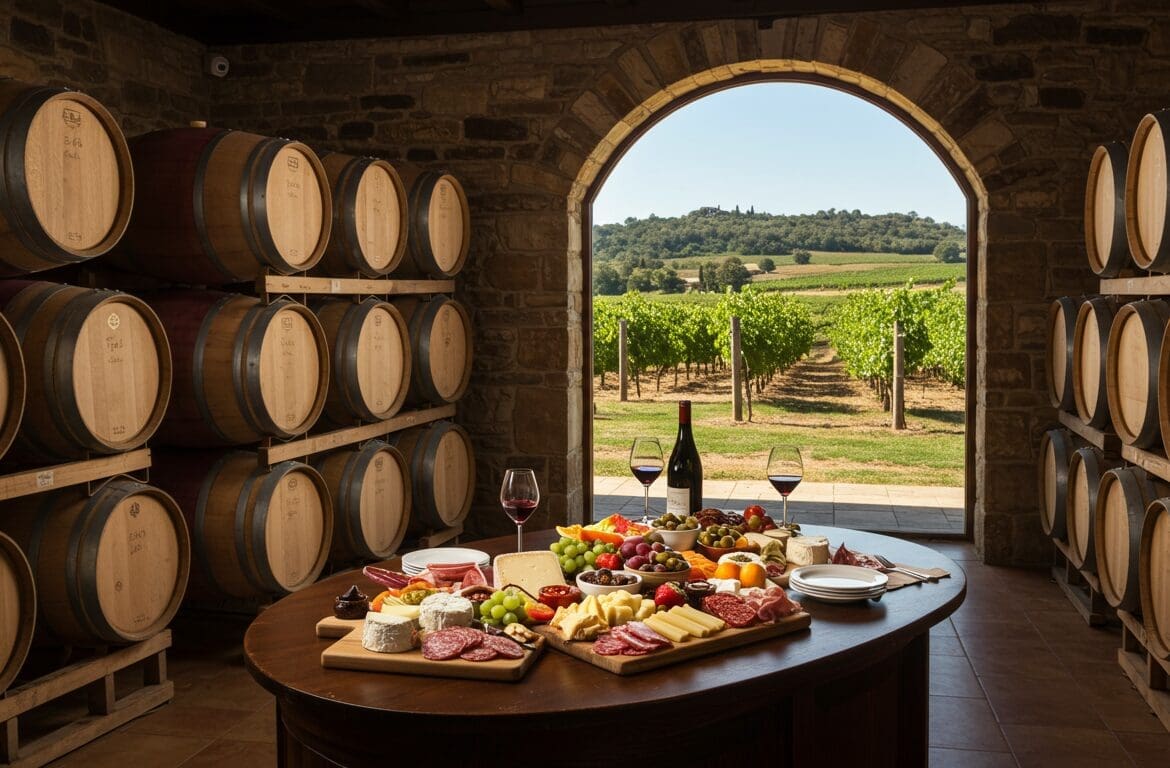
The wine estates of the Chianti Classico zone make for one of the more civilised days out you can plan in Tuscany. Many of the historic estates – some dating back to the medieval period – welcome visitors for tastings, cellar tours and lunch among the vines. The experience at this level is rarely just about the wine. It is about the landscape you drink it in, the history of a family that has farmed the same hillside for generations, and the particular quality of light that falls across a Tuscan vineyard at midday in September.
Estates in the Greve in Chianti and Panzano areas are particularly accessible from Florence, generally under an hour’s drive. The Panzano area is especially worth noting for its concentration of high-quality producers committed to traditional methods. Some estates offer private tours for villa guests – which, for those staying in a property with a good concierge relationship, can elevate an afternoon considerably. Booking ahead is essential. Turning up unannounced tends not to go well, anywhere in Italy.
The Olive Oil Estates: Liquid Gold, Taken Seriously
Tuscany’s olive oil culture runs almost as deep as its wine culture, and considerably deeper than most visitors realise. The harvest typically runs from late October through November, when the olives are picked just before full ripeness to preserve maximum polyphenol content – which is why Tuscan oils have that characteristic peppery finish that catches at the back of the throat. Producers will tell you this is the mark of quality. They are right.
Several estates around Florence offer dedicated olive oil tastings – degustazioni dell’olio – with the same seriousness applied to wine. You are given small tasting cups, warm bread, and guidance on what you are experiencing: the fruitiness, the bitterness, the intensity of the pepper note. It sounds niche. It is, in fact, revelatory. Buying oil directly from an estate means you leave with something that bears no resemblance to the olive oil sitting in a supermarket on the Fulham Road.
For those renting a villa with kitchen facilities, arriving with a litre of freshly pressed olio nuovo from a local estate is one of those small decisions that makes every breakfast better for the rest of the week.
Truffle Hunting in the Tuscan Hills
Tuscany is truffle country, albeit not with the same volcanic intensity as Umbria or the Langhe. The black truffle season runs broadly from November to March; the far rarer white truffle, tartufo bianco, peaks in autumn. Both are taken with the utmost seriousness by those who know about them and with rather too much enthusiasm by those who don’t.
Guided truffle hunts in the countryside around Florence and the Mugello valley offer something genuinely memorable: an early morning in the woods with a local tartufaio and a dog of improbable intelligence, followed by a lesson in how to clean, store and cook what you’ve found. The dogs – typically Lagotto Romagnolo – are extraordinarily skilled and operate with a professional focus that puts most humans to shame. The experience ends, inevitably, with eggs scrambled with truffle or pasta dressed in butter and shavings, which is the correct ending.
Private truffle hunts can be arranged through specialist operators and, increasingly, through the concierge services attached to high-end villas. This is one experience where private really is worth the premium – the group version, with twelve strangers and a very cold morning, is a different proposition entirely.
The Markets of Florence
The Mercato Centrale in San Lorenzo is the most prominent of Florence’s food markets – a vast nineteenth-century iron-and-glass structure whose ground floor remains a working food market of genuine quality, selling meat, fish, cheese, bread, pasta, olive oil and produce. The upper floor has been converted to a food hall, which is very nice and not really the point. The point is the ground floor, where the Florentines actually shop, and where you can buy ingredients for a villa kitchen that will make you feel unreasonably talented as a cook.
The Mercato di Sant’Ambrogio, a short walk east of the Duomo, is smaller, less visited by tourists, and arguably more representative of how Florentines actually eat. The food hall is simple and honest – a handful of vendors selling hot lunches to market workers and locals – and the surrounding stalls offer excellent seasonal produce, local cheeses and the occasional find that requires immediate purchase and a slight reorganisation of the day’s plans.
For those visiting on a Sunday, local weekly markets in the surrounding Chianti towns – Greve, Radda, Gaiole – offer a quieter version of the same experience, usually with the added benefit of being attached to a piazza where a coffee and a schiacciata can be consumed at considerable leisure.
Cooking Classes in Florence
Florence is one of the better cities in Europe in which to learn how to cook, partly because the techniques involved are genuinely learnable and partly because the raw ingredients available in the market are exceptional. A half-day class focused on Florentine pasta – pappardelle, tagliatelle, the hand-rolled pici of southern Tuscany – combined with a market visit to source the ingredients is a compact and deeply satisfying way to spend a morning.
More serious private cooking experiences are available for those who want to go further: a full day with a professional Florentine chef, working through multiple courses and learning the underlying logic of the cuisine rather than just its recipes. These experiences are typically held either in a professional kitchen in the city or – for villa guests – in the villa kitchen itself, with a chef coming to you. The latter is, frankly, the superior option: you cook in the space where you’ll eat, you sit down to the result on your own terrace, and you don’t have to negotiate anyone else’s dietary requirements.
Private pasta lessons, market tours with a local food guide, and farm-to-table cooking experiences on working Chianti estates are all available at the upper end of the market, and all considerably better than the group class situation, which tends to involve a great deal of waiting while someone else struggles with their pasta machine.
The Best Food Experiences Money Can Buy in Florence
At the top of Florence’s food landscape sit a handful of experiences that have nothing to do with restaurants and everything to do with access. A private wine tasting at a Chianti estate, organised around your specific preferences and led by the winemaker rather than a guide, is a different proposition to the standard cellar door visit. A table in a family-run trattoria that doesn’t take reservations, secured because someone knows someone – that is Florence working as it actually works.
A private market tour with a former chef or dedicated food guide who knows the vendors personally, who can identify the best season for a specific variety of Pecorino, who knows when the new-press olive oil from a particular farm is arriving – this is the kind of access that turns a food market from a pleasant experience into an education. It is available to those who plan ahead and are willing to pay for expertise rather than just proximity.
For villa guests with a private chef, the most indulgent expression of Florentine food culture is simply this: a dinner cooked in your own kitchen using ingredients sourced from the market that morning, a bistecca from a butcher in Panzano who has been ageing beef longer than most sommeliers have been alive, and a bottle of Chianti Classico Gran Selezione opened an hour early to breathe. It will be one of the best meals you eat in Italy. That is a reasonable promise to make.
For everything you need to plan your visit – from neighbourhood guides to transport and the art you really shouldn’t miss – our Florence Travel Guide covers the full picture.
Stay in Florence: Villas for Food Lovers
There is a particular pleasure to returning from a morning at the Mercato Centrale to a villa kitchen with real counter space, a terrace to eat on, and no timetable to observe. A good villa in or around Florence changes the nature of the food experience entirely – it means cooking what you bought, opening wine when you want to, and eating at a table that is unambiguously yours. It also means, if you want it, a private chef who knows exactly what’s in season and where to find it.
Browse our collection of luxury villas in Florence – in the city itself, in the surrounding Chianti hills, and across the wider Tuscan countryside – and find a base from which the very best of this food culture becomes genuinely, properly accessible.