
Family Guide to Florida
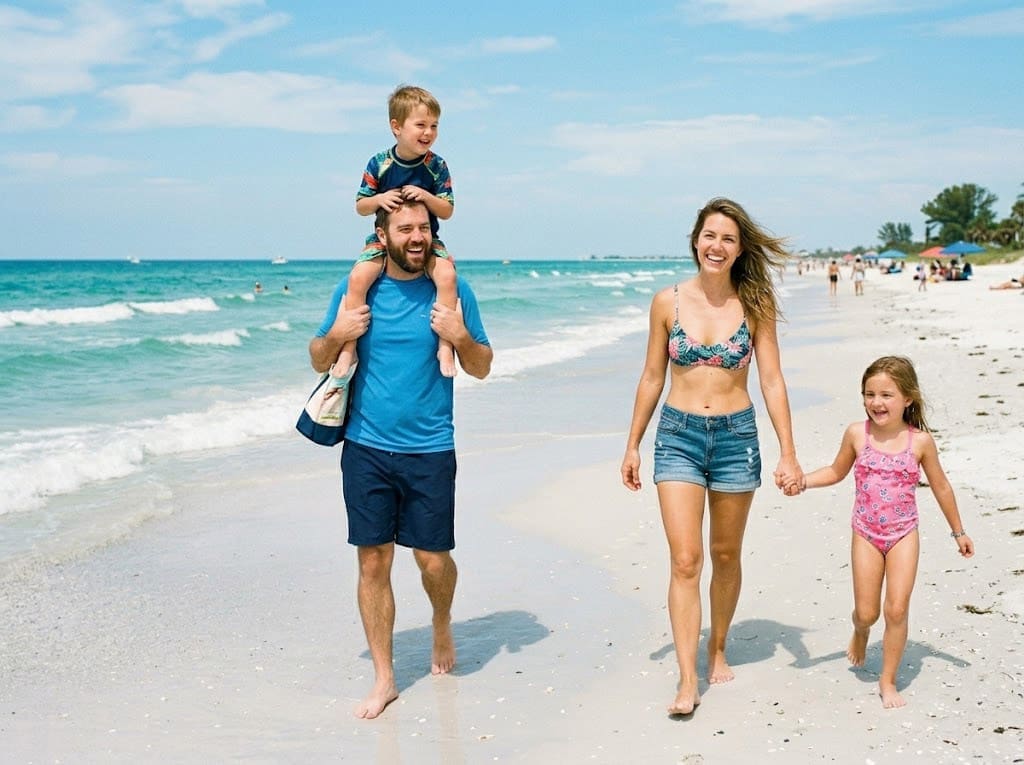
Here is what the guidebooks reliably fail to mention about Florida with children: the real magic does not happen at the theme park. It happens at 7am, when the light goes gold over the Gulf and your youngest finds a horseshoe crab at the waterline, and nobody has had to queue for anything, and the coffee is hot, and the day is entirely yours. Florida is relentlessly, almost aggressively, marketed at families – and yet the version of it that actually works for them, the quieter, more spacious, more genuinely pleasurable version, tends to live just slightly off the tourist radar. This guide is about finding that version.
Why Florida Works So Well for Families
Florida has a particular gift for families with children of wildly different ages, which is rarer than it sounds. The seven-year-old wants water slides. The fourteen-year-old would rather die than be seen near a water slide. The two-year-old has strong opinions about sand. Florida, somewhat miraculously, accommodates all three simultaneously without requiring anyone to make a significant sacrifice.
The climate is the obvious starting point. Warm, reliably warm, from April through October and perfectly tolerable for most of the year besides. The geography does the rest: roughly 8,400 miles of coastline means there is no shortage of beach, and the contrast between the Atlantic side and the Gulf side gives families genuine choice depending on temperament. The Atlantic beaches are livelier, the surf more interesting for older children and teenagers. The Gulf Coast – particularly around Naples, Sanibel and the broader Southwest Florida corridor – offers calmer, shallower, warmer water that makes it genuinely toddler-friendly without being dull for adults.
What makes Florida work specifically for luxury family travel is the infrastructure. The rental villa market is mature and sophisticated, the restaurant scene has evolved well beyond early-bird specials, and the range of private experiences available – boat charters, nature guides, culinary classes, paddleboarding instructors who will come to you – means you never have to settle for the packaged version of anything.
For a broader overview of the destination before diving into the family specifics, the Florida Travel Guide covers the lay of the land across the state’s distinct regions in useful detail.
The Best Beaches for Families in Florida
Not all Florida beaches are created equal, and with children in tow the differences matter considerably more than they might on a solo adult trip. Water depth, current, sand quality, shade availability, parking proximity – these are the things that actually determine whether a beach day ends in delight or a full family meltdown by noon.
For younger children, the Gulf Coast consistently outperforms. The water is shallow and clear for a long way out, the sand is fine and white and surprisingly cool underfoot, and the calm conditions mean that toddlers can paddle with confidence. Siesta Key Beach near Sarasota is frequently cited as one of the finest beaches in the United States, and for once that is not empty boosterism – the quartz sand really does stay noticeably cool even in high summer, which is a small mercy when you have small feet to worry about. Clearwater Beach offers a similar quality of water with slightly more amenity nearby, which counts for something when you need snacks at short notice.
For older children and teenagers, the Atlantic side delivers more energy. The surf around the Space Coast and the beaches near Jacksonville have a rhythm to them that actually rewards proper swimming and boogie boarding. South Beach in Miami is technically a family destination, though arriving with a nine-year-old will give you a particular perspective on it. It is best reserved for families with teenagers who appreciate architecture, people-watching and the specific pleasure of a very good Cuban sandwich eaten on a low wall in the sun.
Families who want something genuinely different should consider a day trip to the Florida Keys, where the water turns a shade of green-blue that children tend to find immediately suspicious (“it doesn’t look real, Dad”) and snorkelling at John Pennekamp Coral Reef State Park delivers the kind of underwater experience that stays in a child’s memory for years. That, rather than any theme park ride, tends to be the holiday they talk about in September.
Family Attractions and Experiences Worth the Journey
Florida’s reputation for theme parks is, of course, entirely deserved. The Walt Disney World Resort in Orlando remains the gold standard of the genre – vast, immersive, operated with a level of logistical precision that is honestly impressive even when you are exhausted by it – and for families with children between roughly five and twelve, a well-planned day there is close to unmissable. The key word is well-planned. Going in without a strategy is the tourist equivalent of crossing the Serengeti on foot. Know your park, book your Lightning Lanes in advance, arrive early, and leave before the afternoon heat turns everyone philosophical.
Universal Orlando’s Wizarding World of Harry Potter continues to deliver for families with older children, particularly those who have grown up with the books. The level of detail in the design is remarkable enough to impress even adults who were dragged there under mild protest.
Beyond Orlando, the nature experiences are where Florida genuinely earns its luxury credentials with discerning families. An airboat tour through the Everglades is thrilling in a way that requires no manufactured drama – the landscape is genuinely alien, the wildlife unexpectedly abundant, and the guide’s knowledge tends to be encyclopaedic. The Kennedy Space Center on the Space Coast is exceptional for children with any interest in science or engineering, and the exhibits are current enough to feel relevant rather than nostalgic.
For something slower-paced, the Crystal River area on the Gulf Coast offers the chance to swim with manatees in the wild – with a reputable, licensed operator – which is one of those experiences that reframes how a child thinks about the natural world in a way that is difficult to replicate in any other setting.
Eating Well With Children in Florida
The honest position on eating with children in Florida is that you are in better shape here than almost anywhere else in the United States. The restaurant culture has enough breadth to serve genuinely good food at almost every price point, the American approach to families dining out tends to be notably more relaxed than the European equivalent, and the abundance of fresh seafood means that menus in coastal areas rarely feel laboured or repetitive.
In practical terms: look for casual waterfront restaurants where the dress code is essentially “dry”, where the fish came off the boat this morning, and where the noise level is sufficient that a child dropping a fork is not a diplomatic incident. Florida does this type of restaurant exceptionally well. Fresh grouper, snapper, stone crab (when in season) and shrimp in various preparations are the backbone of Gulf Coast menus, and children who eat seafood will discover they have been eating it wrong until now.
Miami’s dining scene is considerably more sophisticated and worth investing in for a special evening when childcare arrangements at the villa allow for it. The city has earned a genuine culinary reputation across Latin-influenced, Caribbean and contemporary American cuisines. For families, South Miami neighbourhoods like Coconut Grove offer restaurants where the outdoor terraces and relaxed atmosphere make an evening out with children genuinely pleasant rather than logistically heroic.
Worth noting for families: many higher-end Florida restaurants are more accommodating of children than their European counterparts in equivalent price brackets. The cultural expectation is simply different. This does not mean arriving with toddlers at 9pm is universally welcomed, but a well-timed 6.30pm reservation at a serious restaurant is rarely the social transgression it might be elsewhere.
Practical Tips by Age Group
Toddlers (1 – 4 years)
Florida in summer with toddlers is genuinely manageable provided you respect the heat. The afternoon sun between noon and 4pm is serious, and young children overheat faster than they will tell you. The structure that works is: beach or pool in the morning, a long villa lunch and nap in the cool of the afternoon, and then out again in the early evening when the light softens and the temperature drops to something civilised. A private villa with a pool becomes not just a luxury but a genuine operational necessity in this context – having cool water available the moment you need it, without packing up and driving anywhere, is the difference between a pleasant day and a difficult one.
Gulf Coast beaches with calm, shallow water are the right choice at this age. Sanibel Island is particularly good – accessible, beautiful in an understated way, and substantially less crowded than many comparable beaches. Pack SPF 50 as a minimum. Pack it again. You will run out.
Juniors (5 – 12 years)
This is, bluntly, the golden age for Florida family travel. Children in this bracket have the stamina for a full park day, the curiosity to engage with nature experiences, the appetite for new food, and – crucially – the height requirements for most rides. Orlando’s theme parks make most sense at this age, but so does everything else. Snorkelling, kayaking, paddleboarding, airboat tours, wildlife encounters – Florida delivers at every turn for children who are old enough to fully appreciate what they are seeing.
The logistical advice: build in at least one entirely unscheduled day per week. The pressure to “do everything” is real and it is counterproductive. Some of the best family days in Florida are the ones that start with no plan and end with everyone sunburned, moderately sandy and entirely happy.
Teenagers
Teenagers in Florida have the rare experience of being somewhere that does not require them to pretend to be enthusiastic about things designed for younger children. Miami is genuinely interesting to a curious teenager – the architecture, the culture, the food scene, the Art Deco history of South Beach. Surfing lessons on the Atlantic Coast, paddleboard yoga (they will claim to hate this and then quietly enjoy it), deep-sea fishing charters, escape room experiences in most major cities – the options for slightly older children are substantial.
The Keys road trip is worth considering specifically with teenagers. Driving the Overseas Highway with the ocean visible on both sides produces the kind of silence from the back seat that means something has actually landed. The freedom of a villa base – no hotel lobbies, no curfews, no negotiating over breakfast times – also tends to suit families with teenagers considerably better than any hotel arrangement.
Why a Private Villa with Pool Changes Everything
There is a version of Florida family travel that involves a hotel corridor, a room with two double beds, and the daily choreography of getting five people organised in the same bathroom before 9am. It exists. Nobody would choose it deliberately.
A private villa with pool is not an upgrade on that experience – it is a fundamentally different kind of holiday. The space alone reframes everything. Children have room to decompress, teenagers can disappear to their own corner without anyone having to negotiate for it, and adults can sit on a terrace in the evening with a drink and the particular quiet that only comes when children are occupied elsewhere. The pool – private, accessible at any hour, requiring no towel reservation or communal changing room – becomes the gravitational centre of the day. It is where the holiday actually happens.
For toddlers, the safety and immediacy of a private pool eliminates the logistical friction of beach days when energy or weather is not cooperating. For teenagers, a private villa gives them a version of independence within a contained environment, which is often exactly what the family dynamic needs. For adults, having a full kitchen means the rhythm of meals can be calibrated to children’s actual appetites and timetables rather than restaurant opening hours.
Beyond the practical, there is something about having a space that is entirely yours – your pace, your noise level, your breakfast at 10am or your swim at 11pm – that shifts the quality of family time in a way that is hard to articulate and very easy to feel. Florida’s villa market, particularly across Southwest Florida, the Gulf Coast communities, and the Orlando corridor, offers properties at a level of design and amenity that rival the world’s best private resorts. Outdoor kitchens, home cinemas, games rooms, private docks – the range is genuinely extraordinary.
To start finding the right property for your family, browse our collection of family luxury villas in Florida.