
Ile-de-France Travel Guide: Best Restaurants, Activities & Luxury Villas

Here is a mild confession to start with: Île-de-France is not actually an island. There is no coastline to speak of, no ferry to catch, no sea breeze carrying the smell of grilled fish. The name refers instead to the ancient confluence of rivers – the Seine, the Marne, the Oise – that once made this region feel geographically distinct, like a territory unto itself. Which, culturally speaking, it absolutely is. This is the region that gave the world Versailles, the Louvre, Monet’s garden at Giverny, and a frankly unreasonable concentration of Michelin stars per square kilometre. It also contains Paris, which tends to overshadow everything else with the enthusiasm of a very beautiful, very confident person who doesn’t realise they’re monopolising the conversation. The secret, for the discerning traveller, is to let Paris be Paris – magnificent, overwhelming, utterly itself – and then quietly slip out into the countryside beyond, where châteaux peer over treelines and village markets still feel like something from a quieter century. A luxury holiday in Île-de-France is not one thing. It is simultaneously a world-class city break, a rural French escape, a gastronomic pilgrimage, and a history lesson so absorbing you’ll forgive it for being slightly overwhelming. This Île-de-France travel guide will attempt to do justice to all of it.
Arriving Like a Local (Which Is to Say, Knowing Which Terminal You’re Actually In)
The great majority of international visitors arrive at Charles de Gaulle Airport – CDG to those in the know, Roissy to Parisians who prefer to name things after the surrounding commune rather than the general who inspired the official title. It sits northeast of Paris, about 25 kilometres from the city centre, and it is large enough to qualify as its own small municipality. Terminal navigation at CDG can be, let’s say, characterful. Allow more time than you think you need and resist the temptation to follow signs with excessive confidence.
Orly Airport, to the south of Paris, handles a significant volume of European and domestic traffic and is considerably more manageable in scale. If your itinerary begins in the southern reaches of Île-de-France – Fontainebleau, the Essonne valley, the quieter corners of Seine-et-Marne – Orly can be the smarter choice.
From CDG, the RER B train connects directly to central Paris in around 35 minutes and is perfectly civilised outside of rush hour. Private transfers are the wiser option if you’re travelling with family, luggage of any ambition, or simply a preference for arriving without the particular character-building experience of navigating the Parisian commuter rail with a suitcase the size of a small wardrobe.
Once in the region, a hire car opens up everything beyond Paris itself – the forest roads around Fontainebleau, the château-dotted countryside of the Vexin, the wine villages along the Marne valley. Paris, emphatically, does not require a car. The Métro is efficient, the taxi apps work well, and parking in the city is the kind of puzzle nobody wins. For the broader region, wheels are freedom.
The Table Is the Point: Eating Extraordinarily Well in Île-de-France
Fine Dining
Let us dispense with any pretence of modesty: Île-de-France contains some of the finest restaurants on the planet. Not “among the best in Europe” – among the best anywhere. The concentration of three-Michelin-star establishments in and around Paris is extraordinary, and several of them are the kind of place you will think about, with a specific kind of quiet longing, for years afterwards.
Arpège, on the Left Bank in the 7th arrondissement, is the restaurant of Alain Passard – a chef so committed to his own vision of what French cuisine should be that he converted a three-Michelin-star kitchen to near-total vegetarianism in 2001, at considerable personal and professional risk, and somehow emerged with all three stars intact. He has held them since 1996. The produce comes from his own gardens in Sarthe, Fillé and the Manche. The dishes that result are so precisely calibrated to the season, the soil, the particular variety of a particular vegetable grown in a particular corner of northern France, that eating at Arpège feels less like a meal and more like an argument about the nature of flavour. A convincing argument. One you’re not sure you’re allowed to win.
Le Cinq at the Four Seasons Hôtel George V occupies a different register entirely – which is to say it is the kind of dining room that makes you sit up slightly straighter before you’ve even looked at the menu. Chef Christian Le Squer has held three Michelin stars here for years, drawing on the grand traditions of French classical cuisine and elevating them with a precision that feels effortless, which of course means it is anything but. The tasting menus are exceptional; the wine pairings, navigated by a sommelier team of the very highest calibre, are the sort that make you reconsider wine you thought you already understood.
Then there is Plénitude at Cheval Blanc Paris, awarded three Michelin stars with a speed that startled even the industry – just months after opening in 2021. Chef Arnaud Donckele, a virtuoso with sauces and jus of almost intimidating complexity, has created a menu that moves between his native Normandy and the Mediterranean with the assurance of someone who has spent a lifetime in serious kitchens. The advice from those who know: taste the sauces first, independently, before they meet the plate. The aromatic depth repays the attention.
For those who prefer their gastronomic excellence with a view of the Seine and six intimate dining rooms hung with contemporary art, Guy Savoy at the Monnaie de Paris – the historic mint on the Left Bank – offers exactly that. Two Michelin stars and, for a decade running, recognition from La Liste as the best restaurant in the world. His artichoke and truffle soup, poured at the table, is the kind of dish that becomes a reference point. Everything you eat afterwards gets measured against it, which is not entirely fair on everything else.
Where the Locals Eat
Paris’s neighbourhood bistros remain the truest expression of the French relationship with the table – unhurried, seasonal, deeply unimpressed by fuss. The arrondissements beyond the tourist circuit – the 11th, the 18th, the outer reaches of the 20th – are where you’ll find the wine-bar-restaurants that Parisians actually use on Tuesdays. Natural wine lists scrawled in chalk. Steak tartare prepared tableside. A plat du jour that changes daily because the chef went to the market that morning and made a decision.
Beyond Paris, the market towns of Île-de-France take their food seriously in the way that French market towns do – which is to say, with a quiet, confident authority that requires no validation. The Saturday market at Provins, the producers’ market at Rambouillet, the weekly markets in towns throughout the Oise valley all reward early rising and a willingness to carry things home in a bag rather than a box.
Hidden Gems Worth Seeking Out
The wine villages along the Marne valley – east of Paris through Seine-et-Marne – produce a Champagne that rarely travels far. Local producers sell direct from their cellars, with the particular informality of someone who has nothing to prove. If you find yourself near Châtillon-sur-Marne or exploring the valley villages, the small-production growers are the ones to seek out. The wine is excellent. The hospitality is genuine. Nobody is performing.
In the forest towns around Fontainebleau, a handful of small restaurants serve the kind of food that has evolved in response to what grows and moves in the surrounding countryside – game in autumn, mushrooms picked from specific spots that the chef will describe with proprietorial affection. These are not places that appear in major guides. They appear in the recommendations of people who live nearby, which is a more reliable system.
Beyond the City: The Shape of the Region
Île-de-France covers roughly 12,000 square kilometres – eight departments arranged around Paris like the segments of a wheel. Most visitors never leave the hub. This is understandable, but it represents a significant missed opportunity.
To the south and east lies the Forest of Fontainebleau: 25,000 hectares of ancient woodland threading between dramatic sandstone formations, the forest that trained generations of French painters and continues to draw climbers, hikers and people who simply want to be somewhere genuinely, noticeably quiet. The town of Fontainebleau itself sits alongside its château with a composure that suggests it has long since made peace with being beautiful.
The Seine valley northwest of Paris – through the natural regional park of the Vexin Français – offers countryside that feels improbably rural given its proximity to one of the world’s great cities. Rolling grain fields, chalk escarpments, villages with Romanesque churches and no particular interest in being discovered. This is where Monet settled at Giverny, and while the garden draws considerable crowds in high season, the surrounding landscape that inspired him is largely undisturbed.
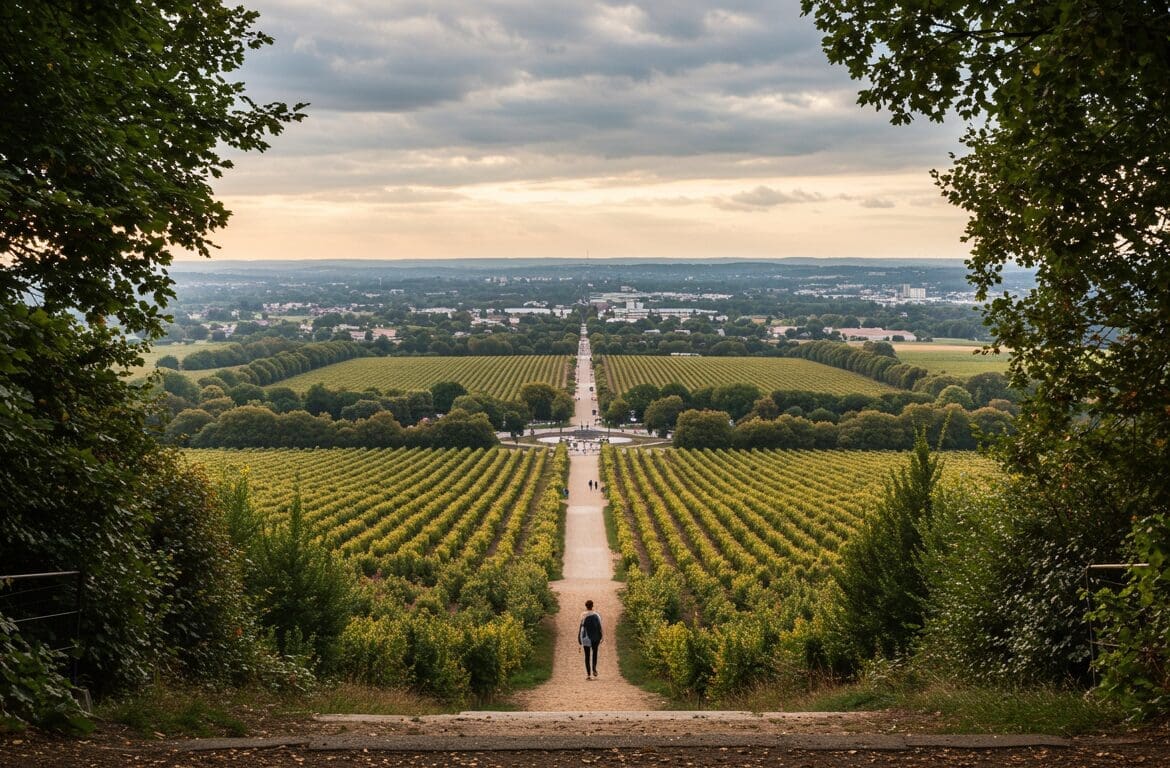
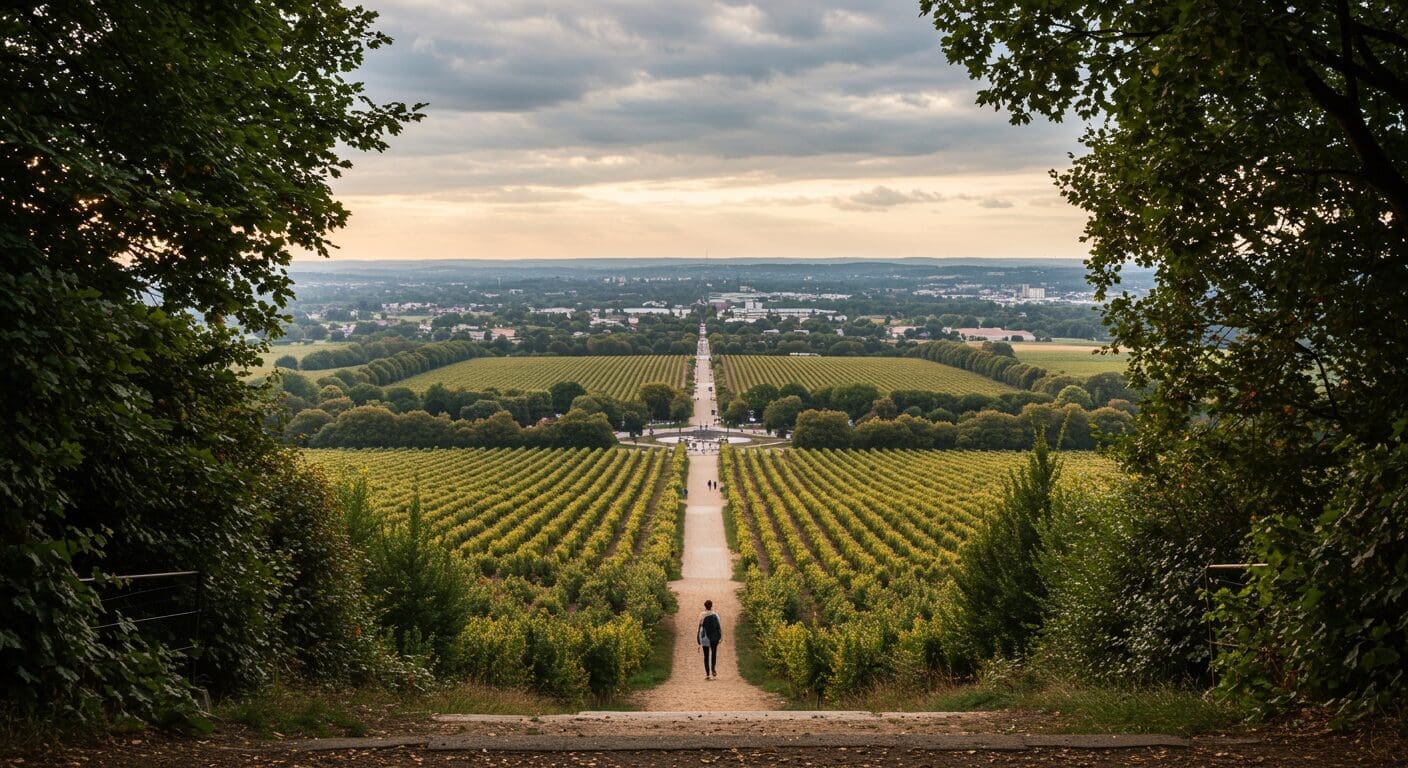
To the northeast, the Picardy plain bleeds gradually into the Île-de-France countryside through valleys and wetlands that support a particular quality of light – the light that made the Impressionists, essentially. There are days in this region, in late afternoon in early autumn, when the countryside looks precisely like a painting. Not metaphorically. Precisely like one.
The Château de Vaux-le-Vicomte, southeast of Paris in Seine-et-Marne, predates Versailles and is, if anything, more emotionally affecting for its scale – grand enough to be extraordinary, intimate enough to actually feel. Nicolas Fouquet, who commissioned it in 1658, was so pleased with the result that he threw a party for Louis XIV. Louis XIV was so covetous of what he saw that he had Fouquet arrested three weeks later. The lesson here is either about restraint or about the wisdom of not inviting kings to your house. Historians differ.
Things Worth Doing: The Activities That Actually Justify the Journey
The obvious starting point for any visit to Île-de-France is the Louvre – and despite being obvious, it remains correct. The world’s most visited museum is, by any reasonable measure, extraordinary, and the impulse to avoid it because it’s popular is a form of cultural perversity the region doesn’t deserve. The trick is not to attempt it comprehensively. The Louvre is not a museum you complete. Pick three rooms, or five, and let the rest exist for the next visit.
Versailles rewards the visitor who arrives early and leaves the main palace for second billing. The Grand Trianon, the gardens in morning light, the Hameau de la Reine – Marie Antoinette’s pastoral fantasy village, which was either an act of playful escapism or a degree of detachment from political reality that history has been adjudicating ever since – are all more quietly extraordinary than the state apartments, which are impressive but relentless.
A river cruise on the Seine is the rare tourist activity that earns its reputation entirely. The city reads differently from the water. Bridges, facades, the Institut de France catching the afternoon light – the whole visual argument of Paris becomes legible in a way that ground-level navigation, however pleasurable, doesn’t quite allow. Evening departures, with the city illuminated and a glass of something in hand, are particularly recommended.
For those with an interest in French cultural heritage at a more intimate scale, the Vaux-le-Vicomte estate runs candlelit evenings on Saturday nights in summer – the château lit entirely by 2,000 candles, the fountains running, the gardens open. It is, objectively, one of the best things to do in Île-de-France, and it has the useful quality of being genuinely moving rather than merely impressive.
Active Escapes: The Region Has More Mountains Than You Think (It Has None, But Bear With Us)
The Forest of Fontainebleau is France’s spiritual home of bouldering – the practice of low-level technical climbing on the sandstone outcrops that punctuate the forest floor. Climbers have been coming here since the 19th century, and the forest now contains thousands of marked problems across all ability levels, navigated by a colour-coded system that requires a certain amount of deciphering but rewards the effort. It is an extraordinary outdoor resource within ninety minutes of Paris, and it remains the place where many of the world’s elite climbers learned their craft.
Cycling in Île-de-France has improved markedly in recent years, both within Paris – where the network of lanes has expanded at an ambitious pace – and throughout the broader region. The Avenue Verte between Paris and London (via Dieppe and the ferry) begins here. The Forest of Rambouillet offers forest tracks for mountain bikers. The Seine valley routes are gentler, following the river through countryside that asks nothing more of you than to be present.
The Marne valley east of Paris has been a leisure destination for Parisians since the nineteenth century – kayaking, paddleboarding, swimming and the particular French summer activity of sitting beside water with considerable patience and a fishing rod. Sailing and windsurfing are available at several of the larger reservoirs and lakes within the region, including the Base de Loisirs at Cergy-Pontoise, which functions as an inland water sports centre of genuine scale.
Running in Paris is, unexpectedly, one of its pleasures. The Bois de Boulogne and the Bois de Vincennes – both vast, forested parks at the edges of the city – accommodate runners, cyclists and riders with a democratic generosity. Early morning, before the city fully wakes, the Tuileries garden is rather beautiful as a running route.
Île-de-France with Children: Considerably Better Than Expected
The reflexive assumption that Île-de-France means Paris and Paris means culture and culture means small children being slowly defeated by marble floors – this assumption deserves revision. The region is, with some planning, genuinely excellent for families.
Disneyland Paris, in Marne-la-Vallée, requires no editorial assistance from us. It exists, it operates at scale, it produces the particular form of familial happiness that involves standing in queues for forty-five minutes and considering it entirely worthwhile. For families with young children, it remains one of the most efficiently delightful single days available within the region. For parents, the nearby Val d’Europe shopping centre has the curious consolation of being extremely good.
The Cité des Sciences et de l’Industrie at La Villette is among the best science museums in Europe – genuinely interactive, built at a scale that children find physically exciting before they’ve engaged with any of the exhibits, and capable of occupying an entire day. The adjacent Géode cinema, a mirrored sphere containing an IMAX dome, adds to the spectacle.
For families staying in a luxury villa in Île-de-France beyond the city, the outdoor advantages are considerable: space to run, private pools, access to forest walks and cycle paths without the logistics of urban navigation. The Forest of Fontainebleau is extraordinary for children with energy to expend – the boulder fields function essentially as a very large, very old natural adventure playground. Children who were skeptical about “the countryside” tend to revise their position within the first hour.
The larger châteaux, handled correctly, can be made to work for younger visitors. Vaux-le-Vicomte offers treasure hunt activities. Versailles has a children’s audio guide. The key is ruthless editing and the acceptance that a two-hour visit remembered fondly is better than a five-hour one remembered as a defining grievance.
History That Doesn’t Feel Like a Lesson
Île-de-France has been the centre of French political, artistic and intellectual life for over a millennium. The Capetian kings made Paris their capital in the 10th century. Saint-Denis, just north of Paris, became the royal necropolis – the burial place of French monarchs for eight centuries, its basilica representing the first major expression of Gothic architecture, a style that subsequently redefined European religious building from the 12th century onwards.
The Gothic cathedrals of the region – Notre-Dame de Paris, currently in the final stages of an extraordinary restoration after the 2019 fire, Chartres (technically Eure-et-Loir but close enough to warrant the detour), Senlis, Beauvais – represent a concentrated programme of architectural ambition that transformed not just the landscape of northern France but the aesthetic vocabulary of Western civilisation. This sounds like an overstatement. It isn’t particularly.
The Revolution played out here in the streets and squares that still exist, still function, still carry the resonance of what happened on them. The Place de la Concorde, where the guillotine stood. The Conciergerie, where prisoners waited. The Panthéon, where the Republic interred its heroes with the particular solemnity of a culture that takes national narrative seriously. History in Île-de-France is not a museum exhibit. It is ambient.
The Impressionist movement, which changed the way Western art understood light, colour and the act of looking, was born in this region – along the Seine valley, in the poplar stands of Argenteuil, in Monet’s water garden at Giverny. The Musée d’Orsay, in a converted railway station on the Left Bank, holds the collection that documents this transformation with a comprehensiveness and beauty that consistently justifies the visit.
Contemporary cultural life in Paris operates at a comparable intensity: the Palais de Tokyo for contemporary art, the Philharmonie de Paris at La Villette for serious music, the Festival d’Automne each autumn assembling a programme of theatre, dance and performance that draws the international avant-garde to the city.
Shopping with Intent: What to Buy and Where to Find It
Paris needs no ambassador when it comes to shopping. The luxury fashion houses of the Rue du Faubourg Saint-Honoré and Avenue Montaigne represent the highest expression of a culture that has elevated the well-made object to something approaching a philosophical position. Hermès, Chanel, Dior, Louis Vuitton – these are not merely brands in Île-de-France. They are, in a very real sense, cultural institutions.
For those whose interests run to something more particular and less global, the antique dealers of the Marais and the Carré Rive Gauche – a cluster of over a hundred specialist antique galleries in the 6th and 7th arrondissements – offer the kind of serious, specialist shopping that takes an afternoon and occasionally takes considerably more of your money than you had allocated. The Marché aux Puces de Saint-Ouen, the great flea market at the city’s northern edge, is one of the world’s largest antique markets, organised into distinct specialist sections, and entirely capable of consuming a full day.
Outside Paris, the artisan producers of the region – honey from the Seine-et-Marne beekeepers, Brie de Meaux and Brie de Melun from their designated zones (these are, legally, specific cheeses from specific places, and the originals are materially different from the international imitations), mustards, preserves, the small-production Champagnes of the Marne valley – represent the kind of shopping that turns into a meal on arrival home and prompts a conversation about when you can go back.
What You Actually Need to Know Before You Go
The currency is the euro. French is the language, though Paris is sufficiently cosmopolitan that English functions well in most contexts – hotels, restaurants, major attractions. Outside the capital, a modest investment in French courtesy (bonjour, s’il vous plaît, merci – the baseline of civilised interaction) is rewarded with a warmth that the French reputation for coldness does not entirely predict.
Tipping in France operates on a different logic to the United States or the United Kingdom. Service is included in restaurant bills by law. Leaving a few euros for genuinely good service is appreciated and appropriate; the expectation of a fixed percentage tip does not apply. At the highest level of dining, discretion and warmth towards the staff are valued above almost anything else.
The best time to visit for weather and navigability is April through June – Paris in spring is not a cliché, it is simply accurate – and September through October, when the summer crowds have thinned, the light is extraordinary and the cultural calendar resumes after the August exodus. August itself is a complicated month: many Parisians leave, which can make the city feel strangely peaceful, but some independent restaurants close for the holiday season. July is busy and warm; January and February are quiet and cold and, for the right kind of traveller, have their own quiet charm.
Paris is, statistically, one of the safer major European capitals. The standard urban vigilance applies – pickpocketing around major tourist sites, awareness in busy metro stations. Beyond Paris, the Île-de-France countryside is remarkably unthreatening.
Why a Private Villa Changes Everything About This Region
There is a version of Île-de-France that exists in a hotel room – perfectly comfortable, precisely located, convenient in all the ways that matter and none of the ways that linger. And then there is the version available from a private villa: a courtyard in the Marais with morning light on old stone; a house in the Seine valley with views across water meadows and a kitchen large enough to take seriously; a château-adjacent property in Seine-et-Marne where the grounds are yours, the pool is yours, the particular silence of the French countryside is yours at whatever hour you choose to encounter it.
For families, the calculation is obvious: space, privacy, a base that doesn’t require everyone to be simultaneously ready by a fixed time. For couples, a private villa in the right location delivers the Île-de-France that the great travel writers have always reached for – the feeling of living briefly inside a place rather than passing through it. For groups, the economics and the logistics both shift in your favour.
The region has extraordinary variety at the luxury end: properties within Paris itself, manor houses in the Vexin, vineyard estates in the Marne valley, historic houses in the Forest of Fontainebleau. Each offers a genuinely different experience of the region. The Louvre is the same whatever your accommodation. The morning you spend reading in a private garden before driving to it is not.
Excellence Luxury Villas offers an expertly curated portfolio of private villa rentals in Ile-de-France – from Parisian apartments of genuine luxury to rural retreats across the broader region. If Île-de-France deserves to be experienced properly, and it does, this is how to do it.
More Ile-de-France Travel Guides
What is the best time to visit Ile-de-France?
April to June and September to October are the optimal windows. Spring brings the city to life with blossom, manageable crowds and reliable warmth. Early autumn delivers exceptional light, a full cultural calendar and the particular pleasure of Paris after the August holidays – quieter, slightly more itself. July and August are busy and warm but restaurant closures can be a factor in August. Winter visits have their rewards – fewer tourists, atmospheric grey light, excellent museum access – but require acceptance of shorter days and occasional cold.
How do I get to Ile-de-France?
The principal international gateway is Charles de Gaulle Airport (CDG), northeast of Paris, served by direct flights from across Europe, North America, Asia and beyond. Orly Airport, south of Paris, handles significant European and domestic traffic and is more straightforward to navigate. From CDG, the RER B train reaches central Paris in approximately 35 minutes; private transfers are the more comfortable option for families or those with substantial luggage. Eurostar connects London St Pancras directly to Paris Gare du Nord in around two hours and fifteen minutes – arguably the most civilised way to arrive from the United Kingdom.
Is Ile-de-France good for families?
Very much so, with some planning. Disneyland Paris at Marne-la-Vallée is an obvious draw for younger children. The Cité des Sciences at La Villette is one of Europe’s finest science museums and genuinely engaging for children of almost any age. The Forest of Fontainebleau offers world-class outdoor exploration – bouldering, hiking, forest walks – within ninety minutes of Paris. Families staying in a private luxury villa beyond the city gain the additional advantages of space, private outdoor areas, and a flexible base for day trips without the organisational demands of hotel logistics.
Why rent a luxury villa in Ile-de-France?
A private villa transforms the experience of Île-de-France from tourism into something closer to genuine residence. It provides space and privacy that no hotel can match, a kitchen for engaging with the extraordinary local produce and markets, and a base with its own character – whether a Parisian property in a historic arrondissement or a rural manor in the Seine valley countryside. For families, the practicalities alone justify the choice. For couples and groups, the quality of the experience – waking to your own garden, returning to your own space after a day in Paris – is simply a different order of travel.