
Food & Wine in Malaga
Food & Wine in Malaga
Around ten in the morning, when the fish market has been open for hours and the first espresso cups are already stacked in the tray, Malaga smells of salt and frying oil and something that might be yesterday’s wine, and the whole city seems to be in the middle of a conversation that started long before you arrived. This is a place that eats with intent. Not for Instagram, not for the Michelin guide (though that has started to notice), but because food here is simply what you do – between work, during work, instead of work. Understanding food and wine in Malaga is really understanding the city itself.
For a broader overview of the city before you dive fork-first into its pleasures, our Malaga Travel Guide covers everything from neighbourhoods to cultural highlights.
The Character of Malagueño Cuisine
Malaga sits at a particular crossroads – Moorish, Mediterranean, Atlantic, mountain and coast – and its kitchen reflects every one of those influences without apology. This is Andalusian food, but with its own sharp local identity. The cooking is confident in a way that doesn’t need explaining. Nobody here is reconstructing gazpacho into a gel or serving it in a shot glass with theatrical garnish. They are just making it cold and sharp and properly seasoned, the way it should be.
The cuisine divides fairly naturally between the coast and the interior. Down on the waterfront it’s fish – always fish – cooked simply and respectfully. Inland, towards the Axarquía and the mountains behind Ronda, the cooking gets heartier: slow-braised meats, wild herbs, cured pork in various persuasive forms. The luxury traveller who spends an entire week eating only in the city centre is missing roughly half the picture. The half that doesn’t have a tasting menu but might be the better meal.
Olive oil is not a condiment here. It is a cooking medium, a sauce, a bread accompaniment and, for some, practically a philosophy. The province of Malaga produces oils of real distinction, particularly from the Antequera region, where the Hojiblanca and Verdial varieties yield oils that are grassy, peppery and assertive in the best possible way. Visiting a working almazara – an olive oil mill – during harvest season between October and January is one of those quietly revelatory experiences that tends to make you rethink every salad you’ve ever made.
Signature Dishes Worth Knowing
Espeto de sardinas might be the most honest dish on the Costa del Sol. Sardines, threaded onto a cane skewer, cooked over smouldering vine wood in a half-boat on the beach, served with nothing but lemon and bread. The preparation has barely changed in a century. The difficulty is eating them without wearing half of one.
Fritura malagueña – the local fried fish platter – is the measure by which every chiringuito on the coast is quietly judged. Tiny anchovies, rings of squid, red mullet, perhaps some cuttlefish, all dusted in fine flour and fried in good olive oil at the right temperature. When it’s done well, it’s light and crisp and tastes of the sea. When it’s not, it’s a cautionary tale about oil temperature and tourist footfall.
Ajoblanco predates gazpacho by several centuries and, many would argue, has the better argument. A cold soup of ground almonds, garlic, bread, olive oil and sherry vinegar, typically garnished with muscatel grapes or melon. It is silky and unusual and extraordinarily refreshing in summer. If you’ve never had it, consider this your moment.
Then there is porra antequerana, the thick, intensely savoury cousin of gazpacho from inland Antequera. Berza malagueña – a chickpea and vegetable stew layered with pork – for the cooler months. Boquerones en vinagre, fresh anchovies cured in vinegar and finished with olive oil and garlic, which appear on virtually every bar counter in the city and are difficult to walk past without ordering.
The Wines of Malaga and Sierras de Malaga
Malaga’s wines are one of the most interesting stories in Spanish viticulture, and one of the most underappreciated. The region actually has two DO designations: Malaga, which covers the celebrated sweet wines made primarily from Pedro Ximénez and Moscatel de Alejandría grapes, and Sierras de Malaga, which covers the dry table wines that have been quietly causing a stir among serious wine drinkers for the past two decades.
The sweet Malaga wines – particularly the aged ones, oxidatively matured in the solera system – are extraordinary things. Deep mahogany, rich with dried fig, coffee, caramel and a complexity that takes time to understand. They were once fashionable across Europe in the eighteenth and nineteenth centuries, then went terribly unfashionable, and are now the preserve of people who know things. Worth getting to know.
The dry wines from the Sierras de Malaga appellation are the more recent revelation. The Axarquía subzone, with its dramatic slate soils and steep terraces, produces Romé and Moscatel sec wines of real originality. The areas around Ronda – elevated, cool, with limestone soils – yield Cabernet Sauvignon, Syrah, Tempranillo and Petit Verdot with a freshness that surprises those who expect only heat from Andalusian red wine. Producers to seek out include Cortijo Los Aguilares, whose wines from the Ronda highlands have attracted consistent critical attention, and Bodegas Bentomiz in the Axarquía, making some of the most characterful Moscatel and Romé wines in the region.
If you are visiting with a serious interest in wine, the Ronda wine route merits at least a day. The landscape alone – dramatic gorges, white villages, vertiginous vines – justifies the drive. The wine is what keeps you there.
Wine Estates and Bodega Visits
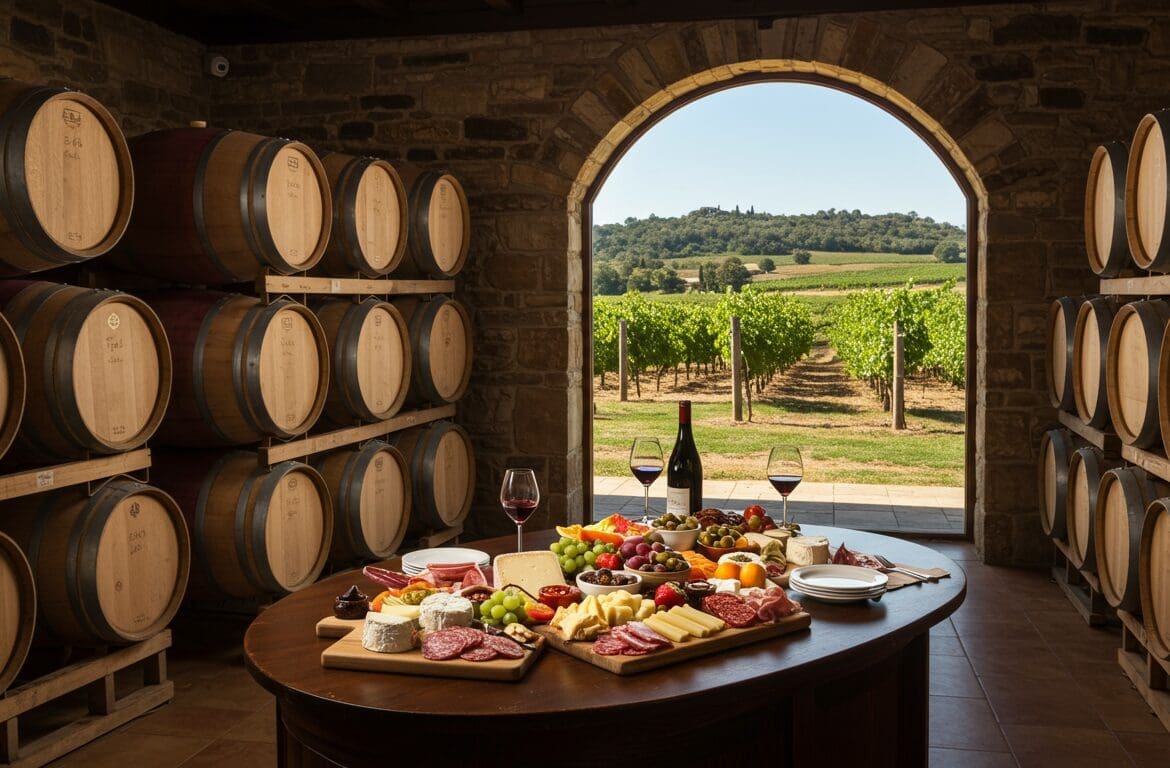
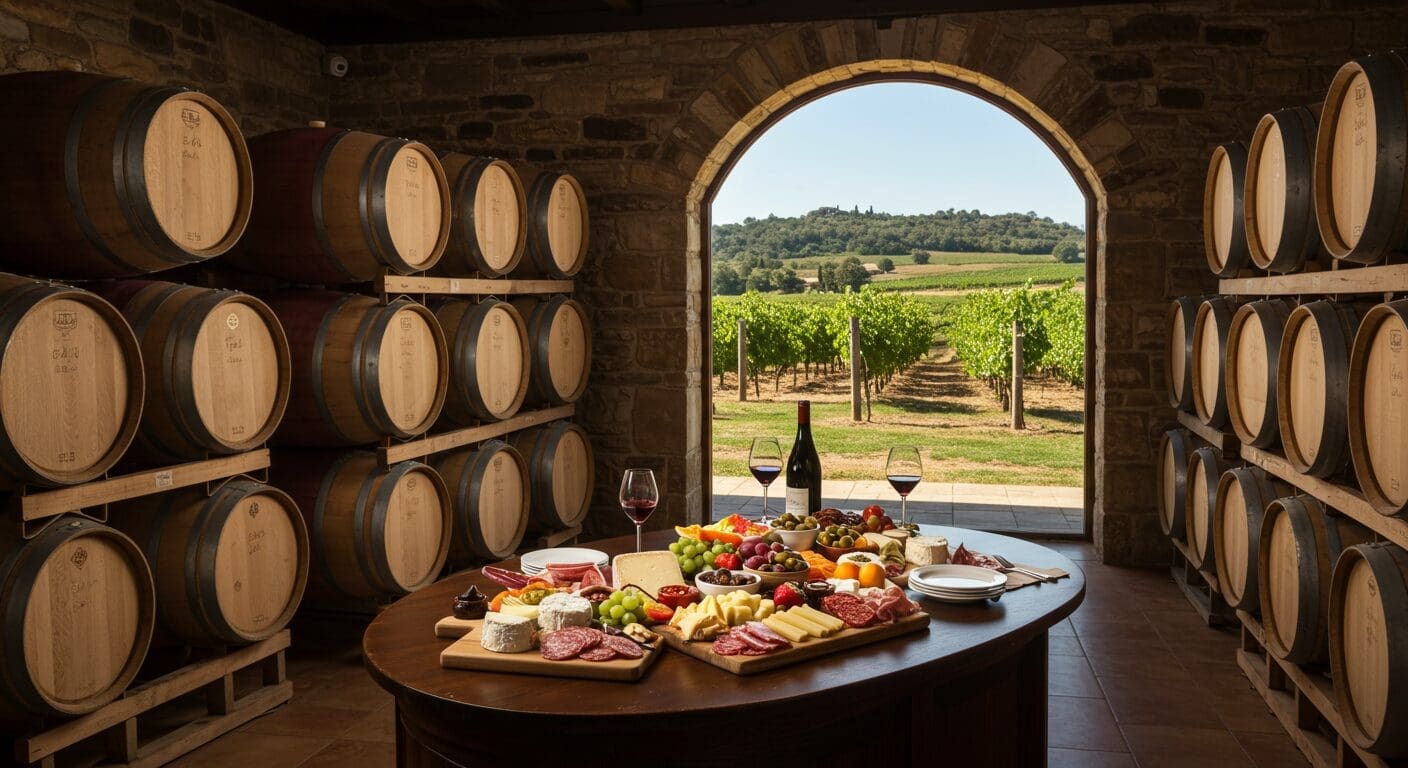
Several of the Sierras de Malaga estates receive visitors, and a well-arranged bodega visit here is a genuinely immersive half-day. The experience tends to be personal in a way that isn’t always possible in, say, Rioja or Bordeaux, where the visitor programmes can feel rather industrialised. Here you are often tasting with the winemaker or a member of the family, in cellars that smell of wood and fermentation, looking out at vines that make an excellent case for having been planted exactly where they are.
Cortijo Los Aguilares, outside Ronda, offers visits that take in both the winery and the estate, with tastings that allow you to understand how altitude and the particular character of the Serranía de Ronda shapes the wines. Bodegas Bentomiz, set high in the Axarquía above the village of Sayalonga, provides a perspective on the region’s terraced slate vineyards that you won’t find anywhere else in Spain. Arranging private visits through your villa concierge is straightforward, and adds a layer of access that the standard tour doesn’t always offer.
Markets, Ingredients and Culinary Exploration
The Mercado Central de Atarazanas in Malaga city is the right place to start any serious engagement with the local larder. A nineteenth-century iron-framed market hall with a spectacular Moorish archway at its entrance, it sells produce, fish, meat and cheese with the particular energy of a market that people actually use. The fish stalls alone – ordering by point-and-indicate if your Spanish is approximate – are an education in Mediterranean species that supermarkets have spent decades pretending don’t exist.
For the luxury traveller who wants to engage at a deeper level, private market tours with a local chef or food guide are available in Malaga city, typically followed by a cooking session using whatever looked compelling on the morning’s visit. These are not the sanitised cooking class experiences of certain other European cities – they tend to be properly hands-on, occasionally chaotic, and almost always delicious. Learning to make proper ajoblanco, or to clean and fry anchovies correctly, or to assemble a proper espeto, is the kind of culinary knowledge that stays useful.
Beyond the city, the weekly markets in villages throughout the Axarquía and the Serranía de Ronda are excellent opportunities to encounter local cheeses, honey, cured meats, almonds and the distinctive Malaga raisins – pasas de Málaga – that are among the finest in the world and frequently ignored by people who should know better.
Truffles, Honey and the Wilder Larder
The interior of Malaga province, particularly the forests of the Serranía de Ronda, supports truffle populations – primarily Tuber melanosporum, the black Périgord truffle – and truffle hunting experiences with trained dogs and local experts can be arranged in season, typically from late autumn through winter. This is not Périgord or the Lot, and truffle hunting is less established here as a visitor activity than in those regions, but that is arguably part of its appeal. You are unlikely to share the experience with a coach party.
Local honey from the Sierra de las Nieves natural park – recently elevated to UNESCO Biosphere Reserve status – is another ingredient worth seeking out. The variety of wild flora in these limestone uplands produces honeys with a complexity that bears no resemblance to anything sold in a supermarket. Buying directly from a producer, if you can arrange it, is infinitely preferable to the tourist-oriented jars at airport shops, and your villa concierge should be able to point you in the right direction.
The Best Food Experiences Money Can Buy in Malaga
The single most transportive food experience in Malaga is, paradoxically, also the simplest. A late lunch at a chiringuito on the beach – the ones with their feet actually in the sand, not the dressed-up waterfront restaurants – eating espeto de sardinas cooked over a wood fire, with cold local wine poured from a jug, the Mediterranean doing its uncomplicated best in front of you. It costs almost nothing. It is genuinely hard to improve upon.
For those who want something more architecturally elaborate, Malaga city’s restaurant scene has evolved considerably in the past decade. There are now tables in the city that take Andalusian ingredients and apply genuine creative ambition without abandoning their roots – a balance that is harder to achieve than it sounds. Private dining experiences, chef’s table evenings and guided gastronomic tours through the historic centre are all available for travellers who want to move beyond the obvious.
A day-long private culinary excursion combining a morning at the Atarazanas market, a visit to an olive oil producer in the Antequera region, and lunch at a rural finca where the cooking uses whatever is in season, represents the kind of sequenced food experience that connects the produce, the landscape and the table in a way that no single restaurant visit can replicate. This is the sort of itinerary that makes the flight home feel slightly premature.
For those with a specific interest in wine, a private two-day circuit of the Ronda wine estates, arranged with access to producers who don’t normally open to visitors, and including dinner at an estate with overnight accommodation, sits at the top of the Malaga food and wine experience hierarchy. It requires planning and the right contacts. Both of which are the natural territory of a good villa concierge.
A Note on Eating Times
One final practical observation that luxury travellers sometimes resist absorbing until it’s too late: in Malaga, lunch is eaten between two and four in the afternoon, and dinner rarely before nine. Attempting to eat dinner at seven thirty will result in a largely empty restaurant, a slightly pitying look from the waiter, and the particular experience of being served by staff who were clearly not expecting you. The city operates on its own schedule, and the food is better when you work with it rather than against it.
The food and wine of Malaga reward time and curiosity in roughly equal measure. They are best explored from a base that gives you the freedom to move between coast and mountain, city market and rural finca, beach chiringuito and bodega cellar. Explore our collection of luxury villas in Malaga – properties with the space, privacy and location to make every meal, every bottle and every long Andalusian afternoon exactly what it should be.
What are the most important wines to try in the Malaga region?
Malaga has two DO designations worth knowing. The first covers the region’s celebrated sweet wines, made primarily from Pedro Ximénez and Moscatel grapes – the aged, oxidatively-matured versions are particularly complex and often underestimated. The second, Sierras de Malaga, covers dry table wines including the distinctive Romé and Moscatel sec wines from the Axarquía zone, and the elevated red wines from the Ronda highlands, where cool temperatures and limestone soils produce wines with real freshness and character. Both styles offer excellent value relative to their quality.
What are the signature dishes of Malaga that visitors should seek out?
Several dishes define food in Malaga and are worth going out of your way to find. Espeto de sardinas – sardines grilled over vine wood on the beach – is the most iconic. Ajoblanco, a cold almond and garlic soup typically served with muscatel grapes, is one of the great dishes of the Andalusian summer. Fritura malagueña, the local fried fish platter, is the coastal benchmark. And porra antequerana, a thick cold tomato soup from inland Antequera, is excellent and far less well known than it deserves to be. Boquerones en vinagre appear on practically every bar counter in the city and should not be ignored.
Is it worth visiting wine estates and food producers outside Malaga city?
Very much so. Some of the most rewarding food and wine experiences in the province lie outside the city entirely. The Ronda wine route gives access to a cluster of serious estates producing wines from high-altitude vineyards, several of which receive private visitors. The Axarquía region to the east of the city offers terraced slate vineyards and distinctive local varieties. Olive oil mills around Antequera are excellent during harvest season. And the rural markets and honey producers of the Sierra de las Nieves add another dimension to understanding the local larder. These excursions are most easily arranged with private transport and ideally through a villa concierge with established producer contacts.