
Thailand Food & Wine Guide: Local Cuisine, Markets & Wine Estates
What does it actually mean to eat well in Thailand? Not the pad Thai that arrives at every tourist table with the resigned punctuality of a delayed flight, but the real thing – the dish that makes you put down your fork (or chopsticks, or spoon, depending on where you are) and stare at the middle distance for a moment, recalibrating everything you thought you knew about flavour. This guide is for travellers who want that moment. The ones who understand that food in Thailand is not a backdrop to the holiday – it is the holiday, seasoned with a little history, a little heat, and, increasingly, a glass of something interesting grown right here in the Kingdom.
Understanding Thai Regional Cuisine
Thailand is not one cuisine. It is four or five, depending on how precisely you’re drawing the lines, each shaped by geography, trade routes, and the particular temperament of the people who live there. The North is mountainous and cooler, which explains both its slower-cooked dishes and the influence of neighbouring Myanmar and Laos. Chiang Mai’s signature khao soi – a rich, curry-laced coconut broth with both soft and crispy egg noodles – is possibly the most perfect single dish in the entire country. That is a bold claim. Stand by it.
The Central Plains and Bangkok represent the elaborate, court-influenced tradition: intricate curries, delicate fish preparations, rice that functions less as a side dish and more as the connective tissue of the entire meal. The South, meanwhile, is fiercer – turmeric-heavy, seafood-abundant, and considerably less forgiving of anyone who orders “medium spicy” and actually means it. And the Northeast, Isan, is a world of its own: fermented fish paste, grilled meats, and papaya salads so aggressively seasoned that they have converted hardened food critics and left others weeping quietly into their napkins. Isan food is having a long-overdue international moment, and rightly so.
Understanding these regional distinctions transforms the experience of eating here. A luxury traveller who moves between Bangkok, Chiang Mai, and the southern islands without paying attention to the shifts in flavour is missing what the country is actually saying about itself.
Signature Dishes Worth Seeking Out
Every Thai dish you’ve heard of deserves to be tried in its proper context. Pad Thai, yes – but not from a tourist strip. Seek it out at a market stall where the wok has been seasoned over decades and the cook works with the focused intensity of someone who has made this exact dish ten thousand times and still cares. The difference is considerable.
Beyond the familiar, there are dishes that reward the curious. Som tam – green papaya salad – varies dramatically by region, with Isan versions leaning on fermented crab and fish sauce in ways that politely announce themselves as an acquired taste. Tom kha gai, the coconut and galangal soup, is a study in restraint and depth simultaneously. Gaeng keow wan, green curry, when made fresh with hand-pounded paste, is barely recognisable as a relative of the jarred supermarket version.
In Bangkok’s finer dining restaurants, chefs are doing something sophisticated with these foundations – refining technique, sourcing obsessively, presenting Thai flavour profiles through a contemporary lens without losing what makes them distinctly Thai. The tasting menus at the city’s acclaimed fine dining establishments have drawn international attention, and several Bangkok restaurants have now earned Michelin recognition. Eating at this level is not a departure from Thai food culture; it is a continuation of a court tradition that has always valued extraordinary craft.
Food Markets: Where Thailand Really Eats
No food and wine guide to Thailand is complete without an honest account of its markets, which are simultaneously the best and most chaotic eating environments you will ever encounter. The trick is to arrive hungry, carry cash in small denominations, and abandon any notion of a structured meal. Markets in Thailand do not do courses.
Bangkok’s Or Tor Kor market near Chatuchak is the place serious food people go when they want premium produce – immaculate tropical fruits, dried goods, prepared dishes from across the country’s regions, all displayed with a care that borders on competitive. It lacks the atmospheric grit of some older markets, but the quality is exceptional, and it is considerably more navigable for visitors who prefer their market experience without the element of mild peril.
In Chiang Mai, the Saturday and Sunday Walking Streets along Wualai Road and Ratchadamnoen Road respectively transform the old city into an open-air food hall of remarkable variety. The trick here is to eat around the edges of the market rather than the centre, where the dishes cater slightly more to visiting appetites. The deeper you wander, the more interesting it gets. This is almost always true of Thailand in general.
Floating markets exist across the country, and several near Bangkok are genuinely worth visiting – though it must be said, some have evolved into experiences staged primarily for cameras rather than appetites. The Amphawa Floating Market, particularly in the evening when the seafood barbecue boats light up the canal, retains more authenticity than most. Arrive with low Instagram expectations and high hunger levels.
Thailand’s Wine Scene: More Serious Than You Think
The idea of Thai wine still surprises people, which is understandable. The country sits between the 14th and 18th parallels north – outside the traditional wine-growing band – and the climate, with its heat and monsoons, presents challenges that would make a Burgundian winemaker reach for something stronger. And yet Thailand has been growing wine commercially since the 1990s, and the results at the upper end are genuinely worth your attention.
The country’s wine regions are classified as “New Latitude” wines, a term for those produced in tropical and semi-tropical zones. The most significant vineyards are concentrated in two areas: the Khao Yai plateau in Nakhon Ratchasima province northeast of Bangkok, and the highlands around Chiang Mai and Chiang Rai in the North. Both benefit from elevation – which moderates temperature – and careful management of the growing season around the monsoon cycle.
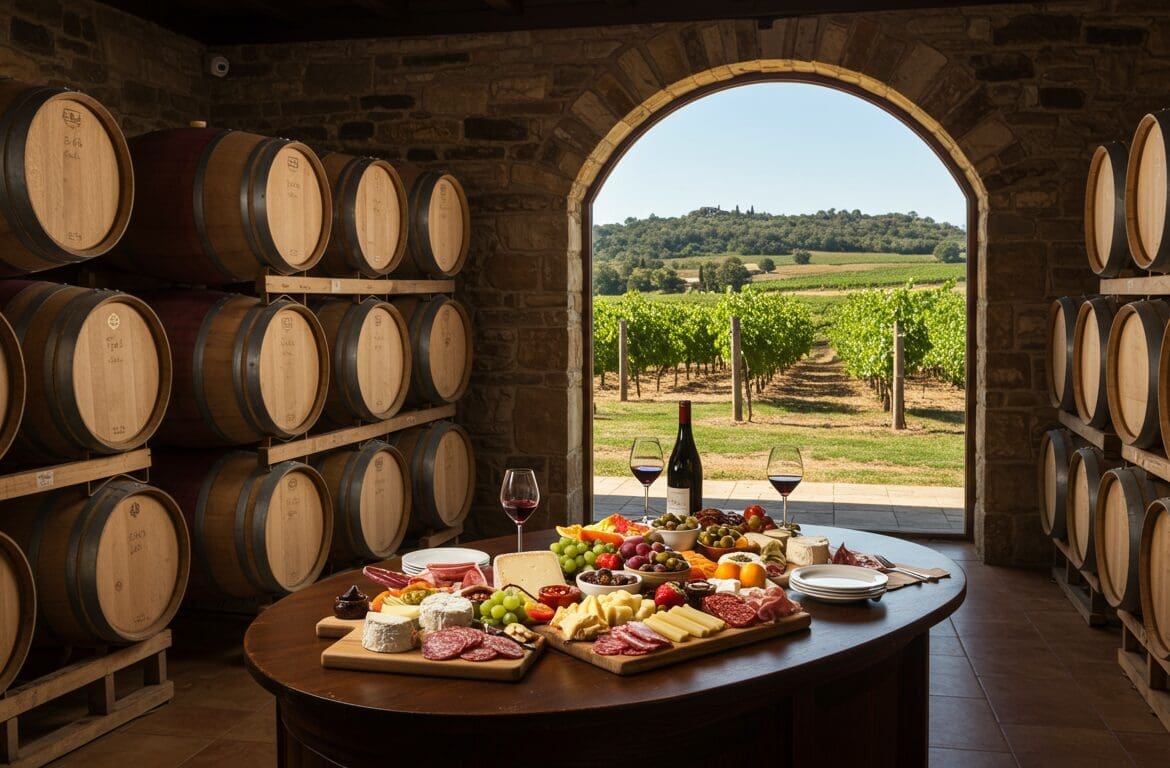
GranMonte, based in Khao Yai, is perhaps the most accomplished and internationally recognised Thai wine producer. A family estate now in its second generation, GranMonte produces wines from Syrah, Viognier, Cabernet Sauvignon, and Chenin Blanc, among others. The quality is serious, the winemaking informed by international training, and the wines have attracted genuine interest from critics rather than merely polite curiosity. A visit to the estate – set across rolling hills that look considerably more European than you might expect from tropical Southeast Asia – includes tastings, cellar tours, and on-site dining that pairs the wines with food of real ambition. It is an afternoon that repeatedly confounds expectations, which is the best kind.
Monsoon Valley, part of the Siam Winery group, operates across multiple sites and is the country’s largest producer. Wines under the Monsoon Valley label range from approachable everyday bottles to more considered reserve selections, and the brand has done significant work in establishing Thai wine on international menus. Their floating vineyard in the Chao Phraya Delta is a genuinely peculiar and rather wonderful sight – Colombard vines growing on stilted platforms above water, because occasionally the most logical response to difficult geography is to simply work with it.
Silverlake Vineyard in Pattaya offers an accessible wine estate experience for visitors to the eastern coast, with tastings and a wine-paired dining room that takes in vineyard views. It is more resort-adjacent than GranMonte in character, but the effort put into both the wines and the visitor experience is evident. For luxury travellers staying along the Gulf Coast, it makes for a rewarding day trip.
Cooking Classes: Learning to Cook Thai Food Properly
A well-chosen cooking class in Thailand is not a souvenir. It is one of the most transferable and genuinely useful things you can take home – the kind that changes how you think about an entire flavour family for the rest of your life. The key distinction is between classes designed around the experience of doing it and classes designed around the photograph of doing it. Both exist. Only one is worth your time.
In Chiang Mai, the cooking school scene is substantial, with schools that take students to a morning market to select ingredients before returning to outdoor kitchens where the mechanics of a good paste – and why the mortar and pestle cannot be replaced by a blender, despite what every lazy adaptation tells you – are explained with patience and precision. The best classes are small, hands-on, and taught by instructors who learned the food at home rather than from a curriculum.
In Bangkok, several high-end cooking experiences are available through the city’s luxury hotels, where resident chefs lead private or semi-private sessions in professional kitchens. These tend to focus on technique and refinement rather than the full market-to-table journey, but for travellers with limited time who want a considered experience rather than an activity, they deliver well.
Phuket and Koh Samui both offer cooking classes tailored to southern Thai cuisine, where coconut milk, turmeric, and fresh seafood feature heavily. Given that Southern Thai food is among the most distinctive and least replicated of the regional styles, a class here provides a very different education from the Central or Northern traditions.
The Best Food Experiences Money Can Buy in Thailand
Thailand rewards elevated expenditure on food in ways that are specific to here. A private chef dinner at a luxury villa with a curated Thai menu – dishes chosen by region, paired with Thai wines or a thoughtful selection of bottles chosen to complement rather than overpower – is an experience that no restaurant, however excellent, can replicate. The intimacy of the setting, the food prepared around your preferences, the ability to pause a course and ask questions of the person who just made it: these are the privileges of private dining done properly.
A chartered boat with a cook, departing at dawn from a southern island to collect the morning’s catch directly from fishing boats before returning to prepare it on board – that is a food experience with a clarity and directness that no tasting menu can manufacture. The fish is not seasonal. It is from this morning, from that boat, from this stretch of water. It makes a difference you can taste.
For travellers in the North, a private foraging experience in the hills around Chiang Rai with a guide who knows the edible landscape intimately can yield ingredients – wild herbs, mushrooms, bamboo shoots – that then make their way into an evening meal prepared at your accommodation. It is not truffle hunting in the Périgord, admittedly, but Thailand’s forest larder is deep and surprising, and a cook who knows how to use it will show you things that no market ever stocks.
Bangkok’s private dining scene has also expanded considerably. Arrangements through concierges at the city’s top properties can secure tables at chef’s tables, exclusive tasting evenings, or access to restaurants that require introductions and patience in roughly equal measure. If you are travelling with a good concierge and have flexible timing, the city’s food world opens in ways that the standard reservation system never quite reveals.
Pairing Food and Wine in Thailand: A Practical Note
Thai food and wine pairing is a conversation worth having seriously, because Thai cuisine – with its layers of heat, sourness, sweetness, and umami – makes genuinely interesting demands of whatever you’re drinking with it. The instinctive reach for something light and aromatic is often correct: Riesling, particularly off-dry, handles the heat and brightness of Thai flavours with considerably more grace than most reds. Grüner Veltliner works well. Champagne and quality sparkling wines, with their acidity and bubbles, cut through coconut-based dishes in a way that is both practical and rather good fun.
Thai wines from producers like GranMonte are increasingly being made with food pairing in mind – their Viognier and Chenin Blanc handle the aromatic intensity of Thai cuisine better than their red selections, which can struggle against the heat. That said, the Syrah expressions, with proper food matching, show genuine character.
The best approach for the curious is to try the Thai wines alongside the food and form your own view. The country’s producers would appreciate it, and you might be pleasantly confounded.
For a broader view of travelling in this extraordinary country – beyond the plate – our Thailand Travel Guide covers everything from the best islands and cities to cultural experiences and practical advice for first-time and returning visitors alike.
Stay Well: Luxury Villas for the Discerning Food Traveller
The right base transforms the experience of eating your way through Thailand. A luxury villa – whether in the hills above Chiang Mai, on a private stretch of Phuket coastline, or within reach of Bangkok’s dining world – gives you the space and freedom that a hotel room simply cannot. A private kitchen for market finds. A terrace for a long wine evening that doesn’t require a taxi home. Staff who can arrange, on request, the kind of food experiences that don’t appear in any directory.
Explore our collection of luxury villas in Thailand and find your ideal base for experiencing the country’s extraordinary food culture at its fullest.