
Best Time to Visit Valencian Community: Month by Month Weather, Crowds & Tips
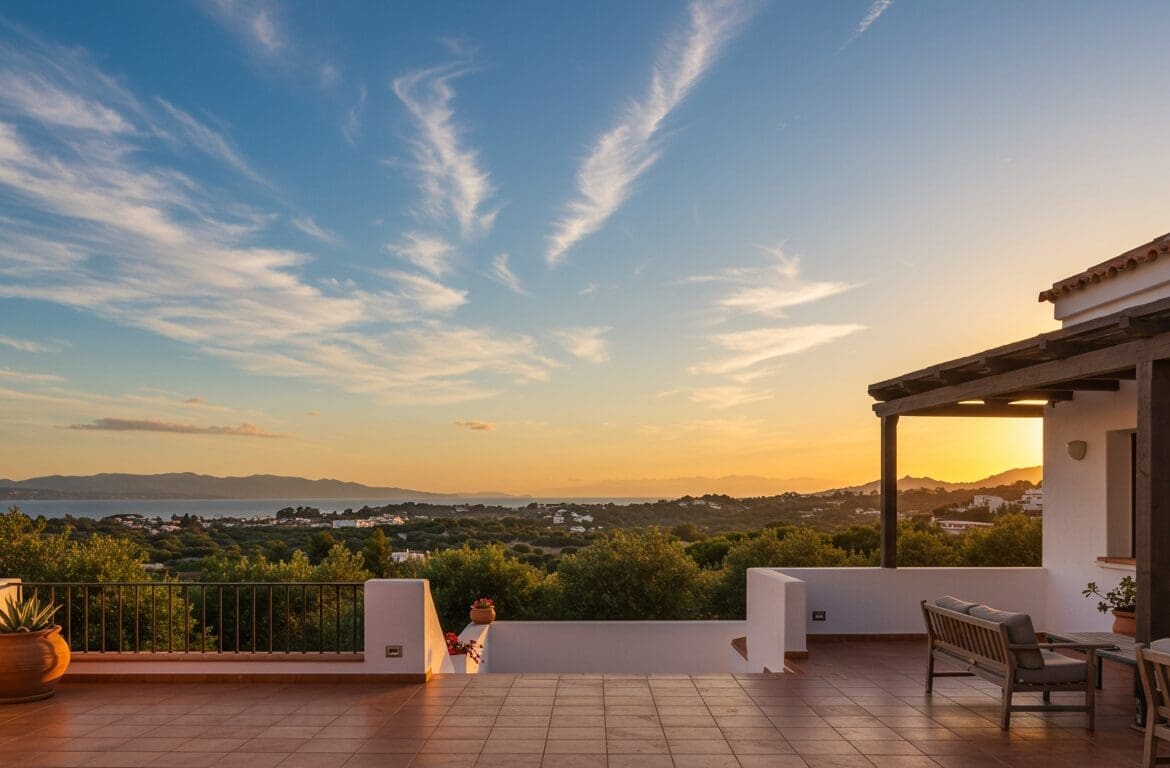
It is eleven in the morning and you are already slightly behind on doing nothing. The terrace of your villa is warm underfoot, the kind of warmth that seeps up through stone and into your bones in the best possible way. Somewhere below, orange groves run down toward the coast. The sea is the colour of a swimming pool but considerably more convincing. A local market is apparently happening in the village square – you can hear it faintly, and you are absolutely going, just as soon as you finish this coffee. This is the Valencian Community at its most effortless: abundant, unhurried, lit by a particular quality of Mediterranean light that the rest of Europe spends all year dreaming about. The question is simply when to show up for it.
The short answer is that it is rarely a bad time. But the longer answer – the one worth having – is considerably more interesting, and it depends entirely on what you are after. Here is the month-by-month guide that will actually help you decide.
Spring in the Valencian Community: March, April and May
Spring is, quietly, the best-kept secret in this part of Spain. The temperatures are generous without being oppressive – expect highs of 17°C in March climbing to around 23°C by the end of May – and the landscape is doing its absolute best to impress. The almond and orange blossoms have already put on their show, and what you are left with is greenery, warmth and a light that photographers pursue professionally.
Crowds are manageable in March and April, though they begin building through May as northern Europeans remember they have been cold for six months. Prices for luxury villa rentals reflect this: spring shoulder season offers genuinely good value, particularly in March and early April, before the school holiday effect takes hold.
The unmissable event is Las Fallas in Valencia city, which runs through mid-March and culminates on the 19th with the Nit de la Cremà – the burning of enormous papier-mâché sculptures in the streets. It is spectacular, genuinely deafening, and quite unlike anything else in Europe. Book accommodation months in advance if you plan to be in the city for it. If you are based in a villa outside the city, the drive in for the fireworks and back again is entirely reasonable and frankly rather satisfying.
Easter (Semana Santa) brings processions, religious celebrations and a notable uptick in domestic Spanish tourism, particularly along the Costa Blanca. Resorts like Dénia, Jávea and Altea are animated but not yet overwhelmed. For families looking for manageable warmth, cultural richness and uncrowded beaches, late April into May is close to ideal. Couples will find the shoulder season atmosphere – café terraces half-full, restaurants still giving you the good table – quietly romantic.
Summer: June, July and August
Let us be honest about summer. It is glorious and it is busy and those two facts are not entirely unrelated. June is the sweet spot – sea temperatures have climbed to something swimmable (around 22°C), the days are long and luminous, and the crowds have not yet reached their August intensity. Inland, the rice paddies of the Albufera are a deep, impossible green.
July and August are peak season in every sense. Temperatures in Valencia city regularly exceed 32°C, and coastal resorts from Peñíscola in the north to Torrevieja in the south fill up considerably. The beaches are magnificent and the atmosphere is festive – this is Spain doing summer properly, with all the noise and life that implies. Luxury villa rentals reach their highest prices, and availability for the best properties requires planning well in advance, ideally the previous autumn. Anyone who phones in January hoping for a front-row villa in August is in for a character-building conversation.
For families, summer is the obvious choice: children are on holiday, the sea is warm and calm, and the social infrastructure – beach clubs, markets, evening paseos – is fully operational. Groups of friends tend to converge here in August for the sheer critical mass of it all. Couples after something quieter might consider the northern coast around Oropesa del Mar or the inland villages of the Marina Alta, where the energy is gentler even in high season.
The festival of Sant Joan on the 23rd and 24th of June is celebrated with bonfires along almost every beach in the region – a midsummer ritual that feels ancient and completely alive at the same time. It is the sort of evening that reminds you why you did not just go to the Maldives.
Autumn: September, October and November
September is summer’s composed older sibling. The sea remains warm – often warmer than August, actually, having spent three months absorbing heat – crowds thin perceptibly after the first week, and the quality of light shifts toward something golden and less relentless. Temperatures hover between 24°C and 28°C through much of the month. It is, by most objective measures, excellent.
October brings the kind of weather that coastal residents describe as perfect and visitors describe with barely concealed outrage that they were not told about this earlier. Highs of around 22°C, blue skies, beaches you can actually walk on without negotiating for space. The rice harvest is underway in the Albufera, and the agricultural markets and festivals that accompany it – including events centred on the region’s prized Denominación de Origen Arroz de Valencia – are worth seeking out. Prices for villas drop meaningfully from peak, and the best properties are genuinely available.
November is quieter still – a little cooler, averaging 17-18°C, with the occasional grey day. Some smaller beach-focused businesses begin to reduce their hours, though restaurants, wineries and cultural attractions remain fully open. For couples looking for something that feels like genuine escape rather than a package holiday with better furniture, November in the Valencian Community offers a particular quality of solitude that is worth travelling for.
Winter: December, January and February
The Mediterranean winter is not nothing. Average temperatures in Valencia sit around 12-15°C – cold enough for a jacket in the evening, warm enough to sit outside at midday with a glass of something local and feel rather smug about your life choices. The light is clear and low and excellent for photography. The interior, including the villages of the Alto Turia and the Maestrazgo, is genuinely dramatic under winter skies.
Valencia city is worth singling out here. In winter it becomes, unarguably, one of the best city break destinations in southern Europe. The Museu de Belles Arts, the IVAM contemporary art museum, the Central Market (a work of Modernista architecture so beautiful it makes the produce inside it feel like a bonus) and the extraordinary City of Arts and Sciences are all comfortably explored without the summer scrum. The restaurants are at their most focused; the tables are easier to come by.
January and February are the quietest months on the coast – some resort-adjacent businesses close entirely, and beach life is theoretical rather than actual. But the costa towns themselves have their own winter personality, and the local population re-emerges to use the promenades and squares that tourists appropriated all summer. It is a different experience, but it is not a lesser one.
Prices for villa rentals in winter are at their lowest, making December and January an attractive option for longer stays – those looking to work remotely, or simply to decompress properly rather than in a fortnight. The festive period around Christmas and New Year is the exception, with rates and bookings both spiking for obvious reasons.
Quick Month-by-Month Breakdown
January & February: Cool, quiet, very affordable. Best for city breaks to Valencia, hiking inland, long-stay remote workers. Not ideal for beach holidays, but genuinely atmospheric.
March: Warming up, Las Fallas festival mid-month transforms Valencia city. Shoulder season prices, good villa availability. Highly recommended for those who do not need the sea to be swimmable.
April: Excellent all-round conditions. Semana Santa brings domestic crowds to the coast. Beaches are pleasant without being packed. Good for families and couples equally.
May: Pre-summer sweet spot. Warm, lively, increasingly busy toward the end of the month. Sea temperatures still cool but the rest of it is close to perfect.
June: Peak-adjacent but not yet peak. Best month for those who want high-summer conditions without August’s intensity. Sant Joan bonfires on the 23rd are genuinely memorable.
July & August: Full high season. Hot, busy, expensive, wonderful if crowds and heat are not your enemies. Book villas very early.
September: The connoisseur’s choice. Warm sea, thinner crowds, lower prices than August. Hard to argue with on any level.
October: Arguably the single best month for a villa holiday if you are not bound by school holidays. Perfect weather, genuine availability, harvest season culture.
November: Quiet and affordable. Some coastal businesses wind down, but the region’s food, wine and inland landscapes are fully on offer. Good for couples and slow travellers.
December: Festive Valencia city is charming. Christmas and New Year see prices rise; the rest of the month is quiet and good value. A genuinely underrated time to visit.
Who Should Visit When
Families with school-age children are largely constrained to the school holidays – Easter, June through August, and the Christmas period. Of these, June and the first half of July offer the best combination of warmth, sea conditions and manageability. August is also fine, provided you book early and accept that the best beaches will be sociable.
Couples have the luxury of flexibility, and should use it. September and October offer something approaching the ideal villa holiday: warm enough to swim, quiet enough to breathe, romantic enough to justify the trip. March, for those interested in culture and festivals, is a particularly good option.
Groups of friends tend to find that July works well – the region is at full operational capacity, the nightlife along the coast is lively, and large villas with pools are worth every euro in high summer. Just book well ahead.
Culture and food travellers will be well served by almost any month outside the depths of January and February, with Valencia city particularly rewarding in the spring and autumn. The Valencian Community’s gastronomy – arroz a banda, fideuà, fresh clams from the Albufera – is worth scheduling a trip around entirely independently of the weather.
The Shoulder Season Advantage
The Valencian Community’s shoulder seasons – broadly March to May and September to November – represent the most compelling argument for not simply following the crowd. The mathematics are straightforward: better prices, better availability, better service (restaurants have time for you when they are not booked three weeks in advance), and weather that is frankly excellent by the standards of anywhere that is not Valencia in its own summer.
Luxury villa rentals in shoulder season can represent savings of 30-40% against peak rates for equivalent properties. For stays of a week or more, that differential is meaningful. And the experience of having a beach, a terrace or a restaurant largely to yourself – while still enjoying the Valencian Community’s full cultural and culinary offer – is one that is difficult to put a number on and easy to become addicted to.
For the full picture of what this region offers beyond the beach, the Valencian Community Travel Guide covers the food, the culture, the coastal towns and the remarkable interior in the detail it deserves.
Find Your Perfect Villa
Whatever month you choose – and there are twelve of them, most of which are better than the European alternatives you are definitely considering – the quality of your base shapes everything. A private pool at seven in the morning, before the day has committed to anything, is not a luxury so much as a different way of experiencing a place entirely. Browse our collection of luxury villas in Valencian Community and find the right property for your season, your group and your particular vision of doing nothing exceptionally well.