
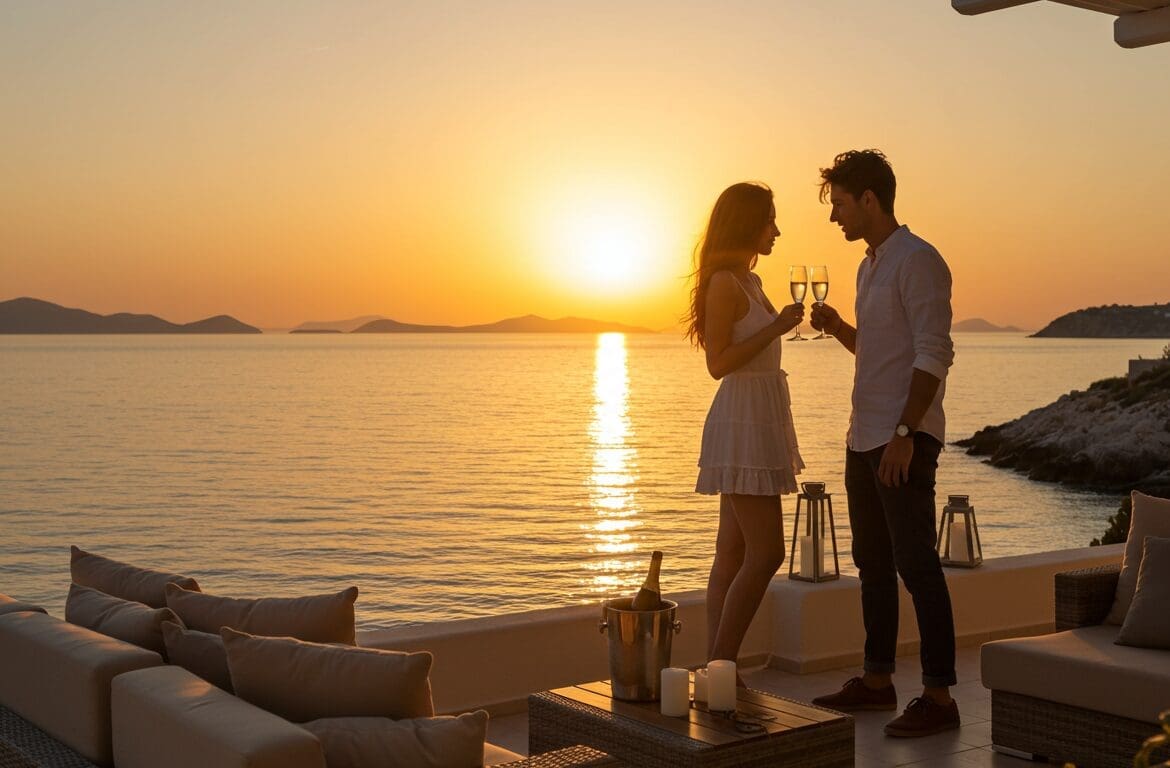
Romantic Valencian Community: The Ultimate Couples & Honeymoon Guide
Romantic Valencian Community: The Ultimate Couples & Honeymoon Guide
Here is a mild confession: the Valencian Community is not, on the surface, the destination that romance writers would choose for a honeymoon novel. It is too loud, too sunlit, too unapologetically itself. The paella is eaten at lunchtime, not by candlelight. The festivals involve fire – deliberately, enthusiastically so. And yet, couples who come here with no particular romantic agenda tend to leave with precisely the kind of memories that soft-focus Maldives brochures have always promised but rarely delivered. Real romance, it turns out, is less about rose petals on beds and more about sharing something genuinely extraordinary. The Valencian Community has that in abundance. It just keeps it slightly better hidden than most places do.
For a full orientation before diving into the romantic detail, the Valencian Community Travel Guide covers the essentials – geography, climate, culture, and everything else you need to arrive feeling informed rather than overwhelmed.
Why the Valencian Community Works So Well for Couples
There is a particular kind of destination that rewards couples above all other travellers – places where the pace is human-scaled, the food is central to daily life, the landscape shifts constantly, and there is always something worth stopping for. The Valencian Community ticks every single one of those boxes, and it does so across an extraordinary range of settings. Within a few hours’ drive – or considerably less – you can move from the drama of a Mediterranean coastline to the quiet intensity of medieval mountain villages, from a Michelin-starred table in Valencia city to a centuries-old winery in the hills of Utiel-Requena.
The region’s sheer variety is, paradoxically, what makes it so intimate. Rather than the exhausting obligation to tick off highlights – the kind of travelling that leaves couples more stressed than when they left – the Valencian Community invites a slower rhythm. You linger over lunch. You find a cove nobody else seems to have noticed. You sit on a terrace as the light turns and decide, without quite deciding, to order another bottle. This is how actual romantic memories are made.
The climate helps, of course. With more than 300 days of sunshine annually and winters that feel closer to a London September than anything truly cold, the Valencian Community extends the season for couples far beyond the summer crush. Spring and autumn here are extraordinary – warm enough for the coast, gentle enough for walking, and mercifully free of the crowds that descend between July and August.
The Most Romantic Settings in the Region
Valencia city itself deserves far more romantic credit than it usually receives. The Barrio del Carmen – the old city’s medieval heart – has a quiet alchemy at night. The streets narrow to near-impossibility. Lantern light spills onto ancient stone. It is the kind of place where you can get genuinely, pleasurably lost without anyone being particularly bothered by it. The Ciudad de las Artes y las Ciencias, meanwhile, offers something entirely different: a futuristic landscape of sweeping white curves reflected in still water, particularly extraordinary after dark when it is lit from below. As a backdrop for a significant conversation, it is hard to beat.
Further south, the Costa Blanca around Altea and Moraira offers a more distilled, unhurried romance. Altea’s white-domed hilltop church visible from the sea, the narrow lanes of its old town, the restaurants where the tablecloths are checked and the fish arrived that morning – this is the Valencian coast at its most quietly seductive. Moraira, with its intimate harbour and sophisticated calm, attracts couples who have done the busy resorts and are done with them entirely. (One visit usually confirms the wisdom of that decision.)
For something truly apart, the inland town of Morella in the Maestrazgo region is worth the drive. This medieval walled city rises from the plain like something a novelist invented – a hilltop fortress, a tangle of Gothic streets, complete silence apart from bells. For couples who find beauty in the austere and the ancient, it is almost unreasonably romantic.
Restaurants for a Special Dinner
The Valencian Community is one of Spain’s most serious culinary regions, which means the options for a genuinely memorable dinner are substantial – provided you know where to look beyond the seafront paella traps aimed at tourists who have just arrived and haven’t yet calibrated their instincts.
Valencia city holds multiple Michelin-starred restaurants, and dining at one represents a particular kind of occasion – the unhurried multi-course tasting menu, the wine pairings chosen with precision, the sense that an entire kitchen has conspired on your behalf for the evening. The city’s Ruzafa neighbourhood has emerged as a hub of creative, contemporary dining that combines genuine quality with an atmosphere that feels more neighbourhood than performance.
On the coast, the emphasis is rightly on seafood – but the best versions are a world away from the tourist-facing rice dishes. Look for restaurants where the menu changes with the catch, where the wine list reflects the local Denominaciones de Origen, and where the terrace looks out over something worth looking at. In Dénia, long regarded as a gastronomic capital of the region, even the most casual fish restaurant tends to operate at a level that would qualify as exceptional almost anywhere else. The red prawns – gambas rojas – are, frankly, the kind of thing that makes you briefly resentful of every other prawn you have ever eaten.
Couples Activities: Beyond Lying on the Beach
The Valencian coastline offers some of the finest sailing conditions in the Mediterranean – consistent winds, well-sheltered marinas, and waters that remain navigable and beautiful for much of the year. For couples, a private sailing charter – whether a half-day trip along the coast or a longer journey to discover hidden coves accessible only by water – represents something genuinely different from the usual holiday activity list. There is something about being on the water together, away from land and noise and connectivity, that tends to produce the kind of unhurried conversation that ordinary life rarely permits.
Wine tasting in the Utiel-Requena and Valencia D.O. areas offers another kind of intimacy. The interior wine regions are less visited than the coast, which means you are likely to have bodegas largely to yourselves. Tastings here are rarely the choreographed performances you find in more famous wine regions – they tend to be run by the people who actually made the wine, in spaces that smell of wood and fermentation, with the directness of producers who are proud of what they do and want you to understand why. For couples who love wine, it is a particular kind of pleasure.
Cooking classes focused on the region’s signature dishes – traditional paella, fideuà, the extraordinary range of rice dishes that Valencia has essentially invented – offer a shared activity that requires cooperation, produces something edible, and usually involves a glass of local wine at both the beginning and the end. Couples who cook together, as the saying does not quite go, tend to have a very good afternoon.
Spa experiences across the region range from boutique wellness hotels in the mountains to cliff-edge treatments at coastal properties. The Roman thermal baths at Montanejos – natural warm spring water in a river gorge surrounded by rock – represent a more unusual option: wild swimming with thermal benefits, and the particular pleasure of doing something unexpected.
The Most Romantic Areas to Stay
Where you base yourselves shapes everything, and the Valencian Community offers genuinely different romantic registers depending on the choice.
The northern Costa Blanca – Moraira, Jávea, Dénia – attracts couples who want sophisticated calm without the noise of larger resorts. Private villas here tend to occupy elevated positions with sea views, surrounded by pine and orange groves, far enough from their neighbours to feel genuinely private. This is the area for couples who want to disappear rather than be seen to be on holiday.
The Altea and Calpe stretch offers dramatic natural scenery – the Peñón de Ifach rock rising from the sea at Calpe is one of the most theatrical natural features on the Spanish Mediterranean – combined with excellent dining and a residential calm that keeps the atmosphere grounded.
Valencia city, for couples who want culture alongside beaches, offers the most energetic base. The old city is walkable, the food scene exceptional, and the short drive or train journey to the coast means you never feel landlocked. A private villa in the city’s quieter residential areas combines urban access with the seclusion that makes a romantic break genuinely restorative.
Inland, the Maestrazgo and the mountains above the coast offer extraordinary quietness – the kind that initially makes city-dwellers slightly nervous before it becomes exactly what they needed. A private rural property here, surrounded by medieval villages and ancient landscape, represents a romantic escape of a completely different order.
Proposal-Worthy Spots
A proposal location should feel like it was chosen specifically rather than selected from a shortlist, which is why the obvious choices – the Eiffel Tower, the gondola – can feel curiously deflating despite the effort. The Valencian Community offers several spots that achieve genuine occasion without the choreographed atmosphere of Famous Romantic Spots.
The roof of Valencia’s Cathedral, with the city spread out below and the sea visible on clear days, has the elevation and the history. The gardens of the Generalitat Valenciana, particularly in spring when the orange blossom is in full force, offer something more intimate. For those staying on the coast, a private sailing charter at sunset – the Peñón de Ifach in the distance, the water going gold – provides a setting with no witnesses but the crew, who will have seen proposals before and will manage the moment with the particular discretion of people who understand that some things deserve privacy.
Morella’s castle walls at dusk, the medieval city below and the plain stretching endlessly toward the horizon, represents perhaps the most dramatically cinematic option in the region. It requires a drive and a climb. Both, on reflection, seem entirely appropriate.
Anniversary Celebrations and Honeymoon Considerations
The Valencian Community handles anniversaries and honeymoons particularly well because it has the range to accommodate different versions of the same fundamental need: time that belongs to two people and nobody else.
For honeymoons, the combination of private villa, private pool, great local restaurants, and a coastline that rewards exploration by boat creates a rhythm that most dedicated honeymoon destinations cannot match. The absence of the all-inclusive resort model – which tends to produce a curious flattening of experience, regardless of how good the champagne is – means that every day requires a small amount of agency. Where shall we go? What do we want to eat tonight? These small decisions, made together, turn out to be part of what honeymoons are actually for.
For milestone anniversaries, Valencia city offers the most concentrated luxury – the tasting menus, the private cultural experiences, the sense of a sophisticated city taking you seriously as guests. For those celebrating a quieter kind of milestone, a week in a private coastal villa, revisiting the simple pleasures of good food, warm evenings, and genuine rest, tends to be precisely right.
The shoulder seasons – April through June, September through November – offer conditions that are arguably superior to high summer for a romantic break. The heat is gentler, the coast less crowded, the restaurant tables more available, and the whole region operating at a pace that invites the kind of slow, unstructured time that romance actually requires.
Your Base: A Private Villa Changes Everything
A hotel, however good, involves a lobby. It involves other guests. It involves the ambient awareness that other lives are being conducted on the other side of reasonably soundproofed walls. A private villa involves none of this. It involves waking up to your own pool, your own terrace, your own kitchen stocked with whatever you chose, your own timeline for the day. This is not a minor distinction when romance is the point.
The Valencian Community’s private villa market covers the full spectrum – hilltop properties above the coast with views that extend to Africa on clear days, city houses in Valencia’s historic centre, rural fincas surrounded by orange and almond groves, contemporary cliff-edge properties above blue Mediterranean water. The common thread is privacy: the ability to be entirely, unhurriedly yourselves without reference to anyone else’s schedule or expectations.
For couples planning a honeymoon, anniversary, or simply a trip that matters, a luxury private villa in Valencian Community is the ultimate romantic base – the kind of accommodation that becomes part of the memory rather than merely the place where you kept your luggage.
When is the best time of year for a romantic trip to the Valencian Community?
Spring (April to early June) and autumn (September to November) offer the best conditions for a romantic break – warm temperatures, reduced crowds, and the full range of restaurants and activities operating without the pressure of peak season. The coast is comfortably warm, evenings are long, and the general pace of the region is at its most relaxed and enjoyable. High summer is more intense – beautiful, but busier and hotter than is always ideal for the kind of unhurried travel that a romantic trip tends to call for.
What makes the Valencian Community a good destination for a honeymoon rather than a more traditional choice?
The Valencian Community offers something that dedicated honeymoon resorts often do not: genuine variety of experience within a single destination. You can combine days at a private coastal villa with exploration of medieval inland towns, world-class dining, sailing, wine country, and cultural immersion in Valencia city. This produces a more textured, memorable experience than a single-resort stay, while a private villa base provides all the seclusion and luxury that a honeymoon requires. It also represents considerably better value than equivalent quality in more commercially marketed honeymoon destinations.
Which area of the Valencian Community is best for couples who want privacy and seclusion?
The northern Costa Blanca – particularly the areas around Moraira, Jávea, and the hills above Dénia – offers the best combination of privacy, natural beauty, and sophisticated amenities for couples seeking seclusion. Private villas here tend to occupy elevated positions with substantial grounds and sea views, surrounded by mature gardens and Mediterranean landscape. The area has excellent restaurants and is within easy reach of Alicante and Valencia airports, but maintains a quietness and residential character that keeps the atmosphere calm even in peak season. Inland rural properties in the Maestrazgo or the mountains above the coast offer even greater isolation for couples who want complete quiet.