Antalya Food & Wine Guide: Local Cuisine, Markets & Wine Estates
Here is what every Antalya guidebook gets wrong: they open with the beach. Understandable, certainly – the Turquoise Coast is not exactly hard on the eye – but it means they consistently miss the thing that makes Antalya worth knowing properly, which is its food. This is a city that sits at the meeting point of the Taurus Mountains and the Mediterranean Sea, draws from both Seljuk and Ottoman culinary traditions, grows its own olives, citrus and herbs in conditions that would make a Provençal farmer weep with envy, and produces wines from ancient grape varieties that most of the wine world has never heard of. You could spend a week here eating brilliantly without once ordering something that exists on any other country’s menu. Most visitors manage to miss all of this entirely. You, presumably, would prefer not to.
The Regional Cuisine: What Antalya Actually Eats
Antalya’s cuisine is not Turkish food as approximated by London high streets. It is something considerably more specific – a Mediterranean-mountain hybrid with its own rhythms, its own seasonal logic, and its own particular genius for combining simplicity with depth of flavour.
The region’s geography is the decisive factor. The narrow coastal plain is lush with citrus, pomegranates, figs and vegetables, while the Taurus Mountains behind supply wild herbs, game, mountain honey and, in season, extraordinary truffles. The sea provides sea bass, bream, octopus and red mullet of the kind that make you understand why fish has anchored Mediterranean civilisation for three thousand years. The combination is not subtle. It is, however, magnificent.
Lamb dominates the meat-based dishes – slow-cooked, spiced with cumin and red pepper, often wrapped in flatbread or served over yoghurt in the manner of a proper İskender-adjacent preparation. But it is the vegetable dishes that are often the revelation for first-time visitors. Zeytinyağlılar – dishes cooked in olive oil and served at room temperature – are eaten as meze rather than as afterthoughts. Artichokes braised with lemon, broad beans with dill, courgette flowers stuffed with herbed rice: this is food that rewards patience and good olive oil in equal measure.
Antalya also has its own piyaz, and residents will tell you, with the quiet certainty of people who are absolutely right, that it is the best in Turkey. Where elsewhere piyaz is a simple white bean salad, here it is elevated with tahini, hard-boiled egg and a dressing of apple cider vinegar that gives it a particular lightness. It arrives alongside almost everything. This is not a complaint.
Signature Dishes Worth Seeking Out
Beyond piyaz, there are dishes that define this particular stretch of coastline and distinguish it from the broader Turkish canon. Şiş köfte grilled over wood fire and served with flatbread charred at the edges. Tandır kebabı – shoulder of lamb slow-cooked in a clay oven until it barely holds together, traditionally eaten at long family lunches that extend well into the afternoon. The ambitious traveller might also encounter hibeş, a local sesame and chickpea paste not unlike hummus but sharper, earthier and noticeably more addictive.
Seafood deserves its own category and its own unhurried evening. Red mullet from the bay, grilled simply and dressed only with lemon, is one of those dishes that makes culinary ambition feel faintly embarrassing by comparison. Sea bream baked in a salt crust – ordered from one of the better waterfront restaurants, opened tableside with appropriate ceremony – is the kind of experience that tends to reorganise one’s priorities. You will not, after eating it, spend much time worrying about anything.
For something sweeter, kadayıf stuffed with clotted cream and drizzled with pomegranate molasses appears across the region in various forms, and the local baklava – made with local pistachios and heavy on butter – is significantly less cloying than its tourist-district counterparts might lead you to fear. Seek the real thing in the old quarter.
Olive Oil: Liquid Geography
The olive groves around Antalya – particularly in the districts of Döşemealtı and Korkuteli – produce oils of serious quality that rarely leave the country, which is either a tragedy for the rest of the world or a rather nice problem for visitors to have. The dominant variety is Memecik, a thick-skinned olive that yields an oil with a robust, grassy character and a peppery finish that you feel in the back of the throat – what olive oil people call the “sting,” and what everyone else calls the sign you’ve found something worthwhile.
Several family estates in the hinterland offer visits during and around the October-November harvest, where you can walk the groves, watch the pressing process and taste oils so fresh they are practically bright green. These are not formal tours with branded merchandise and exit gift shops. They are real working farms, and the hospitality is the kind that makes you feel slightly guilty for not having brought more wine. Arrange visits through a well-connected concierge or local guide – the estates worth visiting are not typically the ones with roadside signs.
For luxury travellers staying in a private villa with a kitchen, sourcing genuinely local olive oil early in the trip and using it as the baseline for everything else cooked during the stay is one of those decisions that seems obvious in retrospect. It will improve every single meal. This is not an exaggeration.
Truffle Country: The Taurus Mountain Secret
Most visitors are unaware that the Taurus Mountains above Antalya produce truffles – specifically a native Turkish variety known as keme or domalan, a cousin to the European black truffle, harvested in late winter and spring after rains. They are found at altitude, rooted beneath the specific type of scrub oak that grows in this limestone terrain, and they are hunted by local families who tend to be somewhat cagey about their exact locations. Understandably so.
Guided truffle hunts can be arranged through specialist providers and local guides who have cultivated the necessary relationships with the farming families. These are unhurried, early-morning expeditions through mountain landscape that looks nothing like the coast below – cooler, quieter, and carrying the particular smell of damp earth and wild herbs that accompanies altitude changes in the eastern Mediterranean. The hunt itself is part of the experience: you are not, despite what optimism might suggest, guaranteed to find truffles. When you do, however, the subsequent lunch – keme shaved over eggs, or stirred into butter and served with fresh bread – is the sort of meal you find yourself describing to people who did not ask.
This experience is best booked through a specialist luxury tour operator or a well-connected villa concierge, and it works best for parties with genuine curiosity about food and landscape rather than those primarily interested in ticking experiences off lists. You know which kind of traveller you are.
Wine in Antalya: Ancient Grapes, Serious Bottles
Turkey is the fifth-largest grape-growing country in the world, which surprises most people. That most of those grapes are grown for eating rather than drinking surprises rather fewer. What will genuinely surprise even experienced wine drinkers is the quality emerging from producers working with indigenous Anatolian varieties – grapes with names like Öküzgözü, Boğazkere, Narince and Emir that have been growing in this soil for thousands of years and are only now being understood by winemakers with the patience and investment to do them properly.
The wine estates closest to Antalya are generally in the broader Aegean and Mediterranean belt, with producers in the Denizli, Burdur and İçel regions accessible as day trips or overnight excursions. The wines produced here tend to be structured, mineral and rather good – the reds particularly, which carry the warmth of a long growing season without the over-extracted heaviness that afflicts similarly sunbaked wine regions elsewhere. Restaurants and wine merchants in Antalya’s old city stock them with increasing confidence, and the better villa concierges can arrange cellar visits.
If you are buying wine to take home – and you should be – look for bottles that will not survive international shipping as their wines are rarely exported. This is a feature, not a problem. It is a reason to buy more than you think you need.
Wine Estates: Where to Go
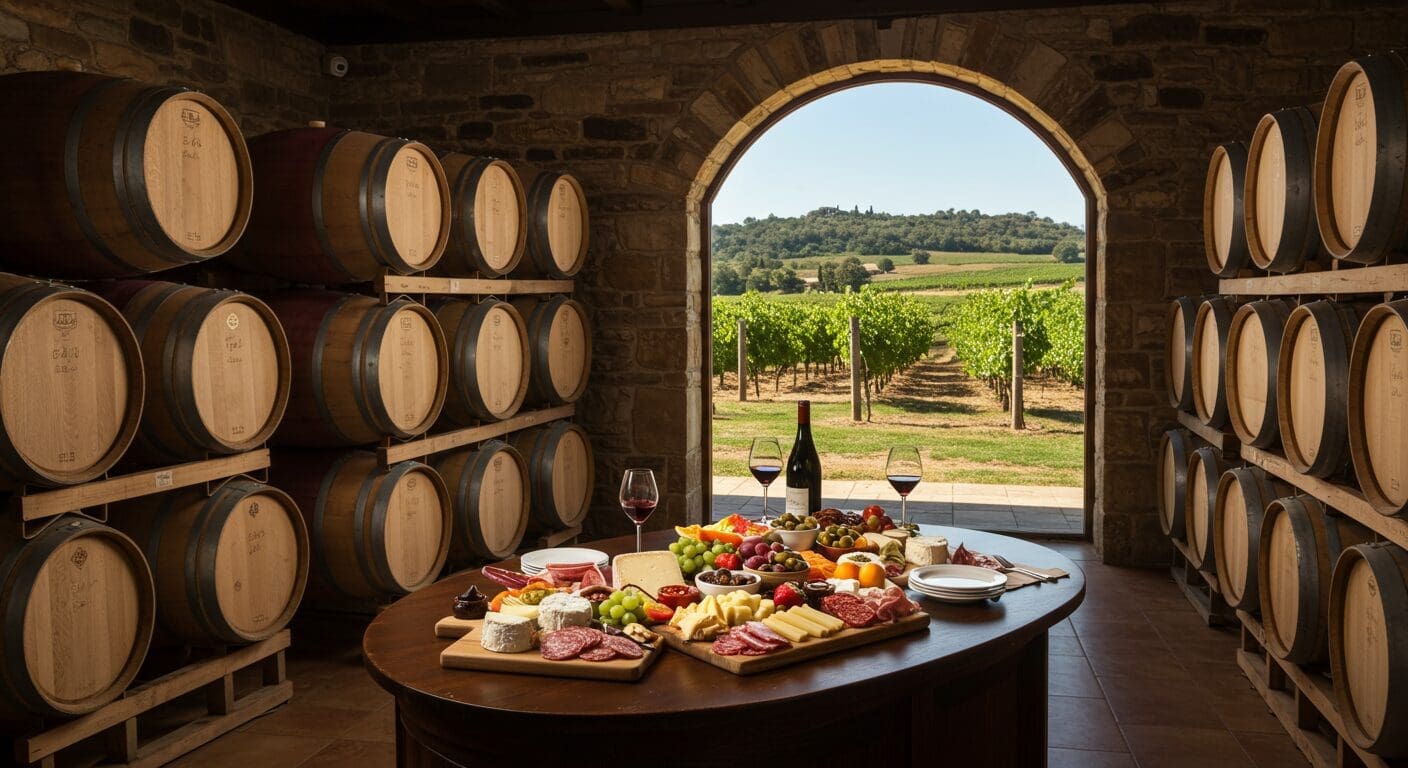
The wine estate experience in Turkey is distinct from its European equivalents, and consciously so. These are not Napa-style visitor centres with gift shops and branded merchandise. The better producers offer tastings that feel closer to being invited into someone’s working cellar – informal, unhurried, led by people who have very strong opinions about what they are making and are not particularly interested in softening them for tourist consumption. This is part of the appeal.
Day excursions to wineries in the Burdur or Denizli provinces take around ninety minutes to two hours from central Antalya, and they work best as full-day experiences combining a cellar visit with lunch at a local restaurant and a return through mountain roads that offer a rather different perspective on the Turkish landscape than the coastal strip. Given the distances involved, hiring a driver or arranging private transfers is sensible – not only for the obvious reason that wine tastings and mountain roads make poor companions, but because having a knowledgeable local driver turns the journey itself into part of the experience.
Several of the more ambitious estates have begun offering overnight stays in small guesthouses on their properties, which allows for a more thorough engagement with the wines across an evening meal. These are not luxury accommodations in the villa sense, but they offer something different: the intimacy of the estate itself, the sound of wind through vines at night, and the distinct pleasure of tasting wine at the place it was made.
Antalya’s Food Markets: Where to Shop Like a Local
The markets of Antalya are the best possible argument against supermarkets, a cause for which one should not need to argue, and yet here we are. The weekly bazaars that rotate through different districts throughout the week are where Antalya actually eats – where the tomatoes are the variety that smells like a tomato is supposed to smell, where the cheeses come from farms close enough that the shepherd probably knows the vendor by first name, and where the spice stalls are piled with things whose names you will need to photograph for later identification.
The most famous is the market in the Muratpaşa district, but the neighbourhood bazaars in areas like Kepez and Lara offer a less visited and more genuinely local atmosphere. The experience of navigating a Turkish market – the calls of vendors, the plastic stools beside tea stalls, the absolute conviction of every stallholder that their pomegranates are the superior pomegranates – is one of those things that cannot be replicated and should not be rushed.
For something more curated, the old quarter of Kaleiçi has specialist shops selling regional cheeses, cured meats, spices and local honey that function more like delis than market stalls. These are better suited to assembling a considered picnic or stocking a villa kitchen with good things than to the full sensory immersion of a bazaar, but they offer quality and selection that the markets, in their beautiful chaotic abundance, cannot always guarantee.
A note on timing: Turkish markets begin properly early and begin winding down by midday. The best produce goes first, and the best atmosphere – before the heat builds and the crowds thicken – is between eight and ten in the morning. Setting an alarm is worthwhile. You will not regret it, which is not something that can be said of every early morning.
Cooking Classes and Culinary Experiences
Learning to make Turkish food properly is a rather good use of a holiday morning, and Antalya has a small number of cooking experiences that rise above the tourist-workshop level to offer something genuinely educational. The better ones begin with a market visit – selecting ingredients, negotiating with vendors with a guide’s help, making choices about what is actually in season rather than what the recipe demands – and then move to a kitchen where the techniques taught are the actual techniques used by local families rather than a simplified approximation designed to reassure nervous foreigners.
Piyaz, of course. Slow-cooked lamb preparations. The surprisingly technical business of stuffing courgette flowers without tearing them. Making gözleme on a proper griddle under the tutelage of someone who has been doing it since childhood, which means accepting early and cheerfully that yours will look nothing like hers. This is part of the learning.
Private cooking experiences can be arranged through villa concierge services for groups staying together, and they make particularly good half-day activities for groups that include varying appetites for sightseeing. Everyone, in experience, can agree on lunch.
The Best Food Experiences Money Can Buy in Antalya
For those for whom money is the easier variable to adjust, Antalya offers a small number of experiences that sit at the top of what the region can offer. A private dinner prepared in your villa by a local chef, sourcing ingredients from that morning’s market, with wines selected to match from a curated cellar – this is the kind of evening that renders restaurant dining feel faintly effortful by comparison. The best private chefs operating in the Antalya area work with the same local producers as the region’s best restaurants, and having that quality in a private setting is one of the genuine privileges of villa rental.
Beyond the villa, a private table at one of the better waterfront fish restaurants in the old port area – arranged in advance, not walked-in-hopefully – with a whole fish chosen from the market that morning and a bottle of something cold and Turkish from the wine list, eaten as the light changes over the bay: this is what Antalya’s food culture is capable of at its most refined. The food is not complicated. The experience, arranged properly, very much is.
For the genuinely committed, a full-day private food tour combining a morning market visit, olive oil tasting, lunch at a family-run restaurant away from the tourist areas, an afternoon at a nearby estate and an early evening return with purchases in hand represents the most complete engagement with what the region produces. Expensive, yes. Memorable, certainly. The kind of day you will describe accurately and without embellishment for years afterwards.
For more on what the region offers beyond its food and wine, the Antalya Travel Guide covers everything from coastal excursions to historical sites in the depth this destination deserves.
If you are planning a stay that puts you in a position to eat and drink as well as the region allows – with your own kitchen, your own outdoor dining space, your own pace – explore our collection of luxury villas in Antalya. The pantry, one assumes, you will stock yourself.