Romantic Istria County: The Ultimate Couples & Honeymoon Guide
Romantic Istria County: The Ultimate Couples & Honeymoon Guide
There is a particular hour in Istria – somewhere between the last of the afternoon light and the first glass of Malvazija – when the limestone hilltop towns turn the colour of warm honey and the air smells faintly of rosemary, pine resin, and the sea. It is, frankly, an unfair amount of atmosphere for one place to possess. Couples who come here for a week often find themselves quietly renegotiating their lives. This is not an accident. Istria – that triangular peninsula tucked into the northern Adriatic where Croatia, Slovenia, and Italy have been politely arguing over territory for centuries – has been doing this to people for a long time. It just does it better now that the restaurants have caught up with the scenery.
This guide is for couples who want more than a pretty backdrop. It is for those who want the private terrace at dusk, the wine that tastes of place, the town that rewards the unhurried. If you are still in the research phase of your Istrian adventure, our full Istria County Travel Guide covers the wider destination in all its detail. But if romance is specifically what you are after, read on.
Why Istria Is Exceptional for Couples
Most romantic destinations fall into one of two categories: they are either achingly beautiful but relentlessly crowded, or they are genuinely secluded but require a certain tolerance for inconvenience. Istria, to its considerable credit, has largely avoided both traps. The infrastructure is excellent – roads are good, restaurants are serious, the wine is world-class – but the peninsula has never quite tipped into the mass-market frenzy that has overwhelmed parts of the Dalmatian coast further south.
What makes it exceptional for couples, specifically, is the texture of the place. The Istrian interior is a landscape of quiet drama: rolling hills laced with vineyards and olive groves, punctuated by medieval hilltop towns that appear to have grown organically from the rock itself. The coast, meanwhile, offers everything from dramatic cliff swimming spots to sheltered coves that require a boat to reach. Between the two, you have the raw material for a romantic holiday that can be as active or as deliberately idle as you choose.
There is also something in the cultural layering that suits couples particularly well. Istria has been Venetian, Austro-Hungarian, Italian, and Yugoslav at various points in its history, and it wears all of these inheritances simultaneously. The result is a place where you can eat fresh pasta with truffle in a stone-walled konoba, drink wine that would not embarrass itself in a Parisian restaurant, and watch the sun set over a harbour that looks like it belongs in a Canaletto painting. Romance, it turns out, is largely a question of setting.
The Most Romantic Settings in Istria
Rovinj is the obvious answer, and it is obvious for good reason. The old town rises from a narrow peninsula in the northern Adriatic in a tangle of cobblestoned lanes, pastel-coloured houses, and staircases that lead unexpectedly to sea views. The church of St. Euphemia sits at the very top, and the walk up – particularly in the early morning, before the day-trippers arrive – is one of those experiences that quietly earns its place in the memory. Rovinj’s harbour in the evening, with the fishing boats rocking gently and the restaurants lit amber against the water, is the kind of scene that makes people propose without quite having planned to.
Groznjan, inland, operates differently. This tiny hilltop village – home to an improbable concentration of artists’ studios and galleries – exists in a state of elegant abandonment that is rather different from the polished romanticism of the coast. There are fewer people, more cats, and a particular quality of silence that couples who have been to busy coastal resorts will find deeply restorative.
Motovun is another hilltop town that rewards the pilgrimage. Approaching it through the Mirna valley, past the oak forests where Istrian truffles hide underground, you understand immediately why this area is considered one of the most atmospheric in all of Croatia. The town walls offer views across the valley that justify every uphill step. Visit in the morning mist and you will understand why film directors keep finding excuses to shoot here.
Romantic Restaurants and Dining Experiences
Istria punches significantly above its weight in gastronomic terms – a fact that the rest of Europe is only slowly catching up with. The region produces white truffles that rival those of Alba, olive oils that regularly appear on international best-of lists, and wines – particularly the indigenous Malvazija Istarska and the red Teran – that are finally receiving the serious attention they deserve.
For a genuinely special dinner, the interior of Istria is where you want to be. The konobe – traditional tavern-style restaurants – scattered among the hilltop villages often have fixed menus built around seasonal produce, and the combination of honest food, local wine, candlelight, and stone walls creates a dining experience that is both unpretentious and deeply romantic. These are not places that need elaborate decoration. The food does the work.
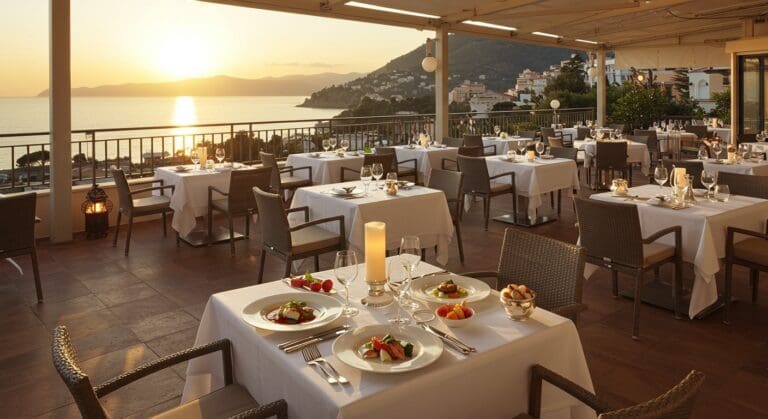
On the coast, Rovinj has a strong restaurant scene, with a number of fine-dining establishments that pair Adriatic seafood with serious wine lists. For couples celebrating something specific – an anniversary, a birthday, the first night of a honeymoon – a table on a terrace with a harbour view remains one of the most reliably transporting experiences the peninsula offers. Book ahead. The Istrian dining secret is less secret than it used to be.
For something more private, many luxury villas in Istria offer the option of a private chef – local produce, your own terrace, no other tables. It is, objectively, one of the finest ways to eat in the region.
Couples Activities: From Sailing to Truffles
The Istrian coastline is made for sailing. The waters of the northern Adriatic are cleaner and calmer than much of the Mediterranean, and the combination of secluded coves, small islands, and handsome harbour towns makes a day or a week on the water one of the most satisfying ways to explore the region. Private charter yachts are readily available from the major marinas, and the experience of dropping anchor in a quiet bay that you cannot reach any other way – swimming, eating lunch on deck, watching the afternoon light change on the water – is exactly as good as it sounds.
Wine tasting in Istria is a more serious undertaking than it might initially appear. The region has a growing number of small, family-run wineries producing wines of genuine distinction, and many of them are set in landscapes – terraced hillsides, converted stone farmhouses, vineyards with sea views – that make the visit as pleasurable as the wine itself. Some offer private tasting experiences for couples, with guided pairings of wine and local food. Book these in advance; the good ones fill quickly.
Truffle hunting is an experience that Istria does better than almost anywhere else in the world. The oak forests of the Motovun valley are home to both black and white truffles, and guided hunts with trained dogs – typically in the early morning, when the mist is still on the fields – offer an engagement with the landscape that goes considerably deeper than a restaurant menu. For couples who like their experiences to have texture and story, this is one of Istria’s most memorable offerings. It is also, it must be said, rather good fun to watch a small dog take its work more seriously than most humans take anything.
Cooking classes are another natural fit for couples travelling together. Several established culinary schools and private chefs in the region offer hands-on classes focused on Istrian cuisine – pasta-making, truffle preparation, the techniques behind Istrian peka (slow-cooked meat and vegetables under an ember-covered lid). Learning to cook something together, then eating it with good wine on a stone terrace, is a more intimate experience than most couples expect.
Spa experiences are available at several of the region’s hotels and wellness centres, with treatments that make use of local ingredients – Istrian olive oil, sea salt, herbs from the interior. For couples seeking active relaxation, the cycling routes through the interior combine beautiful scenery with genuine exercise, and the e-bike option means that the hills need not be a deterrent.
The Most Romantic Areas to Stay
Where you base yourself in Istria shapes the character of your entire stay, and the choice is not straightforward – which is, in this case, a good thing, because it means you are choosing between genuinely different and equally appealing options.
Rovinj and its surroundings remain the most classically romantic choice for couples. The proximity to the old town means you can walk to dinner, wander the harbour in the morning, and return to your own private space – ideally a villa with a pool and sea views – without the logistical friction that can take the edge off a romantic trip. The area around Rovinj has some of the finest private villas in the whole of Istria, and being able to retreat from even a beautiful town to a genuinely private space is, for couples, one of the great luxuries.
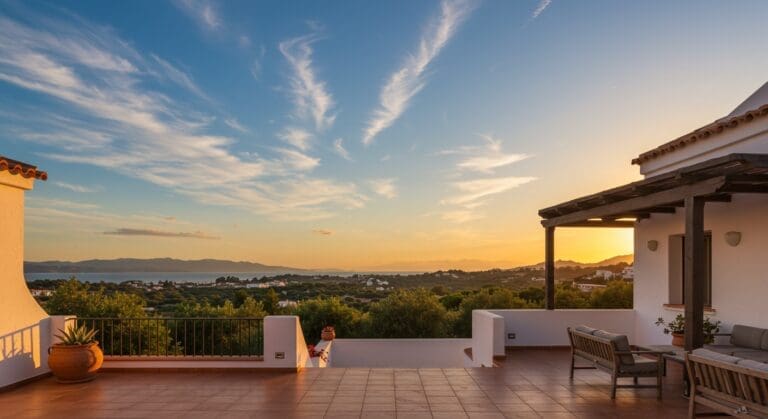
The hilltop villages of the interior – the area around Motovun, Groznjan, Oprtalj, and Buzet – offer a quieter and more contemplative romanticism. The landscapes are extraordinary, the truffle culture is unmissable, and the sense of having found somewhere that most visitors overlook entirely is a pleasure in itself. Villas in this area tend toward the converted farmhouse aesthetic: thick stone walls, exposed beams, terraces that look out over valleys rather than the sea.
The Labin and Rabac area in the east offers a less-visited alternative, with dramatic coastal scenery and a historic hilltop town that has become something of an artists’ enclave. Couples who want the best of both worlds – coast and interior, without the crowds of the more famous western towns – often find this area a revelation.
Proposal-Worthy Spots in Istria
If you are planning a proposal in Istria, the peninsula offers an embarrassment of suitable settings. The shortlist problem is a real one.
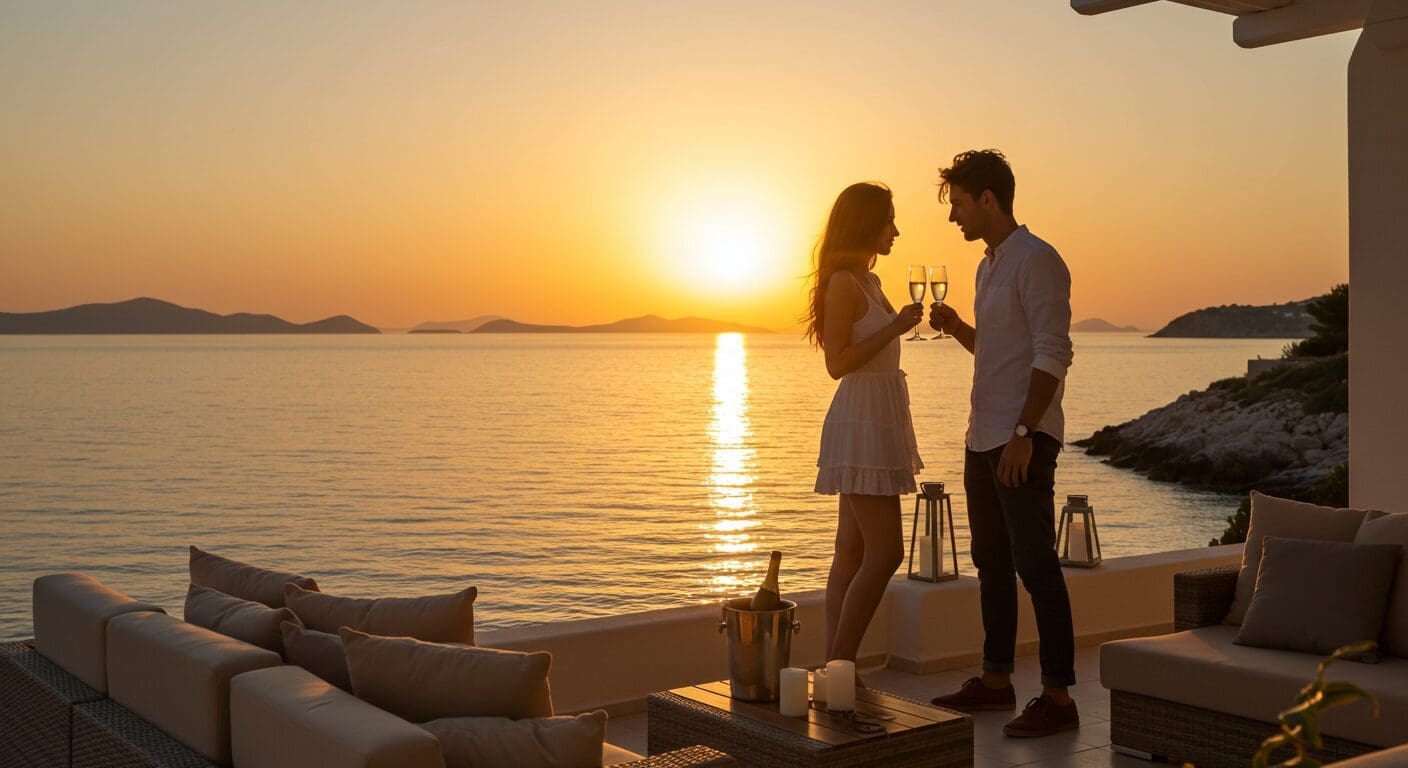
The top of the town walls in Motovun at sunrise, with the Mirna valley spread out below in morning mist, has a theatrical quality that is difficult to match. The old harbour in Rovinj at dusk – specifically the moment when the light turns the old town walls deep orange and the sea goes flat and golden – is a more intimate option, and one that allows you to slip seamlessly from the proposal to a celebratory dinner without changing location. For something more private, a chartered boat at sunset, anchored in a quiet bay off the Istrian coast with no one else in sight, offers a setting of uncomplicated beauty.
The hilltop terrace in Groznjan, overlooking the valleys of the interior in the late afternoon, is for those who prefer a quieter poetry to their significant moments. It is the kind of place that asks nothing of you except to be present. Which is, when you think about it, exactly what a proposal requires.
Anniversary Ideas and Honeymoon Considerations
For anniversaries, Istria rewards the return visitor in ways that few destinations manage. The region changes character with the seasons – the truffle season in autumn brings a different atmosphere entirely from the sun-saturated warmth of July, and the spring, when the wildflowers cover the hillsides and the restaurants reopen after winter with genuine enthusiasm, is arguably the most beautiful time of all. An anniversary trip that explores a different season of the same place is a quietly sophisticated idea that Istria supports particularly well.
For honeymooners, the key considerations are privacy, quality, and the balance between activity and rest. Istria delivers on all three. A private villa – ideally with a pool, a view, and a kitchen well-stocked with local produce – provides a base of genuine retreat. The excursions from that base can be as full or as selective as you choose: a day sailing, a morning truffle hunting, an afternoon entirely horizontal by the pool, a long dinner somewhere that takes its wine list seriously. This is not a destination that forces you into an itinerary. It is better than that.
The best times for a honeymoon in Istria are late May through June, and September into October. The summer peak – July and August – brings heat and visitor numbers that can, in the most popular towns, slightly undermine the sense of having discovered somewhere. The shoulder seasons offer all the warmth and beauty with considerably more space to breathe.
Your Romantic Base: A Private Villa in Istria
The logic of a private villa for a romantic trip to Istria is not complicated. It is the difference between sharing your honeymoon breakfast with forty strangers and eating it alone on a terrace above the sea. Between having a pool that is yours for the week and negotiating for a sunlounger at nine in the morning. Between cooking a private dinner with a chef using produce from the local market and waiting for a table.
Istria’s villa market has matured considerably in recent years, and the quality of private rental accommodation – particularly at the luxury end – now matches the ambition of the destination itself. Converted stone farmhouses in the interior, contemporary villas with infinity pools on the coast, historic properties within walking distance of Rovinj’s old town: the options are genuinely diverse, and the right choice depends entirely on what kind of romantic trip you are designing.
A luxury private villa in Istria County is the ultimate romantic base – the one that makes everything else possible, and makes coming home from a day’s exploration feel like an arrival rather than a compromise. Browse the collection, choose carefully, and then do as Istria asks: slow down, open the wine, and let the light do the rest.
When is the best time of year for a romantic trip or honeymoon in Istria County?
Late May through June and September into October are the sweet spots for couples. The weather is warm, the sea swimmable, and the popular towns are far less crowded than in peak summer. The autumn months also coincide with the truffle season – which, for food-loving couples, is a considerable bonus. July and August are lively and beautiful but busier; those who prioritise privacy and atmosphere over peak sunshine are generally better served by the shoulder seasons.
What are the most romantic towns in Istria for couples?
Rovinj is the most celebrated, with its old town rising above the harbour in a way that makes a strong case for itself at almost any hour of the day. For something quieter and more contemplative, the hilltop villages of the interior – particularly Motovun, Groznjan, and Oprtalj – offer a different kind of romance: emptier streets, extraordinary views over the Mirna valley, and a connection to the landscape that the busier coastal towns cannot quite replicate. Most couples find the ideal is a base near the coast with day trips inland, or vice versa.
Is a private villa better than a hotel for a honeymoon in Istria?
For most honeymooning couples, a private villa offers a level of intimacy, flexibility, and genuine privacy that hotels – however well-appointed – find difficult to match. A villa with a private pool means your morning swim is yours alone. A villa with a kitchen means you can engage a private chef, stock up at the local market, or simply eat breakfast at whatever hour you choose without the social theatre of a hotel dining room. The best luxury villas in Istria also tend to sit in extraordinary locations – coastal clifftops, hillside olive groves, within walking distance of charming old towns – which makes the base itself part of the experience rather than merely a place to sleep.