Menorca Food & Wine Guide: Local Cuisine, Markets & Wine Estates
Here is a confession that might surprise you: Menorca, the quieter, supposedly more restrained Balearic island, is quietly one of the most interesting places to eat in Spain. Not loudly interesting – Menorca doesn’t do loud – but interesting in the way that rewards the person who actually pays attention rather than simply photographing their food before eating it. While its more famous neighbour Ibiza was busy becoming a global brand, Menorca was doing something altogether more useful: preserving its culinary heritage, protecting its farmland under UNESCO Biosphere Reserve status, and continuing to make gin. Which, it turns out, it has been doing since the British occupation of the eighteenth century. The island that colonised gin. Not many people know that. Fewer still know how good the food is.
The Soul of Menorcan Cuisine
Menorcan food is built on two things: extraordinary local ingredients and a complete indifference to trend. This is not an insult. In a world of fusion menus and deconstructed everything, there is something genuinely refreshing about a cuisine that decided long ago what it wanted to be and has stuck with it with admirable stubbornness.
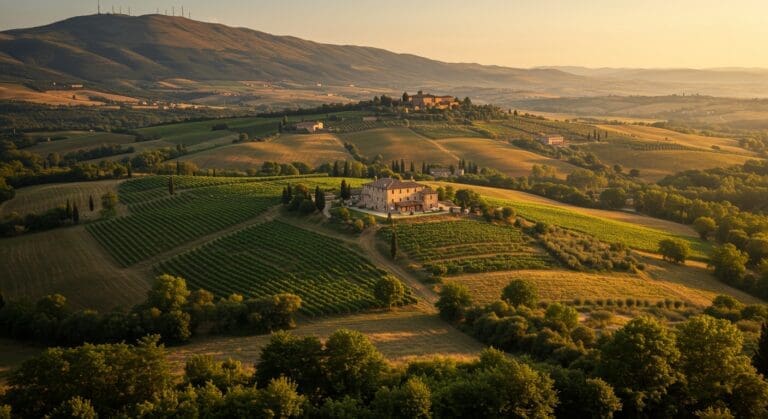
The island’s food traditions are rooted in the land and the sea in roughly equal measure. The interior – all rolling green hills, dry stone walls, and farmland that looks more like Brittany than you might expect – produces cheese, sobrassada, lamb, and a range of vegetables that benefit from the island’s relatively mild climate. The coast, with its clear turquoise waters, delivers lobster, cuttlefish, red shrimp, and fish of impeccable freshness.
Menorcan cooking tends toward the slow and the rich. Sauces are built with patience. Stews develop for hours. Even the salads feel considered rather than afterthought. The influence of successive waves of occupation – Moorish, British, French – left curious traces in the kitchen that linger to this day, making this one of the few Spanish regional cuisines where you might find yourself eating something that feels unexpectedly North African one moment and faintly French the next.
The Dishes You Need to Know
If you do only one thing on this island from a culinary perspective, make it caldereta de llagosta. This is Menorca’s defining dish: a lobster stew of breathtaking richness, built on a sofrito base and served in the traditional clay pot from which it takes its name. The lobster used is the local spiny variety, caught in the waters around the island, and the stew is typically finished with the coral from the shell – which gives it a depth and intensity that makes most other fish dishes feel rather polite by comparison. It is not cheap. It is not supposed to be. Order it anyway.
Beyond the caldereta, the island’s food repertoire includes sobrassada menorquina – a paprika-cured sausage spread that differs from its Mallorcan cousin in its slightly coarser texture and more intense flavour – and formatge de Menorca, the island’s protected designation of origin cheese. Mahón cheese, to give it its better-known name, is made from local cows’ milk and ranges from a mild, young curado to an aged version with sharp crystalline notes. The older the cheese, the more interesting the conversation that follows.
Ensaimada, the spiralled pastry that has become a Balearic staple, is made here too, though Menorcans will tell you theirs is better than Mallorca’s. The island also has its own version of pa amb oli – bread rubbed with tomato and dressed with local olive oil – which sounds deceptively simple and is, in the right context, deeply satisfying. There is also oliaigua, a humble summer soup of bread, tomatoes, figs, and olive oil that the island has eaten for centuries and that no amount of culinary fashionability has managed to replace.
Menorca’s Wine Scene: Small, Serious, and Worth Exploring
Let us address the elephant in the vineyard: Menorca is not a major wine-producing island. The climate is challenging – the tramuntana wind, which blows from the north with the kind of cheerful persistence that drives locals and vines alike slightly mad – and the island’s wine industry is small by any measure. What exists, however, is worth taking seriously precisely because the people making it are doing so with genuine conviction rather than commercial ambition.
The island has a growing number of small producers working predominantly with the Moll grape variety (also known as Prensal Blanc), a native white that produces wines of pleasing freshness and gentle aromatic character. The island’s reds tend to use Tempranillo and Merlot, often blended, and range in style from the approachable to the genuinely complex. The D.O. Binissalem designation applies to Mallorca rather than Menorca, so local wines typically fall under the Vins de la Terra designation – which tells you something about the scale of operation and rather more about the producers’ attitude.
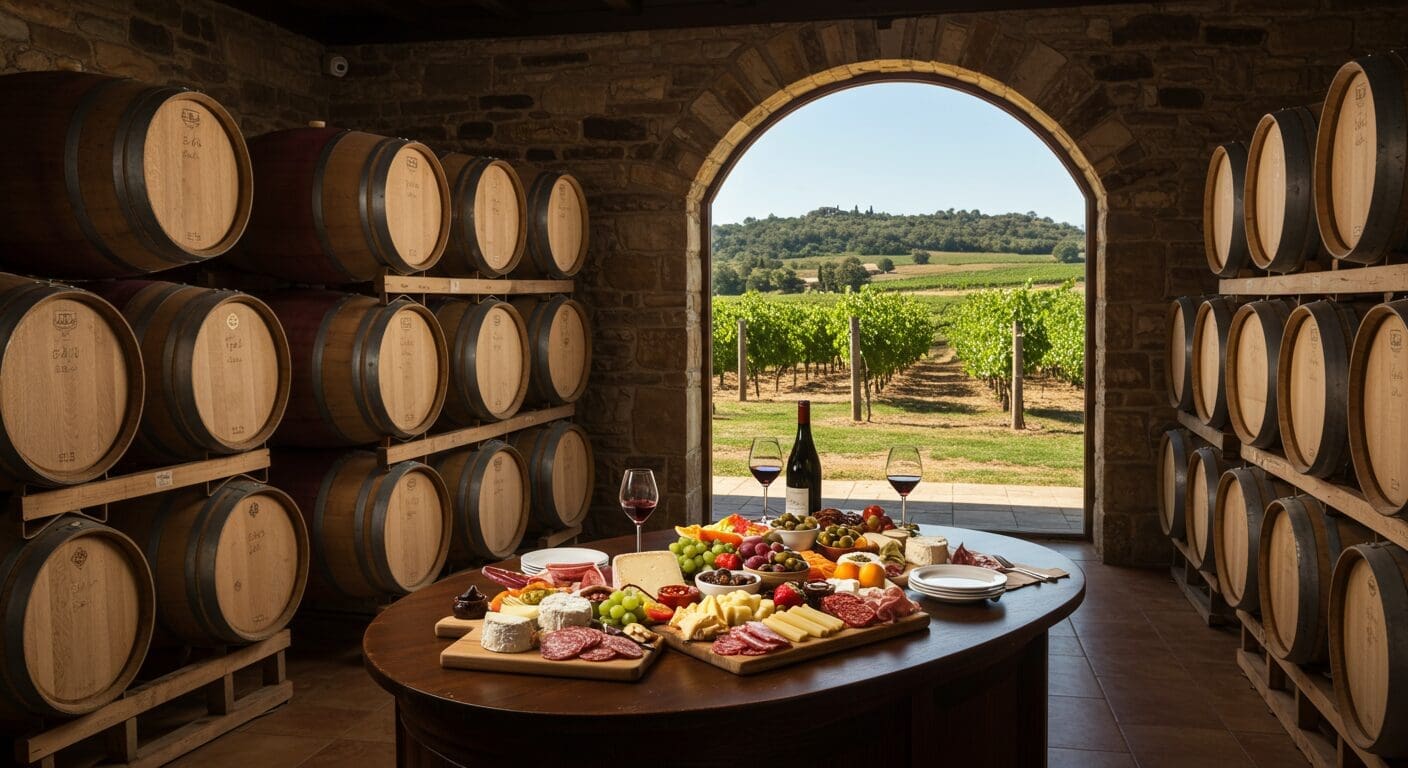
Wine estates on the island tend to be small family operations that combine wine production with agritourism, and visiting one makes for an excellent half-day. The experience is typically unhurried – tasting in a converted farmhouse, walking through the vineyard, eating something produced on the property – and is a useful corrective to anyone who has spent too much time on wine tourism conveyor belts elsewhere. These are places where someone’s grandmother probably still has opinions about the vintage. You will not leave wishing you had gone to a theme park instead.
Menorcan Gin: The Surprising Heritage
When the British occupied Menorca in the early eighteenth century, they brought with them a taste for gin and, finding that the island had suitable botanicals and a workforce with transferable distilling skills, proceeded to establish a local industry that has outlasted the occupation by several centuries. Menorcan gin – ginebra to locals – is made primarily from juniper and is typically enjoyed with lemon rather than tonic, a serve known as a pomada that has become something of an island institution.
The most celebrated producer is Xoriguer, whose copper pot stills have been operating in the port of Mahón since the eighteenth century. A visit to the Xoriguer distillery is one of those experiences that manages to be both genuinely interesting and conveniently walkable from the harbour. The tasting is generous. The history is well told. You will probably buy a bottle, and that is entirely reasonable.
Food Markets Worth Getting Up For
Menorca’s markets are the kind that reward actual engagement rather than passive browsing. The main market in Mahón operates in the covered Claustre del Carme, a former convent that has been repurposed with considerable elegance, and combines a permanent food hall with a weekly market that brings in local producers from across the island. The cheese counter alone justifies the visit. The fish section, early on a weekday morning when the serious cooking is being done, is a lesson in what a seafood market is supposed to look like.
Ciutadella, the island’s second city and former capital, has its own market culture – the weekly Tuesday and Saturday markets draw a mix of local shoppers and visitors who have figured out that this is where the island does its actual shopping rather than its tourist shopping. The distinction matters. There is less artisanal soap and considerably more sobrassada.
Smaller village markets operate on a rotating schedule throughout the summer months, and tracking down the one happening nearest to your villa on any given morning is the kind of low-stakes adventure that Menorca does well. You will come home with cheese you cannot identify, wine you cannot pronounce, and a bag of figs that will be gone by the time you reach the car.
Cooking Classes and Culinary Experiences
For those who want to understand Menorcan food rather than simply eat it – both are valid, but only one involves an apron – the island has a growing range of hands-on culinary experiences. Cooking classes tend to focus on the island’s signature dishes: the caldereta, the various iterations of slow-cooked meat, the pastry traditions that have been passed down through Menorcan families with the kind of seriousness usually reserved for property disputes.
Several of the island’s rural estates and boutique properties offer cooking experiences as part of a wider programme, typically combining a morning at the local market with an afternoon in the kitchen and an evening eating the results. These are not the tourist-facing cooking demonstrations that involve watching someone competent while you sip wine – they are participatory, occasionally chaotic, and frequently delicious. The best ones involve a local cook who has been making the same dishes for forty years and has strong views about what you are doing wrong. This is, in context, a gift.
Foraging walks – typically combining local herbs, wild asparagus when in season, and coastal plants – are available through a handful of specialist guides and pair well with a cooking session afterwards. The island’s position as a UNESCO Biosphere Reserve means that its natural environment is well protected and genuinely varied, and walking through it with someone who knows what is edible versus what is merely decorative is an education in itself.
Olive Oil and Artisan Producers
Menorca is not Tuscany, and it does not pretend to be. The island’s olive oil production is modest in scale but earnest in intent, with several small producers pressing oil from local groves and selling it direct from the farm or through the island’s markets. The oils tend toward the mild and fruity end of the spectrum – a reflection of the local Arbequina variety and the island’s climate – and work beautifully with the island’s bread, cheeses, and vegetable dishes.
Beyond olive oil, the island has a small but growing number of artisan food producers worth seeking out. Local honey, made from the island’s wildflower meadows, is exceptional – complex and aromatic in a way that supermarket honey has spent decades failing to replicate. There are producers making traditional Menorcan jams and preserves, and a handful of farms selling their own cured meats direct to visitors. Tracking these down is the kind of project that can happily occupy a morning without feeling like an itinerary.
The Best Food Experiences Money Can Buy
If you are going to invest seriously in eating on this island – and we would argue that you should – a few experiences rise above the rest. A private caldereta dinner prepared by a local chef in your villa is among the finest things you can do on the island: the dish at its best in the most comfortable possible setting, with wine chosen to match and no obligation to be anywhere at any particular time afterwards. Excellence Luxury Villas can arrange this through their concierge partnerships, and it is the kind of evening that redefines your relationship with lobster stew in the best possible way.
A private boat trip that combines a morning on the water with a market visit and a lunch prepared on board – using fish bought that morning – is another level of food experience that the island’s geography makes uniquely possible. There is something about eating simply prepared seafood in a secluded cove, on a boat, in water the colour of something a paint company would name optimistically, that no restaurant experience can quite match.
Wine and cheese tastings arranged at one of the island’s small producers, held privately after hours when the day visitors have left, combine genuine product quality with a sense of access that is increasingly rare in popular European destinations. These experiences do not happen without good connections. This is, coincidentally, something a good luxury villa concierge is rather useful for.
A Final Note on Eating Well in Menorca
The best advice for eating in Menorca is also the simplest: slow down. This is an island that does not reward rushing. The food is patient, the producers are unhurried, and the whole culinary culture operates on a timescale that has very little interest in the twenty-first century’s obsession with efficiency. The caldereta takes as long as it takes. The cheese has been ageing since before you booked your flights. The gin has been made the same way for three hundred years.
There is a lesson in there somewhere, though Menorca is far too polite to spell it out. It simply puts the food in front of you and waits for you to understand.
For more on planning your time on the island, including what to do beyond the table, see our full Menorca Travel Guide, which covers the island in the detail it deserves.
Ready to make this a reality? Browse our collection of luxury villas in Menorca – properties with private pools, full concierge services, and the kind of kitchens that make you want to use them. Or at least have someone else use them spectacularly on your behalf.