Best Restaurants in Provence: Fine Dining, Local Gems & Where to Eat
Italy has the romance of the table. Spain has the theatre. But Provence has something neither quite manages: the absolute, unhurried conviction that eating well is not an event but simply a way of life. Here, a Tuesday lunch can stretch to four hours without anyone checking their watch. Markets exist not as tourist attractions but as genuine infrastructure. And the produce – lavender-scented honey, truffles from the Vaucluse, olive oil pressed from groves older than most nation states – arrives at the table with the quiet authority of things that don’t need to be explained. You don’t discover the food culture of Provence so much as submit to it. Which, frankly, is the correct response.
Whether you’re based in a luxury villa in Provence deep in the Luberon or closer to the coast near Cassis, what follows is a considered guide to eating well across the region – from three-Michelin-star temples to the kind of bistro where the patron knows everyone’s name except yours. Both have their place. Both are essential.
This guide is part of our wider Provence Travel Guide, which covers everything from where to stay to what to do when you’re not at the table. Which, in Provence, may not be very often.
The Fine Dining Scene: Michelin Stars Over the Alpilles
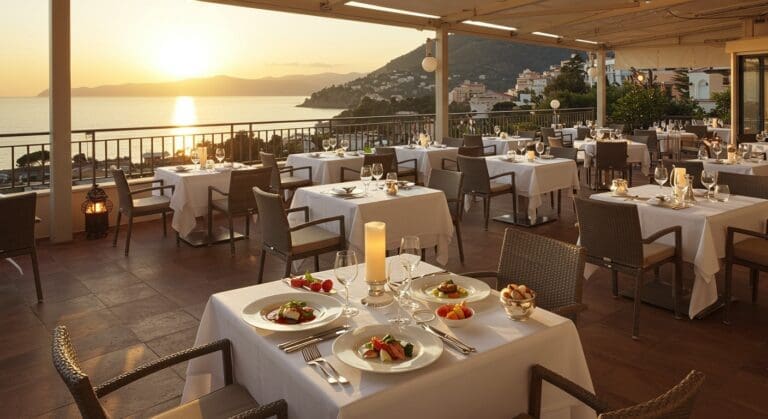
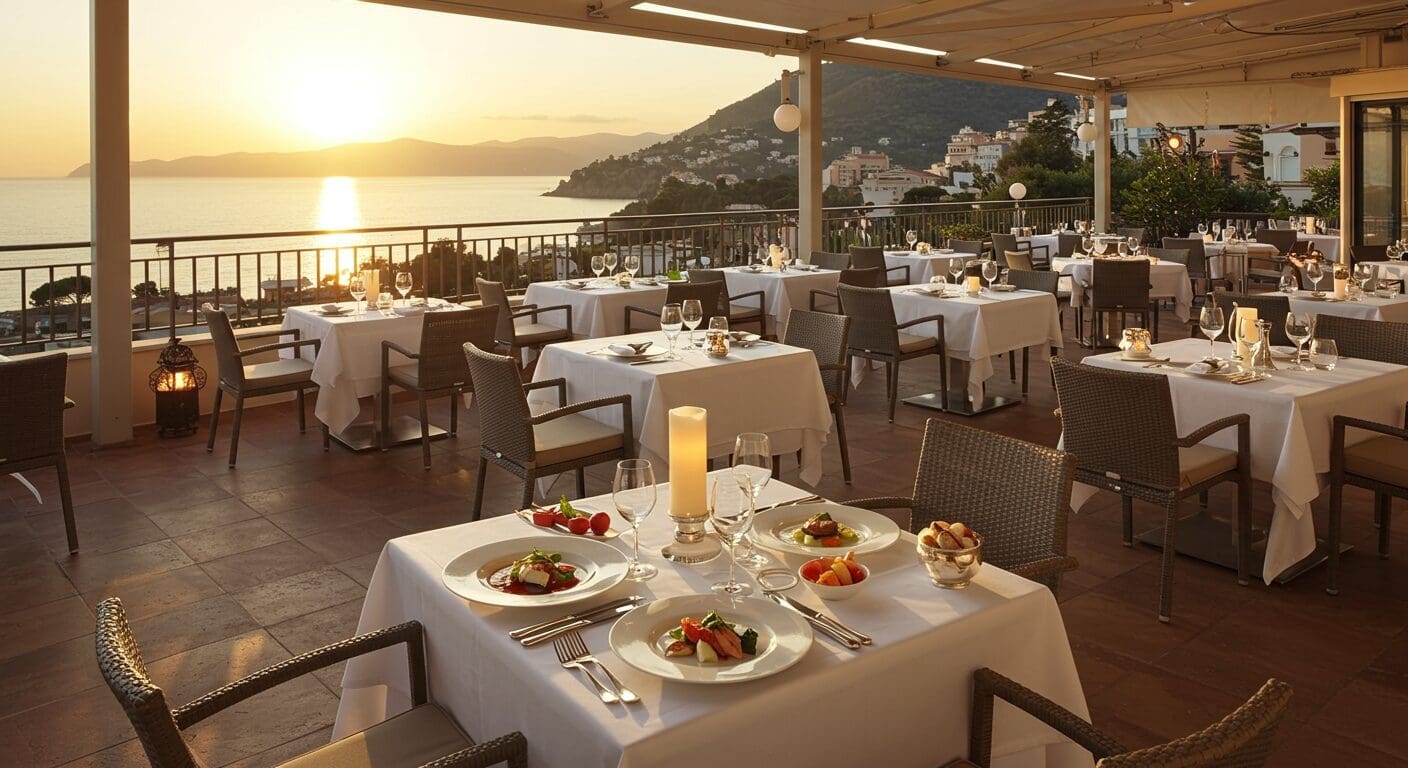
Provence wears its Michelin stars lightly, which is appropriate for a region that has always understood that extraordinary food and studied formality are not the same thing. The finest tables here feel rooted in landscape and season rather than performance – the starched white tablecloth is present, but so is the view of limestone hills and olive groves, and the latter tends to win the argument.
At the very pinnacle sits L’Oustau de Baumanière in Les Baux-de-Provence, the holder of three Michelin stars in the 2025 MICHELIN Guide France and, by almost any measure, the crown jewel of Provençal fine dining. The setting alone – a centuries-old Provençal mas folded into the dramatic rocky terrain of the Alpilles – would be enough to make the journey worthwhile. But chef Glenn Viel, now familiar to French audiences as a judge on Top Chef, has elevated this legendary address into something genuinely of its moment. His cooking draws on olive oil from the Vallée des Baux, organic vegetables from the estate’s own kitchen garden, and a profound respect for Mediterranean terroir. The result is cuisine that manages to feel both deeply classical and quietly thrilling – no small feat when you’re working in a room where the ghosts of previous chefs are practically seated at the bar. A meal here is not cheap. It is, however, entirely defensible.
On the coast, La Villa Madie in Cassis offers a different register of luxury – sea views, Michelin distinction, and chef Dimitri Droisneau’s signature Grilled Mediterranean Royal Lobster that has been making people very happy for some years now. Menus range from a four-course lunch at €75 to an eight-course signature menu at €215. For the setting and the quality of the cooking, the latter represents something approaching good value. Don’t say that too loudly – someone might do the sums.
In the Luberon, the newly minted JU – Maison de Cuisine earned its first Michelin star less than a year after opening in March 2024, which is the kind of trajectory that makes more established kitchens quietly nervous. The open kitchen, the walnut tables, the custom ceramic bowls – it’s Provençal-chic done with genuine conviction rather than Instagram calculation. Worth booking early and booking often.
Local Gems: The Bistros and Village Tables That Matter
For all the Michelin glory, some of the most memorable eating in Provence happens at tables that would never trouble a guidebook inspector. The trick is knowing where to look – and being willing to sit down somewhere that takes reservations on a chalkboard and serves the plat du jour without elaboration.
Les Vieilles Canailles in Aix-en-Provence is the kind of place that defines the word bistro without needing to announce it. Tucked into the historic heart of the city, this tiny, convivial room has built a fiercely loyal local following on the strength of its atmosphere and its unapologetically French menu. The os à moelle – bone marrow on toast, for the uninitiated – is exactly the sort of dish that makes you wonder why you ever eat anything else, and the Paris-brest arrives as a reminder that pastry is a serious discipline. The atmosphere is jovial in the way that only genuinely beloved neighbourhood restaurants manage. Go on a weeknight if you can. Watch the regulars greet each other. Order whatever sounds right.
In the Luberon, the village of Cucuron offers one of the region’s most quietly magical dining experiences at La Petite Maison de Cucuron. Chef Éric Sapet holds one Michelin star, but the setting – a table at the edge of the village’s ancient koi pond – is the detail that stays with you. On a warm summer evening, with the water reflecting the last light and a plate of truffles or local shellfish in front of you, it’s the kind of moment you’ll be quietly smug about for years. Sapet’s cooking draws directly from the market: mushrooms, Provençal cheeses, seasonal vegetables treated with intelligence and genuine flavour. Book the outdoor table. Obviously.
Across the region, look for the routier signs on rural roads – the truck-stop restaurants that have fed workers and farmers for generations. Some are unremarkable. A few are extraordinary. The ratio is better than you’d think.
What to Order: The Dishes That Define Provençal Cooking
Provence has a culinary vocabulary all its own, and it’s worth learning a few key words before you sit down. The region’s cooking is fundamentally Mediterranean – built on olive oil rather than butter, generous with garlic, herbaceous and bright – but it carries the weight of centuries of tradition without feeling museum-like.
Bouillabaisse is the obvious starting point: Marseille’s great fish stew, which arrives with rouille (a fierce, garlicky saffron mayonnaise) and croutons, and which requires at least two hours and no pressing commitments afterwards. Purists will tell you it can only be made in Marseille. They are not entirely wrong, though excellent versions exist along the coast. Daube Provençale – slow-braised beef with olives, orange peel and herbs – is what Provence tastes like in winter: deep, fragrant and completely restorative. Tapenade on good bread, socca (chickpea flatbread, more common as you move towards Nice but found across the region), ratatouille made properly with vegetables that have had some sunlight – these are the building blocks.
Truffles deserve their own sentence. The Vaucluse produces some of Europe’s finest black truffles, and between November and March they appear on menus with the enthusiasm of a region that fully understands its own luck. Order them whenever they appear. This is not the moment for restraint.
For dessert: calisson d’Aix (the almond and melon confection that Aix-en-Provence has been making since the 15th century), lavender-honey ice cream, and the tarte Tropézienne if you find yourself near Saint-Tropez. You will find yourself near Saint-Tropez. Everyone does, eventually.
Wine and Local Drinks: What to Pour
Provence produces more rosé than any other region in France, a fact that approximately half the world’s summer holidays now depend upon. The wines of the Var and the Aix-en-Provence appellation range from perfectly pleasant to genuinely serious, and the best – pale, dry, mineral, barely pink – are a different proposition entirely from the sugary pink wines masquerading under the Provençal name in supermarkets elsewhere.
For red wine, explore the Châteauneuf-du-Pape appellation in the southern Rhône Valley: Grenache-dominant, powerful, age-worthy, and produced in an area whose papal history lends it a certain gravitas. Gigondas and Vacqueyras offer similar character at friendlier prices. The whites of Cassis appellation (the town, not the blackcurrant liqueur – though both have their place) are particularly fine with the local seafood: Marsanne and Clairette grapes producing wines of real complexity and a freshness that matches the coastal air.
Château La Coste near Aix-en-Provence is worth a specific visit – not only for the wine, which is biodynamically farmed and taken seriously, but for the art and architecture installations scattered across the estate. Works by Tadao Ando, Alexander Calder and others punctuate the vineyards in a way that feels genuinely considered rather than decorative. It is, in the most literal sense, a place where art and wine share equal billing. There is also an excellent restaurant on site, which makes the visit admirably self-contained.
For local drinks beyond wine: pastis, the anise-flavoured spirit diluted with cold water until it turns an opaque golden-white, is the defining aperitif of the south. Order it before lunch in a village café and feel immediately, inexplicably French.
Food Markets: Where Provence Shops
The markets of Provence are not, it should be emphasised, primarily for tourists. They are where people actually buy food, which is why they are so much better than most markets elsewhere. The stall-holders know their customers, the produce is seasonal because there is no other option worth considering, and the social function of a Saturday market in a Luberon village is taken as seriously as anything else in the week.
The market in Apt, held on Saturday mornings, is one of the region’s finest – sprawling across the old town with everything from local cheeses and cured meats to the region’s celebrated candied fruits. The Aix-en-Provence market on the Cours Mirabeau and Place Richelme operates daily and draws a mix of locals and visitors with admirable produce and considerable atmosphere. For truffles, the market at Richerenches in the Vaucluse – one of the world’s largest truffle markets, held on Saturday mornings between November and March – is an experience that goes well beyond a shopping trip. The smell alone is worth the drive.
Rule of thumb: arrive early, bring a basket (not a rolling suitcase – the locals will judge you), and buy more cheese than you think you need. You will not regret it.
Beach Clubs and Casual Dining: The Coast and the Calanques
Provence’s coastline, from the dramatic limestone calanques near Cassis westward and east toward the Var, offers a register of eating that sits somewhere between lunch and a lifestyle choice. Beach clubs and waterfront restaurants here take the food seriously – this is not a region that accepts mediocrity as the price of a sea view.
Cassis itself is a particularly rewarding base for coastal eating: small enough to retain genuine village character, serious enough about food to hold its own against flashier neighbours. The harbour restaurants serve the local catch – sea bass, rascasse, octopus – with simplicity and confidence. The calanques themselves are best approached by boat, and a picnic assembled from the morning market is the most sensible strategy.
Along the coast toward Saint-Tropez and the Var, beach clubs move up a gear in terms of scale and price. The formula – sunbeds, rosé, grilled fish, sun – has been refined over several decades and is executed with considerable professionalism. The food at the better establishments is genuinely good. The people-watching is excellent. Both are best enjoyed without thinking too hard about what anything costs.
Reservation Tips: How to Actually Get a Table
A few practical observations from experience, offered in the spirit of preventing unnecessary disappointment.
L’Oustau de Baumanière takes reservations well in advance, and in high summer – July and August – you should be thinking months ahead, not weeks. The same applies to La Villa Madie in Cassis and La Petite Maison de Cucuron, both of which are small enough that availability evaporates quickly once the season begins. JU – Maison de Cuisine, still relatively new and generating considerable buzz, is booking up fast; if you want a table this summer, act now rather than optimistically.
For village bistros and local restaurants, French lunch service typically runs from noon to 2pm with a rigidity that initially surprises British and American visitors. Arrive at 1:45pm and you will be seated but will feel the kitchen’s quiet disapproval. The dinner service begins around 7:30pm and rarely gets going before 8pm. Adapt accordingly.
Many smaller restaurants in the Luberon and Alpilles are closed on Sunday evenings and Monday or Tuesday – this is not laziness but the entirely sensible practice of markets and supply chains. Check ahead. When in doubt, call rather than email. A phone call in Provence goes considerably further than a digital form.
The Villa Table: Eating In Without Compromise
No guide to eating well in Provence would be complete without acknowledging the pleasure of the meal that never leaves home. When you’re staying in a luxury villa in Provence, the option to bring the best of the region’s food culture directly to your own terrace – via a private chef, a well-stocked kitchen, and a morning spent at the market – is not a compromise but an entirely different kind of indulgence. A private chef who knows the local producers, who can source truffles in season and press olives into a dish that tastes unambiguously of the landscape outside the window, transforms the villa dining experience from convenient to genuinely memorable.
The best villas in the region come with this option as standard – or at least with the connections to make it happen. It is, arguably, the most Provençal way to eat: at your own table, at your own pace, with the cicadas providing the only entertainment required.
For everything else you need to know about the region – from where to stay to how to spend your days between meals – our Provence Travel Guide covers the full picture.