Provence Food & Wine Guide: Local Cuisine, Markets & Wine Estates
It is half past eight in the morning, and a man in a linen shirt is holding a melon to his nose with an expression of absolute concentration, as though the fate of nations depended on what he finds there. Around him, the market at Isle-sur-la-Sorgue is already in full roar – lavender sachets stacked in violet pyramids, tomatoes the colour of arterial sunsets, a wheel of cheese so ripe it seems to be breathing. You came for a baguette and a look around. Two hours later you are carrying a wicker basket, a bottle of estate rosé, and a small clay pot of tapenade wrapped in newspaper by a woman who clearly felt sorry for you. This is Provence. It gets you like that.
For anyone seriously interested in eating and drinking well – and if you are reading a Provence food and wine guide you almost certainly are – this region is not just a destination. It is an education. In the relationship between land and table. In the unhurried intelligence of a cuisine that has been perfecting itself for centuries. And in the quietly held provincial conviction that the rest of France is doing it slightly wrong.
The Essence of Provençal Cuisine
Provençal food is Mediterranean food at its most self-assured. Olive oil is the foundation – not used with reluctance as a butter substitute, but poured with genuine generosity over everything from roasted aubergines to poached fish. Garlic is not a flavouring here, it is practically a vegetable. Herbs grow wild in the garrigue – that dry, aromatic scrubland that perfumes whole hillsides – and thyme, rosemary, savory and bay end up in the pot almost by default.
The signature dishes are honest rather than elaborate. Bouillabaisse is the great set piece – a saffron-gilded fish stew from the Marseille waterfront that has spawned a thousand arguments about authenticity and a formal charter to settle them. Properly made, it arrives in two stages: the broth first, with rouille and grilled bread floating on top, then the fish. It is theatrical, fragrant, and deeply satisfying. It also takes most of the day to prepare, which is why you should order it somewhere serious rather than attempt it on a Tuesday evening after wine.
Daube Provençale is beef slow-braised in wine with olives, orange peel and herbs – the kind of dish that makes you understand why kitchens were invented. Socca, the chickpea pancake of Nice, is street food at its most elemental: crisp at the edges, yielding in the middle, eaten standing up, usually too hot. Tapenade – that silky black olive paste – and anchoïade (anchovy butter with garlic) appear on every respectable table. Ratatouille exists here too, of course, but the real thing – cooked slowly, the vegetables surrendering their individual identities to something greater – bears no relation to the version you have eaten from a supermarket container. Forget you ever had that version.
The Wine of Provence: More Than Rosé (Though Mostly Rosé)
Let us address the obvious first. Provence produces more rosé than any other fine wine region in the world, and the world has responded with near-hysterical enthusiasm. The pale, copper-tinged wines of the Côtes de Provence appellation have become a luxury lifestyle signifier in their own right – bottles appearing on superyacht tables and poolside at five-star hotels with almost suspicious frequency.
The quality at the top end is genuine. The best Provençal rosés – made primarily from Grenache, Cinsault, and Mourvèdre – are dry, mineral, aromatic and bracingly refreshing. They are not frivolous wines. They are just drunk in frivolous settings, which is a distinction worth preserving.
But to drink only rosé in Provence is to miss a great deal. The Bandol appellation, on the coast near Toulon, produces Mourvèdre-dominant reds of remarkable depth and longevity – brooding, earthy wines that need time and deserve serious attention. White wines from the Cassis appellation are precise and elegant, built for the local seafood in a way that feels less like pairing and more like fate. Châteauneuf-du-Pape sits at the northern edge of what might loosely be called Provençal wine country, producing Grenache-led reds of enormous richness and complexity.
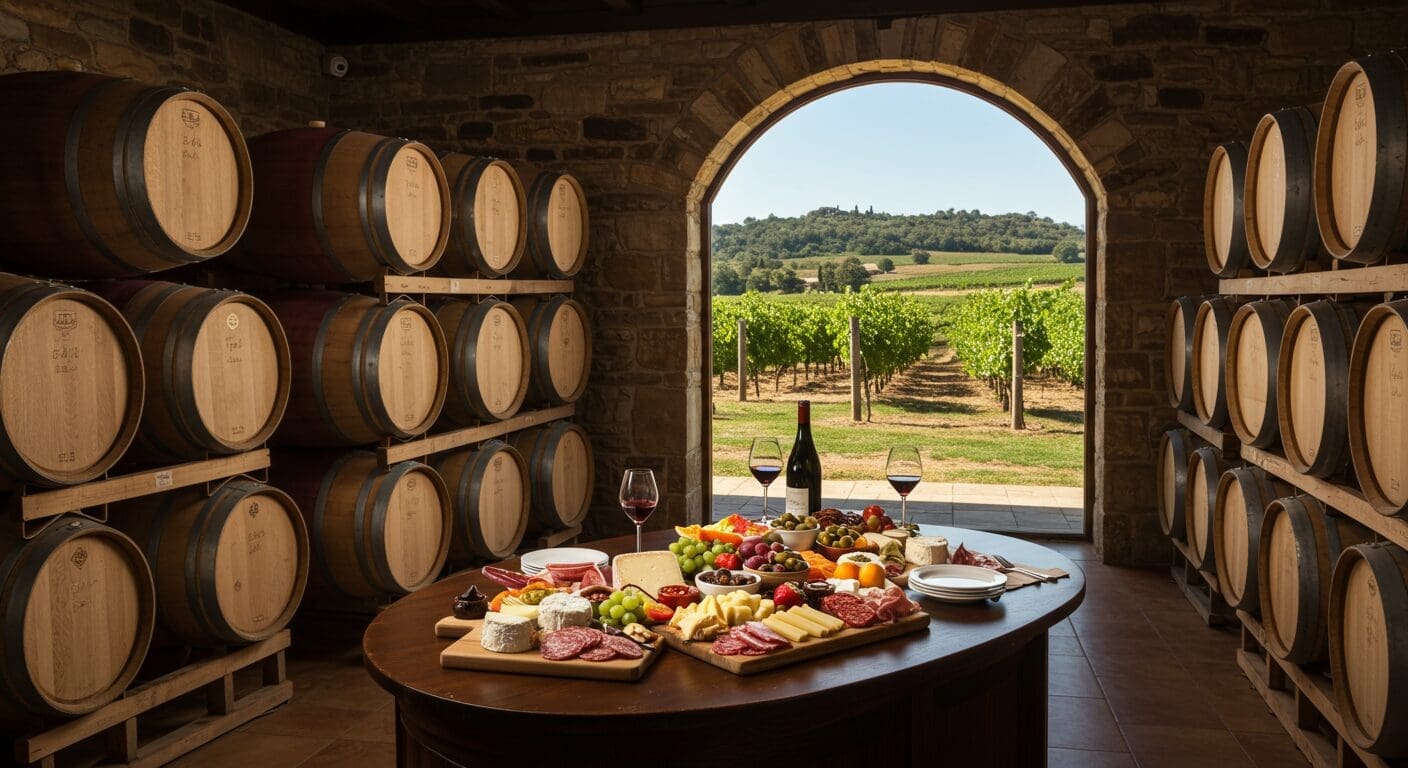
For estate visits, the Var department and the area around Les Baux-de-Provence offer some of the most atmospheric domaines in France – ancient stone buildings, vines trained across iron-red soil, and a hospitality that is generous without being performative. Many estates require appointments; a well-connected villa concierge can smooth the path considerably.
Food Markets Worth Getting Up Early For
Provençal markets operate on their own logic. They appear on certain days, in certain towns, fill the streets completely, and then vanish – leaving behind only olive pits and the faint smell of lavender – as though they were never there. Knowing when and where to find them is part of the pleasure.
The market at Aix-en-Provence runs daily in the Place Richelme, with a larger weekly version spreading through the old town on Tuesday, Thursday and Saturday mornings. It is one of the finest food markets in France – possibly, if you ask people in Aix, in Europe, though they will say this with the modest certainty of people who already know the answer. Seasonal produce dominates: melons from Cavaillon in summer, truffles in winter, goat’s cheese year-round.
Isle-sur-la-Sorgue runs its famous Sunday market in a slightly surreal combination of antiques and food – you can buy a Louis XVI armoire and a bag of fresh almonds within twenty paces of each other. Lourmarin, in the Luberon, holds a Friday market of great charm that attracts serious cooks from across the region. The town was also Peter Mayle territory, a fact that the locals have made their peace with. Mostly.
Apt, also in the Luberon, hosts a Saturday market renowned for its candied fruits – a Provençal speciality that sounds archaic until you taste the real thing and understand immediately why people have been making it for three hundred years.
Olive Oil: Liquid Gold, and No, That Is Not a Cliché
Provence is one of France’s most significant olive oil producing regions, and the oils here have a character all their own – fruitier and more delicate than Tuscan oils, with a subtle herbal quality that reflects the landscape they come from. The Les Baux-de-Provence AOC designation protects oils from the Alpilles mountains, where ancient olive groves produce small yields of exceptional quality.
The olive harvest typically runs from November through January, and many domaines welcome visitors – offering tastings, tours of the mill, and the chance to see oil being pressed with an immediacy that is quietly revelatory. Buying directly from the producer, ideally a litre tin still warm from the mill, is one of those simple acts that somehow means more than it should. You will use this oil differently. You will use it carefully.
Several producers around the Alpilles and the Var operate visitor programmes that can be combined with wine estate visits for a full day of artisanal indulgence. For longer immersions, some estates offer harvest participation programmes in autumn – physically demanding, socially warm, and ending in the kind of communal meal that makes you briefly consider never going home.
Truffles: The Underground Economy
Provence sits at the heart of French truffle country. The Vaucluse department – and particularly the area around Carpentras and Richerenches – produces a significant proportion of France’s black truffle harvest, and the winter markets dedicated to the trade are among the most atmospheric food experiences on the continent.
The Richerenches truffle market, operating on Saturday mornings from November through March, is conducted with a combination of ceremony and discretion that feels faintly conspiratorial. Transactions happen quietly, between people who know each other, in a village that has organised its entire identity around this single aromatic tuber. It is not a tourist market. You may attend. You will understand nothing. This is fine.
For those who want structure, guided truffle hunting experiences are available throughout the Luberon and Vaucluse, typically involving a trained dog – the pig has largely been retired, for reasons the truffle hunter will explain with some amusement – a woodland walk, and the improbable pleasure of watching an animal locate something underground that costs more per gram than most people earn in an hour. Many experiences end with a truffle-themed lunch prepared by the guide or a local chef. Book early. These fill fast.
Cooking Classes: Learning to Cook Provençal
The best cooking experiences in Provence follow the same arc: a morning at the market with a chef who knows precisely which stall to visit and why, followed by a return to a kitchen that manages to be both professional and convivial, followed by the meal you have just made, eaten with wine you probably didn’t make but which appears in generous quantities regardless.
These experiences exist at every level, from half-day introductions to week-long residential courses held at country houses with serious kitchen facilities. For luxury travellers, several private chefs operating across the region offer bespoke market-to-table experiences that can be arranged through your villa rental – a private cooking class in your own kitchen, stocked with market produce, is the kind of thing that sounds like a corporate team-building exercise until you are actually doing it, at which point it is simply a very good afternoon.
Focus areas vary by season. Spring brings classes dedicated to spring vegetables and fresh herbs. Summer is ratatouille and stone fruits and cold soups. Autumn tips toward game, mushrooms and the first serious red wines. Winter means truffles, daube, and the pleasure of cooking things that take all day while it rains outside.
The Best Food Experiences Money Can Buy in Provence
Money in Provence buys access that would otherwise take local connections, years, and a great deal of luck to accumulate. Private access to domaines not open to the public. A vertical tasting of Bandol red across a decade, conducted in a cellar that smells of stone and old oak. A private dinner prepared by a Michelin-starred chef at your villa, with wines selected by a sommelier who has clearly thought about this more than you have.
Helicopter transfers between estates for a day of wine touring without the minor inconvenience of driving is the kind of thing that raises an eyebrow until you consider the alternative – navigating single-track Provençal roads at dusk after a particularly generous tasting. At which point it seems entirely reasonable.
For the deeply serious, the truffle markets combined with a private dinner built around freshly hunted truffles, prepared by a chef who sources nothing else in November and December, constitute one of the great food experiences available anywhere in France. The French, who understand competitive eating better than anyone, acknowledge this. High praise.
Throughout the region, farm-to-table lunches at working estates – olive oil domaines, goat’s cheese producers, lavender farms with unexpected kitchen operations – offer something that no restaurant, however well-starred, quite replicates: the experience of eating food in the place it came from, with the people who made it, at a table that has been set a thousand times before. Provence has perfected this particular form of hospitality over a very long time. It shows.
Plan Your Provençal Table: Where to Stay
The most satisfying way to experience Provençal food and wine is not from a hotel room but from a private kitchen with a market full of produce, a garden with herbs that are actually growing rather than arranged in a ceramic pot for aesthetic purposes, and enough space to invite people for the kind of long lunches that the region has been advocating since before most countries had a cuisine. A private villa gives you all of this – plus the ability to receive an olive oil delivery at eight in the morning and a case of rosé from the estate down the road at noon, without anyone raising an eyebrow.
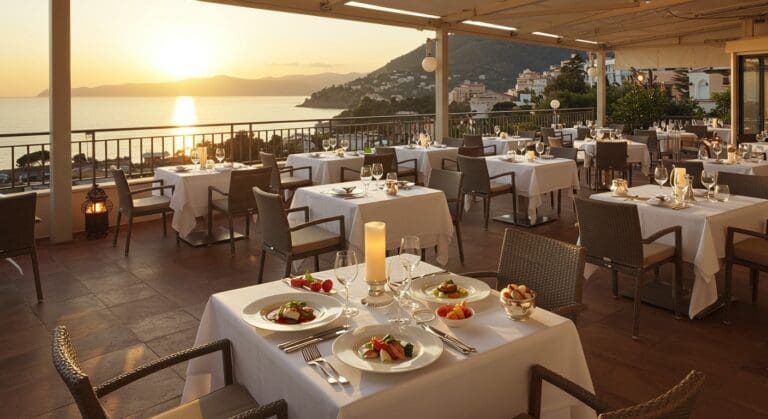
Whether you are planning a week of serious wine touring through the Var and Luberon, a truffle-hunting autumn break in the Vaucluse, or simply a summer of long meals on a terrace with rosé in an ice bucket and a view of absolutely nothing that needs to be improved, the right base makes everything better.
Explore our collection of luxury villas in Provence – from mas farmhouses in the Luberon to contemporary estates above the Côte d’Azur – and find the one that fits your table.
For a broader view of the region before you arrive, our Provence Travel Guide covers everything from the best villages to the essential cultural detours.