Wales Food & Wine Guide: Local Cuisine, Markets & Wine Estates
What if one of Britain’s most compelling food destinations had been hiding in plain sight all along – not behind a Michelin-starred façade or a fashionable postcode, but behind a language most visitors can’t pronounce and a landscape so emphatically itself that the food, inevitably, tastes of place? Wales has always fed people well. It just hasn’t always made a noise about it. That is changing. From the salt marshes of the Gower to the river valleys of mid-Wales where wild garlic grows thick enough in spring to perfume the air for miles, Welsh cuisine is quietly, confidently, having its moment – and for those who know where to look, it is one of the most rewarding food journeys in the British Isles.
The Foundations of Welsh Cuisine: What This Country Actually Eats
Welsh food is rooted in the land and the sea with an honesty that more fashionable food cultures spend a great deal of effort trying to simulate. The starting point is always the ingredient. Welsh lamb, grazed on upland pasture and salt marshes, has a flavour complexity that makes the supermarket variety taste like a polite approximation. Specifically, salt marsh lamb from the Gower Peninsula and the Llyn Peninsula – where sheep graze on samphire, sea lavender and sea purslane – carries a natural seasoning that no kitchen intervention can replicate. It is, genuinely, one of the finest things you can eat in these islands.
Then there is Welsh Black beef, a heritage breed that has been grazing Welsh hillsides for centuries. Slow-grown, well-marbled and reared in conditions that would make most cattle farmers weep with envy, it appears on the menus of serious restaurants across Wales and, increasingly, across the rest of the UK. Alongside it sits a dairy tradition of real depth: Caerphilly cheese, crumbly and lactic, is the most famous expression of it, but there are artisan producers across the country making raw milk cheeses, washed-rind varieties and soft goat’s cheeses that deserve far wider attention than they receive.
Cawl – a slow-cooked broth of lamb, leek and root vegetables – is Wales’s national dish in the way that a grandmother’s recipe is a national dish: every version is different, all versions are correct, and anyone who argues otherwise is wrong in a way that cannot be settled. Beyond cawl, the leek (one of Wales’s national symbols, which tells you something about Welsh priorities) appears everywhere from elegant restaurant preparations to farmhouse soups. Laverbread – seaweed harvested from the Pembrokeshire coast, cooked into a dense, mineral-rich paste and served on toast with cockles and bacon – is the kind of breakfast that coastal Wales has been eating for centuries and that London restaurants now charge accordingly for.
Welsh Wine: A Serious Industry in a Surprising Place
Yes, Wales makes wine. No, it isn’t a punchline. The Welsh wine industry has been growing steadily since the 1970s, and while the country will never trouble Bordeaux for volume, a number of estates are producing bottles of genuine quality – particularly sparkling wines made from Seyval Blanc, Solaris and Madeleine Angevine, varieties suited to the cooler climate and longer ripening seasons of the Welsh lowlands. The limestone and clay soils of South Wales share characteristics with parts of southern England where English sparkling wine has already earned international respect, and Welsh producers are beginning to earn comparable attention.
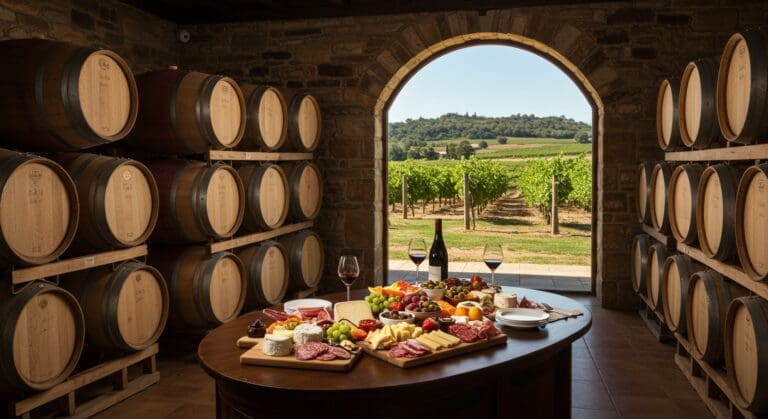
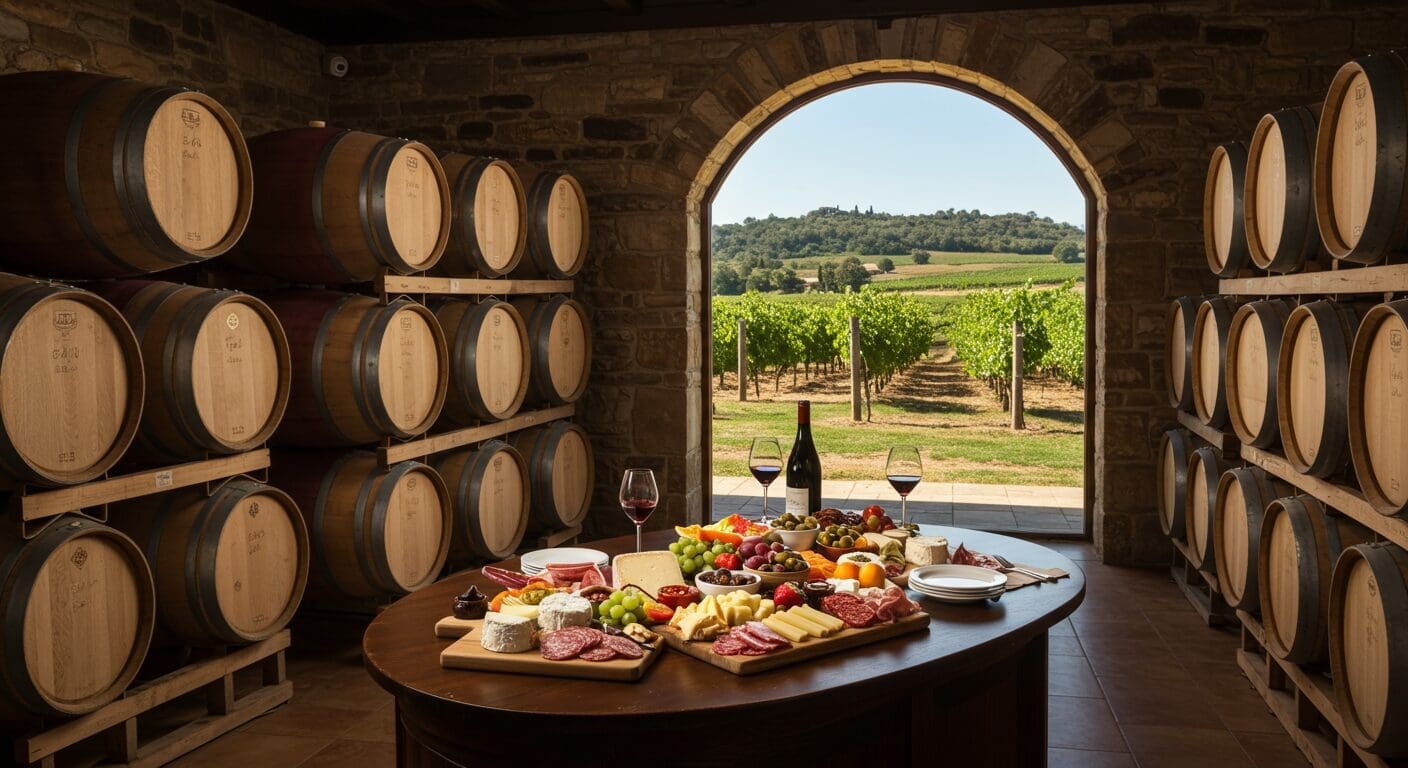
Ancre Hill Estates in Monmouthshire is the name most serious wine drinkers will encounter first, and with good reason. A certified biodynamic estate producing both still and sparkling wines from the Wye Valley, it approaches viticulture with the kind of philosophical rigour more commonly associated with Burgundy. Their sparkling wines in particular are worth seeking out – and the estate itself, looking out over the Wye Valley, is worth visiting for reasons that go well beyond the glass. Llanerch Vineyard in the Vale of Glamorgan is another established name, offering wine tours, tastings and accommodation that make it a natural destination for a longer stay. The wine tourism infrastructure across Wales is still developing compared to more established regions, which means, on balance, that you are more likely to get an unhurried conversation with an actual winemaker than a laminated tasting note.
White Hart Vineyard in Llangybi and Sugar Loaf Vineyard in the Brecon Beacons also reward visits. The latter sits at one of the higher elevations of any UK vineyard and produces wines with a freshness and acidity that reflect exactly where they come from. The Brecon Beacons as a wine region was not a sentence that existed twenty years ago. It is a sentence worth paying attention to now.
Food Markets: Where Welsh Producers Gather
The market tradition in Wales is old, practical and increasingly excellent. Abergavenny Food Festival, held each September in what the food world has taken to calling the gastronomic capital of Wales, is the headline event – two days of producers, chefs, tastings and demonstrations that draws serious food lovers from across the UK. It is, by any measure, a genuinely impressive regional food festival rather than a pleasant local affair with artisan chutney. The distinction matters. The surrounding market town of Abergavenny supports independent food shops and delis year-round that reflect the festival’s influence, which is not something every festival can claim.
Cardiff’s Central Market, a Victorian covered market that has been trading since 1891, is a different but equally rewarding experience – a working market where Welsh butchers, fishmongers and cheese stalls operate alongside cafés that have been serving the same regulars for decades. The atmosphere is brisk and unsentimental. Cardigan Market in west Wales and Brecon’s weekly market are smaller but no less authentic. For luxury travellers wanting to self-cater in a private villa, markets like these are where the real sourcing happens – where you find the dry-cured bacon and the aged Caerphilly and the smoked fish that no supermarket can replicate.
The Best Food Experiences Money Can Buy in Wales
At the higher end of Welsh dining, a number of restaurants have established reputations that extend well beyond the country’s borders. The Walnut Tree Inn near Abergavenny – a rural restaurant with roots going back to the 1960s – continues to be one of the most talked-about tables in Wales under chef Shaun Hill, whose cooking combines classical precision with a complete absence of performance. Ynyshir in Machynlleth, mid-Wales, has in recent years become one of the most boundary-challenging restaurants in the UK, earning two Michelin stars under chef Gareth Ward with a tasting menu that takes Welsh ingredients through a lens influenced by Japan and fire cookery in equal measure. Booking is competitive. The drive through mid-Wales to get there is, depending on your tolerance for single-track roads and sheep, either part of the experience or a minor adventure in itself.
Ultracomida in Aberystwyth and Narberth is worth noting as a destination deli and restaurant combining Spanish and Welsh produce in ways that make complete sense once you encounter them. The combination of Manchego and Perl Wen, of chorizo alongside Welsh charcuterie, works better than it has any right to. Elsewhere, private dining experiences in country house hotels and luxury villas allow guests to work directly with local producers – arranging for a delivery of Salt Marsh lamb from a local farm, commissioning a private chef to cook a multi-course dinner built around Welsh seasonal produce, or simply having the right bottles of Welsh sparkling wine waiting on arrival.
Foraging experiences are available across Wales, particularly in Pembrokeshire and the Wye Valley, where coastal and woodland foraging cover everything from sea purslane and rock samphire to wild mushrooms, elderflower and wood sorrel. Guided days with knowledgeable foragers are one of those rare experiences that feel immediately worthwhile rather than merely educational.
Truffle Hunting and Specialist Produce in Wales
Wales does not have the truffle tradition of Périgord or Umbria, but it does have truffles. Summer truffles – Tuber aestivum – have been found in broadleaf woodland across Wales, particularly in areas with limestone-rich soils. A small number of specialist truffle hunters operate in the country, and the occasional fine dining restaurant in South and Mid-Wales will source Welsh truffles during the season. It is not yet an organised truffle tourism industry in the way that France and Italy have developed, which means the experiences available are more intimate, more genuinely exploratory, and considerably less likely to involve a guided tour in eleven languages. Whether that is a feature or a bug depends entirely on your disposition.
Welsh charcuterie is a category gathering momentum. A growing number of artisan producers are making air-dried meats, smoked sausages and cured hams using Welsh Black pork and heritage breeds – producing products that rival established continental equivalents rather than approximating them. Welsh honey, particularly from hives in Snowdonia and the Brecon Beacons, is exceptional – intensely floral in summer, darker and more resinous in late season. It is the kind of thing that ends up in the luggage on the way home.
Cooking Classes and Culinary Immersion
For those who want to do more than eat – who want to understand how Welsh food is made and where it comes from – a range of cooking experiences exists at various levels of immersion. The Abergavenny area, given its concentration of serious food producers, supports several cookery schools and private chef experiences. Some luxury villa rentals in Wales can be arranged to include dedicated cooking experiences – either with a private chef on-site or through a partnership with a local cookery school, where guests spend a morning at a farm or market sourcing ingredients before an afternoon in the kitchen working with them.
Cheese-making experiences at Welsh artisan dairies are increasingly available, offering the chance to work with raw milk and traditional cultures to produce something that can, with a reasonable amount of effort and attention, be taken home and eaten with some degree of pride. Bread-making and foraging-to-table experiences round out a category that is genuinely growing in quality and ambition. Wales has the ingredients, the landscape and the producers to support world-class culinary tourism. It is, in the most understated way possible, getting on with it.
Practical Notes for the Serious Food Traveller
Welsh cuisine is seasonal in a way that rewards planning. Salt marsh lamb is at its best from late summer into autumn. Wild garlic transforms woodland cooking in April and May. Sewin – the Welsh sea trout, considered by many who have eaten both to be superior to Atlantic salmon – runs in Welsh rivers from late spring through summer. Oysters from the Menai Strait, between Anglesey and the mainland, are harvested through the cooler months and are among the finest bivalves in the UK: briny, clean, sweet and with a finish that tastes unmistakably of cold northern water.
Self-catering from a private villa – particularly one with a well-equipped kitchen and access to local producer networks – allows the food traveller to move between restaurant meals and home cooking with genuine flexibility. Bringing back a piece of Perl Wen from the Saturday market, opening a bottle from Ancre Hill on a Tuesday evening with nobody watching, making cawl on a rainy afternoon: these are pleasures that no restaurant can quite replicate. They are also, for the record, a very good reason to stay longer than you planned.
For a broader sense of the country before you arrive – the landscape, the culture, the logistics – the Wales Travel Guide covers the full picture in useful detail.
Stay Well, Eat Better: Welsh Villas for Food Lovers
The best way to experience this Wales food and wine guide: local cuisine, markets and wine estates in full is simply to be here – with time, with the right base, and with the kind of kitchen that allows you to do something worthwhile with a leg of salt marsh lamb and a bunch of locally foraged herbs. A private villa in Wales offers a level of connection to place that hotels, for all their virtues, rarely manage. You are close to the markets. You are close to the farms. You are close to the vineyards. You are, in the very best sense, in the way of good things.
Explore our curated collection of luxury villas in Wales – and find the right base for your own Welsh food adventure.