
Andalusia Travel Guide: Best Restaurants, Activities & Luxury Villas
Here is a confession that may get this guide off to an uncomfortable start: Andalusia is almost too much. Not in the way that, say, a theme park is too much – relentless and exhausting – but in the way that a great meal with too many courses is too much. You keep eating because everything is extraordinary, and somewhere around the third monument, the second flamenco performance and the fourth glass of Manzanilla, you realise you have entirely lost the thread of your own itinerary. Most people who visit Andalusia for a week come back having seen a quarter of what they planned and feeling oddly complete about it. That is the region’s particular magic – and its quiet trap. It does not reward the relentless ticking-off of sights. It rewards surrender. So arrive with loose plans, a tolerance for afternoon heat, and the wisdom to cancel at least one thing in favour of sitting somewhere beautiful with a cold glass of something local. You will not regret it.
Getting Here: The Airports Worth Knowing and the Roads Worth Driving
Andalusia is large – genuinely, dramatically large – covering roughly 87,000 square kilometres across southern Spain. How you arrive depends almost entirely on where you are going, and getting this right will save you hours of unnecessary motorway.
malaga/” title=”luxury villas in Malaga with private pool”>Malaga Airport (AGP) is the main gateway and one of Spain’s busiest international airports, with direct flights from most major European cities and decent transatlantic connections. It is the logical entry point for the Costa del Sol, Marbella, Ronda and the broader western reaches of the region. Seville Airport (SVQ) handles a good volume of international traffic and is the obvious choice if your Andalusia is more flamenco and tapas than beach clubs and golf. For Granada, the small local airport is convenient but limited in routes, so many visitors fly into Malaga and drive the 1.5 hours east – a journey that, done in the right light, through the olive-silvered hills of the interior, is quietly one of the best drives in Spain. Cádiz and the surrounding coast are best accessed via Jerez Airport (XRY), which receives a surprisingly good selection of budget and charter flights.
Once here, a hire car is not merely convenient – it is, for most villa stays, essentially non-negotiable. Public transport in Andalusia is perfectly serviceable between major cities (the high-speed AVE train between Seville and Malaga is a pleasure), but the places that matter most in this region – the white villages draped across hillsides, the quiet coves, the mountain valleys – require a car. The roads are good. The scenery is exceptional. The speed cameras are numerous. Drive accordingly.
The Table Is Everything: Eating Extraordinarily Well in Andalusia
Fine Dining
Andalusia has quietly become one of Europe‘s most serious fine dining destinations, and the number of Michelin stars scattered across the region would surprise people who still associate the south of Spain primarily with paella and sangria. Both of those things exist here, of course. Neither represents the ceiling.
The most extraordinary table in the region – and an argument could be made, in Europe – is Aponiente, in the salt marshes outside El Puerto de Santa María near Cádiz. Chef Ángel León has held three Michelin stars since 2018 and operates from an 18th-century tidal mill whose interior takes the theatrical conceit of being beneath the sea rather seriously: fishtail-back chairs, mermaid references, a dining room that makes you feel as though the Atlantic has reassembled itself around you. León’s obsession is the sea in its entirety – not just the fish, but the plankton, the seaweed, the bioluminescent organisms that most chefs have never considered putting on a plate. A meal here is not dinner. It is a point of view.
In Seville, Abantal holds the city’s sole Michelin star, and chef Julio Fernández Quintero wears that distinction with impressive understatement. The nine-course tasting menu is a creative and refined reworking of Andalusian classics – recognisable enough to feel rooted in place, refined enough to feel genuinely modern. The chef’s table inside the kitchen is one of those experiences that travel writers recommend so frequently it risks sounding like a cliché, and is nonetheless entirely worth doing.
Córdoba’s contribution to the region’s fine dining conversation is Noor, where two-Michelin-starred chef Paco Morales takes a genuinely unusual approach: each season he dedicates the menu to a different historical era of Al-Andalus, transferring the aromas and flavours of medieval Moorish Andalusia into something recognisably avant-garde. The concept sounds like it could be gimmicky. It is not. It is one of the most intellectually coherent and delicious restaurants in Spain.
Where the Locals Eat
The locals eat everywhere, constantly, and at hours that would scandalise most northern Europeans. Lunch rarely happens before 2pm. Dinner before 9pm is essentially a meal for tourists and children. Tapas, in their proper Andalusian form, are not a starter or a snack – they are a way of life, a social structure, a perfectly valid reason to be standing at a bar at noon on a Tuesday.
In Seville, Modesto is the kind of restaurant that reminds you why honest cooking done well requires no apology and no Michelin inspector. Locals crowd the ground floor bar to drink Sherry and eat tapas with the serious enthusiasm of people who have not just discovered this is a good idea. The dining room upstairs is warm and traditionally Andalusian, and the seafood – particularly the Marqués de Villalúa clams – is exactly what you want after a long morning of sightseeing. The grilled milk-fed lamb chops are, by local consensus, among the finest in the city. Order them and believe the locals.
Across the region, the bar-and-tapas culture is at its most vivid in cities like Seville and Jerez, where an evening begins somewhere around 8pm, involves several bars, several small plates, a progression through the narrow streets, and ends at a time that seems surprising the following morning.
Hidden Gems Worth Seeking Out
The most quietly remarkable eating experience in Andalusia may not be in a restaurant at all. It is sitting at an outdoor table at Restaurante Antonio in Zahara de los Atunes, a small fishing village on the Atlantic coast of Cádiz, eating bluefin tuna that was caught before it passed through the Straits of Gibraltar. The restaurant sits in a whitewashed building surrounded by sand dunes with the beach directly in front of it. The tuna – prepared with the kind of precision that suggests the kitchen takes this fish as seriously as the sea does – draws food lovers from all over Spain. There is a reason for that. The almadraba tuna season runs from April to June, and if you are anywhere near this stretch of coast during those months, this table is not optional.
Beyond specific restaurants, the hidden gem of Andalusian eating is the mercado – specifically the covered food markets in cities like Seville (Mercado de Triana), Malaga (Mercado Central de Atarazanas) and Córdoba (Mercado Victoria). These are where the region’s exceptional produce is most viscerally on display: the jamón ibérico glistening on its stand, the mounds of gazpacho vegetables, the olive varieties that number in the dozens. A morning spent here, eating standing up and spending almost nothing, is one of the most Andalusian things you can do.
A Region of Extraordinary Parts: Understanding the Landscape
One of the persistent mistakes people make about Andalusia is treating it as a single place. It is not. It is eight provinces, several distinct landscapes, and at least three entirely different holiday experiences bundled into one autonomous community with a flag and a complicated history.
The Costa del Sol – the stretch of Mediterranean coast running west from Malaga through Marbella and beyond – is the most internationally familiar face of the region. Glamorous in parts, overdeveloped in others, occasionally both simultaneously. Marbella itself has a justifiably glossy reputation, with its old town a genuine pleasure of narrow streets and orange trees, and its marina a study in impeccably maintained boats and very confident sunglasses. Further west, the coast softens into quieter territory around Estepona and, eventually, into the extraordinary natural park of Los Alcornocales.
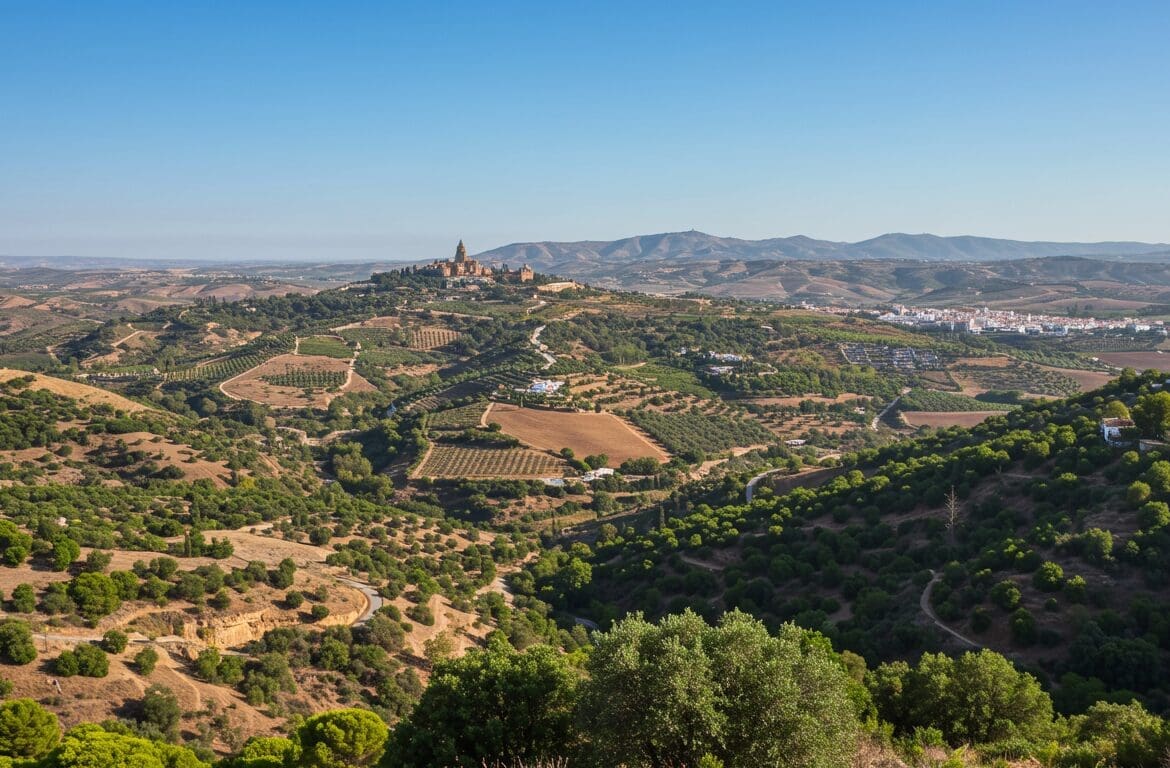
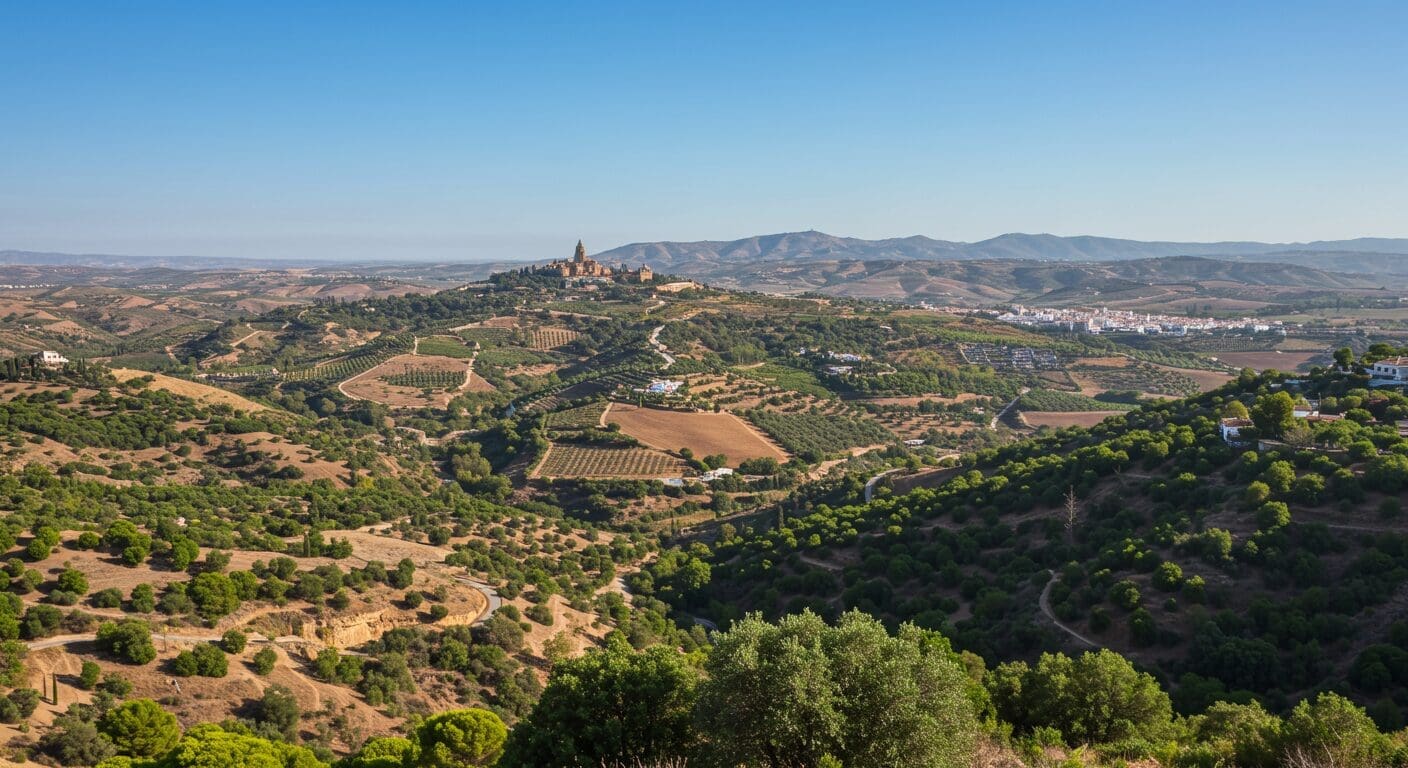
The interior is where Andalusia becomes something entirely different. The Sierra Nevada – which contains mainland Spain’s highest peak, Mulhacén, at 3,479 metres – rises dramatically behind Granada and provides a landscape of genuine Alpine grandeur that is startling when you remember you are forty minutes from the Mediterranean. The Alpujarras, the network of white villages strung along the southern slopes of the Sierra Nevada, are among the most beautiful and visited settlements in Spain, and justifiably so.
To the west, the Sierra de Grazalema and the Ronda perched on its gorge offer a different kind of drama – the bleached limestone landscape of the Pueblos Blancos, the white villages, which unfurl across the hills of Cádiz and Málaga provinces like a string of fairylights someone has arranged rather carelessly. And then there is the Atlantic coast: the wide beaches of Cádiz province, the salt marshes, the dunes of Bolonia, the wind-lashed kitesurfing paradise of Tarifa. Andalusia in the Atlantic is a different animal entirely from Andalusia on the Mediterranean – wilder, windier, colder in the water, and arguably more interesting.
Things to Actually Do: A List That Avoids the Obvious Where Possible
The obvious things are obvious for good reason. The Alhambra in Granada is one of the architectural wonders of the world and deserves its queues. The Real Alcázar in Seville is extraordinary. The Mesquita in Córdoba will stop you in your tracks. Do all of these. Book tickets well in advance – the Alhambra especially, which sells out weeks ahead during peak season, and which has broken the hearts of many under-prepared visitors who arrived at the gates without a reservation and were turned politely away.
But beyond the monuments, Andalusia offers a range of experiences that reward the visitor who looks slightly sideways. Take a sherry tour in Jerez de la Frontera – not a cursory tasting but a proper visit to one of the great bodegas like González Byass or Bodegas Tradición, where the solera system of ageing is explained by someone who has clearly devoted their entire professional life to this subject and is grateful for the audience. Sherry is one of the world’s great undervalued wines. Andalusia is the place to correct that misapprehension.
Attend a flamenco performance – but choose carefully. Andalusia has no shortage of tourist flamenco, which is to authentic flamenco what karaoke is to live music. In Seville, seek out a peña – a private flamenco club – or book a performance at one of the serious tablaos like Casa de la Memoria or Museo del Baile Flamenco. The experience of watching a genuinely skilled bailaora perform in a small, intimate space is not one that wears off quickly.
Drive the route of the Pueblos Blancos, stopping at Vejer de la Frontera, Arcos de la Frontera and Zahara de la Sierra. Rent a boat and explore the coastline between Tarifa and Bolonia. Visit the Roman ruins of Baelo Claudia, which sit improbably on one of Andalusia’s most beautiful beaches, largely free of crowds and entirely free of the significance they deserve. Take a day trip to the Doñana National Park, where Europe’s most important wetland hosts flamingos, lynx and a biodiversity that makes the rest of the continent seem underachieving.
Caminito del Rey and Beyond: Adventure in a Landscape Built for It
Andalusia’s physical drama – the gorges, the sierra, the Atlantic wind – makes it a genuinely outstanding destination for adventure sports, and the region has invested meaningfully in infrastructure to match its natural advantages.
The Caminito del Rey, roughly an hour’s drive from Malaga, is one of Spain’s most celebrated hikes and one of those experiences that photographs cannot quite prepare you for. The trail follows a narrow pathway pinned to the vertical walls of the Garganta del Chorro gorge, above a river that glints several hundred metres below. It was originally built for workers maintaining the hydroelectric infrastructure of the gorge, fell into spectacular disrepair, and was restored and reopened in 2015. The full route covers around 7.7 kilometres and takes two to three hours. It requires a head for heights and an advance booking. It rewards both generously.
Tarifa, on the southernmost tip of mainland Europe, is Europe’s kitesurfing capital in any meaningful sense – the Levante wind that tears through the Strait of Gibraltar for much of the year creates conditions that professionals travel specifically to use. Beginners can take lessons at any number of schools along the beach. Those who already know what they are doing will find conditions here that make other kitesurfing destinations feel politely mediocre.
Inland, the Sierra Nevada offers serious hiking and mountaineering in summer and actual skiing in winter – the Pradollano resort sits at high altitude above Granada and receives reliable snow from December through April. It is surreal to ski in the morning and drive to the beach in the afternoon, and yet in Andalusia this is not a hypothetical. People do it. They post photographs of it and the photographs look implausible. They are not.
The region’s coastline offers excellent diving along stretches of the Mediterranean coast, particularly around the Cape of Gata Natural Park in Almería, where the water is clear, the marine life is abundant, and the relative lack of development means the seabed has not been comprehensively disturbed. Cycling is increasingly well catered for, with a growing network of greenways – vías verdes – converted from old railway lines, running through landscapes of olive groves and vineyards at a gradient that the naturally non-athletic among us will find extremely encouraging.
Andalusia with Children: Better Than You Are Expecting
Andalusia is, rather unexpectedly, one of the most naturally child-friendly regions in Europe. Not because of theme parks and specifically designed children’s attractions – though these exist – but because of the culture itself. Spanish society does not partition children away from adult life the way much of northern Europe does. Children eat at restaurants at 10pm in Andalusia and nobody raises an eyebrow. They are welcomed in tapas bars, included in family paseos along the promenade, present at festivals and fiestas. The result is that travelling here with children feels less like managing a compromise and more like a genuinely shared experience.
Practically speaking, the beaches are exceptional – long, sandy, clean, and with the calm Mediterranean waters of the Costa del Sol offering safe swimming for even small children. The Malaga side of the coast has reliable summer heat, calm seas and excellent beach infrastructure. Cádiz province’s Atlantic beaches are wilder and more dramatic, and the surf is more active – older children and teenagers often prefer them considerably.
Granada and its surroundings offer a particularly rich experience for families with older children, where the Alhambra functions as a genuinely vivid history lesson about the Moorish period in Spain. The interactive museums in Seville – particularly those connected to the 1992 Expo site on Cartuja island – are well-suited to children, and the city’s wide open spaces make it manageable even in summer.
The private villa advantage here is considerable. Andalusia’s summer heat is serious – temperatures regularly exceed 35°C in July and August – and the ability to retreat to a private pool, eat lunch in a shaded garden, and operate on your own schedule rather than that of a hotel is not a luxury in the abstract but a genuine quality-of-life improvement for families. Children who have spent the afternoon in a private pool are, in the author’s experience, significantly more agreeable at dinner than children who have spent it at a crowded public beach.
Three Thousand Years of History, Compressed Into One Remarkable Region
Andalusia is one of the most historically layered places in Europe, which is saying something on a continent that has been continuously inhabited and repeatedly invaded since the Neolithic. The particular quality of Andalusian history is its collision of civilisations: Phoenician, Roman, Visigoth, Moorish, Jewish, Christian – each left physical and cultural residue that compounds into something unlike anywhere else in the world.
The Moorish period – al-Andalus, from the 8th century until the final fall of Granada in 1492 – produced the architectural achievements that define the region’s identity. The Alhambra complex in Granada is the most complete surviving example of Moorish palatial architecture in the world: its geometry, its water features, its gardens, its poetry inscribed in plasterwork are a sustained argument for the sophistication of a civilisation that much of subsequent Spanish history attempted to minimise. Stand in the Court of the Lions in the right morning light and the argument is comprehensively won.
The Mezquita of Córdoba is the other great monument of this era – a hypostyle mosque of hundreds of columns built between the 8th and 10th centuries, into the centre of which a cathedral was inserted in the 16th century. The result is architecturally bewildering and historically revealing: two religious civilisations occupying the same building, neither entirely comfortable about it, both producing work of extraordinary quality. Córdoba under the Caliphate was one of the largest and most sophisticated cities in Europe. The remains of the Medina Azahara palace complex outside the city give some sense of the scale of that ambition.
Flamenco, Andalusia’s most recognisable cultural export, is a more recent synthesis – emerging in recognisable form in the 18th and 19th centuries from the fusion of Gypsy, Moorish and Jewish musical traditions. It is not merely entertainment. It is an emotional language, technically demanding and culturally specific, which explains why watching it performed by someone who truly understands it is a qualitatively different experience from the tourist versions.
The festivals of Andalusia are among Spain’s most celebrated: Seville’s Feria de Abril, a week of flamenco dancing, horseback riding and very serious sherry consumption in late April; Semana Santa (Holy Week), when the costaleros carry the great religious floats through the streets of Seville and Málaga with a solemnity and scale that is genuinely affecting regardless of your religious convictions; the Feria del Caballo in Jerez, a horse fair of international significance that is also an excuse for an extraordinary display of Andalusian culture and equestrian skill.
What to Bring Home: Shopping That Goes Beyond the Obvious
There is, let us be honest, a great deal of tourist shopping in Andalusia that one could cheerfully leave behind. The ceramic tiles, the plastic flamenco dolls, the miniature Alhambra replicas – all available, all tempting in the moment, all looking slightly diminished once you are home. Resist where possible.
What Andalusia genuinely produces well, and what travels exceptionally, is food and wine. Jamón ibérico de bellota – acorn-fed Iberian ham, preferably from Jabugo in the Sierra de Aracena or from the producers of the Pedroches valley in Córdoba – is the obvious answer, and an extremely good one. Buy it vacuum-packed from a serious delicatessen rather than pre-sliced from a tourist shop. The difference is not subtle.
Sherry is the other obvious and correct answer. The great solera-aged wines of Jerez – a Palo Cortado from Bodegas Tradición, a 30-year-old Oloroso from González Byass – are not adequately represented by the bottles available in your local supermarket, and the price differential between buying here and buying at home is remarkable. Extra virgin olive oil from Jaén province, which produces more olive oil than Greece and more than most people would consider possible, is another unimpeachable choice.
For crafts, Córdoba is the place for traditional Cordoban leather goods – the industry here has a history stretching back to the Moorish period, and the hand-tooled leather work from the old ateliers around the Mezquita is genuinely beautiful and genuinely made here. Granada’s Albaicín quarter offers ceramics from the Fajalauza tradition – distinctive blue-and-green painted pottery that has been made in the city since the 16th century – and the Moroccan-influenced craft shops of the Alcaicería market near the cathedral are worth a browse, even if the haggling that once defined the experience has given way to rather more fixed pricing.
Practical Things: What You Actually Need to Know Before You Go
Spain uses the Euro. Tipping is appreciated but not compulsory – rounding up a bill, or leaving a euro or two after tapas, is the norm; the North American approach of calculating twenty percent on everything would make most Andalusian waiters mildly alarmed. Credit cards are accepted almost everywhere, though smaller village bars and market stalls may still be cash-only.
Spanish is the language, and Castilian Spanish at that – Andalusian Spanish has a distinct accent and some regional vocabulary, and moves at a pace that language school graduates often find unexpectedly challenging. English is widely spoken in tourist areas along the coast and in the major cities. In the rural interior, it is less reliable. A small effort with basic Spanish – greetings, please, thank you, the names of food – is received with disproportionate warmth.
The best time to visit Andalusia depends almost entirely on what you are doing. Spring (April and May) is widely considered the ideal combination of manageable temperatures, wildflower-covered hillsides and the great festivals of Seville. Autumn (September and October) offers similar advantages with the added bonus of warm sea temperatures and significantly thinner crowds. Summer (July and August) is peak season – the coast is busy, the interior is extremely hot (Seville regularly hits 40°C and above in August, which is not an exaggeration but a weather forecast), and the popular sites require significant advance planning. That said, the long summer evenings, the beach culture and the social life of coastal Andalusia in July are genuinely glorious if you approach them correctly – which is to say, slowly and with generous quantities of cold local wine. Winter is mild on the coast and genuinely cold in the mountains, and offers the profound pleasure of having many of the great monuments almost entirely to yourself.
Safety is not a serious concern in most of Andalusia – it is a safe region by any European standard. The normal urban precautions apply in the larger cities: Seville and Malaga have their share of tourist-targeted pickpocketing, particularly around the major monuments and markets. Keep your wits about you in crowded spaces and you will almost certainly be fine.
Why a Private Villa Changes Everything About a Luxury Holiday in Andalusia
There is a version of Andalusia that hotels deliver perfectly well. The boutique hotel in the Barrio Santa Cruz in Seville, the beachfront resort on the Costa del Sol, the converted parador in a hilltop castle – all are genuinely excellent options, and this guide would be dishonest if it suggested otherwise.
But the luxury villa version of Andalusia is a different experience in kind, not merely in degree. The region’s geography lends itself to it: the fincas and cortijos of the Andalusian countryside – traditional farmhouses with their thick whitewashed walls, terracotta floors, deep shade and private outdoor spaces – are architecturally suited to the climate and the pace of life that the climate demands. A villa with a private pool in the hills above Marbella, or on a quiet road in the Cádiz hinterland, or looking down over the Guadalquivir valley towards Seville, offers the kind of immersion in Andalusian light and landscape that a hotel room, however beautifully appointed, simply cannot replicate.
The practical advantages compound this. You eat when you want – which, on a luxury holiday in Andalusia, often means a long late breakfast in the sun, a lunch of local market produce assembled at your own leisure, and dinner wherever the evening takes you. The children (or the adults, who are just children with better wine) can use the pool without booking a slot. You can host friends for dinner. You can have the conversation that a week in a hotel lobby never quite permits. And you can, crucially, watch the evening light move across the olive groves in the kind of unhurried silence that is the actual point of this kind of holiday – the thing you came for, whether you knew it when you booked or not.
Excellence Luxury Villas has over 27,000 properties worldwide, and Andalusia is one of our richest collections. Whether you are looking for a whitewashed cortijo in the Ronda mountains, a contemporary villa above the sea in Marbella, or a grand finca in the rolling hills of Cádiz, the options are considerable and the quality is consistently exceptional. Browse our full collection of luxury villas in Andalusia with private pool and find the version of this remarkable region that suits you best.
More Andalusia Travel Guides
What is the best time to visit Andalusia?
Spring (April and May) and autumn (September and October) are the sweet spots: temperatures are comfortable, the landscapes are at their best, and the major sites are manageable without the peak-season crowds. April brings Seville’s extraordinary Feria and the wildflower-carpeted hillsides of the interior. October offers warm sea temperatures alongside noticeably quieter beaches and monuments. Summer is glorious on the coast if you embrace the pace – slow, late and fuelled by cold local wine – but July and August in the inland cities, particularly Seville and Córdoba, can be genuinely extreme. Winter is mild and uncrowded on the coast, cold in the mountains, and ideal for anyone whose idea of a good holiday includes having the Alhambra largely to themselves.
How do I get to Andalusia?
The main international gateway is Malaga Airport (AGP), with direct flights from most major European cities and year-round connections from the UK, Germany, Scandinavia and beyond. Seville Airport (SVQ) is the better choice for northern Andalusia – it handles a solid range of European routes and is twenty minutes from the city centre. Cádiz province and the Atlantic coast are most conveniently served by Jerez Airport (XRY), which receives budget and charter flights from several northern European cities. Granada Airport is small and limited in routes; most visitors fly to Malaga and drive the 1.5 hours east. Once in the region, a hire car is strongly recommended – the best of Andalusia is emphatically not on a bus route.
Is Andalusia good for families?
Exceptionally so. Spanish culture is genuinely child-inclusive in a way that makes family travel feel less like a logistical exercise and more like a natural state of affairs – children eat late, join the evening paseo, and are welcomed at restaurants without the slight air of imposition you sometimes encounter in other European countries. The beaches along the Costa del Sol offer calm, warm Mediterranean water ideal for young swimmers; the Atlantic coast near Cádiz is wilder and better suited to older children. Seville’s architecture, Córdoba’s Mezquita and the Alhambra in Granada all work as genuinely vivid history lessons for older children. A private villa with a pool transforms the logistics of family travel in Andalusia’s summer heat considerably – the ability to retreat to your own outdoor space in the middle of the day is not a small thing.
Why rent a luxury villa in Andalusia?
Because Andalusia, more than almost anywhere in Europe, rewards a slower and more immersive experience than a hotel naturally provides. The region’s traditional architecture – the whitewashed cortijos, the old fincas with their thick walls and shaded terraces – was designed for exactly this kind of living: meals outdoors, long evenings, mornings that have no particular schedule. A private luxury villa gives you space, privacy, a pool that is yours alone, and the freedom to organise your days around the landscape and the culture rather than around hotel mealtimes. For families, groups or anyone who wants Andalusia on their own terms, it is simply the best way to do it. Excellence Luxury Villas offers a curated collection of properties across the region, from coastal villas above the Mediterranean to countryside retreats in the Cádiz hills and Ronda mountains.