
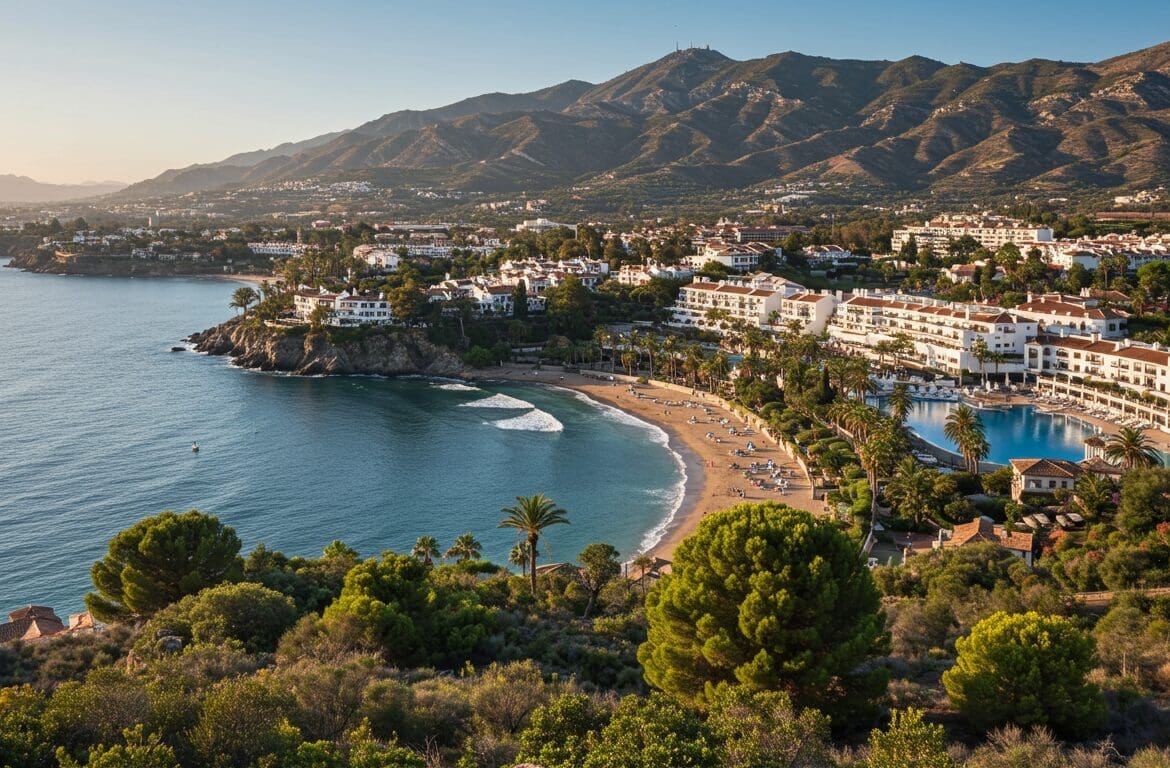
Marbella Travel Guide: Where to Stay, Eat & Explore in Luxury
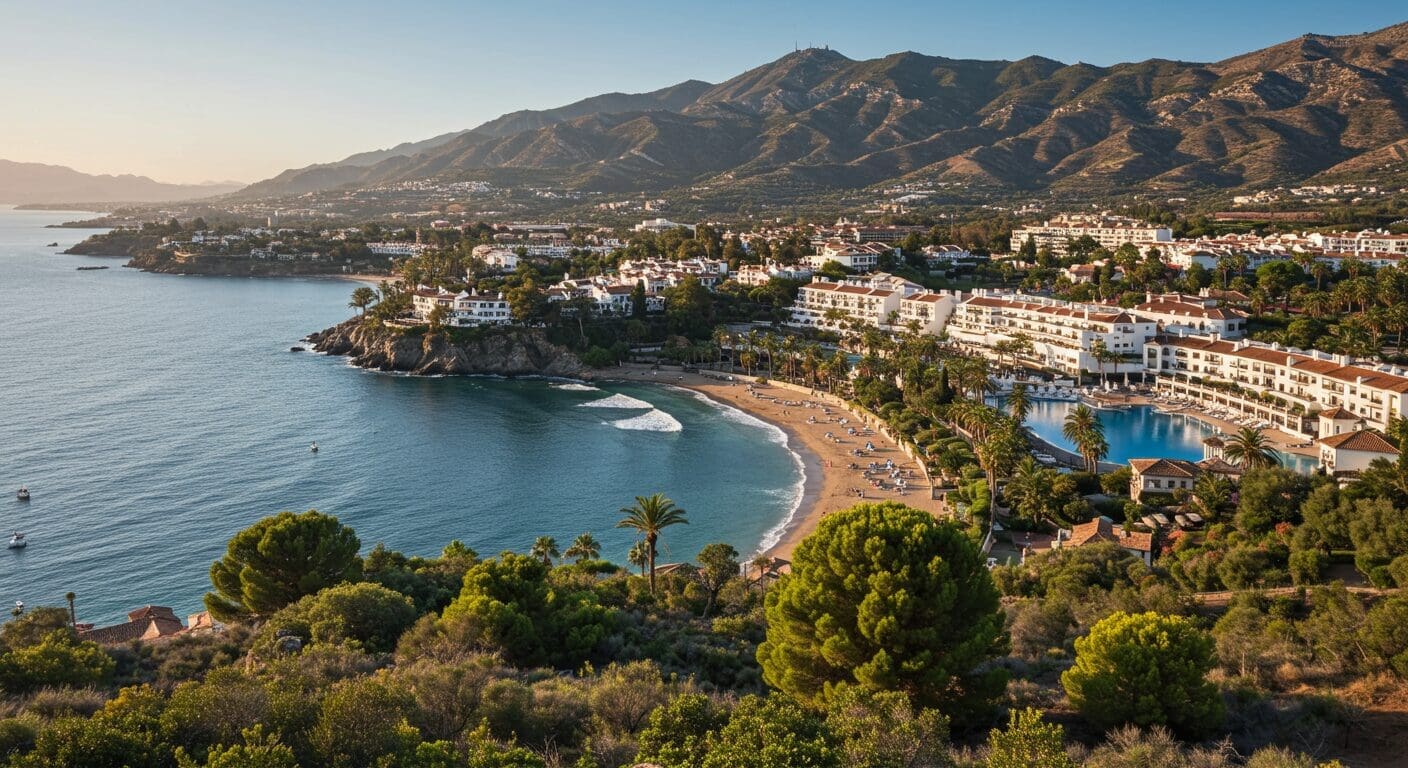
Seven in the morning, and the light on the Costa del Sol is already doing things that would make a painter question their life choices. You’re sitting on a terrace somewhere above the Mediterranean, the Sierra Blanca still holding a faint blush of dawn behind it, a coffee that’s actually good in your hand, and the only sound is a sprinkler and the distant, optimistic bark of someone’s dog. In a few hours, Puerto Banús will be doing its full peacock routine – the yachts, the sports cars, the choreographed leisure. But right now, Marbella belongs entirely to you. This, more than any headline or reputation, is what the place actually is.
It is, admittedly, a destination that arrives pre-loaded with associations. Marbella has spent decades being shorthand for a particular kind of excess – and it would be dishonest to pretend that chapter isn’t still being written somewhere near the marina. But the full picture is considerably more nuanced, and considerably more appealing, than the clichés suggest. This is a place that works beautifully for families who want privacy, space, and a private pool without negotiating a hotel lobby with wet children. It’s ideal for couples celebrating something significant – an anniversary, a honeymoon, a milestone birthday requiring an upgrade from their usual standards. Groups of friends who want the freedom of a shared house without the compromise of sharing walls with strangers thrive here. Remote workers who’ve discovered that fibre optic connectivity and a view of the Mediterranean are not mutually exclusive have found their corner of paradise. And for anyone whose idea of a holiday involves early morning yoga, afternoon massage, and a long swim before dinner, Marbella’s climate and infrastructure make it quietly exceptional for wellness-focused escapes.
Getting to Marbella: Easier Than You’d Expect, Better Than It Has Any Right to Be
The principal gateway is Malaga Airport – officially Málaga-Costa del Sol Airport – which sits roughly 60 kilometres east of Marbella and handles an impressive volume of European traffic year-round. Direct flights connect it to London, Manchester, Dublin, Amsterdam, Paris, and most major European hubs. Fly time from the UK is around two and a half hours, which means you can be on that terrace by early afternoon if you time it right. Málaga is also a destination worth a stop in its own right – the Picasso Museum alone justifies an overnight – but for the purposes of reaching Marbella, it functions primarily as the door.
From the airport, private transfers are the obvious choice for a luxury villa holiday – your driver meets you, your luggage goes in the boot, and forty-five minutes later you’re somewhere considerably nicer than an arrivals hall. Taxis are metered and reliable. Car hire is straightforward if you want independence, and you should probably want it: while Marbella’s Old Town is walkable and Puerto Banús has everything in close proximity, the wider coastline and the inland villages demand wheels.
Driving in southern Spain is, on balance, a pleasure. The AP-7 toll motorway runs the length of the coast with efficiency. The A-7 coastal road is slower but considerably more scenic. Those arriving from further afield – the United States, the Middle East, Asia – often route through Madrid or London, with Málaga as the final hop. Worth noting: Gibraltar Airport is roughly an hour to the west and handles some UK routes, which can be useful if you’re planning to explore that end of the coast.
The Table Is Set: Eating in Marbella Like You Actually Mean It
Fine Dining
The name that anchors serious dining in Marbella is Dani García – a chef of genuine national significance who has, somewhat improbably, chosen to concentrate much of his empire in a single resort town. His trio of restaurants at Puente Romano represents the kind of culinary density you’d expect in a major city, and the cooking across all three repays serious attention. LEÑA is the one that tends to make people reconsider their relationship with steak. Rated 9.2 out of 10 and described by those who have been as a ten-out-of-ten dining experience, it is a modern steakhouse in the truest sense – a sleek, contemporary room where exceptional cuts are cooked over an open flame with a rigour and finesse that makes the word “steakhouse” feel inadequate. The kind of meal you think about on the flight home.
Lobito de Mar, another García production and practically next door, is the seafood counterpart – fresh, exquisite, and resolutely Spanish in its instincts even when it’s being innovative. The seafood here arrives from the Atlantic and Mediterranean with the confidence of something that has been swimming very recently. The third in the trilogy maintains the standard; García has an unusual ability to run multiple restaurants without any of them feeling like afterthoughts.
For Michelin credentials in a more intimate register, Skina is essential. Two Michelin stars in a dining room so small that a booking is not merely advisable but mandatory – chef Jaume Puigdengolas works a Japanese-Mediterranean fusion that makes rather more sense on the plate than it might sound in a description. The menu evolves constantly, which means that regulars return to find new surprises rather than a comfortable but stagnant repertoire. Fine Spanish wines complete the picture. If you cannot get a table, find solace in the fact that you are not alone.
Where the Locals Eat
The chiringuito – the casual beachside restaurant that is a fixture of the Andalusian coast – is where Marbella’s unguarded personality reveals itself. Order the espetos, the sardines grilled on skewers over open fires made from old fishing boats (the boats are not strictly mandatory but somehow traditional), and eat them with your feet in the approximate direction of the sand. This is not a refined experience. It is, however, a very good one.
The Old Town – the Casco Antiguo – has a concentration of tapas bars and neighbourhood restaurants that the resort hotels cannot replicate. The Plaza de los Naranjos, the orange tree square at the heart of the old quarter, is exactly as charming as photographs suggest and busier than ideal in high summer, but the streets radiating from it contain quieter spots where the menu del día is both affordable and honest. The covered market on Calle Huerta Chica is worth a morning visit for produce – the fruit and vegetables in southern Spain are not a minor pleasure.
Hidden Gems Worth Seeking Out
Casanis Bistrot is one of those restaurants that has no business being quite this good in a town with Marbella’s reputation for spectacle. Housed in a 150-year-old country house with a leafy courtyard, wooden beam ceilings, and terracotta flooring, it has the feel of somewhere that has been quietly excellent for a very long time. The menu combines French, Belgian, and Spanish influences with organic vegetables from the restaurant’s own garden, and the streetside terrace is the kind of place you settle into and discover, two hours later, that you haven’t moved. That is a compliment.
Ikigai Izakaya requires a small act of navigation – it is hidden down a covered passageway just off the pedestrian Avenida del Mar – but the reward for finding it is genuine. A small, cozy room with friendly service and a compact menu that takes authentic Japanese technique and applies it to the best local ingredients. The charcoal-grilled yakitori is the recommended entry point for first-timers. The Japanese curry with pork and the grilled corn with red miso and garlic butter are the dishes that explain why regulars don’t tell people about it. We are telling you anyway.
The Lay of the Land: Understanding Marbella’s Geography
Andalusia is a region that operates in superlatives, and Marbella sits in its southwestern corner with a slightly knowing expression, aware that it has been dealt a rather good hand geographically. The Costa del Sol stretches along the province of Málaga, and Marbella occupies a privileged section of it – backed by the Sierra Blanca mountains, which rise to over 1,200 metres and create both a dramatic backdrop and a climatic shield that gives the town more annual sunshine than virtually anywhere else in Europe. This is not a coincidence. The mountains block cold air from the north, the Mediterranean moderates temperatures from the south, and the result is a microclimate that makes outdoor living possible, and pleasant, for an extraordinary portion of the year.
Marbella itself divides into distinct zones, each with its own character. The Old Town is compact, white-walled, and genuinely historic – a Moorish quarter of narrow streets and flowering balconies that predates the resort town entirely. The Golden Mile runs west along the coast toward Puerto Banús, a stretch of grand hotels, high-end villa estates, and the kind of landscaped gardens that require serious maintenance. Puerto Banús is the marina district – glossy, unapologetically theatrical, and more fun than its detractors admit, particularly if you approach it in the spirit of spectatorship. East of the centre, the landscape becomes quieter and the beaches longer.
Inland, within twenty or thirty minutes of the coast, the picture changes entirely. The white villages of the Serrania de Ronda – Ojén, Istán, Benahavís – sit in the folds of the mountains with a quietness that feels restorative after a few days of coastal stimulation. Ronda itself, the dramatic cliff-edge city with its eighteenth-century bullring and the vertiginous Puente Nuevo, is under an hour’s drive and represents one of the better days out in the whole of southern Spain. The city of Malaga to the east is forty-five minutes and contains considerably more than an airport – the Picasso Museum, the Centre Pompidou’s Spanish outpost, and a street food scene that has improved markedly in recent years.
What to Actually Do: The Best Things to Do in Marbella
The most photogenic ambition in Marbella is hiking La Concha – the distinctive limestone peak that rises above the town at 1,215 metres, its saddle-shaped summit visible from most of the coastline. It is not a casual stroll. The ascent from the Puerto Deportivo area is roughly three to four hours up, and the path demands a degree of fitness and appropriate footwear. What you get at the top is one of the more extraordinary views in southern Spain – the entire Costa del Sol spread below, Gibraltar visible on a clear day, Morocco a thin line on the horizon if the air is right. The mountain is part of the Sierra de las Nieves Natural Park, and the approach through pine forest is its own reward. It is the kind of thing that makes the rest of the holiday feel earned.
For those whose exercise preferences stop at the water’s edge, the beaches require little introduction but some navigation. Playa de la Fontanilla and Playa de Venus near the town centre are the most convenient and most visited. Playa Real de Zaragoza to the east tends to be calmer. The beach clubs – Nikki Beach, Ocean Club, Amare – operate as full-day destinations in their own right, with sun loungers, pools, cocktails, and DJs who understand that lunchtime is not an appropriate moment for full volume.
Inland, a round of golf is practically a civic obligation. The Costa del Sol has more than seventy courses within easy reach, and Marbella sits in the middle of some of the best – Valderrama, La Reserva, and the courses at Aloha and Los Naranjos among them. Horse riding in the Sierra Blanca offers a perspective on the landscape that no car journey replicates. The cable car from the seafront up to the mirador provides the views without the calorie expenditure, which some will consider a perfectly valid trade.
Out on the Water and Up in the Hills: Adventure for Those Who Want It
Marbella’s position on the Mediterranean and its proximity to serious mountain terrain creates an unusual combination of adventure options. On the water, the range runs from gentle to genuinely demanding. Sailing is excellent – the Puerto Banús marina can arrange bareboat or skippered charters along a coastline that has been keeping sailors happy for centuries. Yacht week departures, day trips to Gibraltar or along the coast, sunset cruises that are every bit as good as they sound – the maritime calendar is full.
Water sports are well catered for from most beach locations: jet skiing, paddleboarding, kayaking, and parasailing are standard offerings at beach clubs and independent operators along the coast. For something more considered, scuba diving in the waters between Marbella and Gibraltar offers visibility and marine life of a quality that surprises people who assumed the Mediterranean would be overcrowded and depleted. It isn’t – or at least, not here.
The mountains behind the town offer hiking of varying intensity – La Concha is the headline act, but the Sierra de las Nieves Natural Park, which became a UNESCO Biosphere Reserve, contains trails of all levels through Spanish fir forests and limestone karst landscapes. Mountain biking is possible on dedicated trails in the foothills. Climbers will find crags in the Serrania de Ronda that are known to the community and relatively undiscrowded by European standards. And for a departure that feels appropriately dramatic, the drive to Ronda via the mountain road rather than the motorway is an experience in itself – hairpin bends, views that appear without warning, and a destination that justifies every kilometre.
Marbella with Children: The Quiet Case for a Holiday That Actually Works
The case for bringing children to Marbella rests primarily on the private villa. Hotels with children are a fundamentally different proposition from a villa with a private pool – and anyone who has navigated a poolside queue for sun loungers with two under-tens will understand immediately why. A villa gives families genuine space, a pool that doesn’t require negotiation, a kitchen for the inevitable moment when the youngest refuses anything that isn’t pasta, and a rhythm that bends around the family rather than the hotel’s dining schedule.
Beyond the villa, Marbella is practically organised for families. The beaches are calm and the Mediterranean swims warm from late spring through to October. Selwo Aventura, a wildlife park in Estepona twenty minutes to the west, has the kind of resident animals that make small children unreasonably excited and parents quietly grateful for anything that requires walking and fresh air. Bioparc Fuengirola to the east is another option – a zoo with serious conservation credentials and convincing habitat design.
Day trips calibrate well for families: the Caminito del Rey gorge walk (in its easier sections, appropriate for older children) near the El Chorro reservoir is one of the more extraordinary natural spectacles in Andalusia. Gibraltar, which is an hour away, is reliably fascinating for children old enough to appreciate both a border crossing and a Barbary macaque attempting to steal their lunch. Water parks dot the coast and provide the kind of uncomplicated pleasure that requires no cultural context whatsoever.
Beneath the Surface: Marbella’s History and Cultural Life
It would be easy – and not entirely inaccurate – to read Marbella as a place with a shallow relationship to history. The reputation for glamour is recent enough that you might assume the place simply materialised in the 1960s fully formed, draped in something expensive. This would be to miss a more interesting story. The Old Town is Moorish in its bones – Marbella was a significant settlement during the Nasrid kingdom, and the remains of the tenth-century castle walls still stand in the heart of the Casco Antiguo. The town was taken by the Catholic Monarchs in 1485, and the architectural layering of that transition is legible in the old quarter if you look for it.
The Orange Square – Plaza de los Naranjos – dates from the fifteenth century and is anchored by a sixteenth-century town hall that has been doing its job with quiet dignity while the town around it has reinvented itself several times over. The Museum of Spanish Contemporary Engraving, housed in a restored Renaissance hospital, is small and excellent and has the additional advantage of being almost entirely free of tour groups. The Museo del Grabado is one of those civic cultural institutions that punches above its weight and is routinely overlooked in favour of more famous neighbours. Its loss.
Annually, the Semana Santa (Holy Week) processions in March or April transform the Old Town into something that feels genuinely medieval – the pasos, the hooded brotherhoods, the brass bands playing saetas in the night air. The Feria de San Bernabé in June is the town’s summer festival, six days of flamenco, horses, and the particular festive energy of a Spanish town deciding collectively to stop working. Both are worth timing a trip around.
Shopping in Marbella: From the Serious to the Pleasantly Frivolous
Puerto Banús is to luxury retail what La Concha is to hiking – the obvious destination, the one everyone mentions, and one that delivers more or less exactly what it promises. The main boulevard running along the marina holds the expected roster of international luxury houses – Gucci, Louis Vuitton, Versace, Hermès – alongside independent jewellers and boutiques catering to a clientele for whom price tags are aspirational in the other direction. It is simultaneously absurd and entertaining, and a glass of something cold on a marina terrace while watching the foot traffic is a perfectly valid way to spend an afternoon. People-watching in Puerto Banús is a sport with no formal rules but a high participation rate.
For something less theatrical, the Old Town’s independent boutiques are worth an afternoon of wandering – ceramics, leather goods, local jewellery, and the kind of linens that look remarkably good when you get them home. The market on the Paseo Maritimo on Sunday mornings draws both locals and visitors and has a range that extends well beyond tourist trinkets into genuinely useful produce, antiques, and the occasional unexpected find.
Artesanía – Spanish craft – is well represented in the villages inland. Ojén, in the hills behind Marbella, is a small white village with artisan workshops producing work of genuine quality. And if you’re making the drive to Ronda, the market town’s leather goods, particularly the horse equipment and accessories that reflect the region’s equestrian culture, are the kind of thing you buy once and keep for a long time.
Practical Marbella: The Useful Details, Delivered Without Condescension
Spain operates on the euro. Cards are widely accepted everywhere from upmarket restaurants to supermarkets, though smaller tapas bars in the Old Town occasionally prefer cash – a small supply of notes is useful. Tipping is not obligatory in the way it functions in the United States, but rounding up or leaving five to ten percent at restaurants is both appreciated and appropriate when the service has earned it. Nobody will chase you into the street.
The best time to visit Marbella depends on what you want from it. July and August are peak season – the coast is at full operational intensity, the beaches are busy, the prices are at their highest, and the heat between noon and four o’clock is a serious argument for a pool and a shaded terrace. June and September are, for most purposes, the ideal months – warmth without the full summer compression, beaches that are full but not unmanageable, and an energy that feels more like pleasure than endurance. May and October are underrated: the weather remains genuinely warm, the prices ease, and the town breathes differently when it’s not at capacity.
Spanish is the language; Marbella’s cosmopolitan nature means English is spoken virtually everywhere in the resort context, but a few words of Spanish – buenas días, por favor, gracias – are both practically useful and received with the warmth that small efforts always generate. The local culture values leisure seriously, which means that lunch can last two hours and dinner rarely starts before nine in the evening. Adapting to this rhythm is not a hardship. Safety is generally very good; standard urban awareness applies, particularly around the marina and busy tourist areas.
The siesta is not entirely dead, even in a resort town – some smaller shops close between two and five in the afternoon, which is the universe’s way of suggesting that you should probably be at the pool anyway.
Why a Luxury Villa in Marbella Is Not Just Better – It’s a Different Holiday Entirely
There is a version of a Marbella holiday that involves a hotel room, a shared pool visible from twelve other rooms, and breakfast at a set time in a room designed for volume rather than pleasure. It functions. It is, in most measurable respects, fine. And then there is the villa: your own house, your own pool, your own terrace with the view you chose in advance, your own kitchen if you want it and your own chef if you want that instead.
The privacy argument is the one that converts most people immediately. A private pool is not merely a luxury preference – when you’re travelling with children who want to swim at seven in the morning, or with a group of friends who want to eat dinner outside at eleven, or when you simply want to exist in a swimsuit without an audience, it becomes a practical necessity. The space argument follows: a villa designed for eight people has a relationship to that number of guests that no hotel suite can replicate. Multiple bedrooms, multiple bathrooms, living spaces that expand and contract around the group’s mood.
Many villas in Marbella come with staff options – a private chef who can handle everything from casual lunches to formal dinners, a concierge who knows which restaurant is actually worth the booking and which is coasting on its reputation, a housekeeper who ensures that the chaos of a large group doesn’t accumulate. The concierge function, in particular, is disproportionately valuable in a destination like Marbella, where the difference between a good experience and a great one often comes down to a phone call made to the right person at the right time.
For remote workers who’ve discovered that the laptop works anywhere the connection is strong, a well-equipped Marbella villa with fast broadband – increasingly including Starlink at higher-spec properties – represents a model of working life that renders the open-plan office more or less permanently unappealing. Morning swim, focused work, afternoon somewhere excellent – the structure practically writes itself.
Wellness guests find in a private villa everything a spa hotel offers and several things it doesn’t: a pool that is genuinely private for early morning laps, space for outdoor yoga without scheduling it around the group class, and the freedom to eat well and sleep late without anyone’s timetable intersecting with yours. Marbella’s climate does the rest – the air quality in the foothills above the coast, the long warm evenings, the particular quality of Mediterranean light that makes everything feel slightly better than it would elsewhere.
If the case for a private villa has made itself, the next step is straightforward. Excellence Luxury Villas offers a curated collection of private villa rentals in Marbella – from architecturally considered hillside retreats with panoramic sea views to coastal estates with direct beach access – each selected to the standards that the destination demands.
More Marbella Travel Guides
- Best Restaurants in Marbella: Fine Dining, Local Gems & Where to Eat
- Marbella Food & Wine Guide: Local Cuisine, Markets & Wine Estates
- Marbella with Kids: The Ultimate Family Holiday Guide
- Best Time to Visit Marbella: Month by Month Weather, Crowds & Tips
- Marbella Luxury Itinerary: The Perfect 7-Day Guide
- Romantic Marbella: The Ultimate Couples & Honeymoon Guide
What is the best time to visit Marbella?
June and September are the sweet spot for most travellers – warm enough for beach days, calm enough for comfortable dining and sightseeing, and not at the pressure levels of July and August. May and October offer genuine warmth with noticeably lower prices and crowds. High summer (July-August) is peak season in every sense: busy, hot, and expensive, though the full-intensity coastal atmosphere has its own energy if that’s what you’re after. Winter is mild by northern European standards – rarely below 12°C – and perfectly pleasant for golf, hiking, and exploring the Old Town without competition.
How do I get to Marbella?
The primary airport is Málaga-Costa del Sol Airport, approximately 60 kilometres east of Marbella – around 45 minutes by private transfer or taxi. Direct flights connect Málaga to most major European cities year-round, with particularly strong connections from the UK (London Heathrow, Gatwick, Stansted, Manchester, Edinburgh), Ireland, and throughout Europe. Gibraltar Airport, roughly one hour to the west, handles some UK routes and is a useful alternative. For transatlantic travellers, the most common routing is via Madrid or a European hub. Private transfers from the airport are recommended for villa guests arriving with luggage.
Is Marbella good for families?
Very much so, particularly when the base is a private villa rather than a hotel. The calm Mediterranean sea is safe for children, the beaches are clean and well-serviced, and the climate from late May through October is reliably excellent for outdoor family life. Selwo Aventura wildlife park in nearby Estepona, Bioparc Fuengirola to the east, the Gibraltar day trip, and the Caminito del Rey gorge walk all work well for families with children of varying ages. The private pool of a villa is, for most families, the single feature that most significantly changes the quality of the holiday – swimming on your own schedule, without an audience, at seven in the morning or nine at night.
Why rent a luxury villa in Marbella?
The core advantages are privacy, space, and flexibility – three things that a hotel room cannot fully replicate regardless of its star rating. A luxury villa gives you a private pool, your own indoor and outdoor living spaces, a kitchen (and often a chef to use it), and a rhythm entirely your own. For families, the absence of shared spaces and fixed meal times is transformative. For groups of friends or multi-generational travellers, the economics of a villa versus multiple hotel rooms often compare favourably, while the experience is in a different category entirely. Many villas also include concierge services, housekeeping, and staff who know the destination well enough to make the difference between a good trip and a genuinely exceptional one.
Are there private villas in Marbella suitable for large groups or multi-generational families?
Yes – Marbella has one of the strongest inventories of large-format private villas in Europe. Properties sleeping ten, twelve, fourteen or more guests are available, typically with multiple bedroom wings that allow different generations to coexist with appropriate degrees of independence, private pools large enough to justify the designation, indoor and outdoor entertaining spaces, and staff options that scale with the size of the group. Multi-generational holidays work particularly well in the villa format because grandparents, parents, and children can each have their own space and routine within a shared setting – without anyone having to compromise on comfort.
Can I find a luxury villa in Marbella with good internet for remote working?
Increasingly yes – fibre broadband is standard in well-maintained premium villas across the Marbella area, and a growing number of higher-specification properties now offer Starlink or equivalent satellite connectivity, which is particularly relevant for hillside villas above the town where terrestrial infrastructure can be variable. If reliable connectivity is a priority, it’s worth specifying this at the enquiry stage – our team can confirm speeds and infrastructure for specific properties. Many villas also have dedicated workspace areas or studies that separate work from leisure, which makes the working holiday model considerably more sustainable.
What makes Marbella a good destination for a wellness retreat?
Several things converge usefully. The climate delivers over 300 days of sunshine annually, making outdoor exercise – morning swims, yoga on a terrace, hiking in the Sierra Blanca – genuinely possible for most of the year. The Sierra de las Nieves Natural Park offers hiking and cycling in clean mountain air within twenty minutes of the coast. The spa infrastructure in and around Marbella is serious – several hotels operate day spa facilities open to non-residents, and villa concierge services can arrange in-villa massage therapists, personal trainers, and nutritionists. The Mediterranean diet, available at its best in the local restaurants and markets, does the rest. And the pace of life – the long lunches, the late evenings, the cultural acceptance of doing less – is, in itself, a form of therapy.