
Best Restaurants in Ko Yao District: Fine Dining, Local Gems & Where to Eat
Here is what the travel press almost never tells you about eating in Ko Yao District: the most memorable meal you will have here will almost certainly cost less than a cocktail at a Phuket beach club, and it will be eaten at a plastic table, possibly with a cat watching you. Ko Yao Noi and Ko Yao Yai occupy a strange and rather wonderful position in the Andaman – close enough to Phuket and Krabi to feel accessible, far enough away that the full apparatus of the international tourist machine has not quite arrived. The food scene reflects this perfectly. There are no Michelin-starred restaurants on these islands. There is no celebrity chef outpost. What there is, quietly and without fanfare, is some of the most honest, precise, and genuinely exciting Thai cooking you will find anywhere in southern Thailand – served by people who have been cooking the same dishes for decades and have absolutely no intention of putting a foam on anything.
Understanding the Ko Yao Food Scene
Ko Yao District covers two main islands – Ko Yao Noi to the north and the larger, quieter Ko Yao Yai to the south – and their culinary characters differ in ways that matter to a discerning traveller. Ko Yao Noi, the more visited of the two, has a slightly broader range of dining options, a small cluster of resort restaurants, and a handful of local spots that have learned to welcome international guests without losing their soul in the process. Ko Yao Yai remains conspicuously quieter, its eating options fewer but often even more authentic, catering primarily to the fishing families and local community who make up the majority of the island’s population.
Both islands are predominantly Muslim, which shapes the food culture in ways that are worth understanding before you arrive. Pork is absent. Alcohol, while available in some resort settings and a small number of tourist-facing restaurants, is not ubiquitous. What you get instead is an emphasis on fresh seafood, aromatic curries, and southern Thai cooking in its most unvarnished form – bold, often fierce with dried chilli, fragrant with turmeric and lemongrass, and built around whatever the fishing boats brought in that morning. This is not a cuisine that waits for reservations.
Fine Dining in Ko Yao District
The honest answer is that Ko Yao District does not have a conventional fine dining scene in the way that Phuket or even Koh Samui does. There are no Michelin stars here, no tasting menus with wine pairings, no sommelier materialising at your elbow. If that is what you are looking for, you have possibly come to the wrong island – and that is not entirely a criticism of the island. What Ko Yao does offer at the higher end of the dining spectrum is resort-level dining that takes the local ingredients seriously.
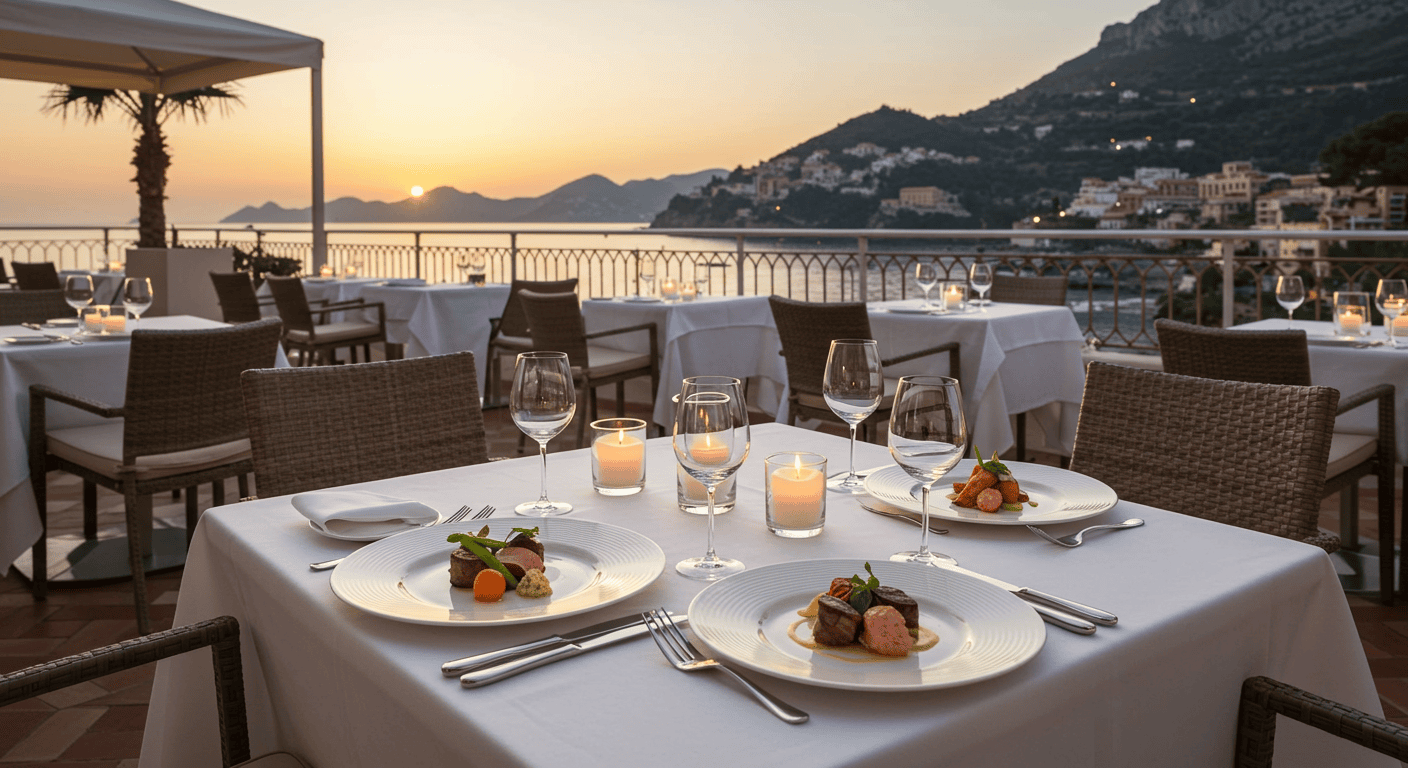
Several of the district’s more established boutique properties run their own restaurants open to non-guests, and these are worth seeking out. The better ones source directly from local fishermen, maintain small kitchen gardens, and offer set menus that lean into southern Thai cuisine rather than retreating to a safe international menu. Expect dishes like slow-cooked fish curry with fresh turmeric, grilled whole snapper with a tamarind dipping sauce, or a green papaya salad made with enough bird’s eye chilli to demand your full attention. The setting – typically open-sided pavilions with views across Phang Nga Bay – provides the kind of theatre that no amount of interior design can entirely manufacture. Sunsets here are not background; they are an event.
For the best version of elevated dining on Ko Yao, it is worth contacting resort restaurants in advance to ask about their current menu approach. Some run special seafood evenings or chef’s table experiences on certain nights of the week – these rarely appear on websites and are almost never mentioned unless you ask directly. Ask directly.
Local Restaurants and Hidden Gems
This is where Ko Yao District genuinely excels, and where the best restaurants in Ko Yao District are found not through any app but through asking the person who made your breakfast where they eat on their day off. The local restaurants on Ko Yao Noi in particular are concentrated around the main village area and along the road that runs through the island’s centre – an unremarkable strip of shopfronts that contains, if you pay attention, several kitchens producing food of remarkable quality.
Southern Thai cuisine in this part of the world is built differently from what most travellers encounter in Bangkok or even Chiang Mai. The curries are drier and more intense, relying on kapi – fermented shrimp paste – and a heavy hand with dried spices. Gaeng tai pla, a notoriously pungent fermented fish kidney curry, is a dish that divides opinion sharply and is considered a test of genuine culinary curiosity. Order it once. You will either fall completely in love with it or develop a deeper respect for your own limitations. Both are valid outcomes.
Look for small family-run restaurants serving khao yam – a southern Thai rice salad tossed with toasted coconut, dried shrimp, fresh herbs, and a sweet-sour dressing made from budu fish sauce – particularly in the mornings when it is freshest. This is breakfast here, and it is significantly better than anything you would find at an international hotel buffet. Roti with massaman curry is another staple that deserves more global recognition than it currently receives.
Beach Clubs and Casual Dining
Ko Yao is not, to put it diplomatically, a beach club island. The full-service, DJ-before-noon, thousand-baht-cocktail experience belongs to Phuket, and Ko Yao seems entirely at peace with this arrangement. What the islands offer instead is something rather better for those who are not in a hurry – relaxed waterfront dining that happens to come with views across one of the most geologically dramatic seascapes on earth.
Several small restaurants and guesthouses along Ko Yao Noi’s western coast have tables that sit essentially at the water’s edge, particularly around the Long Beach area. These are casual in the extreme – sarong-clad staff, handwritten menus, grilled seafood sold by weight – but the experience of eating fresh squid with a lime and chilli sauce while watching the karst limestone towers of Phang Nga Bay turn gold in the late afternoon is not one that is easily improved upon by adding a cocktail list. Though a cold Singha certainly does not hurt.
For travellers arriving by speedboat from Phuket or Krabi, it is worth noting that several of the waterfront spots near the ferry piers on both islands are well positioned for a long lunch before or after island exploration. These are the spots where the food is priced for locals, the portions are generous, and the fish was swimming this morning. The three factors rarely combine quite so reliably elsewhere.
Food Markets and Street Food
The morning market on Ko Yao Noi is not a tourist market. This distinction matters. There are no Chang beer singlets for sale here, no mango sticky rice presented in artful packaging for Instagram. What there is – early, before 8am if you want the best of it – is a working market serving the local community, where vendors sell fresh catch from the overnight boats, bundles of galangal and kaffir lime leaves, freshly pressed coconut milk, and prepared dishes made before dawn for people who start work before the sun is properly up.
Arriving at the market without a specific agenda and simply buying whatever looks interesting is one of the better travel strategies available on Ko Yao. A bag of kanom krok – small coconut pancakes cooked in a cast-iron mould, slightly crispy outside and molten in the centre – costs almost nothing and is one of those flavours that tends to resurface unexpectedly in memory, years later, on a grey Tuesday morning. Ko Yao Yai has its own smaller market, less visited and correspondingly more local in character, which rewards early risers who have made the crossing from the northern island.
Street food in the evenings is concentrated around the village areas and occasionally appears in the form of mobile carts selling grilled corn, fresh-cut fruit, and the various fried things that are best not examined too closely before eating.
What to Order: Dishes Not to Miss
A short, considered list is more useful here than an exhaustive one. Southern Thai cooking has its own logic and its own hierarchy of dishes, and visitors who arrive expecting the central Thai food they know from home restaurants will need to recalibrate quickly.
Gaeng som – a sour, orange-coloured curry made with fish and vegetables in a tamarind and chilli base – is the dish the south is most proud of and with good reason. It bears almost no resemblance to the sweet, mild versions sometimes served internationally. Order it properly and it will make your eyes water in the most satisfying way. Hoy tod, oyster omelettes cooked on a flat iron griddle with a batter that crisps at the edges and stays custardy in the centre, are another essential. Grilled river prawns – enormous, sweet, smoky from the charcoal – are the fish market moment made edible.
For something lighter, khao tom – rice soup – is the local answer to the question of what to eat when you are not quite ready for the full intensity of southern Thai flavour. It is gentle, restorative, and excellent proof that simplicity done well requires no apology.
Drinks: Wine, Local Spirits & What to Order
Wine lists on Ko Yao range from minimal to non-existent in most local restaurants, and the pricing at resort-level establishments for imported bottles can be sobering in its own right. The most honest advice is to approach wine on Ko Yao the way you might approach wearing a dinner jacket to a beach barbecue: technically possible, not entirely the point.
Beer is the practical answer, and Thailand produces several that do the job capably. Singha and Chang are ubiquitous; Leo is lighter and often preferred in the heat. At restaurants that serve alcohol, a cold beer with a plate of grilled seafood and a table with a view is a combination that requires no further improvement.
The non-alcoholic options deserve more credit than they typically receive. Fresh coconut water served directly from the nut is available throughout both islands and remains the most effective hydration strategy in 35-degree heat, regardless of what the sports drink industry would have you believe. Fresh-pressed sugarcane juice, nam oi, is sold from small carts and is extraordinarily good. Herbal drinks made from butterfly pea flower – a deep indigo blue that turns violet with lime – are found in local cafes and are as beautiful as they are refreshing.
Southern Thailand also has a tradition of locally produced herbal spirits and rums that occasionally appear in village shops. Approach with curiosity and appropriate caution.
Reservation Tips and Practical Advice
The reservation culture on Ko Yao is, to put it gently, relaxed. Most local restaurants do not take bookings – they open when they open, serve until the food runs out, and close when the family decides it is time. This is not inefficiency. It is a different relationship with time, one that Ko Yao has maintained with some conviction against the encroachments of the international travel industry.
For resort restaurants and any establishment operating at the higher end of the price spectrum, calling ahead is advisable – particularly during high season between November and April when the islands receive their highest visitor numbers. Some of the better resort kitchens run special dinners or chef’s table arrangements that are only available with advance notice, and given that island logistics can make impromptu alternatives difficult, it is worth doing the planning before you arrive rather than on the night.
Arriving early at local restaurants – particularly for lunch, which is the main meal of the day for most Thais – gives you the best selection and the freshest food. By 1pm in some places, the most interesting dishes are gone. By 2pm in others, the kitchen has closed entirely. Flexibility and an early start are the most useful tools a hungry traveller can bring to Ko Yao.
For travellers staying in a luxury villa in Ko Yao District, the private chef option transforms the eating equation entirely. Several villas offer the services of a private chef who can source directly from the morning markets, prepare both Thai and international menus, and bring the best of local cuisine to your table without the logistics of finding anywhere open after dark on a quiet island Tuesday. It is, in the context of Ko Yao’s dining scene, possibly the most intelligent choice available – and one that means the best restaurant on the island is, quite literally, wherever you happen to be sitting.
For more on planning your time in the islands – from transport to beaches to the best time to visit – the full Ko Yao District Travel Guide covers everything you need before arrival.

