
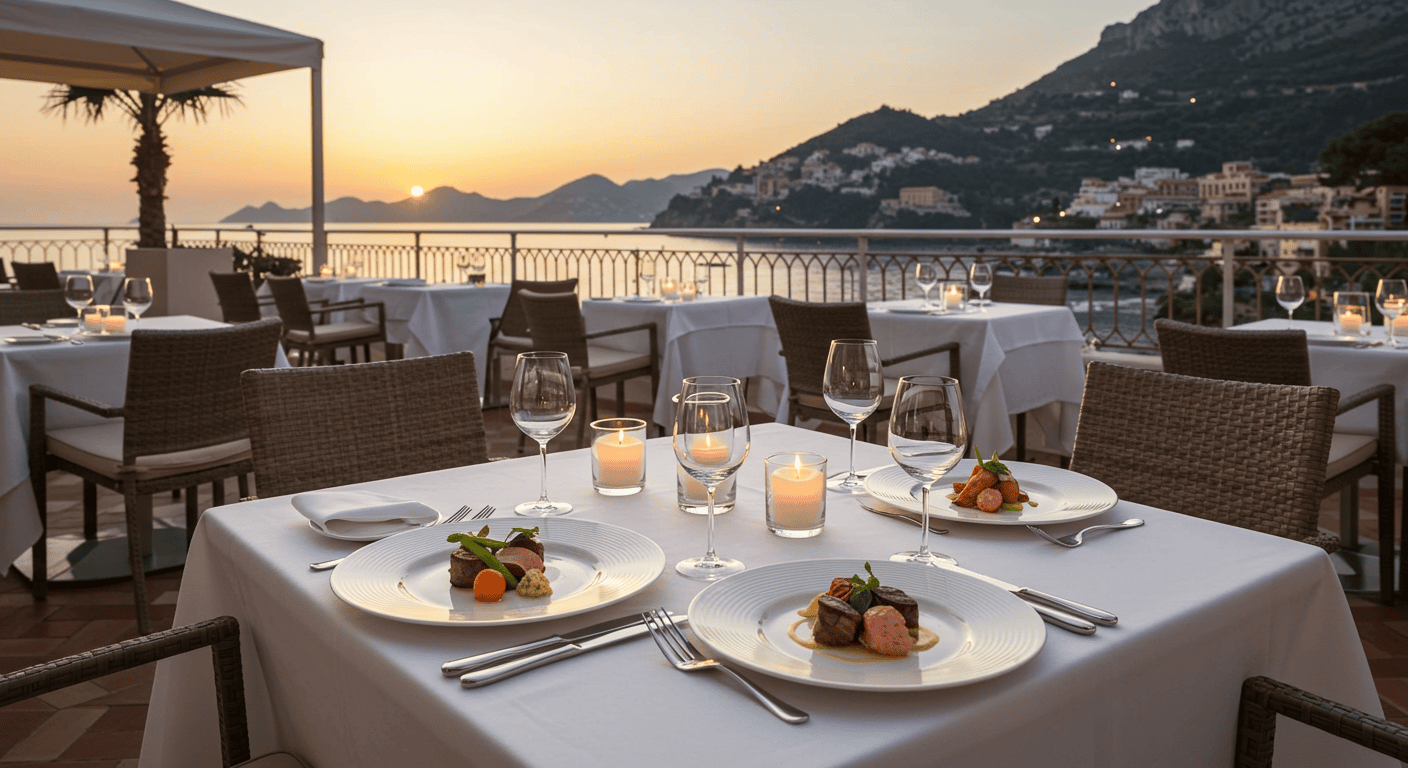
Best Restaurants in Les Gets: Fine Dining, Local Gems & Where to Eat
Here is something the ski industry would rather you didn’t work out too quickly: the best reason to go to Les Gets has nothing to do with the skiing. Oh, the skiing is excellent – world-class, in fact, with access to the vast Portes du Soleil circuit and enough varied terrain to satisfy both the nervous beginner and the quietly competitive expert. But the real differentiator, the thing that separates Les Gets from the grimly functional resorts that treat food as fuel, is what happens when you take your boots off. Les Gets eats well. It eats thoughtfully. And on a good evening, with a carafe of something Savoyard on the table and the mountains turning amber through the restaurant window, it eats beautifully.
This guide covers everything a discerning visitor needs to know about the best restaurants in Les Gets – from fine dining experiences worth planning a trip around, to the kind of low-key mountain bistros where the fondue arrives without ceremony and nobody minds if you order another glass. Whether you’re here for a week in February with ski boots and ambition, or a summer stay when the wildflowers have taken over the slopes and the pace drops to something altogether more civilised, Les Gets has a table with your name on it.
Before you dive in, the broader picture is worth reading: our Les Gets Travel Guide covers everything from arrival logistics to the best times to visit and what to do between meals.
The Fine Dining Scene in Les Gets
Let’s be honest about what fine dining in a mountain village means. It doesn’t mean molecular gastronomy under a Michelin constellation, served by a team of twelve in an atmosphere of reverential silence. What it means in Les Gets – and this is arguably more appealing – is serious cooking executed with precision, in rooms that feel warm rather than worthy, by chefs who understand that their guests have spent the day in the cold and want to feel looked after rather than lectured.
The finest restaurants in Les Gets tend to take their cue from the landscape and the season. In winter, menus lean into Alpine tradition with intelligence: duck confit that has been cooked properly rather than reheated from a bag, seared lake fish with crisp skin and gentle butter sauces, beef dishes that reference the Savoyard fondness for quality meat without being self-congratulatory about it. In summer, the shift is marked – lighter preparations arrive, local produce takes a more prominent role, and the terraces fill with guests who have remembered that eating outside in the mountains, with clean air and a view worth the altitude, is one of the genuinely uncomplicated pleasures of life.
Several of Les Gets’ higher-end restaurants offer tasting menus that reward the guest who arrives without a rigid plan – who is prepared to let the chef’s judgement take over for an hour or two. This is always a good idea. The Alpine larder, in the right hands, is quietly remarkable: aged mountain cheeses, cured meats with depth and character, honey from local hives, and game that tastes like it has been living rather than waiting.
Reservations are essential at any restaurant pitching above the midrange, particularly during the high season weeks of February half-term and the Christmas-New Year period. Book well in advance. The restaurants know their value, and the tables go quickly to those who plan.
Savoyard Classics and Mountain Bistros
If you leave Les Gets without eating at least one proper Savoyard meal, something has gone wrong. This is one of the great regional cuisines of France, built around dairy, cheese, potatoes and unhurried technique – a cuisine that was invented, one suspects, by people who had just come in from the cold and needed the world to feel manageable again. It works. It really does work.
Fondue Savoyarde – made with Comté, Beaufort and Emmental, stirred into white wine and a touch of kirsch – is the foundation. Done well, it is one of the most convivial meals in existence. Done badly, it is a pot of elastic cheese that leaves you feeling slightly cheated. The gap between the two is not as small as you might hope, so choose your bistro with care. The better establishments use quality local cheese rather than the industrial blends that find their way into tourist traps on the main drag. Ask questions. The menus that are specific about their cheese are usually the ones worth sitting down for.
Tartiflette – the unholy and magnificent combination of reblochon cheese, lardons, cream and potatoes – is the other essential order. It is a dish that has no interest in your good intentions about nutrition and absolutely no regrets about it. Order it. Share it, if you must be moderate about something. Raclette, meanwhile – melted cheese scraped directly onto potatoes and charcuterie at the table – is best ordered in a group, both for reasons of portion size and because it creates the kind of communal, mildly chaotic dining experience that turns strangers into friends by the second glass.
The mountain bistros of Les Gets are not places of quiet sophistication. They are places of cheerful noise, good appetite and honest hospitality. The better ones have the kind of atmosphere that makes you extend the booking by another round of drinks without anyone having to suggest it. Look for places where locals are actually eating, not just the ones that have worked out how to put sandwich boards in English outside.
Hidden Gems and Local Favourites
Every resort has restaurants it exports through word of mouth rather than guidebook coverage, and Les Gets is no different. The hidden gems here tend to share certain characteristics: they are slightly off the main pedestrian artery of the village, they rarely advertise heavily, and they tend to be run by people who moved here because they loved the mountains and stayed because they loved the life. This is not a particularly romantic observation – it is simply true, and it matters, because that kind of ownership tends to produce food that comes from genuine care rather than margin calculation.
The category to seek out is the small, independently owned restaurant where the menu changes based on what the kitchen received that morning, the wine list reflects a personal taste rather than a corporate buying agreement, and the service is warm without being performative. These places exist in Les Gets. Finding them requires some exploratory walking through the village’s quieter streets, a willingness to look in rather than pass by, and the confidence to trust a menu that isn’t available in six languages.
A useful heuristic: if the cheese board appears to have been assembled by someone who cares about cheese – by which we mean specific varieties noted by name, served at room temperature, with context offered rather than guessed – you are in good hands. The cheese of this region deserves that treatment. It seldom asks for less.
In summer, the hidden gems multiply slightly, as some chefs who winter in grander Alpine establishments open quieter seasonal projects in the village. These places rarely shout. Follow the reservations advice of whoever is managing your villa – they will know.
Casual Dining and Mountain Restaurants
The on-mountain dining options in Les Gets form a category of their own and should not be dismissed as functional pit stops. Yes, you will encounter places at altitude that serve the ski resort equivalent of motorway food – recognisable, filling, entirely unmemorable. But Les Gets also has mountain restaurants that take their position seriously, offering a proper lunch experience on sunny terraces with views that no interior designer could replicate at any budget.
The midday mountain meal is something of an Alpine art form when executed correctly. It involves timing: arriving just after the initial lunch rush, when the queues have eased and the kitchen is in its rhythm. It involves commitment: this is not a sandwich-and-back-on-the-skis situation but a genuine sit-down occasion with a glass of wine and time for the mountains to feel properly appreciated. And it involves knowing which mountain restaurants have earned their reputation rather than simply inherited their footfall.
Plancha-grilled meats, charcuterie boards assembled with care, warming soups that taste of actual stock rather than the powdered alternative – these are the markers to look for. The restaurants at the top of the Chavannes and Mont Chéry sectors are worth investigating specifically; the views from the latter, facing south across the valley, provide the kind of context that makes even a modest plate of food feel like an occasion.
For summer visitors, mountain dining takes on a different character entirely. The terraces that were crowded with ski jackets in February become leisurely lunch spots for walkers and cyclists, the pace drops, and the cooking often improves accordingly. Summer gives the chefs room to breathe, which tends to show in the food.
What to Drink: Wine, Spirits and Local Drinks
Savoie wine is, in the nicest possible way, one of France’s most underestimated secrets. It doesn’t have the global recognition of Burgundy or Bordeaux, which is frankly to your advantage at the table: the wines here are priced according to their regional profile rather than their international prestige, which means you can drink extremely well for considerably less than you might expect in a French resort of this standing.
The white wines of Savoie are the ones to start with. Apremont and Chignin – both made from the Jacquère grape – are light, mineral and slightly pétillant in a way that makes them the natural companion to fondue, fish and mountain air in equal measure. Roussette de Savoie, made from the Altesse grape, steps up in weight and complexity, and is worth ordering when the menu turns towards more substantial dishes.
For reds, Mondeuse is the grape to know – structured, slightly peppery, with a kind of alpine directness that suits the food culture perfectly. It is not a wine that flatters or performs. It simply is what it is, which is rather good.
Génépi deserves a mention. This herbal digestif, made from Alpine plants, is the drink the mountains invented for the end of a long meal. It is potent without being aggressive and botanical in a way that feels genuinely connected to its environment. Accept it when offered. It would be rude not to, and besides, it is delicious.
A word on après-ski drinking: Les Gets does it well without the faintly exhausting excess of some larger resorts. The bar culture is convivial rather than competitive. This is one of its more endearing qualities.
Food Markets and Artisan Producers
The weekly market in Les Gets operates during both summer and winter seasons and is worth arranging your morning around. This is not a polished artisan market designed for the tourist economy, though tourists are very welcome and clearly expected. It is the kind of market that local households actually use – where the cheese sellers know their regulars, where the vegetable stall reflects what is actually in season rather than what photographs well, and where a slow walk with a coffee in hand constitutes a genuinely pleasant hour.
The cheeses on offer deserve particular attention. Beaufort – the grande dame of Alpine cheeses, aged and complex and criminally underordered outside France – is available here in a quality that supermarkets in London or Geneva simply cannot match. Reblochon, when purchased from a producer who takes its moisture and rind colour seriously, is a completely different object to the version that arrives in a cardboard box from an airport duty-free. Buy both. Buy more than you think you need. The mountain air does something to your appetite that no urban nutritionist would sanction.
Honey from local apiaries, flavoured with mountain flowers, is another find worth pursuing. So is the charcuterie from producers in the surrounding valleys – the saucisson here carries the kind of herbal depth that comes from pigs that have had, relative to the supermarket alternative, something resembling a life worth living.
If you are staying in a villa with a kitchen – and given the quality of the villa stock in Les Gets, this is not exactly a hardship – the market is where your morning should start before any serious self-catering meal. Or before your private chef arrives to make better use of your market finds than you probably would have done.
Reservation Tips and Practical Advice
Dining in Les Gets during peak season without reservations is a gamble that rarely pays off in a way you will enjoy recounting. The village is not enormous, the number of excellent restaurants within it is not infinite, and the competition for tables at the better establishments is real. Book everything you care about before you arrive. Book it more in advance than feels strictly necessary. The restaurants do not feel sorry for you when you turn up at eight o’clock on a Saturday in February and discover that the village has been sold out since November.
Most restaurants in Les Gets are happy to accommodate dietary requirements with reasonable notice – emphasis on reasonable. Calling ahead the morning of a dinner reservation to mention a significant allergy is courteous and useful. Mentioning it for the first time when the bread arrives is not either of those things. The kitchens here are generally smaller than city restaurants and work with less margin for last-minute improvisation.
Dress code is another point worth addressing. Les Gets is a village, not a city, and the atmosphere at even its finest restaurants tends toward relaxed rather than formal. Smart-casual is the register to aim for – you will not feel underdressed in clean clothes that suggest you have made an effort, and you will not feel overdressed in a well-cut jacket. Nobody will look at your shoes. This is the mountains; everyone secretly knows that your feet have been in ski boots all day.
The best table in any restaurant is almost never the one nearest the door. Ask for the window seat, or the corner, or whatever configuration gives you a view of something worth looking at. In Les Gets, the something worth looking at is usually the mountains, which have the advantage of not changing their expression depending on how the evening is going.
Staying in a Villa with a Private Chef
There is one dining experience in Les Gets that consistently outperforms everything else on this list, and it requires no reservation, no walk through cold evening streets, and no negotiation over who is getting the last of the tartiflette. Staying in a luxury villa in Les Gets with a private chef brings the best of everything to one place: the quality of local produce sourced directly from market and supplier, the knowledge of a professional who understands both the regional cuisine and your personal preferences, and the pleasure of eating somewhere that nobody else is eating tonight.
A private chef in this context is not a luxury affectation. It is a meaningful addition to the experience of a mountain holiday – particularly for larger groups, for families with young children who don’t want a late-night restaurant expedition after a long day on the slopes, or for guests who simply want to eat at the highest level without leaving the warmth of a beautifully appointed chalet. Many of the villas managed through Excellence Luxury Villas offer this service, and the chefs who work within these properties are serious professionals. The market produces the ingredients; the chef produces the occasion. You produce an appetite. The division of labour is equitable and the results speak for themselves.

