
Best Restaurants in Ko Kut District: Fine Dining, Local Gems & Where to Eat
It begins, as most good things in Ko Kut do, with very little fanfare. A plastic table on the sand. A cold Singha arriving before you’ve properly sat down. Somewhere nearby, someone is dropping morning catch into a wok with a sound that could make a grown adult weep with anticipation. The Gulf of Thailand shimmers in the middle distance, indifferent and gorgeous, and you realise that eating well here requires almost no effort at all – which, if you think about it, is the purest form of luxury. Ko Kut doesn’t perform for you. It simply gets on with being one of Thailand’s most quietly compelling places to eat, and you are very lucky to be sitting at that table.
This guide covers the full picture: from the refined terrace restaurants of the island’s better resorts to the open-fronted kitchens where the fluorescent lighting is doing nobody any favours but the crab curry is doing everyone a great deal of good. Whether you’re searching for the best restaurants in Ko Kut District for a special occasion or simply trying to figure out where the locals eat, you’re in the right place.
Understanding the Ko Kut Dining Scene
Ko Kut – or Koh Kood, as it’s also romanised, depending on which sign you happen to be reading – sits in the far eastern corner of the Gulf of Thailand, close to the Cambodian border and pleasantly far from the kind of tourist infrastructure that tends to flatten culinary character out of a place. There are no franchises here. No international chain hotels with their buffet breakfasts and their laminated menus. What you get instead is a dining scene shaped almost entirely by what comes out of the sea that morning, what grows in the surrounding forests and gardens, and what the women running the beachside kitchens feel like making.
This is not a Michelin-starred destination. There are no white-glove tasting menus with eleven courses and a sommelier who looks slightly pained when you ask for still water. Ko Kut’s excellence is altogether more grounded – it lies in freshness, technique, and an almost stubborn resistance to mediocrity. The best meals here are often the simplest, and the most memorable ingredients rarely travel further than a few kilometres from plate to sea.
The dining scene clusters naturally around a few areas: the western coast around Ao Tapao and Khlong Chao, where most of the island’s visitors stay; the small settlements around the piers; and the interior, where a handful of resorts have created their own culinary worlds within manicured grounds. Knowing where to look – and when – makes all the difference.
Resort Restaurants: Where Refinement Meets the Shoreline
Ko Kut’s higher-end resorts have taken the concept of dining seriously in a way that a lot of Thai island resorts talk about but fewer actually deliver. The better properties along the western coast have invested in proper kitchens, trained chefs with regional pedigrees, and menus that understand the difference between Thai food cooked for tourists and Thai food cooked the way it ought to be.
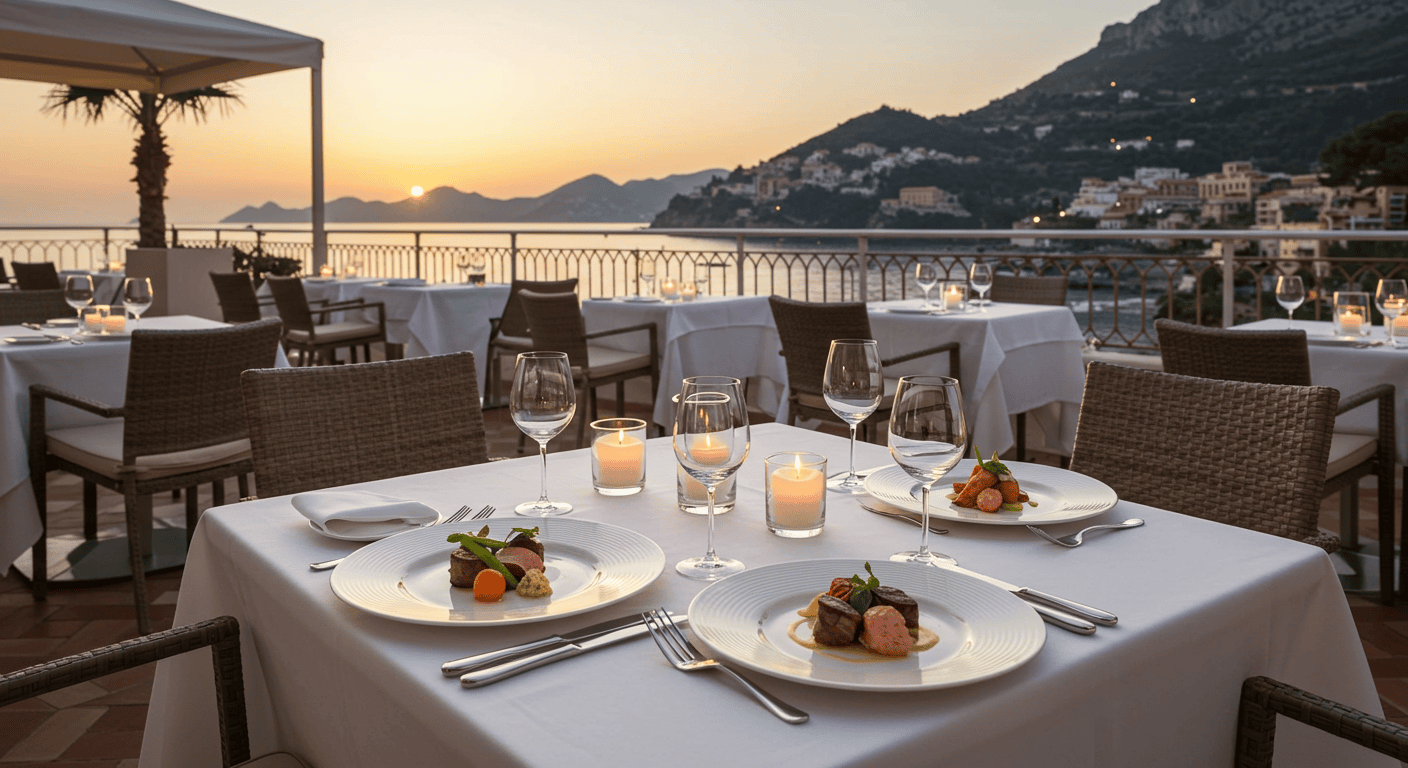
These resort restaurants tend to occupy genuinely beautiful spaces – open-sided pavilions where the sea breeze moves through without making a nuisance of itself, or candlelit terraces where the light hits the water in the kind of way that makes you feel it was designed. Dining here, you’ll find refined interpretations of southern Thai classics: the deep red heat of a proper gaeng tai pla (southern fish kidney curry, which sounds more alarming than it is), fragrant crab dishes prepared with the day’s catch, and grilled whole fish that arrives at the table with the sort of confident simplicity that only truly fresh seafood can carry off.
Wine lists at the better resort restaurants are curated if not extensive – expect a reasonable selection of French and New World bottles alongside decent imported options. Markups are what you’d expect on an island with limited logistics. The sensible approach is to drink local as much as possible and save the serious wine conversation for somewhere it travels better. For pre-dinner drinks, however, cocktails made with local fruit – think passion fruit, green mango, fresh coconut – are uniformly excellent and frequently underpriced.
Reservations at resort restaurants are advisable during high season (roughly November through April), even – especially – for hotel guests. The good tables fill up. You have been warned in the gentlest possible way.
Local Restaurants and Beachside Kitchens: The Real Education
The most important meals you’ll eat in Ko Kut will almost certainly not cost you very much. This is a fact that luxury travellers sometimes find disorienting, and then swiftly find liberating.
Around Khlong Chao Beach and the quieter stretches of the northern coast, a string of independently run restaurants operate with the kind of relaxed confidence that comes from knowing they don’t need to impress you. They’re open when they’re open. The menu is what’s fresh. The chairs are mismatched in a way that stopped being trendy in cities approximately fifteen years ago and has remained entirely correct here throughout.
These are the kitchens where you’ll encounter pad cha – a dry-fried dish of seafood with wild ginger, green peppercorns, and kaffir lime leaves, cooked at a temperature that makes watching it slightly exhilarating. Where you’ll find tom yum goong made with prawns pulled from the sea that morning, the broth tart and fragrant and absolutely nothing like the version you’ve had in airport Thai restaurants. Where a whole grilled barracuda arrives with a lime and chilli dipping sauce and you quietly rearrange your entire afternoon around finishing it.
Look for restaurants with handwritten signs, motorbikes parked outside, and at least one table of Thai staff from a nearby resort eating on their break. That last detail is the most reliable quality indicator on the island. Possibly anywhere.
Beach Clubs and Casual Dining: Afternoon Done Properly
Ko Kut has not yet been colonised by the sort of beach club that requires a four-hundred-dollar minimum spend and a DJ who’s flown in from Ibiza. For this, quiet gratitude is appropriate.
What it does have is a growing number of relaxed beach-facing venues where the line between restaurant, bar, and sunlounger operation is pleasantly blurred. Along the island’s most popular stretches, you’ll find open-air spots serving grilled seafood, fresh fruit platters, Thai iced teas, and cold beer throughout the afternoon with the sort of unstressed service that makes you stay far longer than you planned. These are ideal for long lunches that dissolve imperceptibly into early evenings, a form of time management that Ko Kut seems specifically designed to encourage.
Coconut-based dishes are particularly good in this more casual register – look for khao man gai (poached chicken with fragrant rice) as a lighter midday option, or fried rice with crab that somehow tastes completely different here than it does in Bangkok. Fresh coconut water, served straight from the shell, costs a fraction of what you’d pay for a bottled water anywhere else and is exponentially better. Some simple choices are simply obvious.
Hidden Gems: Where to Eat Off the Beaten Track
The interior of Ko Kut is less visited than the coast – which is a polite way of saying that most tourists don’t venture far from the beach, which is a polite way of saying that the good stuff remains largely undiscovered. The roads that thread through rubber plantations and cashew orchards lead eventually to small village settlements where food is cooked on open fires and the menu operates on a tell-us-what-you-want basis. This requires either a degree of Thai language capability, a translator, or the kind of cheerful pointing-at-things confidence that turns out to be remarkably effective.
Waterfall areas – particularly around Nam Tok Khlong Chao – sometimes have small food vendors and family-run operations nearby that serve simple rice dishes and grilled meats to locals and the occasional adventurous visitor. The food is unpretentious in the extreme. It is also, frequently, exceptional. The pork grilled over charcoal with a sweet and sour tamarind dipping sauce that you might find at one of these roadside spots will stay with you longer than any resort tasting menu. Probably longer than this article.
The key to finding these places is time and local knowledge. A villa manager or a longtail boat captain who knows the island well is worth more than any app. Ask where they eat. Then go there.
Food Markets and Street Food: Morning Rituals Worth Waking Up For
Ko Kut’s market scene is modest by mainland standards but genuinely rewarding for those who engage with it properly. Small morning markets operate in the main settlements – particularly around the pier areas on the eastern coast – where vendors set up in the early hours to sell fresh produce, prepared foods, and the kind of breakfast that recalibrates your expectations for the rest of the day.
Jok – Thai rice porridge – is a morning staple worth seeking out, served with ginger, spring onion, a soft egg, and your choice of meat or seafood. Khanom krok, the coconut-milk pancakes cooked in dimpled iron pans, are sweet and slightly crisp at the edges and should be eaten immediately while the vendor watches with appropriate satisfaction. Mango sticky rice appears later in the day and in the evenings, and is precisely as good as everyone who has ever been to Thailand has told you.
Markets are also the place to buy fresh fruit for your villa – Ko Kut grows exceptional mangosteens, rambutans, and dragon fruit, all of which taste considerably better purchased from someone who grew them than from a supermarket refrigerator. Prices are negligible. The experience of wandering through with no particular agenda and a coffee from a nearby street stall is entirely free and highly recommended.
What to Drink: Local and Otherwise
Thailand is not, historically, a great wine country – largely because it isn’t a wine country at all. Several domestic wineries have emerged in recent decades producing drinkable and occasionally interesting bottles from Khao Yai and other regions, and the better resort restaurants on Ko Kut will carry a selection. They’re worth trying once, as much for the conversation as the glass.
The more convincing local drinking culture revolves around beer and spirits. Singha and Chang are the ubiquitous cold lagers that work perfectly in the heat – and here, in context, they genuinely do work perfectly. For something with more character, look for craft options occasionally available at the smarter beach bars. Mekhong whisky – a Thai cane spirit often labelled as rum or whisky depending on your indulgence – mixed with soda and lime is a serviceable sundowner with strong local credibility.
Fruit-based cocktails and fresh juices deserve more serious attention than they sometimes receive. Ko Kut’s abundance of tropical fruit means that a properly made passion fruit mojito or a fresh watermelon juice with a pinch of salt and a squeeze of lime is a genuinely sophisticated drink. Non-alcoholic options are also excellent, and the Thai iced tea – strong, sweet, and a slightly alarming shade of orange – is a deeply useful afternoon revival that should not be underestimated.
Dishes You Should Order at Least Once
Ko Kut rewards the curious eater. If you’ve spent your Thai travels ordering pad thai from laminated English menus, this island offers a useful corrective. These are the dishes worth seeking out specifically:
Gaeng som – A sour curry made with tamarind, fish, and local vegetables. Sharp, complex, and completely unlike anything called ‘curry’ in the Western world. Order it whenever you see it.
Hoy tod – Crispy oyster omelette, pan-fried with a slightly chewy batter and served with sriracha. Particularly good at beach-side kitchens where the wok temperature is high and the confidence is higher.
Pla kapong neung manao – Whole steamed sea bass with lime, garlic, and chilli. The dish that most clearly demonstrates what fresh fish actually tastes like. Ordered at the right place, this is a revelation.
Kang pu – Crab curry, southern style, made with coconut milk and yellow curry paste. Rich, sweet from the crab, and worth every messy minute of eating it.
Som tam talay – Green papaya salad with mixed seafood. A sharper, fishier, more complex version of the papaya salad you already know. Ask for it as spicy as you genuinely think you can manage, then reconsider.
Practical Notes: Reservations, Timing and Etiquette
Ko Kut operates on a pace that is somewhere between unhurried and entirely unbothered by the concept of urgency. This is a feature, not a bug – but it does require some adjustment in approach for travellers used to urban restaurant culture.
For resort restaurants during high season (November to April), reservations are advisable for dinner, particularly for waterfront or terrace tables. A day’s notice is usually sufficient. Two days if you’re in a large group or it’s a weekend. For local and beachside restaurants, reservations are generally neither possible nor necessary – you simply arrive, and something usually sorts itself out. Arriving early (before seven in the evening) means more choice and a slightly more relaxed pace of service.
Most restaurants on Ko Kut are cash-friendly and some are cash-only, particularly the smaller local operations. ATM access on the island is limited – settle this before you leave the pier area. Tipping is appreciated but not structured; rounding up or leaving a small amount is appropriate and warmly received.
Dress code at even the more refined resort restaurants is informal by global standards. Smart casual – meaning you’ve made a minimal discernible effort – is entirely sufficient. Nobody is going to ask you to put on a jacket. You are on an island. Behave accordingly.
For more on planning your time on the island, including transport, beaches, and the broader lay of the land, our Ko Kut District Travel Guide covers everything you need before you arrive.
The Private Chef Option: Bringing the Best to You
There is, of course, a strong argument that the finest table on Ko Kut is the one on your own terrace. Many guests staying in a luxury villa in Ko Kut District find that the combination of a private pool, an uninterrupted sea view, and a personal chef cooking to order represents a dining experience that no restaurant – however well-regarded – can quite replicate. Private chefs at the better villas work with the morning market catch, source ingredients locally, and will cook almost anything you want with appropriate skill and without the background noise of other people’s conversations. For special occasions, celebrations, or simply an evening when you’d rather not leave, it is an option worth taking seriously. The crab curry, in these circumstances, arrives without a walk, a wait, or a menu. It simply arrives. Ko Kut, it turns out, has thought of everything.


