
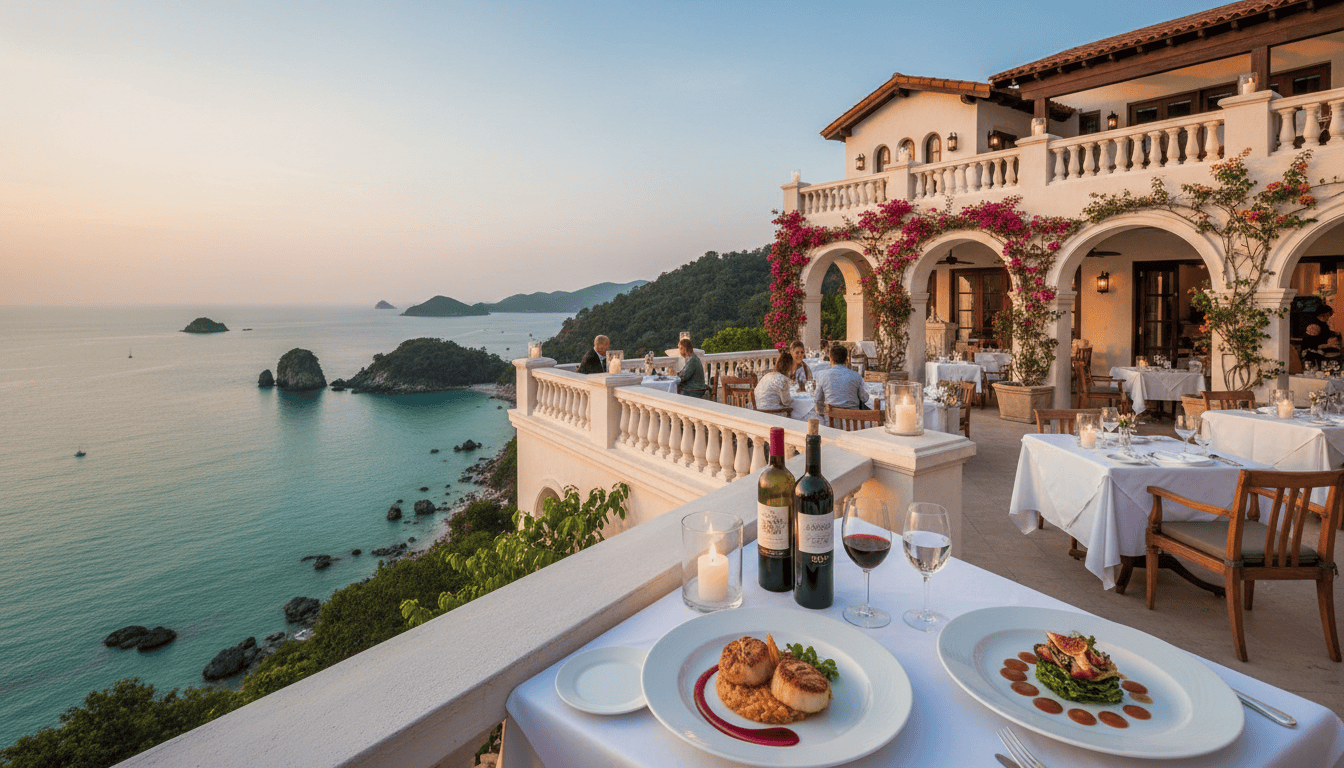
Best Restaurants in Prachuap Khiri Khan: Fine Dining, Local Gems & Where to Eat
Here is what every guidebook about Prachuap Khiri Khan consistently gets wrong: they spend four paragraphs on the bay view and about forty words on the food. This is, to put it gently, a catastrophic misallocation of attention. Because while the gulf waters and the limestone karsts are doing their thing in the background, it is the seafood on the plate in front of you that will actually change your relationship with this part of Thailand. The fishing boats leave before dawn. By 7am the catch is on ice at the market. By noon it is on your table, still tasting faintly of the sea. That is not a travel cliché. That is simply the timetable.
Understanding the Food Scene Here
Prachuap Khiri Khan sits in a part of Thailand that most international visitors zip straight past on the train between Bangkok and the southern islands. Which is, frankly, their loss and your gain. The town has a culinary identity that is distinctly its own – less fiery than the deep south, less coconut-heavy than Samui, more honest than both. The local cuisine is built around the Gulf of Thailand’s extraordinary daily yield: blue swimmer crabs, whole sea bass, fat prawns, pla kapong, and soft-shelled crab that arrives in the market so fresh you almost feel obliged to apologise to it.
There are no Michelin stars here, and the town has not yet been colonised by the kind of restaurant that puts foam on things unnecessarily. What you get instead is something arguably more valuable: genuine regional Thai cooking done with exceptional raw materials, served in places where the ceiling fan works and the bill is unlikely to make you feel faint. For the luxury traveller, this is a different kind of indulgence – the indulgence of eating something real.
Fine Dining in Prachuap Khiri Khan
Fine dining in Prachuap Khiri Khan does not announce itself with white tablecloths and sommelier theatre. It announces itself, more quietly, through the quality of what arrives in the bowl. The upper tier of eating here is found not in hotel restaurants or airport-facing brasseries, but in the handful of elevated seafood establishments along the waterfront and on the roads curving around the bay, where owners have been sourcing from the same fishing families for decades and have quietly developed something close to mastery.
The better seafood restaurants in town operate with a kind of confident simplicity – whole fish steamed with lime, lemongrass and chilli; crab stir-fried with yellow curry powder and egg in the central Thai style; grilled prawns that need nothing more than a squeeze of lime and a small pot of the house seafood dipping sauce, which in Prachuap tends toward the tart and the savoury rather than the sweet. This is the fine dining of the region. It does not need a dress code. It needs you to order carefully and eat slowly.
Several of the waterfront restaurants offer private dining arrangements for larger groups, particularly those staying in villas or private residences nearby. It is worth telephoning ahead, not just for reservations but to ask what the boats brought in that morning. The chef’s recommendation in these places is not a upselling exercise. It is genuinely the best thing on the menu because it is genuinely the freshest thing in the kitchen.
Local Gems: Where the Town Actually Eats
Walk away from the bay and into the market streets, and the town reveals a second layer of eating that is quieter, cheaper, and often more interesting. The local rice porridge shops open at five in the morning and are frequently closed by nine – not because they are exclusive, but because the congee is gone. Small noodle shops serving kuay tiew with clear pork broth operate from carts that have been in the same family for thirty years. The papaya salad here has a sourness and a fermented kick that differs subtly but significantly from the Bangkok version.
The dry goods market that runs along the town’s interior streets is where you find the real pantry of the region: dried shrimp paste, palm sugar sold in cylinders wrapped in leaves, fresh turmeric, and the dried spices that give the local curries their particular character. This is not a photo opportunity. It is a working market, and it is worth treating it accordingly – buying something, asking a question through your phone’s translation app, and generally behaving like a person rather than a lens.
For sit-down local meals, the small restaurants clustered near the fishing pier area serve the kind of food that locals return to weekly without ever thinking about it particularly, which is its own form of recommendation. Soft-shelled crab in season, stir-fried morning glory, and grilled mackerel with rice are staples. Portions are generous. The iced tea is refilled without asking.
Beach Clubs and Casual Dining by the Water
The beach club scene in Prachuap Khiri Khan is considerably more low-key than Hua Hin to the north, which is either a relief or a disappointment depending entirely on your personality. There are no pool parties. There is no DJ at noon. What there is, on the quieter stretches of Ao Manao bay and along the shoreline south of town, is casual open-air dining of a very pleasant kind: picnic tables under casuarina trees, cold Singha beer arriving in a bucket of ice, and grilled corn on the cob from the women who walk the beach in the late afternoon.
The beach restaurants near Ao Manao – the military-controlled bay that requires a brief passport check to enter, which surprises most visitors – serve simple grilled seafood and cold drinks in surroundings that manage to be both utterly uncurated and entirely lovely. The kind of place where you arrive for a quick lunch and are somehow still there when the light turns golden. This happens more often than you might expect.
Further along the coast, a handful of small resorts operate open beachside restaurants that welcome non-residents for meals. These tend toward the Thai resort menu – curries, stir-fries, fresh fruit – but done well, with good ingredients and a view that costs you nothing extra.
The Food Markets: Eating at Street Level
The night market along the waterfront promenade is the most accessible entry point into Prachuap’s food culture for visitors staying just a night or two. It runs from around five in the evening and covers the full spectrum of Thai street eating: pad thai cooked to order in a hot wok, satay skewers over charcoal, fresh coconut pancakes made on little round irons, and a rotating cast of regional dishes that vary by the stall and the day.
The morning market near the main pier is the more serious of the two – less for tourists, more for the town itself. Come here for the seafood selection if you are cooking in a villa, or simply to watch the extraordinary choreography of a Thai market at full speed, which is genuinely worth doing at least once. The vendors are not performing for you; they are simply doing what they do every day, which makes watching them considerably more interesting than watching a cooking demonstration at a hotel.
A smaller weekend market operates in one of the residential streets and leans toward local snacks and takeaway dishes – kanom krok (coconut rice cakes), sticky rice with mango when in season, and the kind of northern Thai sausage that has migrated south with enough people to become a permanent fixture on market menus across the country. Arrive hungry. Leave later than planned.
What to Eat: The Dishes You Should Not Miss
Let’s be direct about this, because the decision is too important to leave to chance. If you eat one thing in Prachuap Khiri Khan, it should be the soft-shelled crab, available from roughly March through October, deep-fried until the shell is light and crisp and the inside remains sweet and yielding. Order it with garlic and black pepper if the menu allows, or simply fried with nothing at all. Either way.
Beyond the crab: whole steamed fish with lime and garlic (pla nung manao) is done superbly here, as is the fried sea bass with fish sauce, which has a caramelised quality that is genuinely difficult to replicate at home. The local prawn dishes – whether grilled, in curry, or in the glass noodle hot pot known as kung ob woon sen – are worth ordering at every opportunity. The prawns from the Gulf at this latitude are notably sweet, with a clean brininess that stands up to bold seasoning without being overwhelmed by it.
For the more adventurous: horseshoe crab eggs are a local delicacy, eaten with green mango salad, and available only in certain seasons and at certain markets. They are an acquired taste, which is a diplomatic way of saying that not everyone acquires it. Worth trying once, regardless.
Wine, Beer and Local Drinks
Thailand is not, historically, a wine country, and Prachuap Khiri Khan is not about to change that. The better restaurants in town stock a workable selection of imported wines – mostly from France, Australia and Chile – at prices that reflect the import duties and then some. The wine is rarely the point here, and the honest recommendation is to drink what the food was designed to be drunk with, which is cold Thai beer or fresh lime soda with a little salt.
Singha and Chang are ubiquitous. Leo has its adherents. The craft beer scene has not yet reached Prachuap in any meaningful way, though bottles from Bangkok’s small brewery scene occasionally appear on menus at the more progressive restaurants. For something local and non-alcoholic, the fresh coconut water served straight from the nut is genuinely good – not the packaged version, the actual fruit, cracked open and handed to you with a straw. There is also a local sugarcane juice pressed at market stalls that is cold, sweet and slightly grassy in the best possible way.
Cocktail culture is limited but present. A few of the beach-adjacent restaurants make a passable gin and tonic and, increasingly, a Thai-inflected cocktail using local spirits infused with kaffir lime or lemongrass. These range from delightful to ambitious. Ask what they make well before committing to a round.
Reservation Tips and Practical Advice
Reservations, in the formal sense, are rarely required at the local restaurants that make up the heart of the dining scene here. Turning up and finding a table is usually possible, with the exception of weekends when Thai domestic tourists arrive from Bangkok en masse and the waterfront fills with a cheerful and somewhat competitive energy. If you are visiting on a Saturday or Sunday, an early lunch is the practical move – arrive by noon and you will eat well; arrive at one and you may be negotiating over a plastic stool.
For the better seafood restaurants, particularly those with private rooms or known reputations, a phone call the morning of your visit is good manners and occasionally necessary. Your hotel or villa concierge can make this call for you and in the same breath establish any dietary requirements, which saves the kind of pantomime that is nobody’s idea of a good start to dinner.
Cash remains king at most of the smaller places. The larger establishments and resort-adjacent restaurants accept cards. The night market is cash only. An ATM near the main commercial street in town is worth locating on your first day rather than your last.
Eating Well from Your Villa: Private Chef Options
For those who prefer their finest meal to happen at a table with a view of their own private pool rather than a passing motorbike, the private chef option available through a luxury villa in Prachuap Khiri Khan makes considerable sense. The combination of morning market access – where a chef who knows what they are doing can select the day’s best catch personally – and a well-equipped villa kitchen means that some of the most exceptional meals available in the region can happen without ever leaving the property.
This is not about avoiding the town; the town is very much worth exploring, and we recommend doing so thoroughly. It is about having the option, on a lazy evening, to eat something extraordinary in complete privacy – soft-shelled crab cooked exactly as you want it, a whole steamed fish with lime, a coconut ice cream made that afternoon. The market does the sourcing. The chef does the work. You do very little at all, which is, after all, the point of a proper holiday.
For more on planning your trip to the region, including where to stay, what to do, and how to get there, the full Prachuap Khiri Khan Travel Guide covers the ground in considerably more depth.


