
Best Restaurants in Budens: Fine Dining, Local Gems & Where to Eat
Somewhere around seven in the evening, when the heat has finally relented and the light turns that particular shade of amber that makes everything look like it was shot for a wine label, Budens does something quietly remarkable. The smell of charcoal drifts over whitewashed walls. Cicadas hand over to conversation. A cork is pulled somewhere nearby. This small village in the western Algarve – tucked between the ochre cliffs of the Parque Natural do Sudoeste Alentejano e Costa Vicentina and the Atlantic-facing beaches of the Costa Vicentina – is not the kind of place that announces itself. It doesn’t need to. The food does that for it.
This is not the Algarve of all-inclusive buffets and fish-and-chips-by-the-pool. Budens and its immediate surrounds – Vila do Bispo, Salema, Sagres – operate on a different register entirely: slower, more considered, deeply rooted in what the sea and the red-clay earth actually produce. For the discerning traveller who came here precisely because it hadn’t been franchised, that is rather good news. What follows is a guide to eating exceptionally well in and around Budens – from the informal to the extraordinary – and a few things worth knowing before you sit down.
For a broader picture of the region, the Budens Travel Guide is the place to start.
The Fine Dining Scene Near Budens
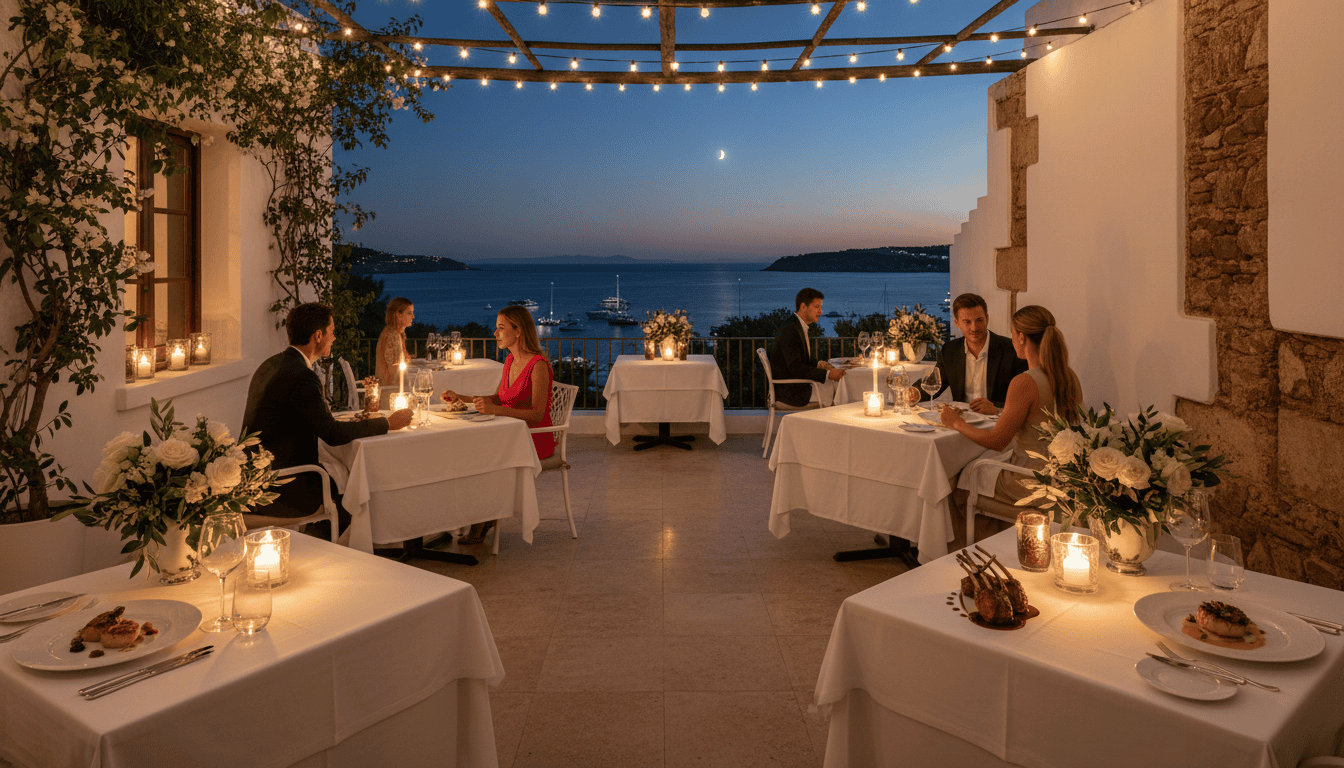
Budens itself is a village of perhaps a few hundred souls, and it wears its scale honestly. You will not find a white-tablecloth temple of gastronomy on the main square – and if you did, you would probably be suspicious of it. The serious fine dining in this corner of the Algarve requires a short drive, but the distances are forgiving and the destinations are not.
The wider western Algarve has seen a quiet but confident rise in destination-level cooking over the past decade, led in part by chefs who came here for the produce and stayed because they couldn’t imagine working with lesser ingredients. The fish landed at nearby ports – often within hours of reaching the table – sets a standard that is genuinely difficult to equal. When a chef has access to sargo, dourada and percebes that arrived that morning on a boat from the Atlantic, the cooking tends to get out of the way and let the ingredients speak. The best kitchens in this region understand that completely.
There are no Michelin-starred restaurants in Budens village itself, but the Michelin Guide has increasingly recognised the western Algarve as a serious culinary zone, with properties in Sagres and towards Lagos carrying recommendations. It is worth consulting the current guide before your visit, as the inspectors have been paying attention. Reservations at the better-known spots fill quickly, particularly from June through September, and a call or email a week in advance is the minimum you should plan for – two weeks in high summer is closer to reality.
Local Tavernas and Village Restaurants
The soul of eating in Budens, honestly, is not fine dining. It is the local restaurant where the specials board changes because the market changed, where the wine list is short and entirely correct, and where the owner will tell you what to order with the mild impatience of someone who would rather you ate well than spent twenty minutes reading. These places are not rough around the edges so much as honestly proportioned – no theatre, no foam, no amuse-bouche. Just very good food, eaten at a sensible pace, usually outside.
The village of Budens has a small cluster of local restaurants serving traditional Algarvian food, and the surrounding hamlets and the nearby coastal village of Salema add considerably to the options. In Salema, a fifteen-minute drive down towards the sea, the harbour-front has a line of casual restaurants where the grilled fish is the point and everything else is pleasantly incidental. Order the grilled sea bass if it is on the board. Order the clams in white wine and garlic without hesitation. The bread, which arrives with butter and usually some form of local olive oil, should be treated with the respect it deserves.
Vila do Bispo, the small market town a few kilometres inland, has a modest but reliable restaurant scene that caters as much to locals as to visitors – which in this part of the world is the best possible indicator of quality. The cataplana – a slow-cooked stew of fish or meat sealed in a copper clam-shell vessel – is the dish the western Algarve does best, and ordering it for two people with a cold glass of local white wine is one of the more civilised ways to spend a Tuesday afternoon. Or any afternoon, frankly.
Beach Clubs and Casual Dining
The beaches around Budens – Salema, Zavial, Ingrina, Boca do Rio – are the kind that travel writers have been quietly trying not to over-describe for years, largely because they suspect that describing them too well would ruin them. The beach restaurants and informal clubs that operate along this stretch follow the same unwritten code: keep it simple, keep it good, don’t try too hard.
Beach dining here is not the glossy, Instagram-curated experience you might find further east along the Algarve coast. It is more likely to be a plastic table on sand, a cold Sagres beer, grilled sardines arriving on a terracotta tile, and the Atlantic doing its thing twelve metres away. This is not a compromise. This is, for many people who have eaten at much more expensive places in much more famous locations, the meal they remember longest.
Some of the beach access points have small bar-restaurants attached, and the quality varies considerably – as it does everywhere. The rule of thumb is simple: look for the place that doesn’t have an English menu displayed outside, is moderately busy at lunch, and has a blackboard rather than a laminated card. You’ll find your way.
For a more structured beach club experience, the drive towards Sagres opens up a few more polished options – places with sunbeds, cocktail menus and a slightly more considered aesthetic. They are enjoyable enough, and the sunsets from this direction are the kind that cause otherwise reasonable people to stop mid-sentence and stare.
Hidden Gems and Off-the-Radar Eating
The best-kept dining secrets in the Budens area are, almost by definition, the ones that don’t appear in guidebooks until it is too late. They tend to be family-run, unlisted on the major reservation platforms, and discovered either by asking at your accommodation or by following the sound of cutlery from a side street. This is genuinely the method. It works.
What these places share is a commitment to the immediate and the local: vegetables from the kitchen garden or the weekly market, fish from a fisherman who is also a neighbour, pork from pigs raised just outside the park boundary. The menus are often short – sometimes just two or three choices – which is always a good sign. A kitchen that knows it can only do three things perfectly is more interesting than one that claims to do twenty adequately.
The Costa Vicentina’s protected status has, somewhat counterintuitively, helped preserve this kind of cooking. When you cannot build a supermarket chain on protected land, you tend to retain the smaller producers, the local supply chains, and the chefs who value them. The ecology of the restaurant scene here is, in other words, a direct consequence of the ecology of the landscape. Which is a slightly long way of saying: the national park is the reason the food is this good.
Ask locals about the restaurants they actually use for special occasions – birthday dinners, family lunches – rather than where they send tourists. The answers will be more interesting, and the food will almost certainly be better.
Food Markets and Local Produce
The weekly market in Vila do Bispo is the practical and atmospheric heart of local food culture in this corner of the Algarve. It runs on a regular schedule and draws both producers and serious home cooks, which tells you most of what you need to know about its quality. You will find honey from the cork-oak scrubland, dried figs, local cheeses from the Alentejo borderlands, fresh vegetables in varieties you may not immediately recognise, and fish that has been out of the water for an admirably short time.
For the self-catering luxury traveller – or for anyone staying in a villa with a kitchen worth using – the market is the obvious starting point for a day’s cooking. The tomatoes alone in late summer justify the trip. Buy more than you think you need. You will not regret it, and the walk back is not that long.
Sagres, which sits at the southwestern tip of continental Europe with the quiet confidence of somewhere that knows exactly where it stands, has a small but well-stocked market as well, and the town’s fishing port means fresh fish is reliably available from local suppliers and fishmongers. If you have the means to cook it and access to good olive oil, garlic and sea salt, you are most of the way there.
What to Order: Dishes Worth Knowing
The western Algarve has a specific culinary identity that diverges from the rest of the region in interesting ways. The Atlantic influence is more pronounced here – the fish is different, the preparation is more restrained, and the prevailing philosophy is that what came out of the ocean this morning should not be asked to do too much. A few dishes that reward ordering:
Percebes – goose barnacles, harvested from the rocks along this coast, briefly cooked in salted water and eaten with your hands. They taste of the sea in its most concentrated form. They are not cheap, and they should not be.
Cataplana de marisco – the seafood cataplana is the signature dish of this coast. A good one – sealed in copper, slow-cooked, opened at the table in a cloud of steam – is a genuinely theatrical and deeply satisfying experience. It is also designed for two, which is the correct way to eat most things.
Grilled sardines – simple, charcoal-cooked, served with roasted peppers and boiled potatoes. This is not a starter. This is a philosophy.
Amêijoas à Bulhão Pato – clams cooked with garlic, white wine, coriander and lemon. A dish that takes about twelve minutes to make and approximately three to eat, because you cannot stop.
Açorda de marisco – a bread-based seafood stew, thicker and more elemental than it sounds. An Alentejo-influenced dish that has migrated south and taken on Atlantic notes. Worth trying once. Worth ordering again immediately after.
Wine, Local Drinks and What to Pour
The Algarve does not have the vinous reputation of the Alentejo or the Douro, but it has been quietly improving its wine story for some years now. The local denominação de origem controlada – DOC Algarve – produces whites that suit the food particularly well: crisp, mineral, built for fish. Look for producers from the Sagres and Lagos areas on local wine lists, and ask the staff for a recommendation. In a good restaurant, this will get you something interesting. In a lesser one, it will at least tell you something about the establishment.
Vinho verde, technically from the northwest, travels well and appears on most lists as a reliable option for seafood. At around eight to twelve degrees, poured cold, with a plate of clams in front of you and the Atlantic in the distance, it is difficult to argue with.
For something more local in character, look for medronho – a firewater distilled from the fruit of the strawberry tree, which grows wild through the hills around Budens. It is served as a digestif, it is considerably stronger than it looks, and it is the kind of thing you accept graciously and sip slowly. Some local restaurants make their own. The quality varies enormously. The experience is always memorable, for better or worse.
Non-drinkers are not an afterthought here: freshly squeezed orange juice is exceptional throughout the Algarve, local sparkling water is good, and the fresh lemonade at beach restaurants in summer – made with actual lemons, actually squeezed – is one of life’s more accessible pleasures.
Practical Notes: Reservations and Timing
A few things worth knowing before you set out to eat well in this part of the world. Portuguese mealtimes run later than northern European visitors often expect: lunch is from around one to three, dinner from eight to ten, and arriving at seven for dinner will earn you a very quiet table and a slightly puzzled look. Lean into local time. The evening is better for it.
Reservations for the better restaurants in the wider area – particularly from June through to September – are strongly advisable. The more popular spots fill up quickly, and walk-in tables become increasingly scarce as the season progresses. A brief email or phone call a week in advance is sufficient for most places; two weeks for anything with a regional reputation. Many restaurants in this area now have email or WhatsApp contact – a simple message in English will generally be understood and appreciated.
Service in this part of Portugal is warm but unhurried, which is not the same as slow. Meals are expected to be long, conversations are expected to happen, and the cheque will not arrive until you ask for it. Settle in. There is nowhere else you need to be.
For the complete context on planning your time in this part of the western Algarve – including where to stay, what to do and how to get around – the Budens Travel Guide covers the ground thoroughly.
Staying in a Luxury Villa and the Private Chef Option
There is, of course, another way to eat exceptionally well in Budens – and it involves staying put entirely. For those staying in a luxury villa in Budens, the private chef option is not a convenience so much as a revelation. A chef who sources from the Vila do Bispo market that morning, who knows what came off the boats at Sagres, who will cook a cataplana for eight on your terrace while the sun goes down over the cork trees – this is not a lesser experience than going out to a restaurant. In certain respects, it is a considerably better one. The wine list is yours. The table is yours. The evening is entirely yours. Excellence Luxury Villas can arrange exactly this, and the villas themselves provide the kind of setting that makes everything taste marginally better. Which is no small thing.
Are there Michelin-starred restaurants in or near Budens?
There are no Michelin-starred restaurants in Budens village itself, but the broader western Algarve – including the Sagres and Lagos areas – has received increasing attention from the Michelin Guide. The region’s quality of produce, particularly its Atlantic seafood, has helped raise the standard of serious cooking considerably in recent years. It is worth checking the current Michelin Guide for the Algarve before your visit, as recommendations in this area continue to evolve.
What are the best local dishes to try when eating in Budens and the surrounding area?
The western Algarve is best known for its seafood, and the dishes most worth ordering include cataplana de marisco (a slow-cooked seafood stew sealed in copper), amêijoas à Bulhão Pato (clams with garlic, white wine and coriander), grilled sardines with roasted peppers, percebes (goose barnacles, a local delicacy), and açorda de marisco (a thick bread-based seafood stew with strong Alentejo roots). For meat eaters, the local pork dishes and slow-roasted lamb from the Alentejo borderlands are also excellent.
Do restaurants in Budens require advance reservations?
For casual village restaurants and beach-front spots, walk-ins are generally manageable outside of peak season. From June to September, however, the better-regarded restaurants in the area fill quickly, and booking at least a week ahead is advisable – two weeks for any restaurant with a broader regional reputation. Most local restaurants accept reservations by phone, email or WhatsApp. Arriving without a booking in August and expecting a table at a good restaurant is, let’s say, an optimistic strategy.


