
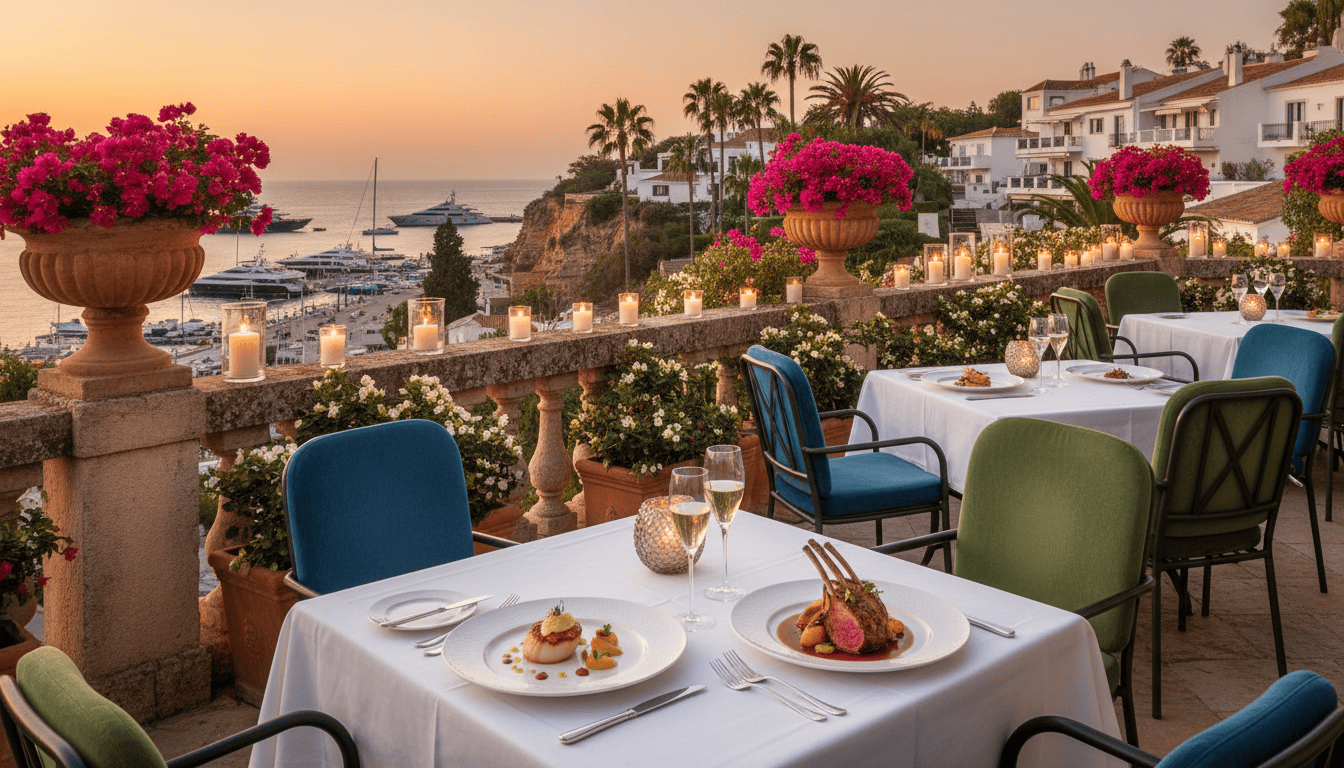
Best Restaurants in Alvor: Fine Dining, Local Gems & Where to Eat
Best Restaurants in Alvor: Fine Dining, Local Gems & Where to Eat
It happens somewhere between the second glass of vinho verde and the moment the sun drops behind the Alvor estuary, turning the water the colour of hammered copper. You have a plate of percebes in front of you – barnacles, basically, clinging to the plate as they clung to Atlantic rocks twenty-four hours ago – and a bread basket so good you’ve already quietly dismantled it. The fishing boats are still visible from your table. You are, without any great effort, eating extraordinarily well. This is how Alvor works. It doesn’t announce its food. It just delivers it, consistently, at tables that face the right direction, in restaurants that have been doing this for longer than the tourists have been coming to watch.
Alvor sits in the western Algarve, close enough to Portimão and Lagos to borrow their energy, but self-contained enough to have developed a genuine culinary character of its own. The best restaurants in Alvor span the full range – from serious fine dining drawing on the Algarve’s extraordinary larder, to family-run tascas where the menu changes daily because the market changed that morning. What follows is a guide to eating well here, in every register.
The Fine Dining Scene in Alvor
The Algarve is not without Michelin ambition – the region has collected stars with increasing confidence over the past decade – and while Alvor’s immediate dining scene skews toward the genuinely good rather than the formally celebrated, the broader western Algarve is close enough to matter. Serious diners who want a marquee tasting menu experience will find it within easy reach, and the drive through pine and eucalyptus to a candlelit dining room is, frankly, part of the experience.
Within Alvor itself, fine dining tends to mean something slightly different from the metropolitan interpretation. It means a chef who trained seriously and then came home. It means tablecloths, yes, but also a genuine relationship with the local fishing boats and a wine list that understands what grows here. Look for restaurants emphasising cataplana – the copper cooking vessel that is less a piece of equipment than a philosophy – prepared with real care rather than tourist-facing approximation. When cataplana is done properly, with clams, chouriço, white fish and a base of slow-cooked onion and tomato, it is one of the most quietly brilliant dishes in European cooking. When it is done badly, it is beige. Ask your villa team or a trusted local which version you’re getting before you commit.
The area around Alvor rewards exploration in the evening. Several restaurants along the waterfront and tucked into the old town’s narrow streets have elevated their offering considerably in recent years, responding to a clientele that arrives knowing something about food. Reservations are not optional in high season. Book ahead, dress with a degree of intention, and order the fish.
Local Tascas and Family Restaurants
If the fine dining scene is where Alvor shows its ambition, the tascas are where it shows its soul. These small, often family-run restaurants operate with an admirable disregard for trend. The menu is written on a blackboard – or sometimes just communicated verbally by someone who has memorised it because it changes daily. The wine comes in a ceramic jug. The bread arrives before you’ve asked for it. Sitting in one of Alvor’s traditional local restaurants on a Tuesday lunchtime, eating grilled sea bream with boiled potatoes and a drizzle of olive oil so green it looks implausible, surrounded by people who have been eating here for thirty years – this is not a lesser experience than a tasting menu. It is a different one, and in certain moods, the superior one.
The old quarter of Alvor – a warren of whitewashed lanes leading down toward the waterfront – contains several of these establishments, their façades modest to the point of invisibility. This is intentional. The ones with large signs and laminated photo menus are generally not the ones you want. The ones you want are the ones where the owner’s mother appears from the kitchen at some point during service. Dishes to seek out include açorda de marisco (a rich, bread-thickened seafood broth), amêijoas à bulhão pato (clams with garlic, white wine and fresh coriander, so simple it makes you question everything you thought cooking required), and whatever the day’s fish is. Always the day’s fish.
Beach Clubs and Casual Waterfront Dining
Alvor’s beach – a broad, well-proportioned sweep of Atlantic sand backed by low cliffs – has attracted a cluster of casual dining options that range from the straightforward to the genuinely polished. Beach clubs in this part of the Algarve have quietly grown up. What was once the domain of plastic chairs and pre-packaged salads now occasionally involves proper cocktail programmes, wood-fired cooking and sunlounger service that doesn’t feel like an afterthought.
Lunch at a beachside spot here follows a particular rhythm that is worth surrendering to entirely. Arrive around one. Order something cold. Eat well. Spend approximately forty-five minutes longer than planned because the view has made the concept of time feel negotiable. The food at the better beach establishments leans into grilled seafood and simple salads – ingredients that want sunlight and a slight breeze to reach their full potential. Freshly grilled sardines eaten outside, with your feet essentially in the sand, is one of those experiences that requires no embellishment. It is also, incidentally, very affordable. The Algarve’s greatest trick is making you feel profligate while spending very little.
For those who want something slightly more structured without fully committing to an indoor restaurant, several spots along the Alvor waterfront offer covered terraces with water views and a menu that bridges casual and considered. These are the tables to book for a long Sunday lunch when the light is doing something extraordinary over the estuary and no one particularly wants to be anywhere else.
Hidden Gems and Local Secrets
Every village in the Algarve has a restaurant that the guidebooks haven’t caught up with yet. In Alvor, this tends to be the place recommended by whoever owns the local supermarket, or by the woman at the fruit stall who noticed you chose your peaches carefully. These recommendations are worth pursuing with some urgency – the moment a restaurant appears in print, something almost imperceptible shifts in its atmosphere, and not always for the better.
What the hidden gems of Alvor tend to share is an emphasis on land as well as sea. The Algarve’s inland cooking – pork dishes, game, the extraordinary local sausages – is less frequently celebrated than its seafood, but no less worth seeking out. A small restaurant with five tables, a proprietor who doubles as the waiter, and a slow-roasted black pork presa that has been in the oven since morning: this is a meal you will describe to someone at a dinner party eighteen months later and slightly resent that they aren’t more visibly impressed.
Medronho, the local firewater distilled from arbutus berries, will sometimes appear at the end of a meal in one of these places, poured without ceremony into a small glass and placed in front of you with the implication that this is simply what happens now. Accept it. It is an acquired taste that takes approximately one small glass to acquire.
Food Markets and Daytime Food Culture
Alvor’s relationship with food doesn’t begin at dinner. The morning market culture in and around the western Algarve is worth setting an alarm for, and not just for the photography opportunities (though those exist – the pyramid arrangements of local oranges are genuinely difficult to walk past without stopping). The regional produce here is serious: tomatoes with actual flavour, figs that have ripened in proper heat, almonds still in their husks, cheeses from small producers in the Serra de Monchique hills to the north.
Portimão’s market, a short drive from Alvor, offers a more substantial experience for those who want to engage seriously with the regional larder. This is particularly relevant if you’re staying in a villa with kitchen access – the temptation to cook after a morning at the market is hard to resist, and the ingredients justify the impulse entirely. Picking up cured meats, a wedge of local cheese, a bag of almonds still fragrant from the tree, some decent olives and a bottle of wine for a villa lunch: this is not roughing it. This is living.
Back in Alvor, look for the smaller daily stalls and the kind of bakery that has been making the same pastries for three generations. The pastel de nata is inescapable in Portugal – and correctly so – but the Algarve also produces a range of almond-based confections, particularly dom rodrigos and morgados, which are worth seeking out in their original form rather than the vacuum-packed tourist version.
What to Drink: Wine, Local Spirits and Beyond
Portugal’s wine story is one of the genuinely underappreciated narratives in European viticulture, and the Algarve is writing an interesting chapter of it. The region’s wines – produced under the Lagos, Portimão, Lagoa and Tavira denominations – have historically been overlooked in favour of the Douro, Alentejo and Minho, but local producers are making increasingly compelling cases for Algarve terroir. The heat-adapted grape varieties, including Negra Mole and Castelão for reds and Arinto for whites, produce wines with a character suited exactly to the food being served alongside them.
Vinho verde from the north remains the default summer wine for good reason – its slight effervescence and clean acidity are almost perfectly calibrated for a long lunch in warm weather. But do ask at better restaurants whether they carry local Algarve bottles. The conversation that follows is usually worth having.
Locally produced beer is less of a story here than in some parts of Portugal, but the international standards are well-stocked everywhere. Sagres and Super Bock are the national constants. A cold Sagres in a proper glass, on a warm evening, next to water – this is not a sophisticated drink recommendation. It is, however, an accurate one.
Ginjinha – a sour cherry liqueur – appears occasionally as an aperitif or digestif, and the aforementioned medronho is worth treating as a cultural experience as much as a beverage. For non-drinkers, freshly squeezed orange juice from Algarve oranges is one of those small daily pleasures that sounds ordinary until you taste it and briefly reconsider your life choices.
Reservation Tips and When to Go
Alvor operates on a fairly forgiving dining calendar outside of the core summer months, roughly July and August, when everything fills quickly and the better restaurants run two or three seatings per night. If you are visiting in high season and have a specific restaurant in mind – particularly for a special occasion dinner – booking two weeks ahead is not excessive. For smaller tascas that don’t take reservations at all, arriving at opening time (typically 7pm, though some locals won’t eat until 8:30 or 9pm) is the simple solution.
Shoulder season – May, June, September and October – is, for this writer’s money, the best time to eat in Alvor. The restaurants are still fully operational, the produce is frequently at its best, and you can get a table on a Tuesday without planning your entire trip around it. October in particular sees the local restaurants reclaim something of their year-round character, the pace slows pleasantly, and the light on the estuary in the early evening is worth organising a trip around independently of the food.
When navigating the local dining scene, don’t underestimate the value of asking whoever manages your accommodation for a recommendation. Not a generic one – a specific one. “Where would you eat tonight, if you were going out?” The answer to that question is usually more useful than any list, including this one.
Dining from a Private Villa: The Chef Option
For all the pleasure of Alvor’s restaurant scene – and it is genuine, varied pleasure – there is something to be said for eating at a table that’s yours, in a kitchen garden that’s yours, with a chef who arrived that morning with provisions from the market and a menu developed around your specific preferences and dietary requirements. Staying in a luxury villa in Alvor with access to a private chef transforms the holiday’s relationship with food entirely. Breakfast becomes an event. A long lunch by the pool requires no driving. A special occasion dinner – an anniversary, a birthday, an evening where the sunset simply demands to be accompanied by something exceptional – can be arranged with the kitchen equivalent of a bespoke suit.
The best luxury villas in the area can facilitate everything from a private chef for a single evening to a full culinary concierge experience, sourcing local ingredients, recommending wine pairings and even arranging cooking experiences focused on traditional Algarve techniques. It is, in the most unforced sense possible, the best of both worlds: the restaurants when you want them, the privacy and intimacy of your own table when you don’t.
For a broader understanding of the destination – the beaches, the estuary, the old quarter and everything beyond the table – see the full Alvor Travel Guide, which covers the region in the depth it deserves.
What are the best restaurants in Alvor for a special occasion dinner?
For a genuinely memorable dinner in Alvor, look for restaurants along the waterfront or in the old quarter that specialise in cataplana and freshly landed seafood, with a wine list that includes regional Algarve bottles. Book well in advance in high season – at least two weeks for peak summer dates. Alternatively, arranging a private chef at your villa is increasingly popular for special occasion dining, offering a fully personalised menu in complete privacy.
What dishes should I definitely try when eating in Alvor?
Start with amêijoas à bulhão pato – clams cooked with garlic, white wine and coriander – which is one of the simplest and most satisfying dishes in Portuguese cooking. Cataplana (a slow-cooked seafood and chouriço stew prepared in a traditional copper vessel) is the regional speciality and worth ordering wherever you see it done properly. Grilled fresh fish – particularly sea bream and sea bass – is excellent throughout the area. For something sweet, seek out local almond pastries such as dom rodrigos rather than defaulting to the ubiquitous pastel de nata, though those are good here too.
Do restaurants in Alvor require reservations, and how far in advance should I book?
In July and August, reservations are strongly recommended for any restaurant you specifically want to eat at – particularly for dinner. Booking one to two weeks ahead is sensible for the better-known spots. Smaller tascas and local family restaurants often don’t take reservations; for these, arrive at opening time (around 7pm) to secure a table. Outside of peak season, the dining scene is considerably more relaxed and walk-ins are usually possible, though calling ahead for weekend evenings is always a reasonable precaution.

