
Best Time to Visit Lucca: Walls, Bikes & Puccini Opera
The best time to visit Lucca is during spring (April to May) or autumn (September to October), when temperatures sit around 15-25°C (59-77°F), crowds are noticeably thinner than in summer, and the light is ideal for walking or cycling the city walls. Summer (June to August) is hot, humid and busy but brings major festivals, while winter (November to March) is cool, quiet and considerably cheaper, suiting travellers more interested in empty streets than sunbathing.
There is a particular hour in Lucca – somewhere between the baker opening his shutters and the first determinedly Lycra-clad cyclist clattering up onto the city walls – when the whole place still smells of last night’s rain on warm stone and this morning’s espresso, and almost nothing is open. It is, in its way, the most honest version of the city you will get, because for the rest of the day it belongs to everyone else too: the walkers, the wobbling hire-bike tourists, the nonna doing her shopping at a pace that suggests she has never once hurried for anyone.
Lucca does not have Florence’s crowds or Pisa’s one-trick tower, and that is precisely its appeal – but it does have seasons, and they matter more than most visitors expect. This guide works through them month by month. For everything else – what to see, where to eat, how to spend a day inside those famous walls – the Lucca Travel Guide covers the rest.
Lucca Weather and Seasons at a Glance
Spring (March-May): mild, 10-24°C (50-75°F), moderate crowds, excellent light.
Summer (June-August): hot, 26-31°C (79-88°F), peak crowds, festival season.
Autumn (September-November): warm cooling to mild, 15-27°C (59-81°F), fewer crowds, harvest season.
Winter (December-February): cool and often grey, 7-12°C (45-54°F), minimal crowds, lowest prices.
Visiting Lucca in Spring: March to May
Spring is when Lucca remembers it is Tuscan rather than merely picturesque-adjacent. March starts cool and changeable, 10-16°C (50-61°F), with the walls still fairly empty and olive groves outside town showing their first new growth. By April the city has properly woken up: 13-19°C (55-66°F), wisteria appearing over garden walls, café terraces filling at lunchtime rather than only in the evening. May is arguably the sweet spot, 15-24°C (59-75°F), warm enough for lunch outdoors without the furnace quality of July.
Crowds build steadily but never reach summer levels, and day-trippers from Florence and Pisa tend to arrive late morning and clear out by early evening, leaving the walls almost yours at dawn and dusk. Hotels and restaurants are fully open, prices sit below peak, and the Garfagnana hills to the north are at their greenest. This suits travellers who want Lucca properly – cycling the ramparts without dodging a tour group, eating outside without sweating into the wine – rather than merely ticking it off.
Visiting Lucca in Summer: June to August
Summer is hot, properly hot. June runs 19-28°C (66-82°F) and is still tolerable; July and August climb to 20-31°C (68-88°F), with humidity that makes early afternoon a reasonable time to disappear indoors, as the locals have been doing for centuries. The walls’ tree-lined promenade offers shade that the open piazzas simply don’t, which is one reason Lucchesi treat it less as a tourist attraction and more as a communal living room.
This is also peak season for crowds and prices, and the Lucca Summer Festival in July draws a genuinely international crowd for open-air concerts in Piazza Napoleone, which is excellent if that’s your plan and mildly inconvenient if you were hoping for a quiet evening stroll past it. Everything is open, everything is busy, and everything costs more. Summer suits travellers who want a buzzing atmosphere, don’t mind the heat, and have booked ahead for restaurants rather than hoping to wander in.
Visiting Lucca in Autumn: September to November
Autumn is the other contender for best time to visit Lucca, and the chestnut season gives it a genuine case. September starts warm, 16-27°C (61-81°F), and carries the city’s most atmospheric tradition: the Luminara di Santa Croce on 13 September, when thousands of candles light the streets for a solemn evening procession honouring the city’s revered crucifix. October cools to 12-21°C (54-70°F), with the Garfagnana hills producing the chestnuts that find their way into the region’s castagnaccio, and olive groves beginning their harvest.
Late October into early November brings Lucca Comics & Games, one of Europe’s largest comics and gaming festivals, which transforms the historic centre into something between a medieval pageant and a convention hall – wonderful if you’re into it, and worth knowing about if you’re not, since accommodation tightens and the piazzas fill with costumed crowds. Outside festival dates, November settles into quiet, mild, 8-15°C (46-59°F) days that suit travellers who prefer their Tuscany without the queue.
Visiting Lucca in Winter: December to February
Winter is Lucca at its most unfiltered and, depending on your tolerance for grey skies, either a genuine pleasure or a reason to book elsewhere. December runs 5-11°C (41-52°F) with a modest Christmas market and fewer coach tours than anywhere in Tuscany this time of year. January and February are the coolest months, 2-10°C (36-50°F), with fog rolling in off the Serchio valley some mornings and the walls occasionally near-empty even at midday – a sight almost nobody who’s visited in July would recognise.
Some smaller restaurants and shops close for a break in January, and rural attractions outside the city wind down for the season, but the centre itself never really shuts. This is the off-season case in a single sentence: lowest prices, thinnest crowds, and a city that looks exactly as good in photographs taken with cold hands as it does in the height of summer – arguably better, since nobody else’s selfie stick is in the shot.
Best Time to Visit Lucca for Festivals and Events
If timing your trip around an event matters, three dates anchor the calendar. The Lucca Summer Festival in July brings major live music to Piazza Napoleone and Piazza Anfiteatro, with the ancient amphitheatre shape of the latter making for one of the more atmospheric gig venues anywhere in Italy. The Luminara di Santa Croce on 13 September is quieter but more distinctly Lucchese – a candlelit procession through darkened streets that has nothing to do with tourism and everything to do with the city’s own sense of itself. Lucca Comics & Games in late October or early November is the loudest and largest, pulling visitors from across Europe and genuinely changing the character of the old town for its duration.
Throughout the year, smaller concerts referencing the city’s most famous son – Giacomo Puccini, born here in 1858 – run in the Chiesa di San Giovanni, a low-key way to spend an evening regardless of season.
Shoulder Season in Lucca: Why April, May, September and October Win
If you want one piece of advice from this entire guide, it’s this: come in shoulder season. April, May, September and October offer the clearest trade-off in Lucca’s calendar – warm enough days for lunch outside, cool enough nights for a jacket on the walls, and crowd levels that let you actually hear the bell towers rather than just see them over someone’s raised phone. Restaurants are fully staffed and not yet exhausted by August’s volume, hire bikes are available without reservation, and hotel rates sit comfortably below peak summer pricing.
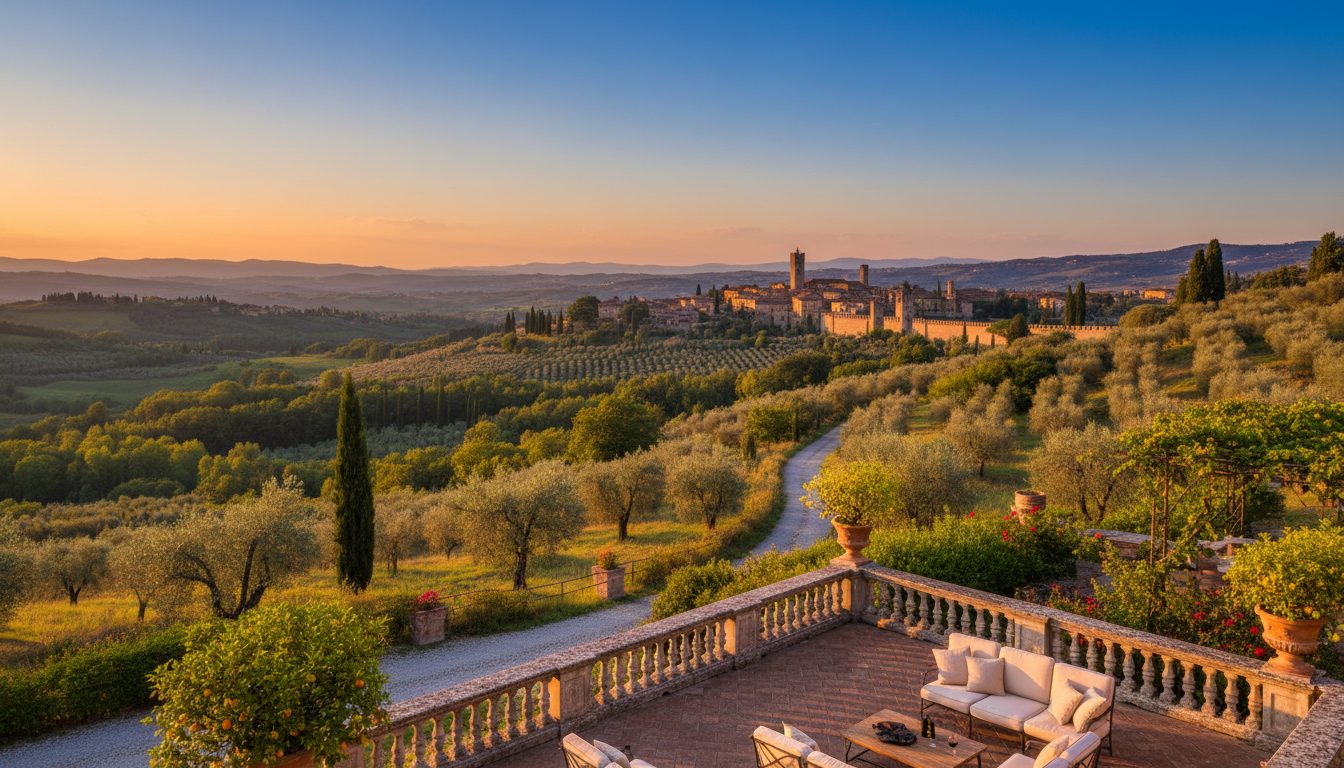
These months also happen to flatter the Tuscan countryside beyond the walls – spring’s new growth and autumn’s harvest colours both outdo summer’s flattened, sun-bleached palette. For most travellers planning one trip to Lucca, this is where to put it.
Off-Season Lucca: The Case for Winter
Winter will never be the popular answer, which is rather the point. Prices drop across the board, the walls return to locals and early risers, and the city’s genuine daily rhythm – market stalls, school runs, old men arguing amiably outside bars – becomes visible again once the day-trip crowds thin out. It suits travellers who have already done the obvious Tuscan highlights, or who simply prefer a city to a postcard of one. Pack layers, book restaurants that interest you rather than assuming they’ll be open, and expect grey skies more often than not – Lucca in January rewards low expectations generously.
For travellers weighing up where to stay once they’ve settled on when to go, there are villas in Lucca worth considering.
Lucca Weather and Seasons FAQs
What is the hottest month in Lucca?
July and August are the hottest months in Lucca, with daytime highs typically reaching 29-31°C (84-88°F) and humidity that makes early afternoon sightseeing uncomfortable for most visitors.
Does it rain a lot in Lucca?
Lucca sees most of its rainfall in autumn and early winter, particularly October to December, while July and August are reliably dry. Spring showers are common but usually brief.
Is Lucca worth visiting in winter?
Yes, for travellers who value low prices and thin crowds over warm weather. The historic centre stays fully open year-round, though some rural attractions and smaller businesses reduce hours in January.


