
Best Time to Visit Granada: Alhambra Light, Snow & Free Tapas
The best time to visit Granada is spring (April to June) or autumn (September to October), when daytime temperatures sit comfortably between 18-26°C (64-79°F) and the Alhambra is bearable without an industrial supply of sunscreen. Summer brings dry heat that regularly tops 35°C (95°F), while winter is cold but mild by European standards and includes skiing in the Sierra Nevada, just 45 minutes from the city centre. Each season suits a different traveller – spring and autumn for sightseeing, winter for skiing and quiet streets, summer for late terraces and festival nights.
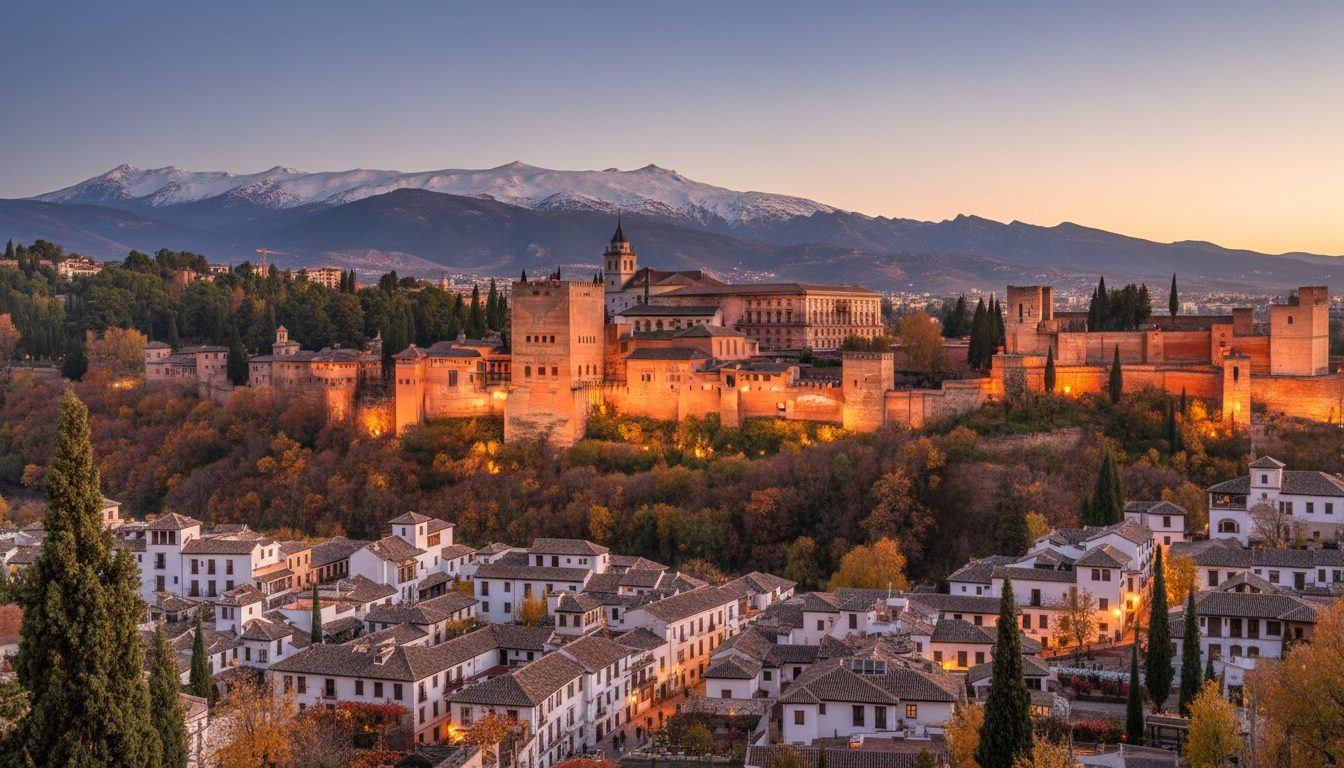
There is a particular Granada moment that tells you everything you need to know about its climate. You are standing on a terrace in the Albaicín, a small glass of cold beer sweating gently in your hand, wearing a t-shirt in what any sensible calendar would call spring. You look up, past the rooftops and the swallows, and there – improbably close, as if someone propped a postcard against the sky – sits the Sierra Nevada, still wearing its winter snow. Granada does this to you more than once. It is a city that refuses to pick a season and stick to it, which is either maddening or marvellous depending on how much you enjoy packing layers.
That contradiction – Mediterranean warmth shadowed by a snow-capped mountain range – shapes everything about when you should come. If you haven’t already, the Granada Travel Guide covers the wider picture; this one deals purely in weather, crowds and timing.
Best Time to Visit Granada at a Glance
Spring (March-May): mild, blooming, busy around Easter. Summer (June-August): hot, dry, long evenings, festival season. Autumn (September-November): warm days, cool nights, excellent light, thinning crowds. Winter (December-February): cold mornings, bright afternoons, skiing, and the Alhambra almost to yourself on a weekday.
Spring in Granada: March to May
Spring is Granada at its most flattering. March starts cool and unpredictable, hovering around 15°C (59°F), but by May the city has settled into a run of 20-26°C (68-79°F) days with blue skies and jacaranda-free streets (that’s Seville’s trick, not Granada’s – here it’s orange blossom scenting the air around the cathedral instead). Rain is possible, especially in March, so pack a light jacket you can pretend you won’t need.
This is also when Granada’s religious calendar hits full stride. Semana Santa, the week before Easter, fills the streets with silent processions, incense and crowds thick enough to require strategic positioning hours in advance. Hotel prices rise accordingly and the Alhambra’s timed-entry tickets sell out well ahead, so book early if your trip coincides. Early May brings Día de la Cruz, when neighbourhoods compete to build the most elaborate flower-covered cross – a smaller, more local affair than Semana Santa, and arguably more fun. Spring suits travellers who want good light for photographs, comfortable walking weather for the Alhambra and Albaicín’s steep lanes, and don’t mind sharing the view with everyone else who had exactly the same idea.
Summer in Granada: June to August
Summer in Granada is not subtle. July and August regularly deliver 35-40°C (95-104°F) afternoons, the kind of dry heat that makes the pavement shimmer and sensible locals disappear indoors between 2pm and 6pm. Evenings, though, are where Granada redeems itself – temperatures drop into the low twenties, terraces fill, and the city’s famous custom of a free tapa with every drink becomes a genuinely sustainable dinner strategy once the sun has gone down.
Late June brings the Granada International Festival of Music and Dance, with performances staged in the Alhambra’s palaces and gardens after dark – reason enough on its own to brave the heat. Corpus Christi, in early June, turns the city into a week-long fairground of processions, bullring events and a genuinely enormous funfair on the outskirts, and is one of the most important dates on Granada’s calendar. Expect higher prices, fuller flights, and an Alhambra that requires booking weeks ahead. Summer suits night owls, festival-goers and anyone who considers a midday siesta a civilised life skill rather than an admission of defeat.
Autumn in Granada: September to November
If Granada has a best-kept secret, it’s September and early October. The ferocious summer heat breaks into something closer to 24-28°C (75-82°F) by day, nights cool noticeably, and the crowds that clogged the Alhambra’s ticket office all summer thin out considerably. The light turns golden and low in a way that makes the Generalife gardens look faintly unreal, and locals reclaim their own city from the tourist throng with visible relief.
By November, temperatures settle around 12-18°C (54-64°F), rain becomes more frequent, and the first snow often dusts the Sierra Nevada peaks visible from the city. Few major festivals compete for attention in autumn, which is precisely the point – this is a season for wandering rather than queuing. Restaurants and tapas bars run at a normal, unharried pace, hotel rates ease back from summer peaks, and walking tours of the Albaicín no longer feel like a shuffling conga line. Autumn suits travellers who prioritise comfortable sightseeing and decent value over festival spectacle.
Winter in Granada: December to February
Winter is Granada’s most underrated season, and also its coldest – December through February average 5-14°C (41-57°F), with sharp, clear mornings that can require gloves and afternoons mild enough to sit outside in a coat. Snow rarely settles in the city itself, but the Sierra Nevada ski resort, less than an hour away, keeps its slopes open from around December to April, making Granada one of the few places in Europe where you can genuinely ski in the morning and wander a Moorish palace in the afternoon – a claim so frequently repeated by local tourist boards that it has become almost suspiciously true.
Christmas and the New Year bring a brief surge of visitors and higher prices, along with festive lights strung through the city centre. February 1st marks San Cecilio, Granada’s own patron saint’s day, celebrated with a more local, low-key fiesta that rarely troubles the average tourist’s itinerary. Outside the holiday fortnight, winter is quiet: shorter queues at the Alhambra, lower accommodation rates, and restaurants happy to seat you without a reservation. It suits skiers, budget-conscious travellers, and anyone who finds the idea of an empty Mirador de San Nicolás at sunset more appealing than a crowded one.
Granada’s Shoulder Season Advantages
April, May and October do most of the heavy lifting for travellers who want the best of Granada without its worst extremes. Temperatures are forgiving enough for hours of walking, the Alhambra’s gardens are either blooming or turning gold depending on which end of the window you land in, and prices sit noticeably below the July-August peak. These months also give you a genuine chance at spontaneity – a table at a tapas bar without a wait, a last-minute Alhambra slot, a hotel room that hasn’t tripled in price for a festival weekend. The trade-off is minor and manageable: pack layers, because mornings and evenings still carry a chill that midday sun won’t quite erase.
The Case for Off-Season Granada
There’s a strong argument for visiting Granada in the dead of winter, minus the Christmas fortnight – say, mid-January or February. Rates drop, crowds evaporate, and the city’s everyday rhythms – the bakeries, the old men arguing over dominoes, the Albaicín’s Sunday quiet – come back into focus without several thousand camera-phones competing for the same rooftop view. The Alhambra, even in the cold, remains one of the few places where off-season light does the building more favours than summer glare ever could. It won’t suit everyone – some bars shorten their hours, a handful of smaller attractions close for maintenance, and you will need a proper coat – but for travellers who’d rather have Granada to themselves than have it at its warmest, winter delivers.
Wherever your dates land, it’s worth deciding on a base early – a search for villas in Granada is a sensible place to start.
Granada Weather and Seasons FAQs
Is Granada hot or cold in general?
Granada has a continental Mediterranean climate with extremes in both directions – summers are hot and dry, often exceeding 35°C (95°F), while winters are cold enough for frost and nearby mountain snow, with daytime temperatures typically between 5-14°C (41-57°F).
How many days do you need in Granada?
Three full days is a reasonable minimum, allowing time for the Alhambra, the Albaicín and Sacromonte neighbourhoods, and at least one evening of tapas bar-hopping. Five days lets you add a day trip into the Sierra Nevada or the Alpujarras foothills without feeling rushed.
Does it snow in Granada city itself?
Snow rarely settles in the city centre, even in the coldest winter months, though it occurs most years at least briefly. The Sierra Nevada mountains visible from the city hold snow from around November to May, making the contrast between the mild city and snowy peaks one of Granada’s defining sights.


