Best Time to Visit Maldives: Monsoons, Mantas & Surf Season
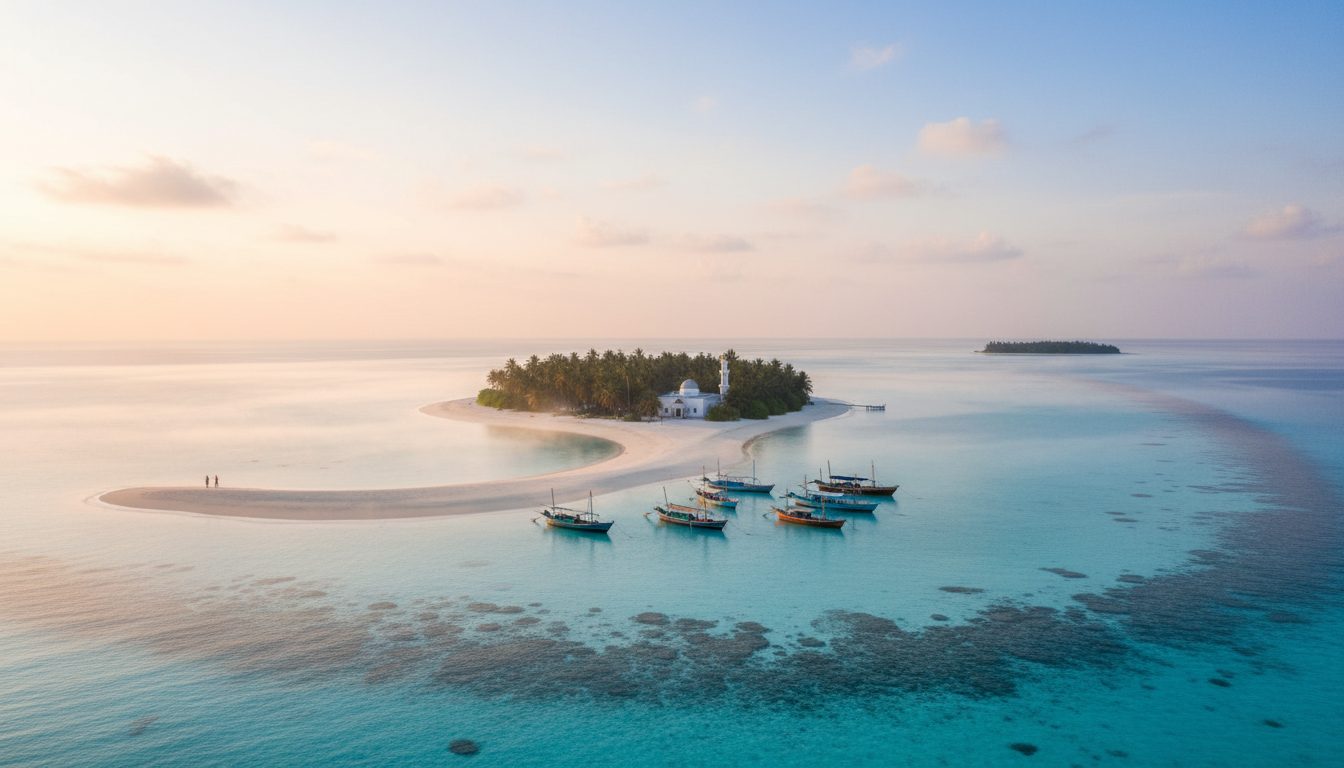
The best time to visit the Maldives is between December and April, when the dry Iruvai monsoon brings low humidity, minimal rainfall and calm seas ideal for diving and island-hopping. The wet Hulhangu monsoon runs May to November, bringing more rain and wind but also lower prices, fewer visitors, and the best chance of seeing manta rays at Hanifaru Bay. Temperatures stay a fairly constant 27-31°C (81-88°F) all year, so rainfall and wind, not heat, are what actually decide your trip.
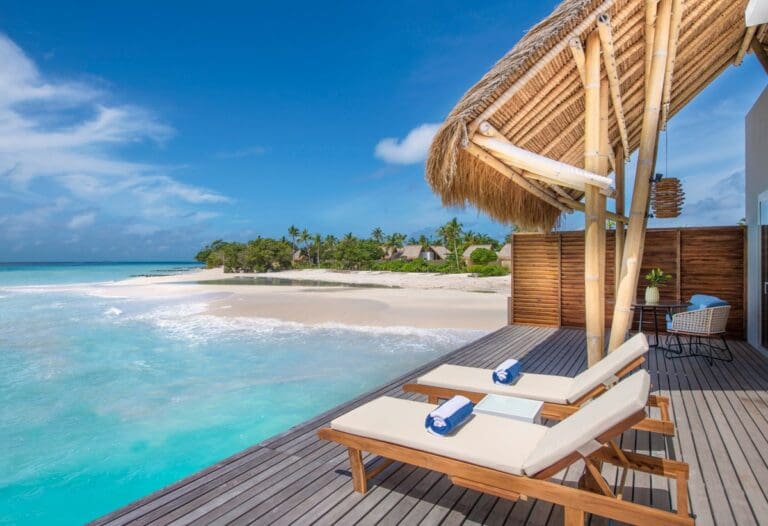
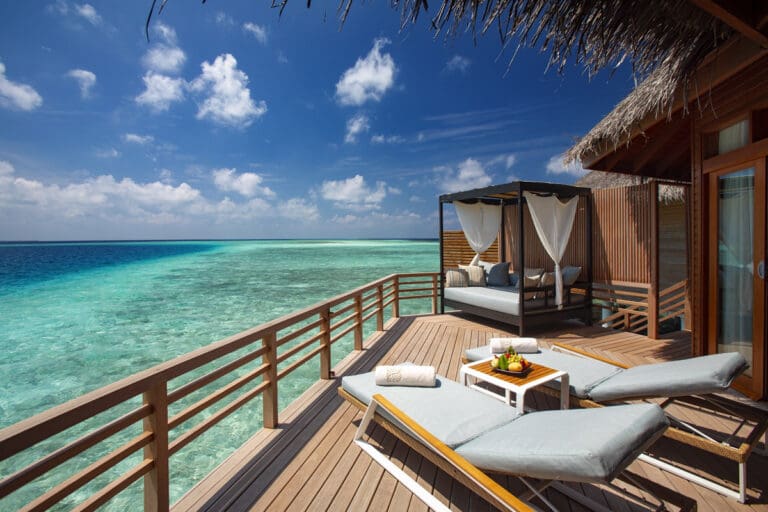
Picture it: 7am, and the sea outside is doing that thing it does here, lying so flat and so clear it looks less like water and more like someone has polished the horizon. You slide in for a swim before breakfast because the water is already 29°C and will not meaningfully change for the rest of the day. By mid-morning you are snorkelling over a reef thick with parrotfish and the odd disinterested turtle. Lunch happens somewhere shaded, with sand underfoot, because that is simply how lunch works out here. In the afternoon a dive boat takes you out to a channel where grey reef sharks cruise past with the bored confidence of regulars at a members’ club. By sunset – and Maldivian sunsets do not hold back – you are back on dry land with a drink, watching fruit bats cross a sky the colour of a ripe mango. This is, weather permitting, more or less every day in the Maldives. The trick is simply choosing a month where “weather permitting” is doing less work than usual.
Best Time to Visit Maldives: Weather at a Glance
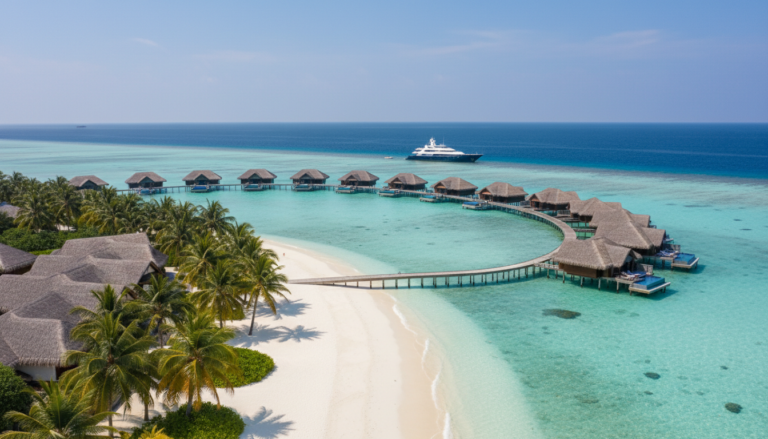
The Maldives sits near the equator, so temperature is almost a non-issue: expect 27-31°C (81-88°F) in every single month of the year, day and night, with sea temperatures hovering around 28°C. What actually changes is rainfall, wind and humidity, driven by two monsoons – the dry, cooler Iruvai (roughly December to April) and the wetter, windier Hulhangu (roughly May to November). Neither is absolute; the Maldives is a scatter of nearly 1,200 islands across multiple atolls, and weather can differ meaningfully between the north and south of the chain on any given day.
Best Time to Visit Maldives in the Dry Season (December to April)
This is peak season, and for good reason. The Iruvai monsoon brings the Maldives its most reliable run of sunshine: low humidity, minimal rainfall, light winds and seas so calm that even nervous sailors relax. Daytime temperatures sit around 30°C (86°F), with barely a degree of variation from one week to the next. It is the best time to visit the Maldives if your priorities are underwater visibility, reliable island-hopping by speedboat or seaplane, and sunbathing without a backup plan.
Naturally, everyone else has worked this out too. December through February – particularly the fortnight either side of Christmas and New Year – is the most crowded and most expensive stretch of the Maldivian calendar, with resort rates climbing accordingly and advance booking essential. Chinese New Year (which moves slightly each year) brings a second wave of demand in late January or February. March and April ease slightly on both price and crowd, while keeping almost all of the good weather, which makes them a genuinely smart compromise.
Best Time to Visit Maldives in December and January
Driest, sunniest, busiest and priciest. Visibility underwater is excellent, the seas are glassy, and resort restaurants fill up well in advance for the festive period. If you want the postcard version of the Maldives and don’t mind paying postcard-version prices, this is it.
Best Time to Visit Maldives in February and March
Still dry, still warm, marginally less frantic. This is arguably the sweet spot of the dry season – the weather hasn’t changed, but the queue for sun loungers has thinned a little.
Best Time to Visit Maldives in April
The last reliably dry month before the monsoon shift. Humidity starts to build, the occasional short shower creeps in, but conditions remain excellent for diving and the crowds have largely dispersed from the December peak.
Best Time to Visit Maldives in the Wet Season (May to November)
The Hulhangu monsoon brings the southwest winds, and with them more rain, more cloud and a noticeably higher chance of a squall blowing through for twenty minutes before the sun reasserts itself, which it generally does. This is not a washout season – it rarely rains all day – but it is a wetter, windier, greener version of the islands, with rougher seas on the western (southwest-facing) sides of atolls. Humidity climbs, and afternoon thunderstorms become a regular feature rather than a surprise.
What this season gives up in guaranteed sunshine, it gives back in value and in access: prices drop meaningfully, resorts are quieter, and – crucially for wildlife enthusiasts – this is when the Maldives’ marine life puts on its best show, which we will get to shortly. It is also, somewhat counterintuitively, the better season for surfers, since the same southwest swells that churn up the seas also produce the reef breaks the Maldives is known for among the surfing fraternity.
Best Time to Visit Maldives in May and June
The transitional months, when the dry season loosens its grip. Rain becomes more frequent but is typically brief and heavy rather than prolonged. Surf season begins in earnest, and the first manta rays start gathering in numbers in Baa Atoll.
Best Time to Visit Maldives in July and August
Peak wet season, with the highest rainfall and strongest winds of the year, plus the Maldives’ Independence Day celebrations on 26 July, marked with parades and fireworks in Malé. Not everyone’s idea of a beach holiday, but divers and surfers who don’t mind a bit of weather drama are rewarded with dramatic skies and thinner crowds.
Best Time to Visit Maldives in September and October
Still within the wet season proper, but with slightly calmer patches between storm systems. This is when manta ray aggregations in Hanifaru Bay often peak, making it an excellent, if occasionally soggy, window for marine life.
Best Time to Visit Maldives in November
The wet season’s long goodbye. Rainfall begins tapering off, seas start to settle, and by late November the shift back toward the dry Iruvai monsoon is usually underway.
Best Time to Visit Maldives for Manta Rays and Whale Sharks
If marine life is your main motivation, the calendar flips somewhat. Hanifaru Bay in Baa Atoll, a UNESCO Biosphere Reserve, is famous for its manta ray aggregations, which build through the wet season and typically peak between August and November, when plankton-rich currents draw in large numbers to feed – sometimes in groups numerous enough to make the water genuinely churn. Whale sharks, meanwhile, are present in Maldivian waters such as South Ari Atoll throughout the year, with sightings slightly more frequent during the latter half, making the supposedly “worse” weather months the better ones for underwater wildlife encounters. It is worth remembering that nature does not consult tide tables or travel guides, and sightings are never guaranteed in either season – only more or less likely.
Best Time to Visit Maldives: Shoulder Season Advantages
April and November – the hinge points between the two monsoons – are the Maldives’ best-kept secret, insofar as an island chain this photographed can keep any secrets at all. Weather is transitional but rarely severe, crowds have thinned from their seasonal peaks, and prices sit meaningfully below the December-February highs. April still carries much of the dry season’s good behaviour; November starts shedding the wet season’s worst moods. Both months suit travellers who want reliable conditions without competing for a sun lounger or paying the premium that comes with school holidays and festive dates.
Best Time to Visit Maldives in the Off-Season: The Case for Going Anyway
Travelling in the heart of the wet season – say, July or August – is not a compromise so much as a different holiday. Rain arrives in short, dramatic bursts rather than settling in for the day, and the afternoon storm that sends everyone running for cover usually clears within the hour, leaving the light looking rinsed and improbably clean. Resorts are quieter, rates are at their lowest, and dive sites see fewer bubbles from fewer boats. For a certain kind of traveller – one who doesn’t mind packing a light rain jacket alongside the sunscreen – this is genuinely one of the better-value windows to experience the Maldives.
For more on getting there, island-hopping and planning the wider trip, see the full Maldives Travel Guide.
Whichever month you choose, it’s worth deciding on timing before browsing villas in Maldives.
Maldives Weather and Seasons FAQs
Is there a hurricane or cyclone season in the Maldives?
No. The Maldives sits close enough to the equator that it falls outside the main tropical cyclone belt, so organised storms of that scale are extremely rare. The main weather risk is the seasonal monsoon rain and wind rather than cyclones.
Does Ramadan affect a Maldives holiday?
Ramadan dates shift each year according to the lunar calendar. On resort islands, daily life, dining and drinking generally continue as normal for guests, but visitors heading to local islands or Malé may notice reduced daytime opening hours for cafes and shops.
Which part of the Maldives has the best weather?
Weather patterns are broadly similar across the atoll chain, but the northern and southern extremes can experience slightly different rainfall timing to the central atolls around Malé, since the monsoon systems move through the country rather than affecting it uniformly on any given day.
Keep reading
More on Maldives
- Travel guideMaldives Travel Guide
- RestaurantsBest Restaurants in Maldives
- BeachesBest Beaches in Maldives
- FamiliesMaldives with Kids
Guides to places in Maldives
Where to stay
Villas in Maldives
A selection from our 81 luxury villas in Maldives.