Best Time to Visit Baja California Sur: Whales, Marlin, Chubascos
The best time to visit Baja California Sur is between December and April, when gray whales arrive in Pacific lagoons, daytime temperatures sit in the mid-20s°C (mid-70s°F), and humidity stays low. This is also the busiest and most expensive period, particularly around Christmas, New Year and Semana Santa. Travellers who prefer lower prices and quieter beaches should aim for May or November instead, Baja’s two genuine shoulder months.
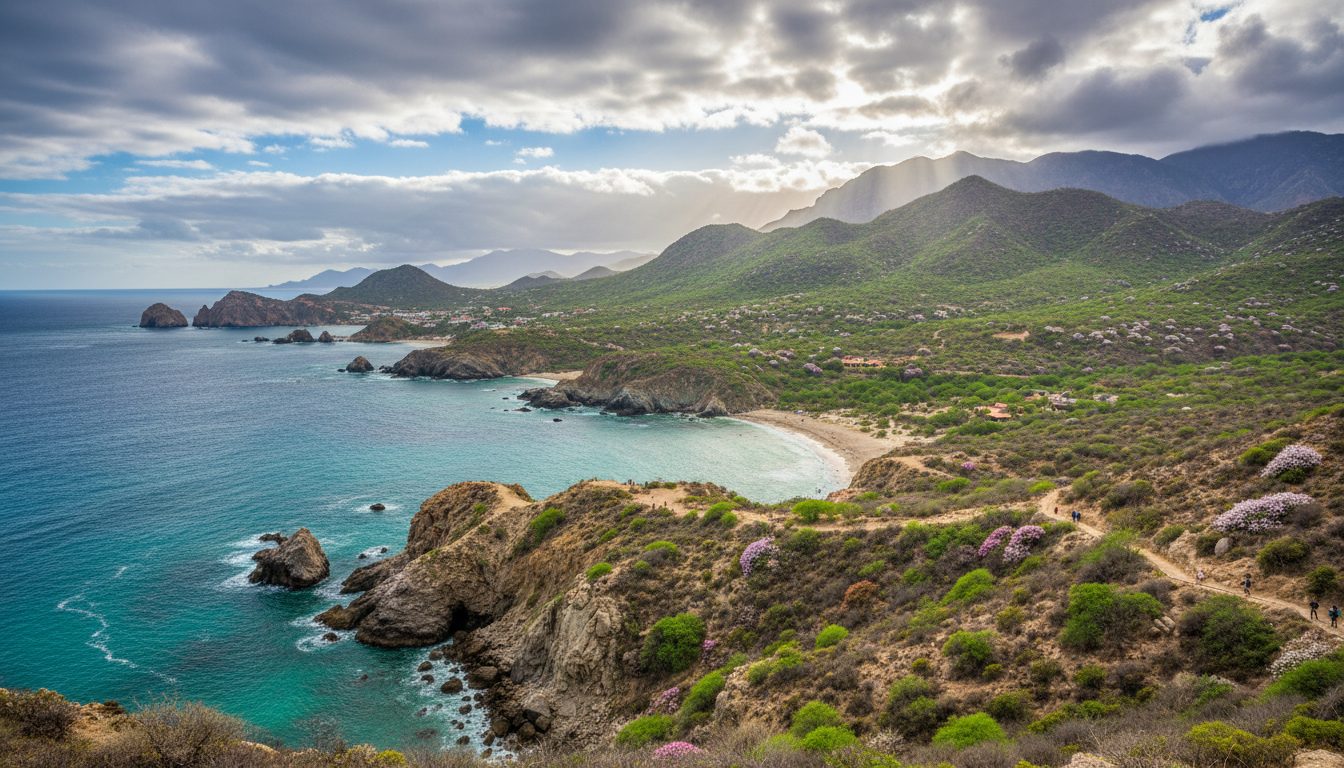
Most peninsulas have one coastline. Baja California Sur, in its unhurried way, has two – the Pacific pounding away on one side, the Sea of Cortez lying flat and jade-coloured on the other – and you can drive between them in under an hour and genuinely feel you’ve changed countries. This geographic split-personality is the key to understanding its weather, because “Baja weather” is really two separate conversations happening at once, and the time of year that suits a Pacific surfer is not necessarily the time of year that suits someone hoping to float, motionless, in bathwater-warm Sea of Cortez shallows. Choosing when to go here means choosing which Baja you actually want.
Best Time to Visit Baja California Sur: At a Glance
Winter (December to February) brings whales, cool evenings and the highest prices of the year. Spring (March to May) is the shoulder season locals quietly prefer, with reliable sun and thinning crowds. Summer (June to August) is hot, increasingly humid near the Sea of Cortez, and best suited to anglers chasing marlin. Fall (September to November) carries hurricane risk early on but rewards patient travellers with bargain rates and golden light by late October. For general planning, the Baja California Sur Travel Guide covers the regions this seasonal breakdown refers to.
Winter in Baja California Sur (December to February): Whale Season and Peak Prices
This is Baja at its most civilised – clear skies, daytime highs of 22-26°C (72-79°F), and nights cool enough that you’ll want a sweater after dinner, which for a desert peninsula counts as a minor miracle. It’s also whale season. Gray whales migrate down from the Bering Sea to calve in Pacific lagoons near Guerrero Negro and Magdalena Bay, arriving from roughly January and sticking around into March, close enough to shore that whale-watching here involves considerably less squinting than it does elsewhere.
Unsurprisingly, everyone knows this. Christmas through New Year and the weeks around Semana Santa (the week before Easter) see the highest prices and fullest hotels of the entire year, with Los Cabos in particular drawing a steady flow of visitors escaping colder climates further north. Restaurants, charter boats and rental cars should be booked well ahead. Everything is open, everything is busy, and everyone seems determined to have a wonderful time regardless of cost – which, to be fair, they generally do.
Spring in Baja California Sur (March to May): The Shoulder Season Sweet Spot
If pressed to name the single best stretch of weather in Baja California Sur, most people who actually live there will say spring, and they have a point. Temperatures climb gently from the mid-20s°C into the high 20s°C (upper 70s to mid-80s°F), humidity stays low, and the hurricane season that governs the back half of the year is still a distant, theoretical concern. Whale season winds down through March, meaning you can often catch the tail end of the migration while crowds are already easing – a neat overlap that frequent visitors treat like insider knowledge, though it’s really just arithmetic.
La Paz hosts its Carnival in February or March depending on the lunar calendar, one of the larger and livelier celebrations in Mexico, with parades and music along the waterfront malecón. By May, things quieten further, prices soften, and the Sea of Cortez begins warming toward the glassy, swimmable condition it holds through summer. This is the season that suits divers, families avoiding both peak crowds and peak heat, and anyone who dislikes queuing for a sunset table.
Summer in Baja California Sur (June to August): Heat, Marlin and Empty Beaches
Summer arrives without much subtlety. Temperatures regularly hit 32-38°C (90-100°F), and along the Sea of Cortez the humidity rises in step, making the air feel thicker than the thermometer alone suggests. The Pacific side, cooled slightly by ocean currents, stays marginally more bearable. Beaches empty out, hotel rates drop, and the pace of everything – service, traffic, conversation – slows to match the heat.
What summer does offer, and offer well, is fishing. Marlin and dorado runs peak through these months, and Cabo San Lucas earns its long-standing reputation as a serious sport-fishing destination during exactly this window, with the Bisbee’s Black and Blue Marlin Tournament held each October marking the unofficial end of the season’s biggest catches. Anyone sensitive to heat should treat summer as a trade-off: fewer people, lower prices, better fishing, and afternoons spent indoors more often than planned.
Fall in Baja California Sur (September to November): Hurricane Watch and Bargain Season
September and October are the peninsula’s acknowledged risk months. Chubascos – sudden, short-lived tropical storms – and occasional hurricanes can sweep up from the Pacific, bringing heavy rain and, on rarer occasions, real disruption to flights and coastal roads. This is reflected honestly in the prices: September is typically the cheapest month of the year to visit Baja California Sur, assuming you don’t mind checking a weather app more often than a cocktail menu.
By late October the risk fades considerably, temperatures ease toward 28-30°C (82-86°F), and the light turns genuinely flattering. Día de los Muertos, celebrated on 1-2 November with altars, marigolds and processions across towns including La Paz and San José del Cabo, marks a clear turning point into the more settled winter season. Whale sharks also begin gathering in the Bay of La Paz from around October, a separate and gentler spectacle from the gray whale migration further north. Fall rewards travellers who can be flexible with dates and philosophical about the odd cancelled boat trip.
For anyone narrowing down exact dates, it’s worth matching the season above to the right base – the coast and style of stay matter as much as the month. A good starting point is browsing villas in Baja California Sur.
Baja California Sur Weather and Seasons FAQs
What is the rainiest time of year in Baja California Sur?
September and October see the most rainfall, driven by the chubasco storms and occasional hurricane activity that move up from the Pacific during this window. Outside these months, rain is rare across most of the peninsula, which is, after all, a desert.
When can you see whales in Baja California Sur?
Gray whales are most reliably seen in Pacific lagoons such as Magdalena Bay between January and March. Whale sharks, a separate species, gather in the Bay of La Paz from around October through April.
Is Baja California Sur hot year-round?
No. Winter and spring bring comfortable daytime temperatures in the low-to-mid 20s°C (70s°F), while summer regularly pushes past 32°C (90°F) with noticeably higher humidity near the Sea of Cortez than on the Pacific coast.
Keep reading
More on Baja California Sur
- Travel guideBaja California Sur Travel Guide
- RestaurantsBest Restaurants in Baja California Sur
- Food & wineBaja California Sur Food & Wine
- FamiliesBaja California Sur with Kids
Guides to places in Baja California Sur
Where to stay
Villas in Baja California Sur
A selection from our 48 luxury villas in Baja California Sur.
 Casa Leonetti Mexico
 Casa Allegria Mexico
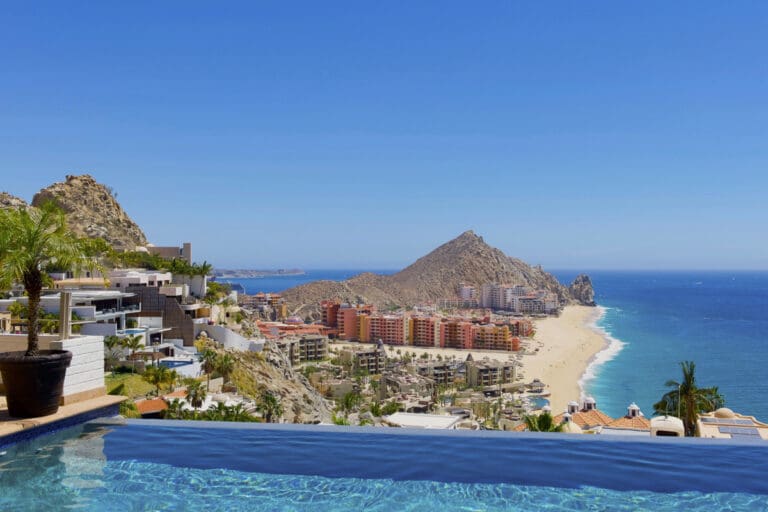 Villa Jada Mexico
 Casa Blue Sea Mexico
 Villa Cortes Mexico
 Villa Toria Mexico
See all 48 villas in Baja California SurVillas across Mexico