Pembrokeshire Food & Wine Guide: Local Cuisine, Markets & Wine Estates
Pembrokeshire’s food culture is built on seafood landed within sight of where it’s served, Welsh lamb raised on salt-sprayed hillsides, and the Pembrokeshire Early, a new potato with its own protected geographical status. Farmers’ markets in towns such as Narberth, Haverfordwest and Tenby sell much of this produce directly, while a small number of vineyards, cider makers and distilleries have started producing Welsh wine, perry and spirits. The overall style is coastal and unfussy rather than elaborate – the cooking here trusts the ingredient more than the technique.
Most coastal regions insist their seafood is the finest in the country. Pembrokeshire has the slightly unfair advantage of being able to prove it, given that its waters hold some of the cleanest coastal status in the UK and its potatoes earned European-level protected status before plenty of more famous regional products managed it. This is not a place that goes in for towers of foam or edible soil. It is a place where the crab was swimming that morning and the lamb was on the hill that overlooks the beach where you’re eating it, and where nobody feels the need to make more of a fuss about either than that.
Pembrokeshire Food and Wine: An Overview
- Signature ingredients: Pembrokeshire Early potatoes, Welsh lamb, crab, lobster, sewin (sea trout), laverbread
- Best markets: Narberth, Haverfordwest, Tenby, Fishguard
- Drink to try: Welsh gin, local cider, small-batch cheese from the Preseli area
- Best season for seafood: late spring through autumn, when crab and lobster are most plentiful
- Style of cooking: coastal, seasonal, ingredient-led rather than ornate
Pembrokeshire Cuisine: Signature Dishes and Regional Flavours
The Pembrokeshire Early potato is the county’s quiet point of pride – a new potato grown in the mild, salt-tempered soil of the southern coast and harvested earlier than almost anywhere else in Britain, which is precisely why it carries protected status. Locals treat the arrival of the first crop each year with something close to ceremony, though they’d deny it if you asked them directly.
Welsh lamb from the Preseli hills is the other backbone of the region’s cooking, grazed on hill pasture and salt marsh that gives the meat a particular depth. Laverbread – seaweed, cooked slowly until it resembles a dark, mineral-rich paste – turns up at breakfast tables fried with bacon and cockles, a combination that sounds improbable until you’ve tried it, at which point it becomes merely surprising. Welsh cakes and bara brith, a dense spiced fruit loaf, round out the tea-time end of things, and neither should be judged on looks. Honey, local cheeses and small-batch preserves fill out farm shop shelves across the county, usually made within a few miles of where they’re sold.
Pembrokeshire Seafood: Crab, Lobster and the Catch of the Day
Seafood is where Pembrokeshire stops being modest. Crab and lobster come in daily from day boats working the coast around St Davids and the Pembrokeshire Coast National Park, often sold within hours of landing from quayside stalls and harbourside cafes. Sewin – sea trout that runs up the county’s rivers in summer – has a devoted following among locals who treat the exact timing of the run as something between a secret and a sport.
Mussels, oysters and scallops also feature heavily on menus along the coast, generally served simply – steamed, grilled, or in a chowder that needs nothing more than good bread alongside it. The county’s cooler northern coast and sheltered southern bays each produce slightly different character in their shellfish, which serious eaters will debate at length over a pint, usually without reaching any firm conclusion. What’s consistent is the freshness: this is a place where “catch of the day” is a statement of fact rather than a marketing phrase.
Pembrokeshire Markets: Where to Find Local Produce
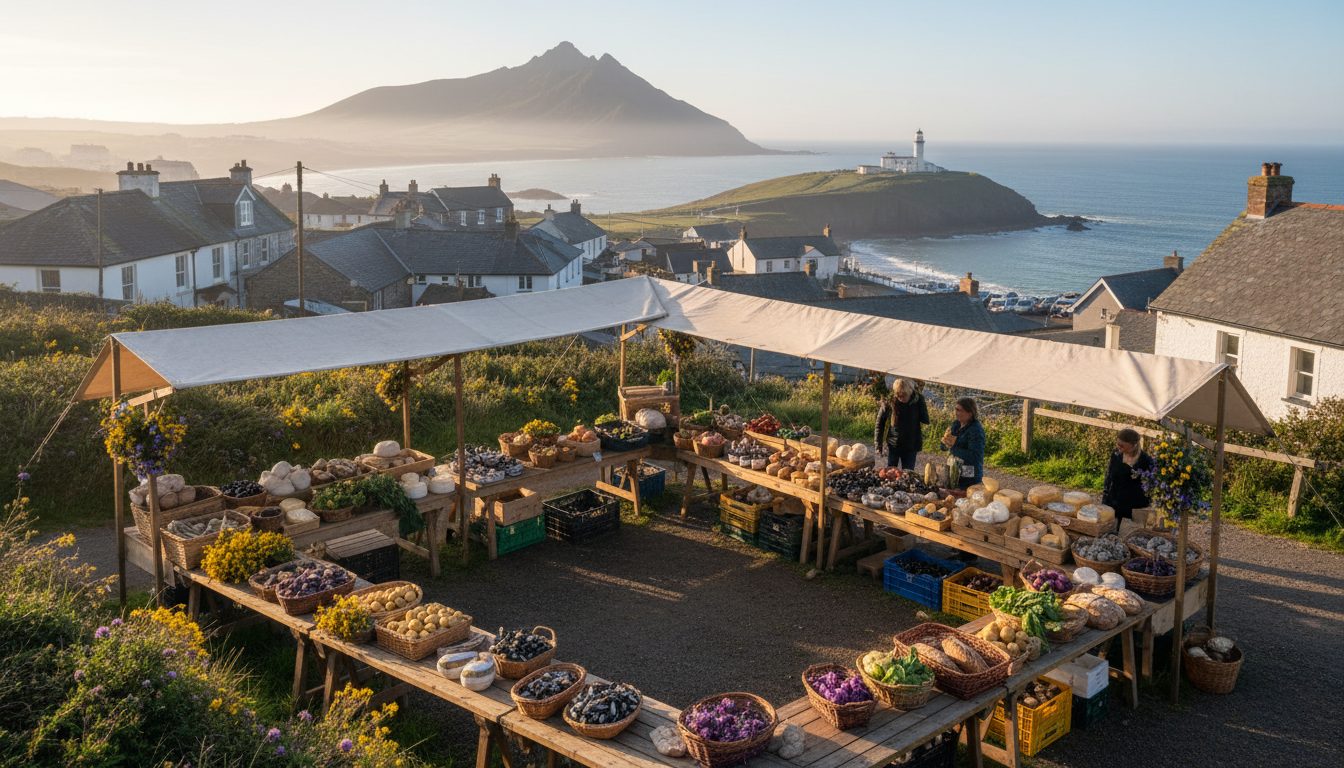
Farmers’ markets remain the easiest way to taste the county properly. Narberth holds a regular market that draws producers from across the surrounding farmland, with stalls selling everything from fresh crab to local cheese and seasonal vegetables. Haverfordwest and Tenby run their own versions, smaller in scale but no less earnest, while Fishguard’s market reflects its position on the quieter northern coast.
Farm shops supplement the markets well, many attached to working farms and selling meat, dairy and vegetables that travelled no further than the lane outside. Buying this way is less about convenience and more about conversation – most stallholders are happy to talk at length about how something was grown or caught, and a surprising number will tell you exactly which field or boat it came from. It is, in its way, the most honest food labelling you’ll find anywhere.
Pembrokeshire Wine and Drink: Vineyards, Distilleries and Breweries
Wales was never destined to rival Bordeaux, and nobody in Pembrokeshire is pretending otherwise. What the county does have is a small handful of vineyards experimenting with cool-climate grape varieties suited to a damp, maritime climate, producing whites and sparkling wines in modest quantities – a curiosity worth trying rather than a reason to book the trip on its own.
Cider and perry made from local orchards are a more natural fit for the climate, and several producers across the county turn out traditional, unfiltered versions worth seeking out at markets and farm shops. Craft distilleries have also taken root here, making Welsh gin flavoured with coastal botanicals – gorse, samphire, seaweed – that taste distinctly of the landscape they’re made in. A few small breweries round out the picture, producing ales designed to be drunk after a long coastal walk rather than analysed too closely.
Pembrokeshire Cooking Classes and Food Experiences
Hands-on food experiences in Pembrokeshire tend toward the practical rather than the theatrical. Coastal foraging walks teach visitors to identify edible seaweed, samphire and shoreline plants, usually finishing with a lesson in how to cook what’s been gathered. Seafood-focused cookery sessions, often run from working harbours, cover crab and lobster preparation from boat to plate, while some farms offer classes built around seasonal produce straight from their own fields.
These experiences work well precisely because the ingredients haven’t travelled – there’s no need to explain provenance when the instructor can point out of the window at it. For anyone planning a longer stay, as outlined in the full Pembrokeshire Travel Guide, a cooking class or foraging walk makes a genuinely useful addition to a week otherwise spent on beaches and coastal paths.
Best Time to Visit Pembrokeshire for Food and Wine
Early summer brings the Pembrokeshire Early potato harvest and the start of the crab and lobster season, making May through July a strong window for seafood lovers. Late summer into autumn sees sewin runs in the rivers and the first of the season’s apples heading toward the county’s cider presses. Farmers’ markets run year-round but are busiest and best stocked between April and October, when both produce and visitors are at their peak.
Winter has its own quieter appeal – fewer crowds, heartier menus built around lamb and root vegetables, and a decent excuse to sit somewhere warm with a bowl of laverbread and a pint of local cider while the weather does its worst outside. Pembrokeshire in January is not for everyone. It is, however, honest about what it is, which is more than can be said for a lot of places that try harder.
For travellers planning where to base themselves for all this eating and drinking, see the current villas in Pembrokeshire.
Pembrokeshire Food and Wine FAQs
What is Pembrokeshire’s signature dish?
There isn’t a single definitive dish, but laverbread with cockles and bacon, served at breakfast, is one of the most distinctive local specialities, alongside fresh crab and the county’s protected Pembrokeshire Early potatoes.
Are there wine estates to visit in Pembrokeshire?
A small number of vineyards operate in the county, producing cool-climate white and sparkling wines in limited quantities. They’re a niche interest rather than the region’s main draw, with cider, perry and craft spirits generally considered more representative of local drinks culture.
When is the best time for fresh seafood in Pembrokeshire?
Crab and lobster are most abundant from late spring through autumn, roughly May to October, while sewin (sea trout) runs in local rivers during the summer months. Shellfish such as mussels and oysters are generally available throughout the year.
Keep reading
More on Pembrokeshire
- Travel guidePembrokeshire Travel Guide
- RestaurantsBest Restaurants in Pembrokeshire
- FamiliesPembrokeshire with Kids
Guides to places in Pembrokeshire
Where to stay
Villas in Pembrokeshire
A selection from our 42 luxury villas in Pembrokeshire.