7th arrondissement with Kids: Eiffel Tower & Champ de Mars
The 7th arrondissement is one of the most family-friendly parts of central Paris, combining the Eiffel Tower, the wide lawns of the Champ de Mars and the Esplanade des Invalides with quiet residential streets and genuine market shopping. It suits families well because it is flat, walkable, low on nightlife and high on open green space. Most sights of interest to children are within a twenty-minute walk of each other.
No other Paris arrondissement gives a tired seven-year-old quite so much room to run directly beneath quite so famous a landmark. The Champ de Mars is essentially a very large municipal lawn with the Eiffel Tower standing at one end of it like a slightly over-engineered garden ornament, and on any given afternoon it is covered in children doing cartwheels, chasing footballs and negotiating turns on the small carousel near the tower’s base. Parents, meanwhile, get to sit with a coffee and pretend they are not thinking about dinner. It is, in its own grand and faintly absurd way, one of the best playgrounds in Europe.
Is the 7th arrondissement Good for Families?
Yes, and more reliably than almost anywhere else in central Paris. The 7th is home to government ministries, embassies and some of the city’s most dignified apartment buildings, which means it is quiet at night, well policed and largely free of the stag-do energy that colours parts of the Marais or Pigalle. Pavements are wide, traffic is manageable, and the whole district is flat enough that a buggy or a scooter never has to contend with a hill. There is no beach and no theme park, so it will not entertain itself. What it offers instead is space, calm and a concentration of genuinely significant sights within pram-pushing distance of each other – the Eiffel Tower, Les Invalides, the Musée Rodin and the river are all walkable from most addresses in the arrondissement. Families who want a base that functions as well for a toddler’s nap schedule as for a teenager’s museum fatigue tend to do well here. For context on the wider area, the 7th arrondissement Travel Guide covers the district in full.
Things to Do in the 7th arrondissement with Kids
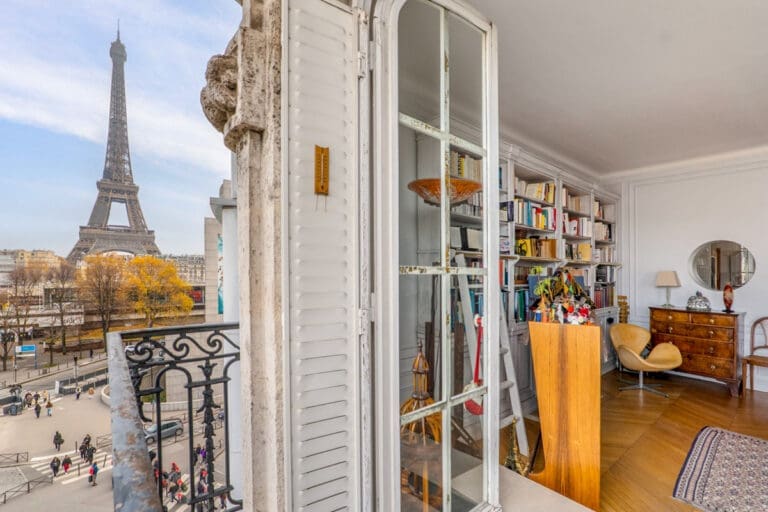
The Eiffel Tower is, obviously, the main event, and it earns its reputation even on a second or third visit – children are generally more interested in the lifts, the glass floor on the first level and the sheer vertical drama of the thing than in any historical context you try to provide. Book tickets in advance; queuing in July with a overheated eight-year-old is character-building in ways nobody actually wants.
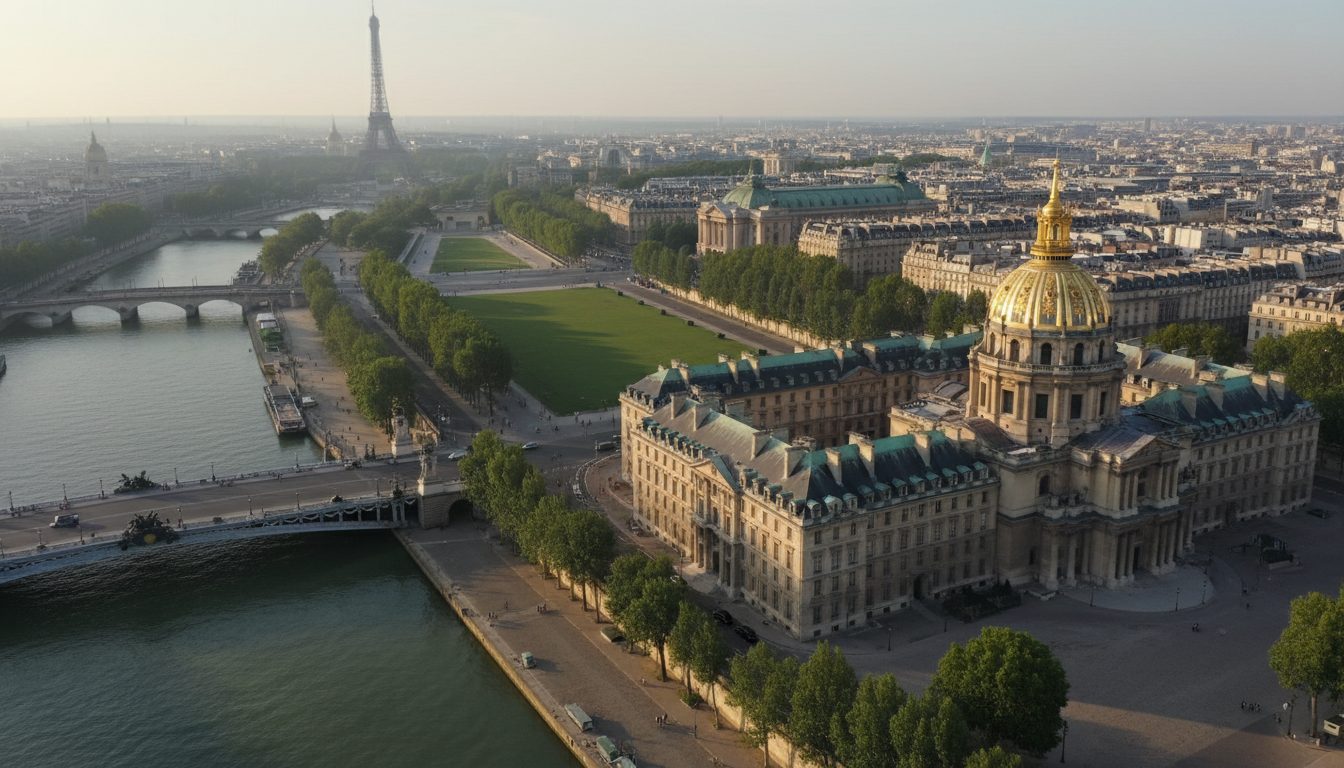
Beyond the tower, Les Invalides has a vast esplanade in front of it that is ideal for scooters, bikes and kite-flying, with the gilded dome itself a useful landmark for “meet back here in twenty minutes” arrangements. The Musée Rodin’s garden, dotted with sculpture among the trees, is calmer and better suited to younger children who need to let off energy without full-on football. Along the Seine, the riverside paths near the Pont de l’Alma give older children somewhere to walk, cycle or simply watch the boats – a low-effort, high-reward activity that costs nothing and buys parents twenty minutes of peace.
Best Parks and Outdoor Activities for Families in the 7th arrondissement
The Champ de Mars remains the arrondissement’s great outdoor asset – roughly a kilometre of lawn running from the Eiffel Tower to the Ecole Militaire, with a playground, a small carousel and enough open grass for a proper picnic rather than the knee-to-knee variety found in smaller Parisian squares. On warm weekends it fills with local families as much as visitors, which is reassuring; nobody holds a picnic spread on a lawn they consider purely touristic.
The Esplanade des Invalides offers a second, slightly more formal green space, better suited to scooting and ball games than lounging, given its gravel paths and more manicured planting. Both spaces are free, shaded in parts, and close enough to cafés and bakeries that nobody has to plan ahead with a cool bag. For families without a car, this matters more than it sounds – carrying supplies for a full day out with small children is nobody’s idea of a holiday.
Where to Eat with Kids in the 7th arrondissement
The 7th is not a district of flashy family restaurants, and that is largely to its credit. Instead there is Rue Cler, a pedestrianised market street lined with bakeries, cheesemongers, fruit stalls and small cafés, where the business of assembling a picnic becomes an activity in itself. Children tend to enjoy choosing their own pastry more than being presented with a children’s menu, and a warm baguette eaten on a park bench beats most formal dining experiences for the under-tens anyway.
Crêperies are common throughout the arrondissement and remain the safest bet for fussy eaters – a plain crêpe with sugar or chocolate rarely meets resistance. For a treat, the area’s grand department store food hall is worth a visit on a quieter morning; it is more spectacle than supermarket, and children generally find the sheer scale of the place more entertaining than the food itself. Reservations are rarely needed outside peak dinner hours, and most cafés are perfectly relaxed about a stroller parked by the door.
Rainy Day Activities in the 7th arrondissement with Kids
Paris in the rain is still Paris, and the 7th has enough indoor options to absorb a wet afternoon without anyone’s mood collapsing entirely. The Musée Rodin’s indoor galleries are manageable in scale – small enough that a determined four-year-old won’t mutiny halfway round – and the sculptures themselves tend to intrigue rather than bore. Les Invalides houses a large military museum with suits of armour, cannons and genuinely dramatic displays that go down well with children who like things that look like they could hurt someone, which is most children.
The Musée du Quai Branly, on the arrondissement’s western edge, specialises in art and artefacts from Africa, Asia, Oceania and the Americas, and its darker, more atmospheric galleries hold younger attention better than a conventional white-walled museum might. On truly miserable days, the grand department store mentioned above offers warmth, lifts to ride, and a food hall that functions as an impromptu lunch stop – a reasonable consolation prize when the Eiffel Tower is lost in cloud.
Getting Around the 7th arrondissement with Children
Walking is the obvious choice and, given the flat terrain and wide pavements, usually the easiest. Cobblestones do appear in places, which buggies tolerate better than they used to but still occasionally complain about. Metro lines 8 and 13 and the RER C all serve the arrondissement, though not every station has a lift, so check routes in advance if you are travelling with a pram rather than a carrier.
Buses tend to be a gentler option than the metro for families, with more room for buggies and a better view of the streets you are passing through – something small children generally appreciate more than adults give them credit for. Taxis are easy to find along the main boulevards, and given the arrondissement’s compact size, most families find they need transport only for longer trips across the city rather than for getting around the neighbourhood itself.
7th arrondissement with Kids by Age: Toddlers, Juniors and Teens
Toddlers
Toddlers do well here largely because there is so much flat, open space to toddle about in without immediate danger. The Champ de Mars playground and the Musée Rodin’s garden are both manageable in scale, with enough shade and benches to make a slow pace genuinely enjoyable rather than an exercise in crowd control. Café culture throughout the arrondissement is relaxed about prams parked at the table, and nap times fit naturally around a stroll along the Seine or a quiet hour in the Rodin garden.
Juniors
Primary-school-age children are, frankly, catered for better here than almost anywhere else in Paris. The Eiffel Tower’s lifts and glass floor hold real appeal, the Invalides military museum delivers on armour and cannons, and the open lawns give them somewhere to actually run rather than simply look at things. A Seine riverside walk with bikes or scooters tends to be the highlight of the day rather than an afterthought between museums.
Teens
Teenagers, who have generally exhausted their patience for being told to look at things, tend to respond better to the Eiffel Tower’s summit views and the sheer scale of Les Invalides than to smaller museums. The department store and surrounding streets offer enough shopping to buy an hour or two of independence, and the riverside paths are pleasant enough for an evening walk without parental commentary. The 7th’s calm, low-key streets also mean teenagers can be given a little more freedom to explore alone than in busier districts.
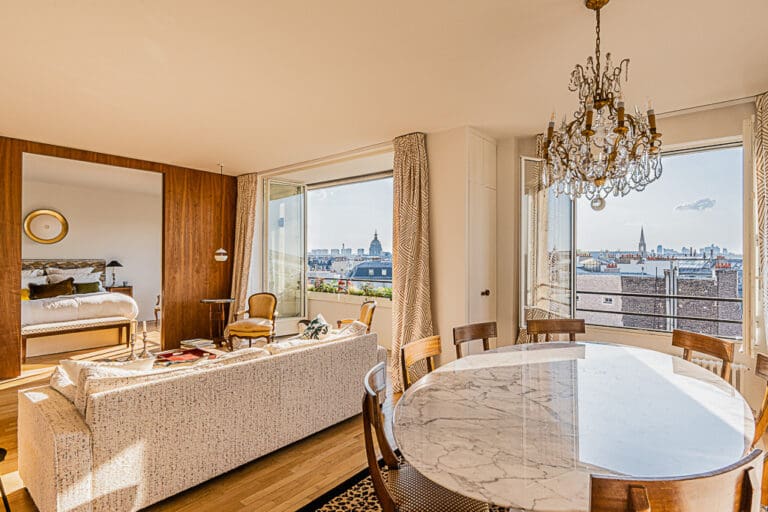
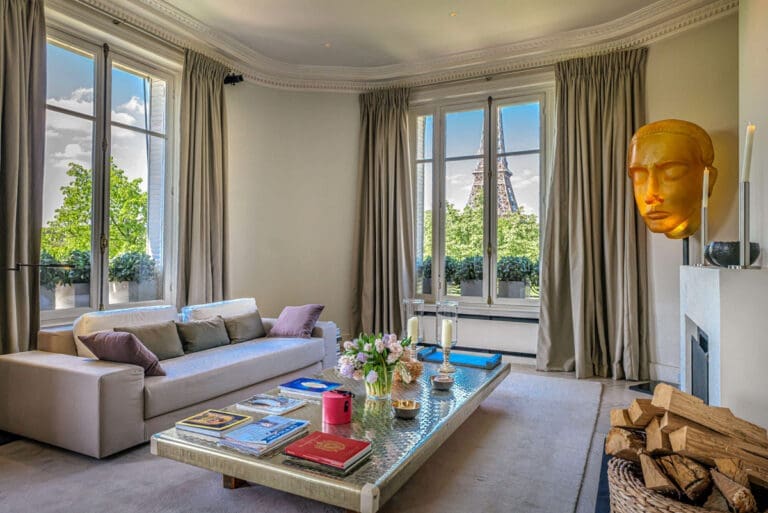
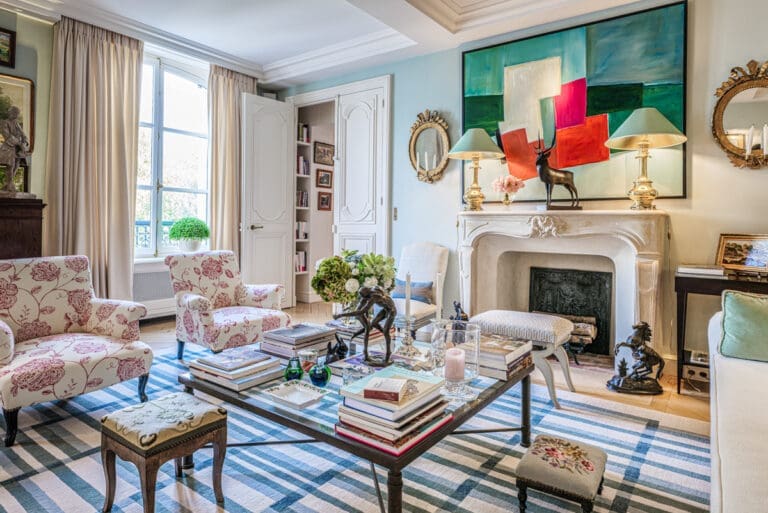
If you are weighing up where to base a family stay, here is a starting point: villas in 7th arrondissement.
7th arrondissement Family Holiday FAQs
Is the 7th arrondissement safe for families at night?
Yes, it is one of the quieter and more residential parts of central Paris, with government buildings and embassies rather than nightlife, making evening walks with children generally relaxed.
How much time should we allow for the Eiffel Tower with kids?
Allow at least half a day once queuing, security checks and lift waits are factored in, and book tickets online in advance to avoid long outdoor waits with young children.
Are there baby-changing facilities and prams spaces in the 7th arrondissement’s museums?
Major sites including the Eiffel Tower, Les Invalides and the Musée Rodin all provide baby-changing facilities and accommodate prams, though it is worth checking lift access in advance for older metro stations nearby.
Keep reading
More on 7th arrondissement
- Travel guide7th arrondissement Travel Guide
- RestaurantsBest Restaurants in 7th arrondissement
- Food & wine7th arrondissement Food & Wine
Guides nearby in Ile-de-France
Where to stay
Villas in 7th arrondissement
A selection from our 4 luxury villas in 7th arrondissement.