Porto Cervo Food & Wine: Vermentino, Bottarga & Seafood
Porto Cervo’s food and wine centres on Gallura’s Vermentino white wine, fresh Mediterranean seafood, and Sardinian staples like bottarga, culurgiones and seadas. The harbour town itself is short on markets but close to vineyards, hill-town trattorias and olive groves that supply its kitchens. Autumn brings truffles from inland Sardinia, while summer favours raw fish, bottarga and chilled Vermentino on terraces above the marina.
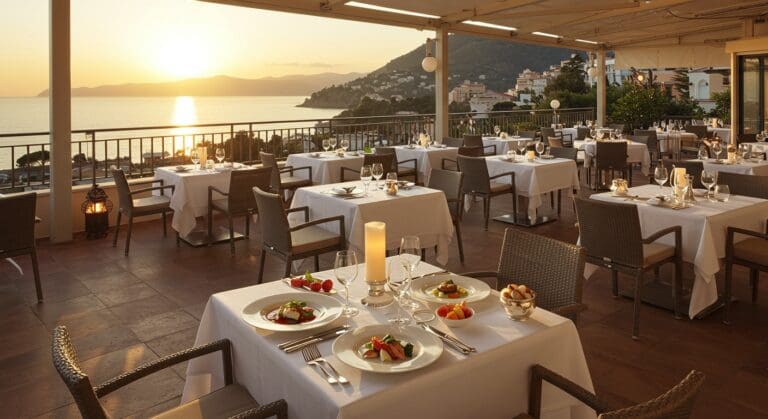
Picture this: you’ve had a late breakfast of good coffee and a cornetto that nobody will admit to buying twice, and by eleven you’re already arguing pleasantly with yourself about where to have lunch. By one, you’re at a table close enough to the water to hear the halyards clinking against the masts, working through a plate of raw red prawns and a glass of something cold, pale and faintly saline. The afternoon dissolves – as afternoons here tend to – into a second glass, a lazy wander past the yachts, and a decision, made far too early, about dinner. This is Porto Cervo doing what it does best: not showing off, particularly, just quietly serving very good food to people who are in no hurry to leave the table.
For the wider context of getting here, when to visit and where the rest of the Costa Smeralda fits in, the Porto Cervo Travel Guide covers the practicalities. This one stays firmly at the table.
Porto Cervo Food and Wine at a Glance
- Regional cuisine: Gallura and northern Sardinian, built on seafood, pecorino, pane carasau and Vermentino wine
- Signature wine: Vermentino di Gallura DOCG, Sardinia’s only DOCG wine
- Signature dishes: bottarga, culurgiones, seadas, fregola with clams, porceddu (roast suckling pig)
- Best season for truffles: autumn and winter, sourced from inland Sardinia
- Best season for seafood and chilled whites: May to September
- Markets: small and seasonal in Porto Cervo itself; larger weekly markets in nearby towns
Porto Cervo Cuisine: Sardinian Flavours Meet Costa Smeralda Polish
The food here is Sardinian at its roots, which is to say it owes more to shepherds and fishermen than to anyone trying to impress a visiting duke. Gallura, the rugged granite-strewn corner of northern Sardinia that Porto Cervo sits within, has its own distinct culinary identity – lighter on heavy sauces, heavier on good raw ingredients left mostly alone. Olive oil, wild herbs, pecorino, tomatoes and whatever came out of the sea that morning do most of the talking.
What’s changed, inevitably, is the setting. Since the 1960s development of the Costa Smeralda, Porto Cervo’s kitchens have absorbed a certain international polish – the plating is sharper, the wine lists longer, the staff more likely to speak four languages before nine in the morning. But scratch the surface of even the glossiest terrace restaurant and you’ll usually find a nonna’s recipe underneath, slightly dressed up for the yacht crowd but not actually betrayed. The best restaurants know the difference between refinement and reinvention, and mostly choose the former.
Portions tend toward the generous, prices tend toward the Côte d’Azur end of things rather than rural Sardinia, and reservations in July and August are not optional extras but basic survival tools.
Signature Dishes in Porto Cervo
Start with bottarga, the cured mullet or tuna roe that gets grated over pasta like a saltier, oceanic parmesan, and which Sardinians have been quietly perfecting for centuries while the rest of Europe caught up only recently. It appears everywhere here, from simple spaghetti to more elaborate seafood plates, and a little goes further than first-timers expect.
Culurgiones are the regional answer to ravioli – plump parcels of potato, pecorino and mint, pinched shut in a pattern that takes Sardinian grandmothers a lifetime to perfect and the rest of us several embarrassing attempts. Fregola, a toasted pasta somewhere between couscous and risotto, turns up with clams or other shellfish and is one of the better arguments for ordering a primo even when you’ve already decided on fish for your main.
For meat eaters, porceddu – suckling pig roasted slowly over myrtle wood until the skin shatters like glass – remains the dish Sardinians travel for. And no meal properly ends without seadas: fried pastry parcels of soft cheese, drenched in honey, usually arriving just as you’ve sworn you couldn’t eat another thing.
Porto Cervo Wine: Vermentino, Cannonau and the Gallura Vineyards
Sardinia’s single DOCG wine – its highest quality designation – belongs entirely to this corner of the island. Vermentino di Gallura is grown on the granite soils that give Gallura its distinctive pink-grey landscape, and the wine it produces is dry, mineral, and built for exactly the kind of seafood lunch described above. It’s not a shy wine, despite its pale colour; good examples have real backbone alongside the citrus and herb notes, which is why it survives a plate of bottarga rather than being flattened by it.
Red drinkers should look for Cannonau di Sardegna, a grenache relative grown across the island that’s become something of a minor celebrity in longevity studies – Sardinia has one of the world’s recognised longevity hotspots, and the local wine gets at least partial, probably undeserved, credit. It’s a warm, generous red, better suited to the porceddu than to the raw fish course.
Finish, if you’re feeling brave, with Mirto – a dark, herbal liqueur made from myrtle berries that grow wild across the Gallura hillsides, served ice-cold after dinner in small glasses that somehow never feel quite small enough once the bottle appears.
Wine Estates Near Porto Cervo to Visit
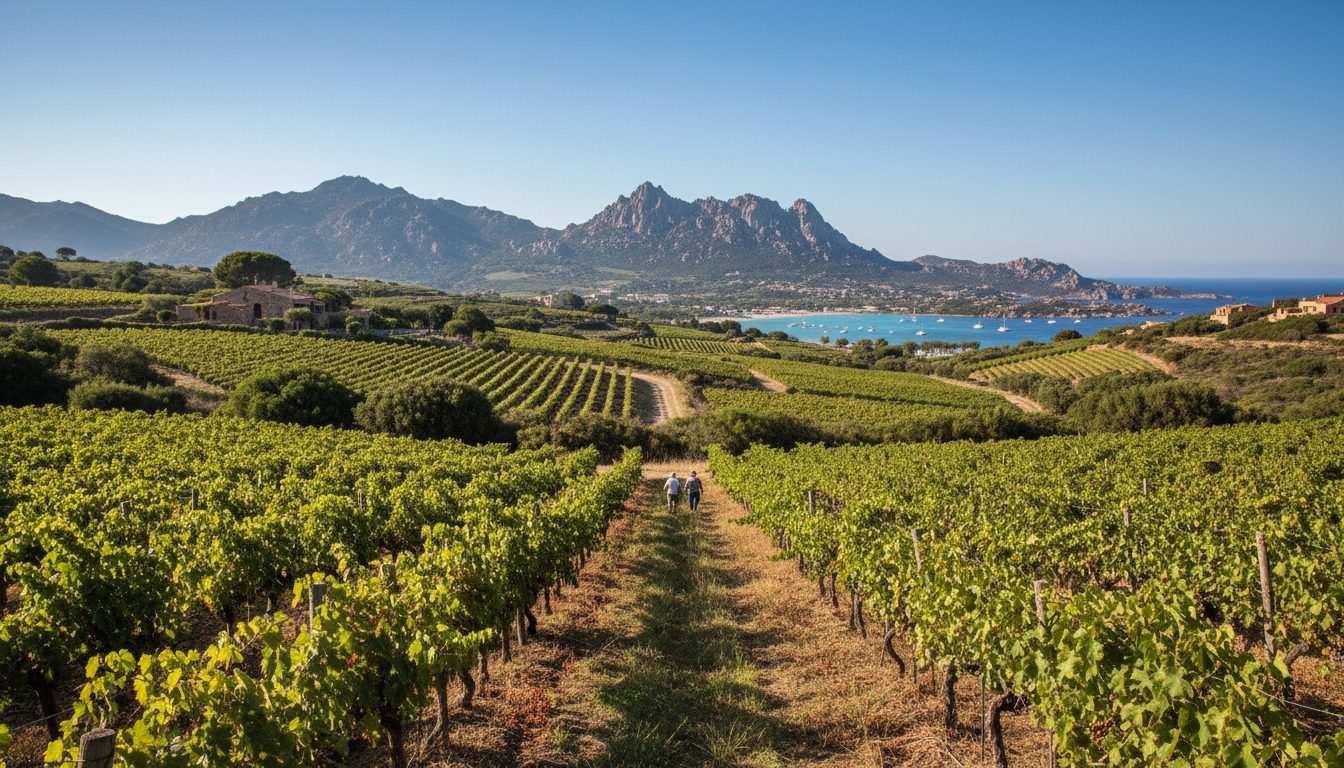
The vineyards don’t sit in Porto Cervo itself – the terrain here runs more to granite boulders and juniper scrub than neat rows of vines – but inland Gallura, within an easy drive, is proper wine country. Family-run estates across the Gallura hills produce the Vermentino that ends up on every Porto Cervo wine list, and many open their cellars for tastings, usually by appointment rather than casual walk-in.
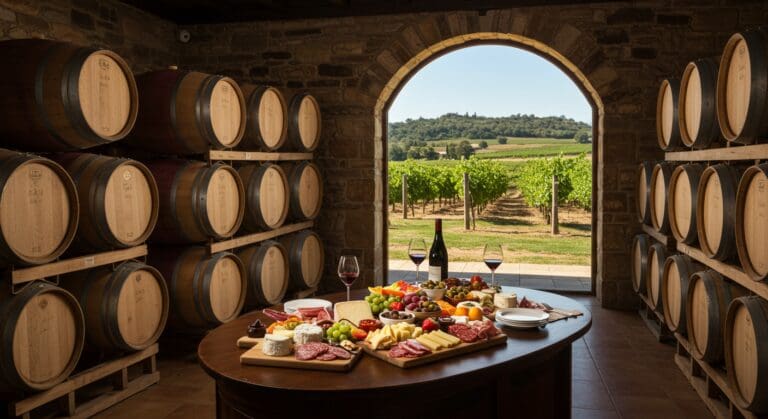
A typical visit involves a short walk through the vines (ask about the granite soils – the producers genuinely love talking about them), a tasting of two or three Vermentino styles, and perhaps a Cannonau or a Mirto to finish. Some estates pair the tasting with a light lunch of local cheeses, cured meats and bread, which stretches a planned hour-long stop into a pleasantly unplanned afternoon. Booking ahead is sensible, particularly in high season when demand from the coast outstrips the capacity of small, family-run cellars that were never designed with yacht-sized crowds in mind.
Porto Cervo Food Markets
Porto Cervo is not, and never claims to be, a market town. The marina piazza is built for boutiques and aperitivo, not crates of tomatoes, so anyone hoping for a sprawling farmers’ market within the village itself will come away disappointed. What does exist is smaller and more seasonal: occasional produce stalls and local craft-and-food markets that pop up in summer, selling honey, cheese, olive oil and preserved goods from inland producers.
For a proper market experience, the nearby towns along the Gallura coast and inland hold their own weekly markets, where fish arrives straight off the boats and vegetable stalls run by actual farmers rather than middlemen set up early and pack up by lunchtime. These are worth the short drive, not least because market shopping remains one of the few genuinely unhurried activities on this stretch of coast – nobody is checking their watch over a crate of San Marzano tomatoes.
Cooking Classes in Porto Cervo
Hands-on cooking experiences around Porto Cervo tend to focus on exactly the dishes you’ll want to recreate once you’re home and missing the sea air: fresh pasta, particularly culurgiones, taught with the kind of patient correction that only comes from someone who’s been pinching the same shape since childhood. Classes often run through a local family’s kitchen or a small countryside agriturismo rather than a formal culinary school, which suits the relaxed, slightly chaotic nature of Sardinian home cooking rather well.
A typical session covers a pasta shape, a sauce built from whatever’s seasonal, and usually a dessert – seadas, inevitably – finished with a tasting of the wine made nearby. Expect flour on your hands, a fair amount of laughing at your own technique, and a lunch at the end that’s considerably better than anything you’ll manage to replicate at home, however diligently you took notes.
Seasonal Specialities in Porto Cervo: Truffles, Olive Oil and Seafood
Summer in Porto Cervo belongs to seafood – sea urchin, red prawns, raw fish crudo, grilled catch of the day – eaten on terraces with a glass of chilled Vermentino and very little else required. This is high season in every sense, and restaurants plan their menus around whatever arrived at the harbour that morning.
Come autumn, the attention shifts inland. Sardinia produces its own truffles, and while the island isn’t as internationally famous for them as Piedmont or Umbria, the black truffles found in the forests of central and northern Sardinia find their way onto Porto Cervo menus from October through winter, shaved over fresh pasta or folded into simple egg dishes.
Olive oil, meanwhile, is a year-round constant but a seasonal event at harvest – the autumn pressing of Sardinian olives produces oil that’s peppery and green, a world away from the flat supermarket stuff, and some producers welcome visitors to watch the process.
Best Food Experiences in Porto Cervo
The single best food experience here isn’t a dish at all – it’s the ritual of the long lunch by the water, where a simple plate of raw fish and a bottle of Vermentino can comfortably occupy two hours without anyone suggesting you move things along. Combine that with an evening spent working through a proper Gallura menu – culurgiones, fregola, porceddu, seadas, in roughly that order of restraint – and you’ve covered most of what the region does best.
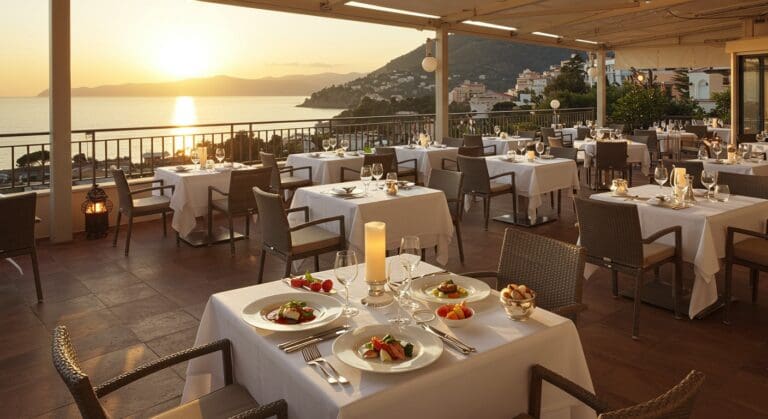
Pair a vineyard visit in the Gallura hills with lunch at the estate if offered, and if you’re here between October and February, seek out a restaurant running a truffle menu rather than expecting it to be the main event all year round. And don’t skip the aperitivo hour: a glass of Vermentino and a small plate of bottarga or local cheese on a marina terrace at sunset is, by most reasonable measures, the most efficient way to feel entirely at peace with your choice of holiday.
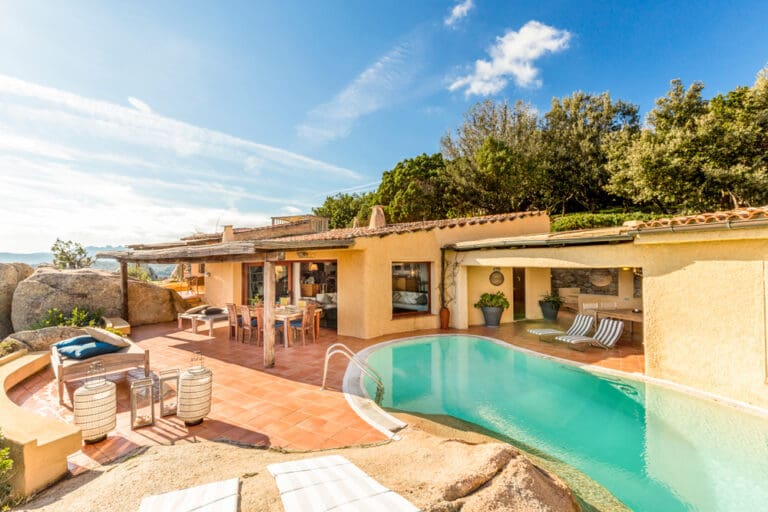
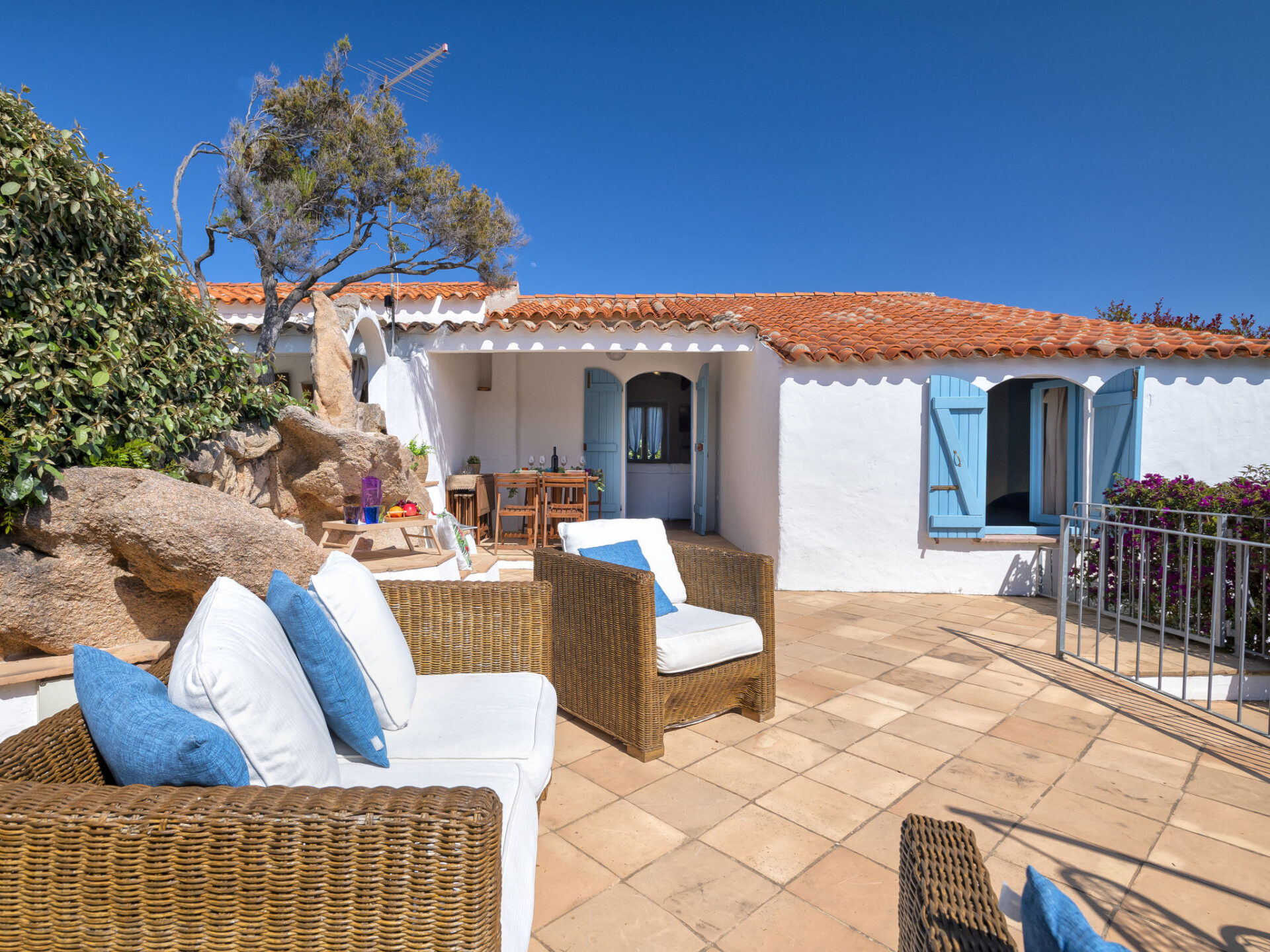
For travellers deciding where to base themselves for all this eating and drinking, see villas in Porto Cervo.
Porto Cervo Food and Wine FAQs
What is the local wine of Porto Cervo?
The defining wine of the area is Vermentino di Gallura DOCG, a dry, mineral white grown on the granite soils of the surrounding Gallura region. It is Sardinia’s only DOCG-designated wine and the natural match for the local seafood.
Are there truffles in Sardinia near Porto Cervo?
Yes, though Sardinia is less well known for truffles than mainland regions like Piedmont or Umbria. Black truffles from inland Sardinian forests appear on Porto Cervo menus mainly from October through winter, often shaved over pasta.
Is Porto Cervo expensive for food and wine?
Porto Cervo sits at the higher end of Sardinian prices, closer to other glamorous Mediterranean yachting towns than to inland Sardinia. Meals and wine cost noticeably less once you drive a short distance inland or to neighbouring towns along the coast.
Keep reading
More on Porto Cervo
- Travel guidePorto Cervo Travel Guide
- RestaurantsBest Restaurants in Porto Cervo
- FamiliesPorto Cervo with Kids
Guides nearby in Sardinia
Where to stay
Villas in Porto Cervo
A selection from our 37 luxury villas in Porto Cervo.