
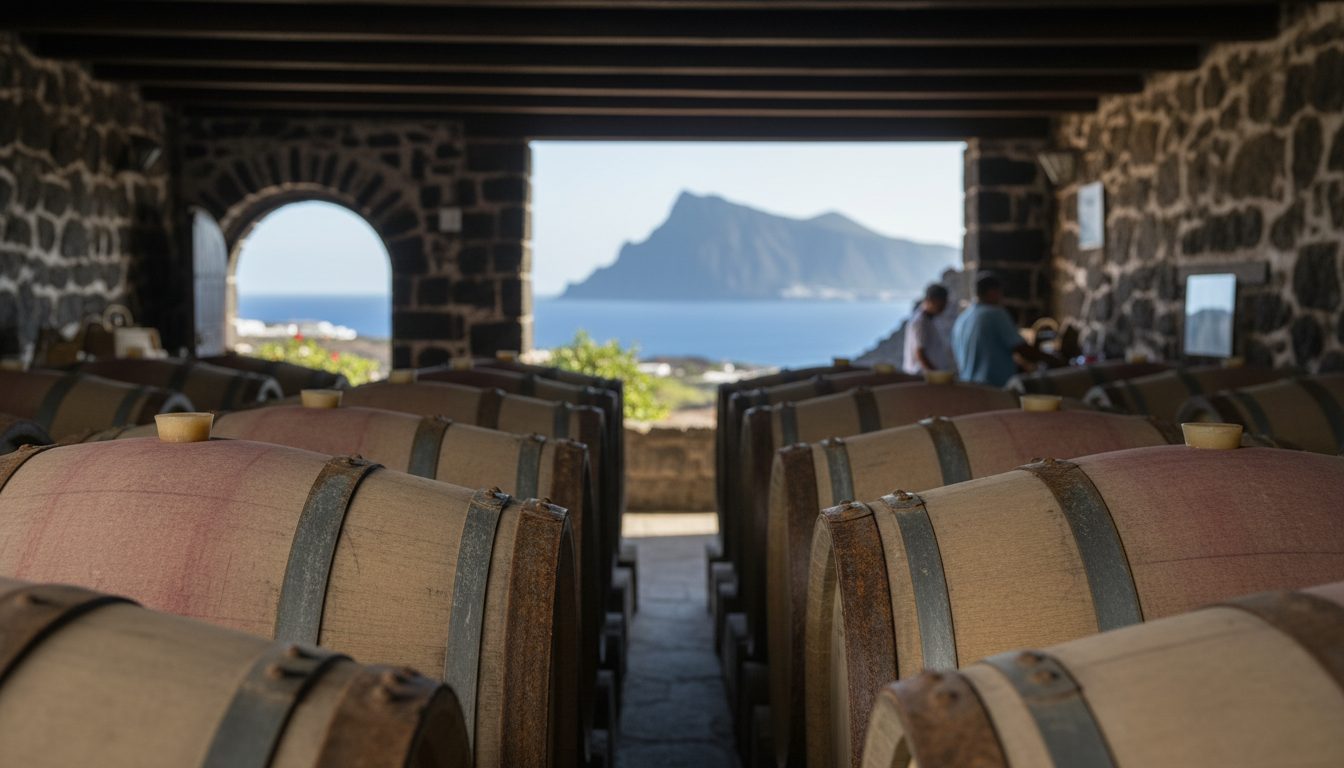
Adeje Food & Wine: Mojo, Gofio & Volcanic Island Wines
Adeje food and wine centres on Canarian staples such as papas arrugadas with mojo sauce, fresh Atlantic fish, gofio-based dishes and wines made from grapes grown in volcanic soil under the Denominación de Origen Tenerife label. The town’s weekly agricultural market and surrounding wine estates in the hills above the coast offer the clearest introduction to the island’s food culture. Visitors can combine market browsing, coastal seafood restaurants and vineyard visits within a single day trip from Adeje.
By late August, when the first grapes come off the vines on the volcanic slopes above Adeje, the whole southern coast seems to exhale. The tourists are still there, of course – they always are – but there’s a particular quality to an evening meal eaten outdoors in early autumn, when the heat has softened and the local kitchens start leaning on whatever came off the boats that morning. Adeje’s food and wine story isn’t loud. It doesn’t announce itself with fireworks or festival banners the way some regions do. It simply gets on with being good, which is, I’ve always thought, the most trustworthy kind of good there is.
This is not, I should say at the outset, a region that trades on French-style gastronomic theatre. The Canary Islands cook with what the Atlantic and the volcano give them, and Adeje – sitting between black-sand coastline and the pine-covered slopes of Teide’s foothills – inherits both the sea and the soil in equal measure.
Adeje Food and Wine: What Makes the Cuisine Distinct
Canarian cuisine, and by extension Adeje’s own version of it, sits slightly apart from mainland Spanish cooking. Geography explains most of it. These are volcanic islands roughly a thousand kilometres from the Iberian mainland and closer to the coast of Africa, and the kitchen reflects that isolation – a cuisine built on resourcefulness rather than abundance, refined over centuries into something quietly confident. Gofio, a toasted grain flour made from wheat or maize, turns up everywhere: stirred into stews, eaten as a breakfast porridge, or shaped into dense little dumplings. It’s an acquired taste for some visitors, though most come round to it by the second week.
Mojo sauces are the other great constant – mojo rojo, a smoky, paprika-rich red version, and mojo verde, made with coriander or parsley and usually served alongside fish. Both are deceptively simple and the subject of fierce, entirely good-natured family disagreement over the correct ratio of garlic to oil. Goat cheese, locally produced and often smoked, appears on nearly every menu, and the island’s small but committed olive oil producers have started to find an audience beyond the Canaries themselves, though production remains modest compared with Andalusia or Extremadura.
Signature Dishes in Adeje
Papas arrugadas – small wrinkled potatoes boiled in heavily salted water and served with mojo – are the dish everyone photographs and almost nobody tires of. They are, on reflection, a masterclass in doing very little to a potato and getting a great deal back. Fresh fish, grilled simply and dressed with mojo verde, dominates menus along the coast; look for vieja (parrotfish) or cherne (wreckfish), both landed locally and treated without excessive fuss.
Ropa vieja, a slow-cooked meat and chickpea stew whose name translates unflatteringly as “old clothes,” is comfort food in its purest form, and puchero canario – a hearty vegetable and meat stew – turns up at Sunday family tables across the island. For something sweeter, bienmesabe, an almond and honey dessert, closes most traditional meals, and rightly so.
Local Wines and Wine Estates Near Adeje
Tenerife’s wine industry is one of Europe’s genuine oddities, and all the better for it. The vines grow in volcanic soil, many of them ungrafted and planted in distinctive cordón trenzado – braided cord – training systems that protect the fruit from trade winds. Phylloxera, which devastated vineyards across mainland Europe in the nineteenth century, never found its way here, meaning some of these vines are remarkably old by European standards.
The wines fall under the Denominación de Origen Tenerife, with Listán Blanco and Listán Negro the dominant grape varieties, alongside the more aromatic Malvasía used for the island’s historic sweet wines – the very bottles that once charmed Shakespeare and shipping merchants alike. Expect whites with a saline, mineral edge and reds that are lighter and more food-friendly than their mainland Spanish counterparts. Several bodegas in the hills above Adeje and in the neighbouring wine-growing districts welcome visitors for tastings, generally by appointment, and a short drive upward in altitude rewards you with both cooler air and a very different landscape – pine forest giving way to terraced vineyards with views back down to the coast.
Food Markets in Adeje
Adeje’s weekly agricultural market is where the town’s food culture is easiest to observe in its natural habitat – stalls of tropical fruit grown locally (papaya, banana, the odd unfamiliar custard apple), local cheeses, honey, and small-batch mojo sauces sold in jars that rarely survive the journey home unopened. It’s a market for buying rather than browsing, which is refreshing after the souvenir strips closer to the resort areas. Arrive early if you want the best produce and the fewest elbows; by mid-morning it has the gentle chaos of any Spanish market at its peak.
Cooking Classes in Adeje
Cooking classes focused on Canarian cuisine have become increasingly available around Adeje and the wider south coast, typically covering the fundamentals – mojo-making, gofio preparation, and the correct (disputed) method for papas arrugadas. These sessions tend to run a few hours, often including a market visit beforehand, and are a genuinely useful way to understand a cuisine that can otherwise feel deceptively plain on a restaurant plate. Group sizes are usually small, which keeps things relaxed rather than performative.
Seasonal Specialities in Adeje
The harvest calendar shapes a lot of what lands on the table. Grape harvest runs through August, slightly earlier than mainland Spain thanks to the altitude and volcanic terroir. Winter brings the best of the citrus and avocado crops, while the Atlantic fishing season – largely unaffected by the tourist calendar – keeps fresh fish a year-round constant rather than a seasonal treat. Truffles, for the record, are not a Canarian tradition and any menu claiming otherwise should be regarded with mild suspicion. Olive oil production, though small-scale, peaks with the autumn pressing, and local producers are worth seeking out for oil with a distinctly different character from the mainland Spanish varieties most visitors already know.
Best Food Experiences in Adeje
The best food experiences here tend to be the unplanned ones – a seafood lunch that runs long because the fish was good and the view better, a wine tasting at altitude where the host talks for twenty minutes about soil before pouring a single glass. Pairing a market morning with a vineyard visit in the afternoon makes for a genuinely full day, and most of what’s worth eating in Adeje rewards patience rather than itinerary planning. For a broader sense of the area beyond its kitchens, the Adeje Travel Guide covers the wider context – beaches, towns and the practicalities of getting around.
Those planning where to base themselves for exploring the region’s food and wine can see villas in Adeje.
Adeje Food and Wine FAQs
What is the local wine of Adeje and Tenerife called?
Wines from the region fall under the Denominación de Origen Tenerife, with Listán Blanco and Listán Negro the main grape varieties grown in the volcanic soils around the island, including the hills above Adeje.
What is gofio and why does it appear on so many menus in Adeje?
Gofio is a toasted grain flour, traditionally made from wheat or maize, that has been a Canarian staple for centuries. It’s used to thicken stews, make breakfast porridge, and form small dumplings, and remains a defining ingredient of Canarian cooking.
Is seafood in Adeje caught locally?
Yes, fresh Atlantic fish such as vieja and cherne is landed along the Tenerife coast year-round and typically served simply grilled with mojo sauce, making seafood one of the most reliably fresh elements of dining in Adeje.
Keep reading
More on Adeje
Guides nearby in Santa Cruz de Tenerife
Where to stay
Villas in Adeje
A selection from our 38 luxury villas in Adeje.
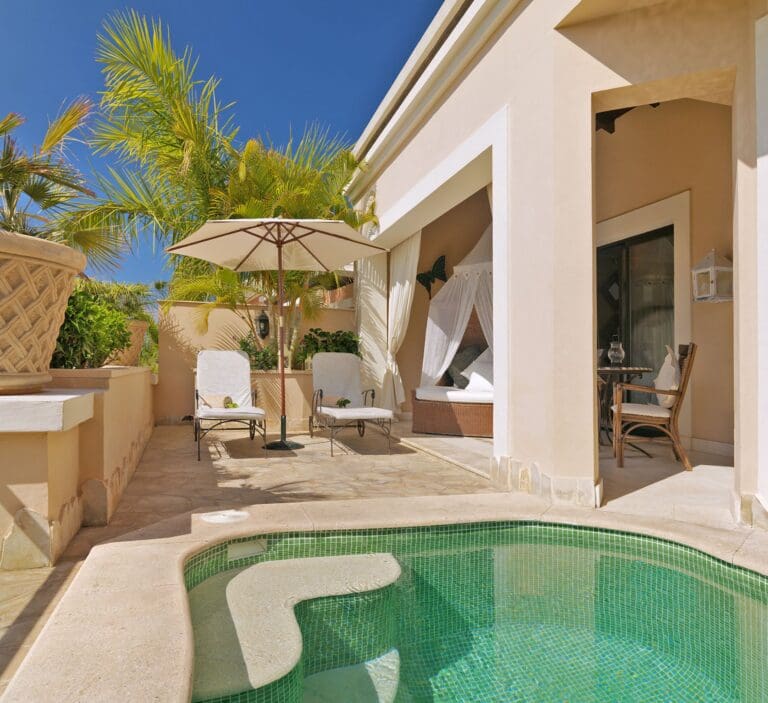 Duchess Villa Spain
 Villa Rosaluz
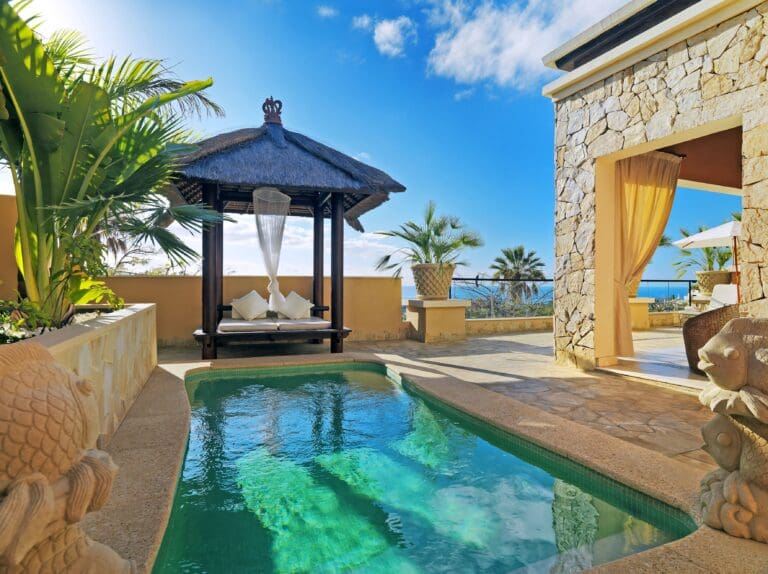 Villa Burbujas Spain
 Royal Villa Spain
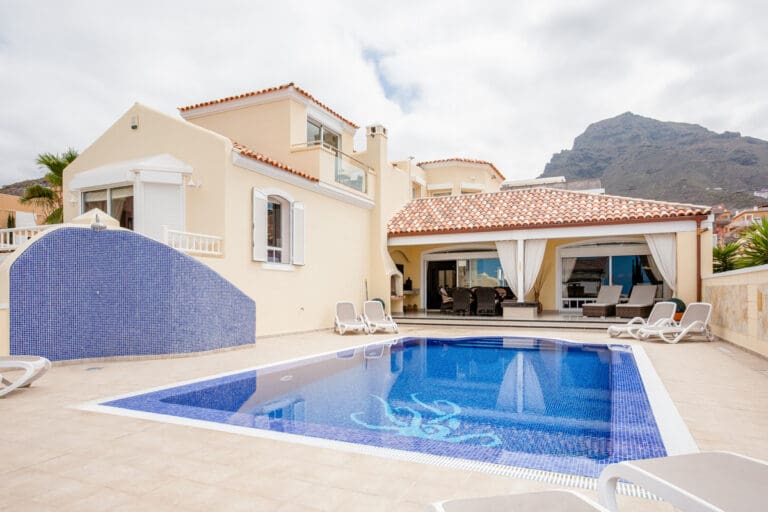 Casa Rommias Spain
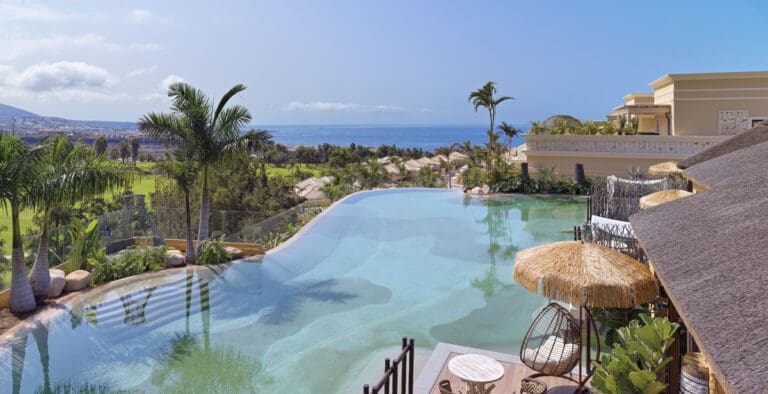 Laguna Royal 2 Spain
See all 38 villas in AdejeVillas across Santa Cruz de Tenerife


