Best Time to Visit Aspen: Four Mountains, X Games & Mud Season
The best time to visit Aspen depends on your budget and your definition of fun. Ski season runs late November to mid-April, with January and February offering the most reliable snow but also the highest prices and biggest crowds. Summer (June to September) brings warm days, hiking and festivals, while April and November – “mud season” – are the quietest and cheapest months, though much of the town shuts down.
At 8,000 feet the air in Aspen arrives thin, dry and faintly scented with woodsmoke, and it does something strange to first-time visitors: it makes the sky look closer than it has any right to be. In winter the sound that defines the place isn’t the whoosh of skis but the metallic click of boot buckles outside every café at 8am, a thousand people getting dressed for the same mountain at once. In summer it’s the creak of Maroon Creek’s aspens in a breeze that still carries a chill even in July. Aspen changes character completely between seasons, which is either the town’s great charm or its great inconvenience, depending on whether you packed the right coat.
Aspen at a Glance
Ski season: late November to mid-April. Snowiest, busiest months: January and February. Best value skiing: early December and late March. Summer season: June to early September, warm and dry. Shoulder seasons: April (mud season, mostly closed) and October to mid-November (quiet, cool, golden light). Elevation: Aspen town sits at 2,438m (8,000ft); the mountains climb considerably higher, so altitude adjustment is worth planning for regardless of season.
Aspen Weather by Season
Aspen’s climate is a high-altitude continental one, which means big temperature swings and reliably dry air whatever the month. Winters are genuinely cold – January averages a low of around -14°C (7°F) and a high of -1°C (30°F) – but the dryness of the snow (Colorado’s famous “champagne powder”) makes the cold feel less punishing than similar temperatures elsewhere. Summers are mild rather than hot: July highs hover around 25°C (77°F), with cool evenings that catch out visitors who assumed mountain towns were permanently chilly. Spring and autumn are the unpredictable middle children, capable of delivering a foot of snow and a t-shirt day within the same week. For a wider sense of the town’s character across the year, the Aspen Travel Guide covers the broader picture beyond weather alone.
Aspen Ski Season Month by Month
Aspen Snowmass operates across four mountains – Aspen Mountain, Aspen Highlands, Buttermilk and Snowmass – each with its own personality and, crucially, its own opening date. Snow reliability improves steadily through the season, and so, unhelpfully, does the price of everything.
November in Aspen: Early Season and Empty Slopes
Buttermilk and Snowmass typically open in late November, with Aspen Mountain and Highlands following in early to mid-December. Coverage is thin and runs are limited, so this is one for terrain-cautious skiers rather than powder purists. What November lacks in snow depth it makes up for in solitude and in hotel rates that haven’t yet noticed it’s ski season.
December in Aspen: Christmas, New Year and Sticker Shock
By mid-December all four mountains are usually open, and snow conditions firm up considerably. The fortnight spanning Christmas and New Year is the single busiest and most expensive stretch of the entire year – lift queues lengthen, restaurant bookings vanish, and New Year’s Eve in town takes on an almost competitive-sport intensity. Book well ahead or avoid the last two weeks of the month entirely.
January in Aspen: Deep Snow and the X Games
January delivers some of the season’s most consistent snowfall and noticeably thinner crowds once the New Year rush has cleared out. It’s also when Buttermilk hosts the Winter X Games, which brings a burst of noise, spectators and closed parking lots to an otherwise quiet month – plan around it if you’d rather ski in peace than watch someone do something unwise on a snowboard.
February in Aspen: Peak Season and Half-Term Crowds
February combines excellent snow with the UK and US half-term school holidays, making it the second-busiest month after the Christmas fortnight. Presidents’ Day weekend in the US adds another spike. Snow quality is usually at its season’s best, but so is demand for everything from lift tickets to dinner reservations.
March in Aspen: Reliable Snow, Milder Days
March is, for many regulars, the best-kept secret of the Aspen season. Snowpack is typically deep, days are noticeably longer and milder, and crowds thin out considerably outside of spring break weeks. Afternoon skiing in a t-shirt over a base layer is a genuine possibility, as is sunburn, which catches out more people than it should.
April in Aspen: Spring Skiing and Mud Season Begins
Closing dates vary by mountain but typically fall in the first two to three weeks of April. Early April can offer excellent spring skiing – soft snow, sunshine, short queues – before the lifts stop and the town slides into “mud season,” when many restaurants and hotels close for annual maintenance and the streets are, true to the nickname, genuinely muddy. It’s the cheapest time to find a bed in Aspen, assuming you don’t mind half the town being shut.
Aspen in Summer: June to September
Summer is Aspen’s quieter secret, and arguably its most underrated season. June brings wildflowers and the start of festival season, with the Aspen Food & Wine Classic and the summer run of Jazz Aspen Snowmass drawing crowds that are enthusiastic rather than overwhelming. July and August are peak summer months – warm days, cool nights, and a full programme from the Aspen Music Festival filling the calendar with outdoor concerts. Hiking around Maroon Bells, mountain biking, fly fishing and simply sitting somewhere with a view are the main activities, and the gondola to the top of Aspen Mountain keeps running for hikers and diners even with no snow in sight. Prices are lower than peak ski weeks but far from bargain territory; this is still Aspen. September brings the Labor Day edition of Jazz Aspen Snowmass and the first hints of the aspen trees’ famous colour change, making late summer a genuinely good compromise between warmth and quiet.
Aspen in Fall: September to November
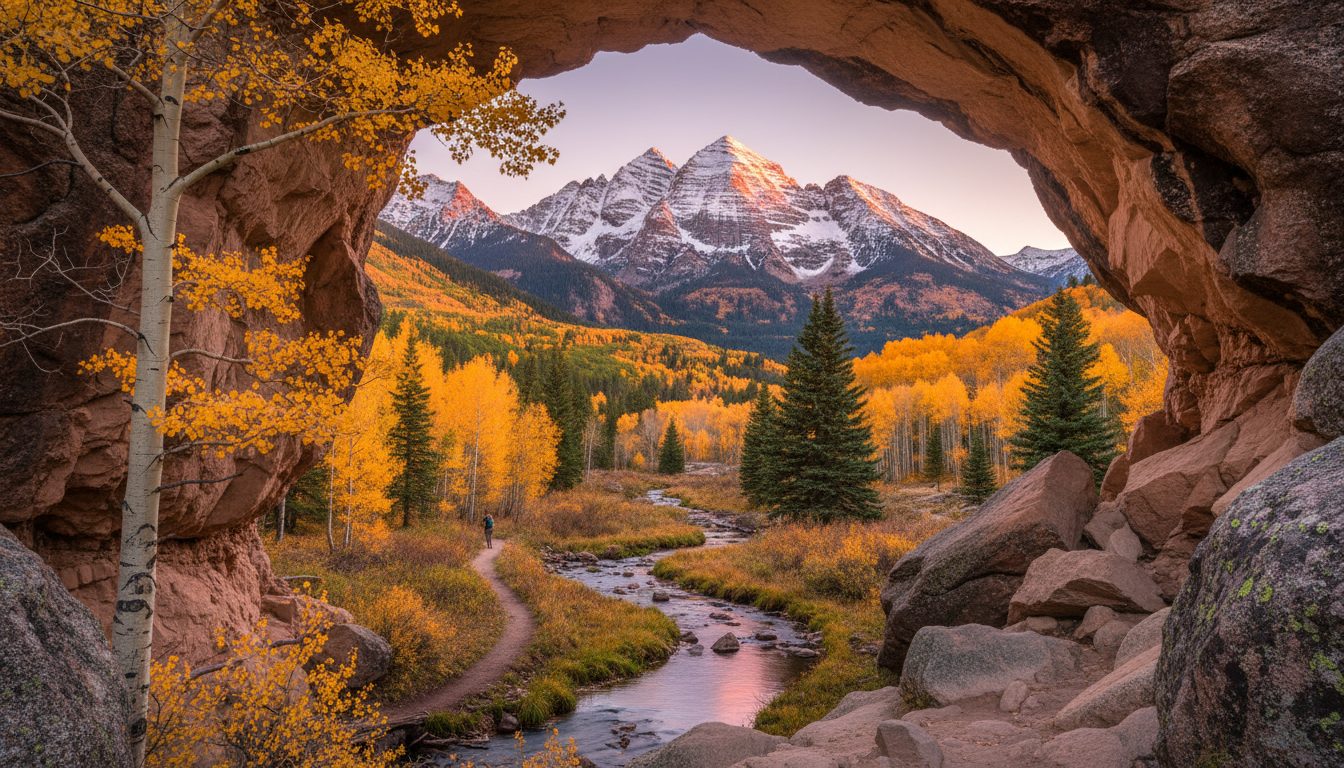
Fall is short, golden and criminally underbooked. The aspen groves that give the town its name turn a vivid yellow through late September into early October, and the Maroon Bells reflected in Maroon Lake during this window are reason enough to visit on their own. Days are crisp, crowds are thin, and hotel rates drop noticeably once the leaves peak and before the first snow arrives. By late October many trails close for the season and the town settles into a hush that lasts until the lifts start turning again – a good month for walkers and photographers, a poor one for anyone hoping to ski or expecting much nightlife.
Best Time to Visit Aspen for Different Travellers
Serious skiers chasing the deepest, most reliable snow should aim for January through mid-March, accepting February’s crowds as the price of good conditions. Families bound by school holidays will find themselves in Aspen during its two busiest, priciest weeks regardless – Christmas/New Year and February half-term – so booking early is less a tip than a necessity. Travellers who want the mountain scenery without the ski-season price tag or crowds do best in June, September or early October, when the town is open, the restaurants are seating people promptly, and the Maroon Bells look their best. Budget-conscious visitors with no interest in snow sports or leaf colour should consider April or November, bearing in mind that a fair portion of the town will be closed.
Once you’ve settled on when to go, the next decision is where to stay – a look at villas in Aspen is a sensible place to start.
Aspen Weather and Seasons FAQs
When do the ski lifts open and close in Aspen?
Buttermilk and Snowmass typically open in late November, with Aspen Mountain and Highlands following in early to mid-December. Closing dates vary by mountain but generally fall between early and mid-April, with Snowmass often closing last.
What is mud season in Aspen?
Mud season refers to the shoulder periods in spring (roughly mid-April to late May) and autumn (late October to late November) when the ski lifts have stopped or not yet started, snow is melting, and many hotels and restaurants close for annual maintenance. It’s the quietest and cheapest time to visit, with limited services available.
Is Aspen worth visiting in summer if you don’t ski?
Yes. Summer offers hiking around Maroon Bells, mountain biking, fly fishing and a full festival calendar including the Aspen Food & Wine Classic, Jazz Aspen Snowmass and the Aspen Music Festival, all set against mild days and cool evenings without any snow required.
Keep reading
More on Aspen
- Travel guideAspen Travel Guide
- RestaurantsBest Restaurants in Aspen
- FamiliesAspen with Kids
- SkiingSkiing in Aspen
Guides to places in Aspen
Where to stay
Villas in Aspen
A selection from our 29 luxury villas in Aspen.