Casares Food & Wine: Goat Cheese, Chacina & Mountain Wines
Casares’ food culture blends mountain Andalusian cooking – goat’s cheese, cured pork, game and wild herbs – with the seafood of the nearby coast, all set against inland Málaga’s vineyards and olive groves. The weekly market, a handful of wine estates within easy driving distance, and traditional ventas serving chacina and gazpacho are the best ways to experience casares food and wine. Expect rustic, produce-led cooking rather than formal dining, with the Ronda wine region supplying most of the better bottles on local lists.
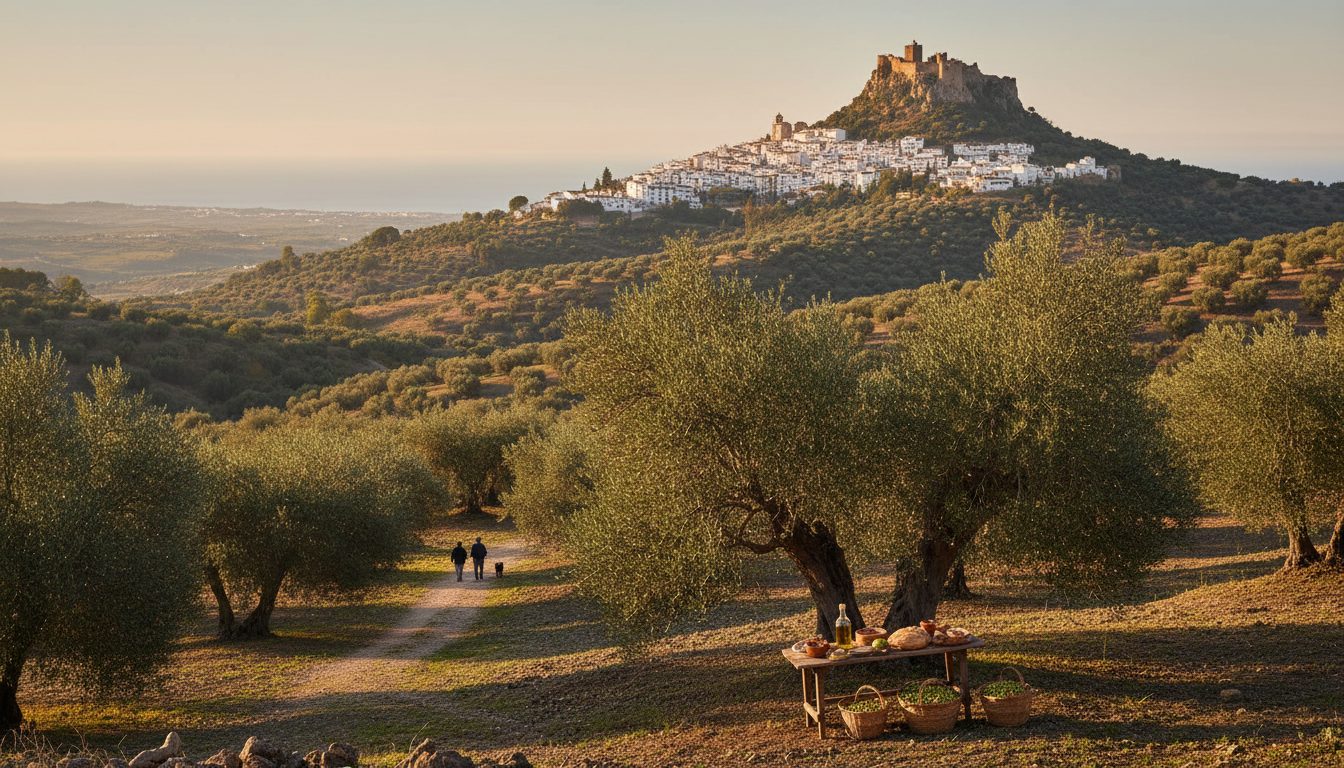
Few towns on this stretch of coast get to have it both ways. Marbella has the sea, Ronda has the mountains, and most places in between have made their choice and stuck to it. Casares, draped over its hillside with the Mediterranean visible in the distance on a clear day, never quite committed either way, which is precisely what makes its food interesting. Up here the kitchen still runs on goat, pork and whatever grows wild on the hillside. Down at the coast, a twenty-minute drive away, it runs on whatever came out of the sea that morning. Few towns manage both without feeling like they’re trying too hard at either.
This is not a destination for anyone chasing fireworks on a plate. It is a destination for anyone who thinks a good tomato, properly ripe and barely dressed, is its own small miracle – and who doesn’t mind a three-hour lunch to prove the point.
Casares Food and Wine at a Glance
Casares sits in the hills above the Costa del Sol, close enough to the coast for fresh fish but firmly rooted in mountain Andalusian cooking. Local specialities include goat’s cheese, cured pork products, gazpacho and ajoblanco, migas, and game in season. The nearby Ronda wine region supplies most of the good bottles, with Málaga’s historic sweet wines also worth seeking out. A weekly street market, several inland bodegas, and village bakeries round out the picture. This is slow, produce-driven food rather than anything showy.
Casares Cuisine: Mountain Flavours Meet the Coast
The food here owes more to the Serranía than to the beach resorts further along the coast, even though the sea is close enough to smell on a westerly wind. Pork is the backbone of the inland diet – Casares and its surrounding villages have long kept pigs in the hills, and the resulting chacina (the general term for cured pork products) turns up everywhere from market stalls to the simplest roadside venta. Chorizo, morcilla and salchichón, cured slowly in mountain air, are eaten as they’ve always been eaten here: sliced thin, with bread, and without much ceremony.
Goat’s cheese is the other pillar. The payoya goats that graze these hills produce milk that makes a cheese with a slight tang and a crumbly bite, sold fresh or aged depending on how patient the producer is feeling. Olive oil, pressed from groves that climb the lower slopes, is poured rather than measured, and nobody will think it odd if you ask for more bread to mop up what’s left on the plate. Meanwhile, down at the coast, the same families who keep goats in the hills are just as happy ordering fish for Sunday lunch – the two worlds overlap more than the postcards suggest.
Signature Dishes in Casares
Gazpacho and its paler, almond-based cousin ajoblanco are both served cold, both deceptively simple, and both considerably better here than anywhere that’s reduced them to a shot glass garnish. Migas – breadcrumbs fried with garlic, peppers and whatever cured meat is to hand – started life as a way of using up stale bread and has stubbornly refused to go out of fashion, turning up on menus as a point of pride rather than apology.
Stews built around game, rabbit or goat appear more often in the cooler months, usually slow-cooked with wine, garlic and bay leaf until the meat gives up without a fight. Closer to the coast, grilled fish and seafood take over, with sardines, prawns and whatever the boats brought in that morning served with little more than oil, lemon and good sense. None of this is complicated food. All of it depends on the ingredients being right, which, in this part of Málaga, they generally are.
Casares Wine: Málaga’s Mountain Vineyards
Málaga’s wine history runs deeper than most visitors assume – the province was producing sweet wine for export centuries before anyone thought to put an umbrella in a glass on the beach below. The historic Málaga DO covers the traditional sweet wines made from Moscatel and Pedro Ximénez grapes, raisined in the sun until the sugars concentrate into something closer to liquid toffee than table wine. They’re an acquired taste for some, and a revelation for others.
More relevant to a modern dinner table is the Sierras de Málaga DO, which takes in the cooler, higher vineyards around Ronda and the Serranía – not far from Casares as the crow flies, even if the roads wind rather more than the crow would like. Altitude and temperature swings here suit reds built on Tempranillo, Syrah and Petit Verdot, alongside increasingly confident whites. It’s a young region by European standards, still finding its feet, which gives the wine lists in this part of Málaga a sense of discovery that older, more settled regions have long since lost.
Wine Estates Near Casares to Visit
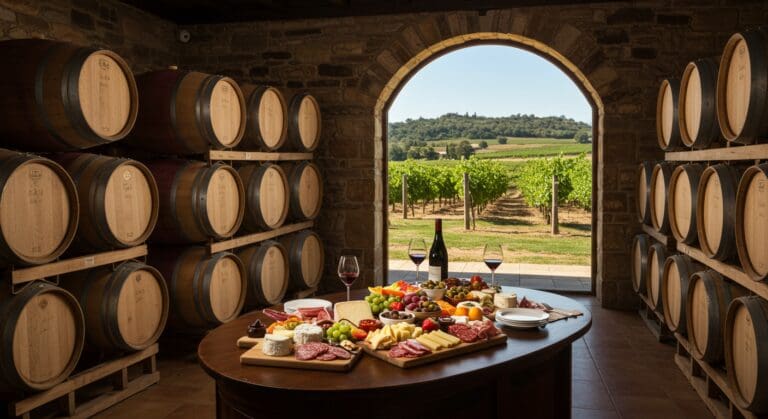
A short drive inland from Casares, towards Ronda and the hill towns strung along the Serranía, brings you into proper vineyard country. Several family-run bodegas here welcome visitors for tastings, usually by appointment, and most are happy to walk you through the vines before pouring anything – a reasonable trade given the hills you’ll have climbed to get there. Expect small production, hands-on winemaking, and owners who know every row personally rather than large-scale operations built for coach parties.
These are working estates rather than polished visitor attractions, which is part of the appeal. Tastings tend to be unhurried and conversational, often finishing with local cheese and chacina laid out on the same table as the wine – a pairing nobody had to think too hard about, since the two have been served together in these hills for generations. Booking ahead is sensible, both because numbers are often limited and because the better estates are, sensibly, in no great hurry to be found.
Casares Food Markets
Casares holds a weekly market that draws producers from the surrounding villages – cheese, olives, cured meats, seasonal fruit and vegetables, and the odd stall selling honey or preserves made to a recipe nobody writes down. It’s a modest affair compared with the larger markets along the coast, which is exactly the point: this is where locals actually shop, not a performance staged for visitors with a camera.
For a wider spread, the coastal towns nearby run larger fish markets, with early morning the time to go if you want to see the catch at its best rather than what’s left by lunchtime. Either way, arriving with cash, a bag, and no particular schedule is the right approach. Markets here reward loitering.
Cooking Classes in Casares
Hands-on cooking experiences in this part of Málaga tend to focus on the dishes that define the region – gazpacho, migas, and the slow-cooked stews that make sense of a mountain winter. Classes are usually small, often run from a family kitchen or a converted finca, and frequently built around a market visit first, so you’re cooking with ingredients you’ve chosen yourself rather than something that arrived pre-portioned in plastic.
These are not polished television-style sessions. Expect flour on the counter, a host who talks with their hands, and a meal at the end that you eat together rather than photograph first. For anyone keen to understand casares food and wine beyond the plate, a morning spent making migas properly, with someone who’s made it ten thousand times before, says more than any menu description could manage.
Seasonal Specialities in Casares: Olive Oil, Game and Seafood
Olive oil pressing happens in late autumn and early winter, when the hills around Casares turn over to the harvest and the air smells faintly of crushed olives for weeks at a stretch. New-season oil, cloudy and sharply green, is worth seeking out at this time of year – it bears little resemblance to anything sold in a supermarket bottle months later.
Game features more heavily in autumn and winter menus, when rabbit, partridge and occasionally wild boar appear in the slow stews that mountain cooking does so well. Summer, predictably, belongs to the coast and its seafood, along with cold soups designed to counter heat rather than fight it. Spring brings the first of the season’s vegetables and a general sense, in the kitchens here, of relief that winter’s over.
Best Food Experiences in Casares
If time only allows for a handful of things, make one of them a long lunch at a traditional venta, the kind of place that’s been serving the same handful of dishes for decades because nobody’s found a reason to change them. Pair it with a market morning, a wine estate visit inland towards Ronda, and – if the season’s right – a trip timed around the olive harvest or the first of the autumn game. None of this requires much planning. Most of it requires only an appetite and the patience to let a meal run its natural, unhurried length, which is, in the end, the whole point of eating in this part of Spain.
For more on exploring the wider area beyond the table, the Casares Travel Guide covers the rest of what the town and its coastline have to offer.
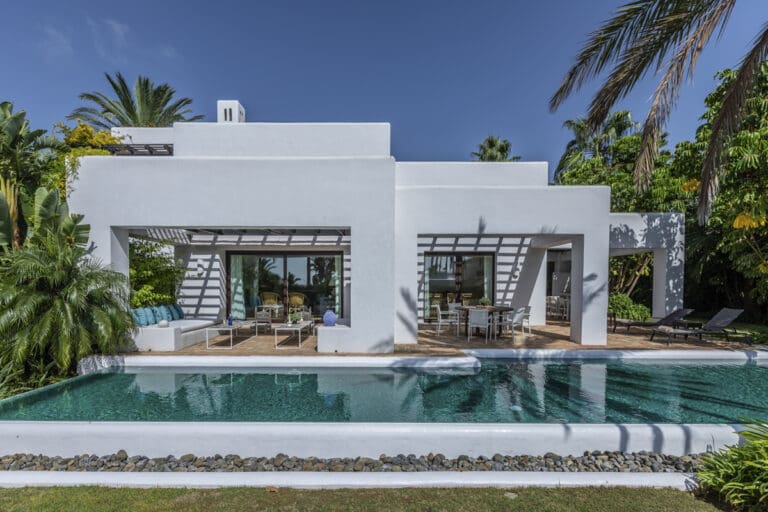
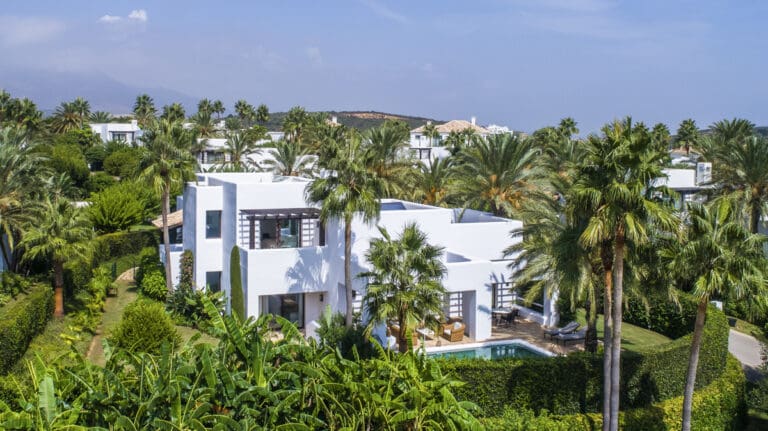
For anyone planning where to base themselves while exploring the region’s food and wine, there are villas in Casares.
Casares Food and Wine FAQs
What is the local speciality food in Casares?
Casares is best known for its cured pork products (chacina), goat’s cheese made from payoya goats grazed in the surrounding hills, and classic Andalusian cold soups like gazpacho and ajoblanco. Fresh seafood also features strongly given the town’s proximity to the coast.
Where can I taste local wine near Casares?
The best wine tasting is found a short drive inland towards Ronda and the Serranía, where several small family-run bodegas within the Sierras de Málaga DO welcome visitors by appointment for tastings and vineyard tours.
Is there a food market in Casares?
Yes, Casares holds a weekly street market selling local cheese, cured meats, olives and seasonal produce. Larger fish markets can be found in the coastal towns nearby, best visited early in the morning for the freshest catch.
Keep reading
More on Casares
Guides nearby in Costa Del Sol
Where to stay
Villas in Casares
A selection from our 15 luxury villas in Casares.