Fuerteventura Travel Guide: Where to Stay, Eat & Explore in Luxury
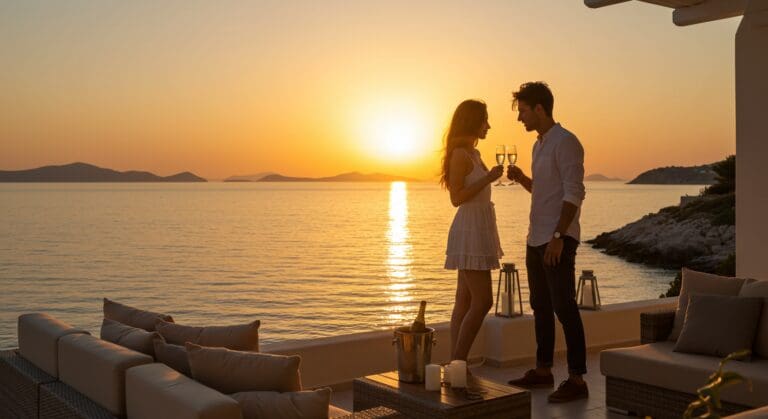
The wind is doing something extraordinary to the sand. Not a gentle coastal breeze but a proper, purposeful Saharan exhale – the kind that sculpts dunes into shapes that shouldn’t be structurally possible and makes every beach photograph look faintly mythological. You’re sitting on the terrace of your villa somewhere above the Atlantic, a glass of something cold and local on the table beside you, watching the light do what it only does here: turn the volcanic rock from ochre to copper to a deep, almost theatrical red as the afternoon slides away. Fuerteventura doesn’t ease you in gently. It just hands you this landscape and waits.
This is not, it should be said, everyone’s island. Those who need their holidays architecturally complex – cities to navigate, galleries to queue for, a dense itinerary to justify the airfare – will find Fuerteventura quietly, magnificently uninterested in them. But for everyone else, it delivers something increasingly rare: uncluttered space, extraordinary light, and beaches so vast they absorb the crowds without breaking a sweat. It works beautifully for families who want privacy and a private pool rather than the organised chaos of a resort; for couples marking milestone trips who want somewhere that feels genuinely remote without requiring a connecting flight through somewhere inconvenient; for groups of friends who want a villa to themselves and a coastline to disappear into. Increasingly it draws remote workers who’ve discovered that Fuerteventura’s reliable sun and improving connectivity make it an entirely serious place to be productively unproductive. And for the wellness-focused traveller who wants outdoor movement, clean air, and the kind of silence that actually helps – this island, with its yoga retreats, world-class windsurfing, and near-total absence of nightlife obligation, is an unexpectedly good answer.
The Journey Out: Further Than It Looks, Easier Than You Think
Fuerteventura sits in the eastern Canary Islands, close enough to the African coast (roughly 100 kilometres from Morocco at its nearest point) that the sand blowing across it is genuinely Saharan in origin. From the United Kingdom, flights are direct from most major airports – London, Manchester, Edinburgh, Bristol – and take around four hours. From mainland Spain, it’s a short hop. From elsewhere in Europe, connections are straightforward via Las Palmas or Madrid. The island’s main airport is Fuerteventura Airport (FUE), located just south of the capital Puerto del Rosario – a town that does its administrative job admirably without particularly demanding your attention as a tourist.
Transfers from the airport are quick by island standards: twenty minutes to Caleta de Fuste, around forty-five to Corralejo in the north, an hour or so to the resort areas of Morro Jable and Jandia in the south. Private airport transfers are strongly advisable if you’re arriving to a villa – they’re not expensive and considerably more dignified than hunting for a taxi rank with luggage. Once you’re on the island, a hire car is effectively mandatory unless you’re content to stay entirely within walking distance of your villa (not the worst plan, honestly). The roads are quiet, uncomplicated, and the distances between places are manageable. The main highway runs roughly north to south. Getting lost is not really a concern here. The island is shaped roughly like a bone – you’ll work this out approximately five minutes after opening a map.
Eating Well in Fuerteventura: From Atlantic Catches to Goat Cheese Worth Crossing an Ocean For
Fine Dining
Fuerteventura’s dining scene rewards those willing to look past the resort strip menus. The island has been slowly, quietly developing a genuinely serious food culture built around its extraordinary local produce – particularly its seafood, which is as fresh as geography can guarantee, and its goat’s cheese, which is among the best in Spain and considerably less celebrated than it deserves to be. In Corralejo and the capital Puerto del Rosario, you’ll find restaurants doing intelligent work with local fish – vieja (parrotfish), cherne (wreckfish), and fresh tuna are the ones to order. Dishes are often simple in the best sense: good fish, good oil, a squeeze of mojo rojo on the side, and an Atlantic view that makes everything taste better than it technically should. Seek out restaurants that change their menu based on what came in that morning. The places with laminated menus and photographs of the food tend not to reward investigation.
Where the Locals Eat
The guachinches – small, informal eating spots often attached to or associated with local farms and wine producers – are where Fuerteventura’s culinary character reveals itself most honestly. These are not tourist experiences. They’re often cash only, the menu is whatever the kitchen has that day, and the welcome is warm in a no-nonsense way that feels entirely genuine. Papas arrugadas (wrinkled potatoes, boiled in heavily salted water and served with mojo verde or mojo rojo) appear on almost every table as a matter of course, and correctly so – they’re addictive in a way that’s difficult to explain to someone who hasn’t tried them. Local goat’s cheese, sometimes fresh and mild, sometimes aged and slightly sharp, arrives as a starter with quince jam or honey and should not be declined. The local beer, Tropical, is cold and uncomplicated. The local wine, from the island’s volcanic soils, is increasingly worth taking seriously. Markets in Corralejo and Puerto del Rosario on weekend mornings are where you’ll find cheese, mojo, local produce, and the pleasant chaos of normal island life going about its business.
Hidden Gems Worth Seeking Out
The villages of the interior – La Oliva, Betancuria, Antigua – tend to have small, family-run restaurants that don’t advertise heavily and don’t need to. These are the places where the slow-cooked puchero canario (a hearty stew of meat, vegetables and chickpeas that tastes like someone’s grandmother made it specifically for you) appears on a handwritten specials board. Betancuria in particular, the island’s ancient former capital, has a handful of genuinely good spots clustered around its main square where you can eat well and slowly after a morning exploring the old town. The trick with finding these places is simply wandering the back streets of any village that isn’t a resort and trusting the instinct that says the place with three cars outside belonging to people who look like they’re on their lunch break is probably a better bet than the one with a sandwich board on the pavement reading “ENGLISH MENU.”
The Shape of the Island: Understanding What You’re Actually Looking At
Fuerteventura is the second largest of the Canary Islands and, geologically, one of the oldest – which explains why it looks the way it does. Where its volcanic siblings like Tenerife and La Palma still bristle with dramatic peaks and dense greenery, Fuerteventura has been worn smooth and flat by millennia of Atlantic wind and Saharan sand. The result is a landscape of extraordinary bareness and horizontal scale: wide plains of volcanic rock, low ridges the colour of dried earth, and then, without architectural preamble, these beaches. The beaches deserve specific mention because they’re the reason a significant portion of the island’s visitors show up. The Parque Natural de Corralejo in the north protects some of the most remarkable sand dune scenery in Europe – dunes of Saharan sand, properly deep and golden, running down to turquoise Atlantic water that changes colour roughly every thirty seconds depending on the light.
The north of the island, around Corralejo, is cosmopolitan and lively by Fuerteventuran standards, which is still fairly relaxed by anyone else’s. It’s where you’ll find the best concentration of independent restaurants, surf schools, and the ferry to Lanzarote if you’re feeling ambitious. The Jandia Peninsula in the deep south is wilder and more exposed – the beaches here, particularly Playa de Sotavento, are legendary among windsurfers and kitesurfers for reasons the wind will make immediately obvious. The Betancuria massif in the interior is technically the highest point on the island and provides views of extraordinary emptiness – mountains the colour of rust, valleys that appear to contain nothing at all, occasional goats expressing mild opinions. The eastern coast is flatter and more developed. The west coast, particularly around Ajuy, has sea caves and black sand beaches that feel genuinely remote even when they’re not.
Things to Do: A Life Lived Largely Outdoors
The honest answer to the question of what to do in Fuerteventura is: be outside. The island’s offer is primarily, gloriously elemental – wind, water, light, space, and the particular quality of doing nothing that feels actively restorative rather than merely idle. But there’s more structure available than the landscape implies. Whale and dolphin watching is excellent off the west coast, where the deep water channels shelter significant populations of bottlenose dolphins, pilot whales, and in lucky seasons, sperm whales. Boat trips are easy to organise from most coastal towns. The Cotillo area in the northwest is where the more discerning beach day is taken – the lagoons formed by the reef system here are shallow and calm even when the Atlantic is lively elsewhere, making them ideal for children and for anyone who’d prefer their swimming not to feel like mild combat.
Day trips to Lanzarote by ferry are popular and justified – the island’s César Manrique legacy, the Jameos del Agua, and the extraordinary Timanfaya National Park lava fields make it a worthwhile contrast to Fuerteventura’s flatter, sandier character. Cycling the interior is gaining serious traction among road cyclists – the roads are quiet, the gradients manageable rather than punishing, and the scenery provides the sort of meditative backdrop that makes pedalling feel like philosophy. Village hopping through the interior – Betancuria, La Oliva with its Casa de los Coroneles, Antigua with its windmill and craft museum – is the cultural day out that most people don’t get around to and then wish they had. Sunset from the western cliffs is not optional. Non-negotiable, actually.
Wind, Waves and Ambition: Fuerteventura as a World-Class Sports Destination
It would be doing Fuerteventura a disservice to treat its wind as merely decorative. The Canary Islands generally receive the Atlantic trade winds with considerable enthusiasm, but Fuerteventura – positioned as it is, relatively flat and directly in the path of whatever is blowing in from the northwest – gets more of it than most. The result is that the island has become one of the definitive global destinations for windsurfing and kitesurfing. The Playa de Sotavento on the Jandia Peninsula hosts world championship events. The beaches around El Medano (technically on Tenerife, but the broader Canarian kitesurfing circuit) and around Corralejo are reliably excellent for both disciplines. Schools and rental operations are excellent and well-established – complete beginners are well catered for, and the conditions for learning are, on the right beach and on the right day, genuinely ideal.
Surfing is good along the west coast, particularly around Corralejo and El Cotillo, where Atlantic swells produce reliable breaks without the crowds you’d find on the more famous European surf coasts. The water temperature year-round stays between 18°C and 23°C – a wetsuit is sensible outside summer but the ocean is always swimmable if you’re not fussy. Scuba diving is underrated here: the clear Atlantic water, underwater lava formations, and diverse marine life including rays, moray eels, and occasional angel sharks make for exceptional diving. Hiking trails cross the interior and the volcanic coastline – the route from Ajuy sea caves along the western cliffs is wild and beautiful and largely empty. Road cyclists and mountain bikers have been arriving in growing numbers as the island’s terrain and quieter roads become more widely known. The wind, ultimately, is the island’s personality. Learning to enjoy it rather than resist it is approximately half the holiday.
Why Families Keep Coming Back (and Back)
There’s a particular kind of family holiday that requires a beach where a child can be allowed to run in a direction and not immediately collide with either another family’s windbreak or the sea wall of a resort. Fuerteventura delivers this consistently. The beaches are large enough – Corralejo’s dune park stretches for kilometres; the southern beaches of Jandia go on until you stop counting – that even in high season there’s space to spread out and feel as though you have some of it to yourselves. The water, particularly in the calmer eastern bays and the lagoons near Cotillo, is shallow, warm by island standards, and sheltered enough for children who are still in the cautious phase of their relationship with the ocean.
The practical case for a private luxury villa over a family resort suite needs little elaboration once you’ve experienced both. A villa with a private pool means no poolside sun-lounger politics, no checking whether the pool is open, no explaining to a five-year-old why they can’t go in yet. Meal times are your own. Nap time is actually quiet. Teenagers can have their corner of the terrace; grandparents can have theirs. Multi-generational groups – and Fuerteventura sees a significant number of them – work particularly well in villas that offer separate living spaces while sharing the communal areas that matter: the pool, the outdoor kitchen, the view. The island’s general pace – unhurried, outdoor-focused, structurally resistant to overprogramming – suits family holidays where the agenda is deliberately light.
History Wearing Lightly: Culture in a Place That Looks Like It Belongs to No One’s Century
Fuerteventura’s history is longer and stranger than the resort strip suggests. The island’s indigenous Berber population, the Majos (or Majoreros), left petroglyphs, goat-herding traditions, and a relationship with the land that the modern island still partly inhabits, at least in its cheese-making practices and in the interior villages where the pace of life has changed less than the holiday brochures might imply. The Norman conquest of the island in 1402 – yes, Norman – makes Fuerteventura technically one of the first Atlantic territories claimed by Europe‘s exploring nations, a fact that sits oddly alongside its current reputation as a beach destination with good kite surfing.
Betancuria, the island’s original capital (named for the Norman conqueror Jean de Béthencourt), is the best place to absorb this history – its cathedral, Iglesia de Santa María, dates to the 15th century and sits with the authority of a building that has seen several more empires than you have. The Casa de los Coroneles in La Oliva is a magnificent 18th-century mansion belonging to the island’s former military governors – the scale of it, in a landscape that otherwise runs to modest proportions, tells you something about how power was arranged here. The poet Miguel de Unamuno was exiled to Fuerteventura in 1924 for his political opposition to the Primo de Rivera dictatorship, and wrote about the island with an affectionate intensity that makes his collected essays an unexpectedly good travel companion. Local craft traditions – particularly the artesanía of lace-making (calados) and the ceramics made without a wheel in the pre-Hispanic tradition – are kept alive in cooperatives and workshops that welcome visitors.
Shopping: Small, Considered and Better Than You’d Expect
Fuerteventura is not a shopping destination in the way that a city break to Milan might be, and it would be dishonest to suggest otherwise. But the island has its pleasures for those who prefer to bring home something with genuine local character rather than a magnet and a branded beach towel. The goat’s cheese – Majorero, the island’s PDO-protected variety – is available in wheels or portions from the agricultural cooperative in Antigua and from various markets, and travels well if wrapped correctly. Local mojo sauces (both red and green) are the other thing to acquire in quantity. The aloe vera products grown on the island are ubiquitous and genuinely good – the quality is higher than the tourist-shop pricing implies.
The markets in Corralejo on Tuesdays and Saturdays, and in Puerto del Rosario throughout the week, are where local artisans sell handmade ceramics, textiles, jewellery, and various things made from volcanic rock that are heavier than you budgeted for in your luggage allowance. The lacemaking tradition – encaje de bolillos – produces genuinely beautiful work that has UNESCO recognition as an intangible cultural heritage. Surf and watersports gear is plentiful and well-priced in Corralejo if you’ve acquired a new hobby during your visit and need to immediately invest in it. The duty-free status of the Canary Islands (as a Special Tax Zone) means electronics and certain goods are cheaper than on the Spanish mainland, though the selection is not exactly overwhelming.
Before You Go: The Practical Things Worth Knowing
Fuerteventura enjoys what is legitimately one of the best climates in Europe – the island averages over 3,000 hours of sunshine per year and maintains temperatures between 18°C and 28°C across most of the year. Winter (November to February) is warm enough for outdoor dining and beach days, though the Atlantic is cooler and the wind more assertive. Spring and early summer (March to June) are considered by many regulars to be the best time to visit – warm, not yet peak-hot, and the landscapes are briefly, unexpectedly green. July and August are busy, hot, and the most expensive. September and October are excellent – the crowds thin, the sea is at its warmest from the summer’s heating, and the light takes on a particular quality that photographers notice immediately.
The currency is the euro. The official language is Spanish, with a Canarian dialect that is notably different from Castilian and closer in some respects to Latin American Spanish. English is widely spoken in tourist areas. Tipping is appreciated but not culturally mandatory – rounding up or leaving five to ten percent in restaurants is the norm. The island is generally very safe. Sun protection is non-negotiable year-round – the Canarian sun at latitude 28°N carries more ultraviolet than the same temperature would imply in northern Europe. Driving is on the right. The speed limits are enforced. The tap water is technically drinkable but heavily desalinated and not particularly pleasant – bottled water is used universally.
The Case for a Private Villa: Space, Silence, and a Pool That’s Actually Yours
There is a version of a Fuerteventura holiday that involves a large resort hotel, an all-inclusive wristband, and a sun lounger booked by leaving a towel on it at six-thirty in the morning. We mean no disrespect to this approach, but it is emphatically not what we’re describing here. The luxury villa holiday in Fuerteventura is a different proposition entirely – one built on privacy, space, and the particular pleasure of having somewhere genuinely your own for the duration of your stay.
A well-chosen luxury villa in Fuerteventura gives you a private pool (heated if you’re visiting outside summer and have any sense), outdoor living spaces scaled for actual use rather than showroom photography, and the kind of kitchen that makes the difference between a good villa and an exceptional one. Families find the configuration – multiple bedrooms, separate living areas, a garden where children can make whatever noise they’re going to make without anyone asking them to keep it down – immediately and completely superior to any hotel arrangement. Groups of friends get the shared house experience without anyone having to sleep on a fold-out sofa. Couples get seclusion that a hotel corridor cannot provide, regardless of the thread count.
Wellness travellers find that a villa with a good outdoor space, a private pool for early morning swimming, and the option to have a private yoga instructor or massage therapist come to the property creates a retreat experience that spa hotels sell at considerably greater cost and considerably less intimacy. Remote workers – and Fuerteventura’s popularity with this community has grown sharply – can find villas with genuine high-speed connectivity, comfortable desk space, and the kind of backdrop that makes four hours of focused work feel entirely sustainable before the afternoon announces itself and the pool becomes the priority. Concierge services, private chefs, and staff can be arranged through the right villa company, turning the stay from comfortable to genuinely effortless.
The island rewards the villa format specifically because so much of what makes Fuerteventura extraordinary is best experienced at your own pace – a breakfast that happens when you’re ready for it, a sunset watched from your own terrace with no one to hurry you along, a morning that begins in the pool and ends wherever the car takes you. Browse our collection of luxury holiday villas in Fuerteventura and find the one that fits your version of this particular perfect.
More Fuerteventura Travel Guides
What is the best time to visit Fuerteventura?
Spring (March to May) and autumn (September to October) are the sweet spots – warm enough for beach days and outdoor dining, with fewer crowds than the peak summer months and lower prices than July and August. The sea temperature is at its warmest in September and October following the summer heating, making it ideal for swimming and watersports. Winter visits (November to February) are entirely viable – temperatures rarely drop below 18°C – and are popular with remote workers and those simply escaping the northern European grey. July and August are busy, hot, and expensive, though the beaches are large enough to absorb the numbers better than most destinations manage.
How do I get to Fuerteventura?
Fuerteventura Airport (FUE) is the island’s main entry point, located just south of Puerto del Rosario in the east of the island. Direct flights operate year-round from across the United Kingdom (London Gatwick, Heathrow, Manchester, Bristol, Edinburgh and others), from mainland Spain, and from most major European hubs. Flight time from the UK is approximately four hours. Low-cost carriers including Ryanair and easyJet run competitive routes alongside full-service airlines. From the airport, private transfers to most villa locations take between twenty minutes and one hour depending on your destination on the island. A hire car is strongly recommended for exploring – the island’s roads are uncomplicated and distances are manageable.
Is Fuerteventura good for families?
Very much so, provided you’re after the right kind of family holiday. The island’s beaches are exceptionally well-suited to children – large, safe, and in many areas very shallow and calm, particularly the lagoon beaches around El Cotillo and the eastern bays. The pace of life is gentle and outdoor-focused without being overprogrammed. The private villa format suits family holidays particularly well: a private pool removes the daily negotiation over pool access, shared outdoor space gives everyone room to breathe, and flexible meal times work around children’s schedules rather than the other way around. Multi-generational families – grandparents, parents, children all in one party – tend to find larger villas with separate wings and communal outdoor areas work exceptionally well here.
Why rent a luxury villa in Fuerteventura?
Privacy, space, and the simple pleasure of a pool that belongs entirely to your group rather than being shared with the rest of the hotel. A luxury villa in Fuerteventura gives you full control over your schedule – when you eat, when you swim, when you go out and when you don’t – in a way that no hotel, however well-staffed, can replicate. For families, the configuration of multiple bedrooms with shared outdoor space is immediately superior to any hotel suite arrangement. For couples, the seclusion is total. Concierge services, private chefs, and in-villa spa treatments can be arranged through Excellence Luxury Villas, making the experience genuinely effortless rather than merely comfortable. The staff-to-guest ratio in a private villa, particularly at the higher end of the market, is simply unmatched.
Are there private villas in Fuerteventura suitable for large groups or multi-generational families?
Yes, and this is one of Fuerteventura’s strengths as a villa destination. The Excellence Luxury Villas portfolio includes properties sleeping anywhere from four guests to fifteen or more, with configurations ranging from four-bedroom villas with open-plan living to larger estate properties with separate wings, multiple lounges, and staff quarters. Private heated pools are standard at the luxury level, and many larger villas include outdoor kitchen and dining areas designed for group entertaining. Multi-generational families particularly value the separate living spaces – teenagers have their zone, younger children have theirs, adults have theirs, and everyone converges at the pool and the dinner table. This is a fundamentally different holiday architecture from a hotel, and for larger groups, a significantly better value proposition per head.
Can I find a luxury villa in Fuerteventura with good internet for remote working?
Yes – and this is increasingly a specific rather than incidental feature of the villas available through Excellence Luxury Villas in Fuerteventura. Fibre broadband has reached most developed areas of the island, and Starlink satellite connectivity is available in more remote locations where traditional infrastructure is less reliable. When making your booking, specifying reliable high-speed internet as a requirement allows us to match you with properties where connectivity has been specifically verified. Many larger villas now include dedicated workspace areas alongside the outdoor amenities, recognising that a growing proportion of guests are combining genuine working days with genuine holiday time. The time zone (GMT in winter, GMT+1 in summer) works well for most European business operations, and the Atlantic calm of a villa terrace turns out to be a remarkably productive environment.
What makes Fuerteventura a good destination for a wellness retreat?
Several things converge here that wellness-focused travellers tend to find compelling. The air quality is exceptional – clean Atlantic air, minimal pollution, and near-constant movement courtesy of the trade winds. The outdoor activity offer is genuine and varied: swimming, surfing, kitesurfing, cycling, hiking, and yoga are all well-established on the island, with qualified instructors available for in-villa sessions on request. The pace of life is naturally decompressive – there is no cultural pressure to fill every hour, and the landscape actively encourages a slower rhythm. Private villas with heated pools, outdoor showers, and garden space create a retreat environment that can be enhanced with in-villa spa treatments, private yoga instruction, and personalised nutrition if required. The light alone – over eight hours of sunshine daily even in winter – has a measurable effect on mood that the wellness industry charges considerable sums to replicate elsewhere.