
Best Restaurants in Grad: Fine Dining, Local Gems & Where to Eat
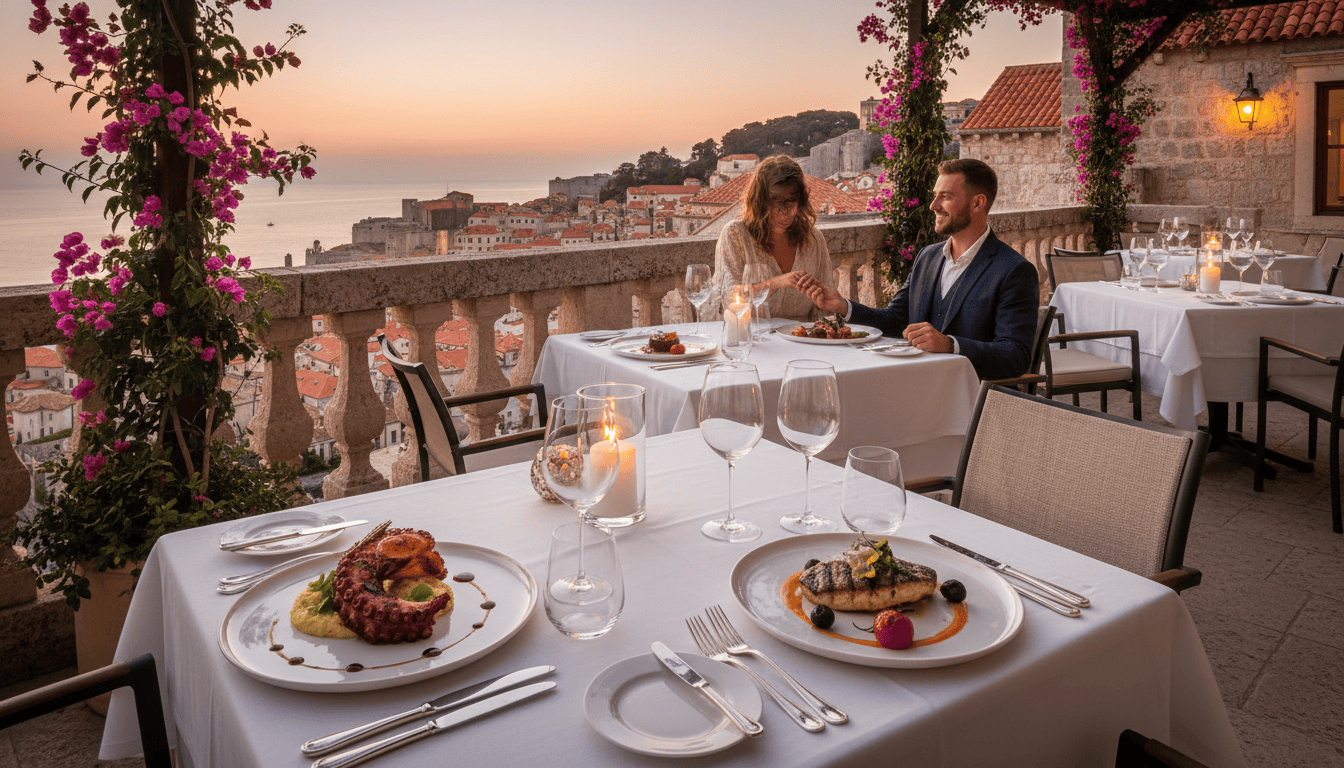
Here is what the guidebooks tend to skip over when it comes to eating in Grad: the best meal you will have is almost certainly one that arrives without ceremony, on a table so close to the water that the spray occasionally makes editorial decisions about your bread. Grad – a small, quietly proud town on the Croatian coast – does not perform for tourists. It feeds them properly, which is an entirely different thing. The food here is Dalmatian in the truest sense: rooted in whatever arrived that morning, finished with olive oil that tastes nothing like the bottle gathering dust in your kitchen at home, and served by people who will not rush you and will not flatter you and will absolutely refill your wine without being asked. This is a guide to finding that table – and knowing what to order once you’re sitting at it.
Understanding the Dining Culture in Grad
Before we talk about specific restaurants, it helps to understand how Grad eats. Lunch is the serious meal – a long, multi-course affair that can begin around one o’clock and end, if you’re doing it correctly, somewhere around four. Dinner is slightly more relaxed, though no less considered. The rhythm of the day is built around the table in a way that most of northern Europe has largely forgotten, and arriving anywhere expecting a quick forty-minute turnaround will earn you a look of mild, unspoken concern from your host.
The local dining philosophy is one of deliberate simplicity. This is not a place that fetishises complexity for its own sake. A piece of grilled fish here – fresh from the Adriatic, brushed with good oil, finished with nothing more than lemon and sea salt – will make you question every elaborate sauce you have ever ordered anywhere else. The cuisine sits within the broader Dalmatian tradition: seafood-forward, heavily influenced by the seasons, with strong Venetian and Mediterranean undercurrents that surface in the pasta dishes, the slow-braised meats, and the particular way locals treat vegetables as something worthy of genuine attention rather than an afterthought beside the protein.
Restaurants in Grad tend to open later than visitors expect – particularly for dinner, where arriving before seven-thirty often means sitting alone in a room that hasn’t quite woken up yet. Arrive at eight-thirty. Order the catch of the day. Let the evening take care of itself.
Fine Dining in Grad: Elevated Adriatic Cuisine
Grad is not a Michelin-starred destination in the formal sense – the guides have not yet caught up with what is happening along this particular stretch of coast, which says more about the guides than the food. What you will find instead is a small collection of restaurants operating at a level of seriousness and craft that would hold their own in any European city, without the accompanying price inflation that tends to follow whenever a tyre company decides somewhere is worth three rosettes.
The finest dining experiences in Grad are characterised by a commitment to provenance that goes well beyond marketing language. Chefs here have relationships with specific fishermen, specific farmers, and in some cases specific olive groves. The menus change not seasonally but daily – sometimes mid-service, if something particularly good has come in. Expect tasting menus that trace the landscape of the region with real intelligence: black risotto made with cuttlefish ink that will absolutely ruin your shirt if you’re not careful, slow-cooked lamb from the Dalmatian hinterland that falls apart at the suggestion of a fork, and desserts built around local honey and figs that taste nothing like the figs sold in supermarkets and everything like what figs are actually supposed to taste like.
Wine pairings at the upper end of the Grad dining scene are worth taking seriously. Local sommeliers have an understandable enthusiasm for Croatian varieties – Plavac Mali, Pošip, Grk – and will generally advocate strongly for them, which is fair enough given the quality on offer. Go with it. You can drink Burgundy at home.
Local Trattorias and Konobas: Where Grad Actually Eats
The word to know is konoba. These are the small, family-run dining rooms that form the backbone of eating life along the Dalmatian coast – informal, often housed in old stone buildings with low ceilings and mismatched chairs, and serving food that has been cooked the same way for three generations because three generations have got it exactly right. Every local in Grad has a favourite konoba and will be mildly offended if you suggest any other one is better.
At a good konoba in Grad, the menu is short and the ingredients are long-travelled only in the sense that the fish came from the water you can probably see from your table. Peka – meat or seafood slow-cooked under a bell-shaped lid buried in embers – is the dish to order if it’s on the menu, though it requires advance notice, usually twenty-four hours, which rewards the kind of traveller who plans at least that far ahead. Brudet, a rich fisherman’s stew served with polenta, is another benchmark dish: deeply savoury, slightly rustic, completely restorative. If the place offers homemade pasta with sea urchin, order it without hesitation and do not think about the calories.
Prices at konobas are refreshingly honest. A full meal with house wine for two people will rarely break the budget in the way that comparable quality elsewhere in the Mediterranean would. This remains one of the Dalmatian coast’s better-kept secrets, though it is probably not one that will survive too many more articles like this one.
Beach Clubs and Casual Dining: Eating with a View
The informal end of Grad’s dining scene is where things get pleasantly blurred – between a long lunch and an afternoon that simply refuses to end, between a restaurant and a bar and a stretch of sun-bleached wood over clear water. Beach clubs along this part of the coast have matured considerably in recent years, moving well beyond the burger-and-chips default of their earlier incarnations toward something genuinely worth eating.
Expect grilled seafood platters, fresh oysters sourced from nearby farming beds, light pasta dishes built for warm weather, and cocktail lists that lean heavily on local spirits – Maraschino liqueur from Zadar has a long and distinguished history on this coast, and a well-made cocktail that incorporates it is not a gimmick but a genuine regional pleasure. The setting at these waterfront spots does considerable heavy lifting, it’s true, but the food at the better establishments earns its place on the table independently of the view.
Casual does not mean careless here. Even the most relaxed waterfront spot will take its olive oil seriously. There is something to be said for a culture where that particular standard has simply become non-negotiable at every level of the market.
Hidden Gems: The Tables Worth Seeking Out
Every town on the Dalmatian coast has its open secret – the place that locals pointedly don’t mention in the presence of too many tourists, not out of hostility but out of entirely reasonable self-preservation. In Grad, this tends to mean a handful of small, unlisted or semi-unlisted spots: family homes that serve a fixed menu to a limited number of covers on certain evenings, tiny wine bars with no sign above the door that open when the owner feels like it and close for the same reason, and the occasional agricultural estate slightly inland that has started receiving guests for long, meandering lunches surrounded by vines and the sound of nothing very much happening.
Finding these places requires the kind of local intelligence that comes from either knowing someone or staying somewhere long enough to be trusted with the information. A good concierge at one of the local villas will often be the most effective route – these relationships are built on years of careful recommendation rather than commission arrangements, and the difference in the dining experiences they unlock is considerable.
It’s also worth paying attention to small festivals and food events in the surrounding villages. The Croatian coast has a strong tradition of local food celebrations – olive oil tastings, fish festivals, wine harvests – that offer not just excellent eating but genuine access to the community in a way that no restaurant visit, however good, quite replicates.
Food Markets and Producers: Eating Like a Local
The morning market is where any serious food culture reveals itself, and Grad’s market scene is no exception. What you find here – the quality of the tomatoes in August, the variety of the herbs, the proprietorial pride of the person selling them – tells you more about the local food philosophy than any restaurant review. Markets along this stretch of coast tend to operate in the morning hours and wind down by midday, which means that planning to visit one requires the kind of willingness to set an alarm while on holiday that separates the genuinely curious from the merely comfortable.
Olive oil is the product worth giving serious attention to. Dalmatian olive oils – particularly those from the islands and from the Pelješac peninsula – have been gaining international recognition, and with good reason. The varieties used here, including Oblica and Lastovka, produce oils with a character quite distinct from Italian or Spanish equivalents. Buying directly from a producer at a market, or visiting a small estate that offers tastings, is one of those travel experiences that sounds modest and turns out to be genuinely memorable. You will bring a bottle home and use it sparingly for months.
Local honey, dried figs, and prošek – the sweet dessert wine of the region, no relation to the Italian Prosecco despite a legal dispute that has been running for some time – are all worth taking home if your luggage allows. They are also worth consuming in situ, ideally at a market table with a small cup of coffee and no particular plans for the next two hours.
What to Drink: Wine, Rakija and the Local Spirits Scene
Croatian wine is having a moment internationally, which means that if you visit now you are still slightly ahead of the curve – a position worth occupying while you can. The wines of the Dalmatian region are predominantly red and white, with Plavac Mali as the dominant red grape: powerful, tannic, and built for the kind of food that would overwhelm a more delicate wine. Dingač and Postup, both from the Pelješac peninsula, are the prestige designations and are worth seeking out on any serious wine list.
For white wine, Pošip – grown primarily on the island of Korčula – is the grape worth knowing. Mineral, crisp, and with enough body to stand up to the rich seafood dishes of the region, it is one of those wines that makes complete sense in its place of origin and travels surprisingly well to the table wherever you happen to be eating.
Then there is rakija. This is the local spirit – a fruit brandy that exists in approximately forty-seven regional variations and that is offered at the end of a meal with the same casual inevitability as the bill. Herb rakija, walnut rakija, honey rakija: the variations reflect the landscape. It is almost always homemade by someone’s relative. It is almost always stronger than you expect. It is never something to drink quickly, and it is entirely something to accept when offered.
Reservation Tips and Practical Advice
The finest tables in Grad require advance booking – in high season (July and August particularly), the best konobas and fine dining spots fill up several days in advance, and the assumption that you’ll simply turn up and find a table is one held almost exclusively by people who end up eating somewhere they’d rather not. Book ahead. Email if they don’t answer the phone. Follow up.
For peka dishes specifically, twenty-four hours’ notice is not a suggestion but a logistical requirement – the dish takes four to five hours under the embers and cannot be improvised. Call the day before, confirm your numbers, and arrive hungry. It is absolutely worth the planning.
Dress codes in Grad are relaxed but not absent – smart casual is the appropriate register at the better restaurants, particularly for dinner. Nobody will turn you away for wearing the wrong thing, but you will feel underdressed and the evening will be slightly less good as a result. This is not a problem unique to Grad.
For those staying in the area and wanting to experience the full range of what the local food scene offers – from market mornings to fine dining evenings – having a base with proper logistics matters more than it might initially seem. Those staying in a luxury villa in Grad are particularly well placed, not only for the obvious comfort advantages but because many of these properties offer private chef options that bring the best of the local produce – the same fish, the same olive oil, the same extraordinary ingredients that the finest restaurants source – directly to your table. A private chef who knows the local market and the local fishermen will cook you a dinner that rivals anything you’ll find in the town’s best restaurants, with the added advantage that you are already home when it’s finished. For a deeper look at everything this part of Croatia has to offer, the Grad Travel Guide covers the full picture – accommodation, activities, and the kind of local knowledge that takes years to acquire.


