Best Time to Visit Isle of Anglesey: Beaches, Salt & Castles
The best time to visit Isle of Anglesey is late May to early September, when average temperatures sit between 15-20°C (59-68°F) and the coastal path, beaches and historic sites are fully open. June and September offer the best balance of reliable weather and manageable crowds, while July and August bring the warmest days alongside the busiest beaches and the highest accommodation prices.
When exactly does an island that spends half the year being quietly battered by the Irish Sea become a sensible place to pack a sun hat? The honest answer is that Anglesey rewards patience more than any other factor – its weather is a committee decision, not a diktat, and the difference between a glorious June afternoon on a white-sand beach and a grey one spent steaming up the windows of a tea room can come down to which side of a passing front you happen to be standing on. This guide works through the year month by month, so you can decide which version of Anglesey you actually want.
Isle of Anglesey Weather and Seasons at a Glance
Anglesey sits far enough north and exposed enough to the Irish Sea that its weather is changeable rather than extreme – rarely bitterly cold, rarely properly hot, almost never predictable for more than a day at a time. Summer (June to August) is warmest and busiest. Spring and autumn are the shoulder seasons that locals quietly prefer. Winter is mild by UK standards but wet, windy and thin on daylight. For context on the island as a whole, the Isle of Anglesey Travel Guide covers the geography and getting around in more detail.
Spring in Isle of Anglesey: March to May
Spring arrives on Anglesey in fits and starts, which is a polite way of saying it can snow in March and sunburn you in May. Average temperatures climb gradually from around 8°C (46°F) in March to 14°C (57°F) by late May, and the island’s famous hedgerows and coastal gorse begin their long yellow show. This is when the beaches empty out properly – South Stack’s clifftop paths and the Menai Strait shoreline belong largely to dog walkers, birdwatchers and the occasional determined cyclist rather than coach parties.
Accommodation prices are noticeably lower than summer, school half-term weeks aside, and most attractions, cafés and castle sites reopen for the season by Easter. Spring suits walkers, photographers chasing soft light, and anyone who would rather have Newborough Forest’s dunes to themselves than share them with a few hundred other people in flip-flops. It is also lambing season across the island’s farmland, which gives the drive between villages an unexpected soundtrack.
Summer in Isle of Anglesey: June to August
This is Anglesey at its most confident. July and August average 17-20°C (63-68°F), the Blue Flag beaches at Rhosneigr, Benllech and Trearddur Bay fill up properly, and the Menai Strait becomes a constant traffic of sailing boats, paddleboarders and people attempting to launch kayaks with more enthusiasm than technique. Daylight stretches generously, sunset lingering past nine on the longest evenings, and the coastal path is at its most sociable rather than its most solitary.
Prices peak alongside demand – this is the busiest and most expensive stretch of the year for anywhere near the coast, and the main car parks at the popular bays fill by mid-morning on fine weekends. The Anglesey Show, the island’s major agricultural event held near Llangefni in August, draws large crowds and is worth timing around rather than stumbling into unprepared. Summer suits families, beach loyalists and anyone who wants the full seaside experience and doesn’t mind queuing for an ice cream to get it.
Autumn in Isle of Anglesey: September to November
September is arguably Anglesey’s best-kept secret, and the locals would probably prefer it stayed that way. The sea has had all summer to warm up, average temperatures hold at a pleasant 14-16°C (57-61°F) through early autumn, and the crowds thin dramatically once the school holidays end. Beaches that were standing room only in August return to something closer to their natural state – wide, windswept and yours for long stretches at a time.
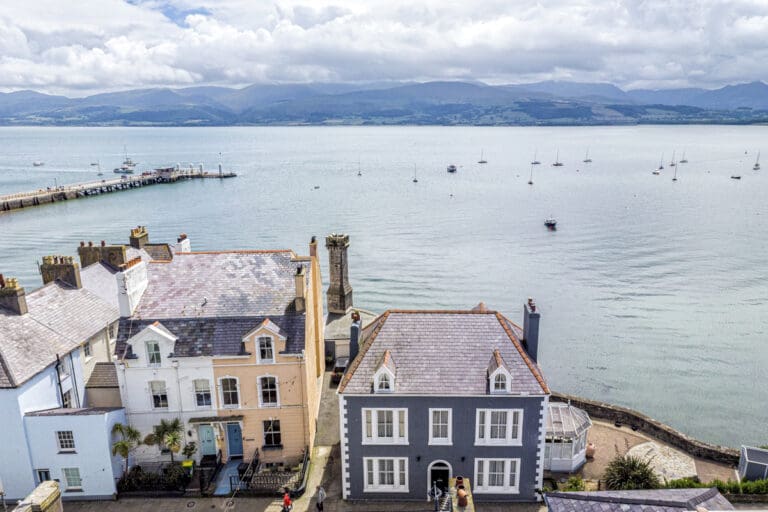
By late October, temperatures drop to around 10°C (50°F), the storms roll in more frequently, and some seasonal cafés and smaller attractions begin reducing hours or closing until spring. This is still a fine month for the coastal path if you don’t mind a waterproof, and autumn light on the Menai Strait, with Snowdonia’s peaks catching the last of the colour across the water, has a genuine claim to being the island’s most atmospheric. Autumn suits walkers, photographers and couples after a quieter break without the deep-winter trade-offs.
Winter in Isle of Anglesey: December to February
Winter on Anglesey is mild rather than harsh – frost is common, snow much less so – but it is reliably wet and windy, with average temperatures hovering around 5-8°C (41-46°F) and daylight in short supply by mid-afternoon. Many seasonal businesses, particularly smaller cafés and some visitor attractions tied to the castle and heritage sites, scale back or close entirely between January and March, so it pays to check ahead rather than arrive expecting a full summer roster.
What winter lacks in warmth it makes up for in solitude. Storm-watching along the exposed northern coast near South Stack has its own stark appeal, and a crisp, clear winter day on the Menai Strait, with the mountains behind it dusted in snow, is arguably the island’s most dramatic view of the year. This is the season for people who want Anglesey stripped back to its bones – fewer amenities, far fewer people, and weather that makes the pub fire feel entirely earned.
Best Time to Visit Isle of Anglesey for Different Travellers
If beaches and reliable sunshine matter most, July and August deliver, accepting the crowds and prices that come with them. If a quieter island with nearly identical weather appeals more, June and September are the shoulder-season sweet spot – warm enough for the coastal path and most beach activities, quiet enough that you won’t be fighting for a parking space at Llanddwyn Island. Spring suits early-season walkers and anyone chasing wildflowers and new lambs over guaranteed sun. Winter, honestly, suits the committed – those who want Anglesey’s wilder, moodier side and don’t mind a few closed shutters along the way.
Whichever season you choose, the shoulder months remain the most consistently sensible bet for anyone planning where to stay among villas in Isle of Anglesey.
Isle of Anglesey Weather and Seasons FAQs
Is Anglesey warm enough to swim in summer?
Sea temperatures around Anglesey typically peak at 15-17°C (59-63°F) in August, which counts as warm by British standards rather than tropical. Swimming is popular at the island’s sheltered bays throughout summer, though a wetsuit is common practice rather than a sign of weakness.
What is the rainiest time of year on Anglesey?
Winter, particularly November through January, brings the most frequent rain and the strongest coastal winds. Spring and early summer are noticeably drier, though no month on Anglesey is entirely rain-proof, so packing a waterproof is sensible year-round.
Do I need to book beaches or attractions in advance during summer?
Popular beach car parks and smaller attraction sites can fill quickly on fine summer weekends, particularly in July and August, so arriving early in the day is the simplest strategy. Advance booking is more relevant for accommodation and any ticketed heritage sites than for the beaches themselves.
Keep reading
More on Isle of Anglesey
Guides nearby in Wales
Where to stay
Villas in Isle of Anglesey
A selection from our 15 luxury villas in Isle of Anglesey.