Lipa Noi Travel Guide: Sunsets, Ferries and Quiet Beaches
Lipa Noi is a quiet stretch of coastline on the western side of Koh Samui, Thailand, best known as the island’s main ferry gateway to the mainland and for its long, shallow beaches facing the sunset. It suits travellers who want a calmer, more local alternative to Samui’s busier east coast, including couples, families and anyone arriving or leaving by boat.
Lipa Noi at a Glance
- Where: Western coast of Koh Samui, Surat Thani province, Thailand
- Nearest airport: Koh Samui Airport (USM), roughly 30-40 minutes by road to Lipa Noi
- Best time to visit: December to April, with January and February offering the most comfortable weather
- Getting around: Rental car or scooter recommended – taxis are available but there is no public bus network
- Known for: Raja Ferry pier to the mainland, calm shallow beaches, long sunsets, a laid-back village feel
- Ideal for: Couples, families, slower-paced trips and anyone connecting to or from the mainland by ferry
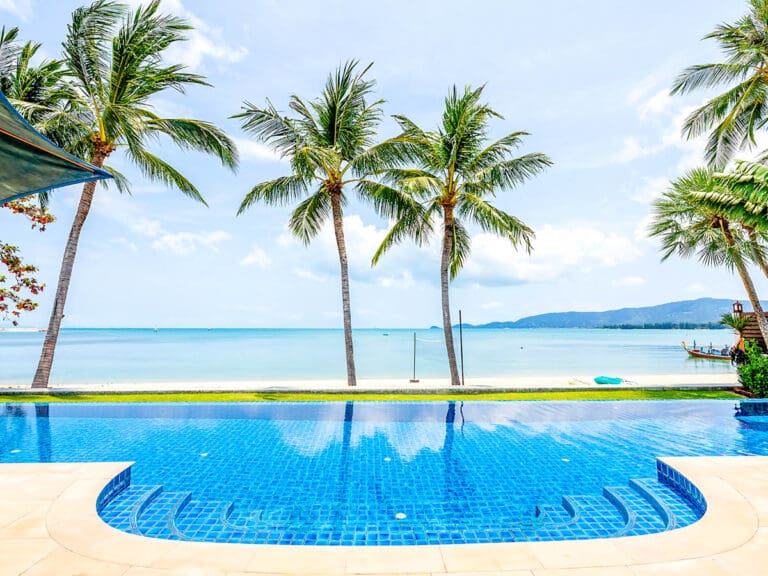
Most beaches promise a sunset. Lipa Noi actually delivers on the promise, night after night, in a way that places facing the other direction simply cannot manage – there is something to be said for choosing the correct side of an island. While Chaweng and Lamai get the nightlife and the crowds, Lipa Noi gets the long gold evenings and the quiet, which is either exactly what you want or precisely why you’ve never heard of it.
This is not a destination for anyone chasing beach bars, jet-ski touts or a lively strip to walk at midnight. It suits couples after a slow week, families with young children who prefer shallow water to surf, and travellers who would rather read a book on the sand than queue for a photograph. Groups of friends hoping for a buzzing social scene, or culture seekers wanting temples and markets on their doorstep, will find Lipa Noi a little too restful – better suited as a quiet base from which to explore the rest of Koh Samui and wider Thailand than a destination to sit still in entirely.
Getting to Lipa Noi: The Island’s Back Door
Koh Samui Airport (USM) is the nearest airport with scheduled international flights, served by Bangkok Airways along with regional connections. From the airport, Lipa Noi is about 18 kilometres away – a drive of 30 to 40 minutes, costing somewhere between 400 and 500 THB by taxi. The beach itself is roughly a 30-minute drive from arrivals, and the pier is only 15 minutes from Nathon Town, the island’s main hub, which is useful to know if you need a cash machine or a proper supermarket before heading to the quieter west coast.
For those arriving via the mainland, Surat Thani Airport is the nearest international gateway, though there are currently no direct flights between Surat Thani and Samui. From Surat Thani Airport it takes at least 1 hour 30 minutes to reach Donsak Pier, from where Raja Ferry sails to Lipa Noi Pier – a crossing of around 3.5 hours, with tickets around 520 THB for the airport-to-pier service. This is also, usefully, Lipa Noi’s defining role on the island: its pier is the main cargo-passenger crossing point to Surat Thani province, with the standard ferry crossing taking about 90 minutes and tickets ranging from roughly $6 to $18. Car ferries run approximately every two to three hours, though schedules shift with the weather, particularly during the October to December monsoon months, so it pays to check before you plan a tight connection.
There is no direct rail line to the island. The most practical train option is the overnight sleeper from Bangkok, departing at 6.50pm and arriving into Surat Thani (Phunphin station) at 7.47am, followed by a transfer minivan to Donsak Pier and a ferry crossing. It is a long day of travel, but a genuinely scenic one if you enjoy watching Thailand’s rice paddies scroll past a train window at dawn.
Once in Lipa Noi, a rental car or scooter is close to essential. Taxis exist but are not plentiful, and there is no public bus route along this stretch of coast – you are, in the nicest possible way, slightly cut off from spontaneity here.
Where to Eat in Lipa Noi: Simple, Slow and Unfussy
Fine Dining in Lipa Noi
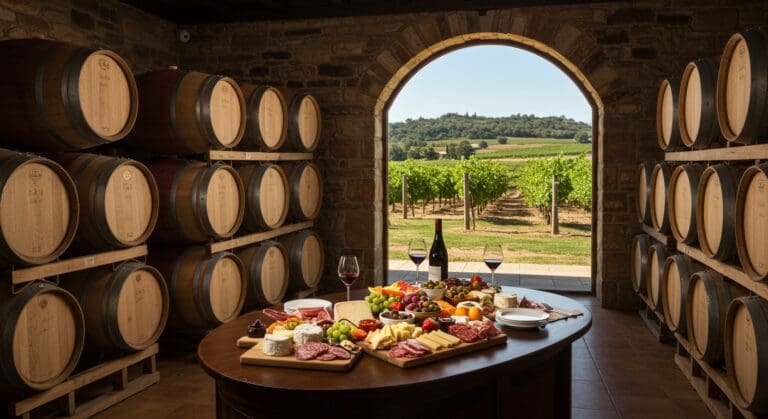
Lipa Noi does not attempt to compete with the more polished dining scenes found elsewhere on Samui, and that restraint is rather the point. What you will find are small, open-air restaurants serving Thai seafood and curries cooked to order, often with a sea view and little else in the way of ceremony – no tasting menus, no sommeliers, just good fish grilled simply and served with lime. It rewards travellers who prefer their luxury quiet rather than theatrical.
Where the Locals Eat
The real eating here happens at modest roadside kitchens and family-run shopfronts along the coast road, where plastic stools and laminated menus are the norm and the food is better for it. Expect whole fried fish, som tam pounded to order, and noodle soups eaten at odd hours because nobody is watching the clock too closely. For a wider spread of stalls, markets and proper supermarkets, Nathon Town is a short drive away and worth the detour on market days.
Hidden Gems in Lipa Noi
Ask around and you will hear about the unmarked kitchens – a house with a hand-painted sign, a grandmother who only cooks what was caught that morning – that locals guard with the quiet possessiveness of people who know a good thing shouldn’t be in a guidebook. Wander the back lanes inland from the beach road rather than sticking to the obvious seafront strip, and you will eat considerably better for the effort.
Exploring Lipa Noi: Coconut Groves and a Very Long Beach
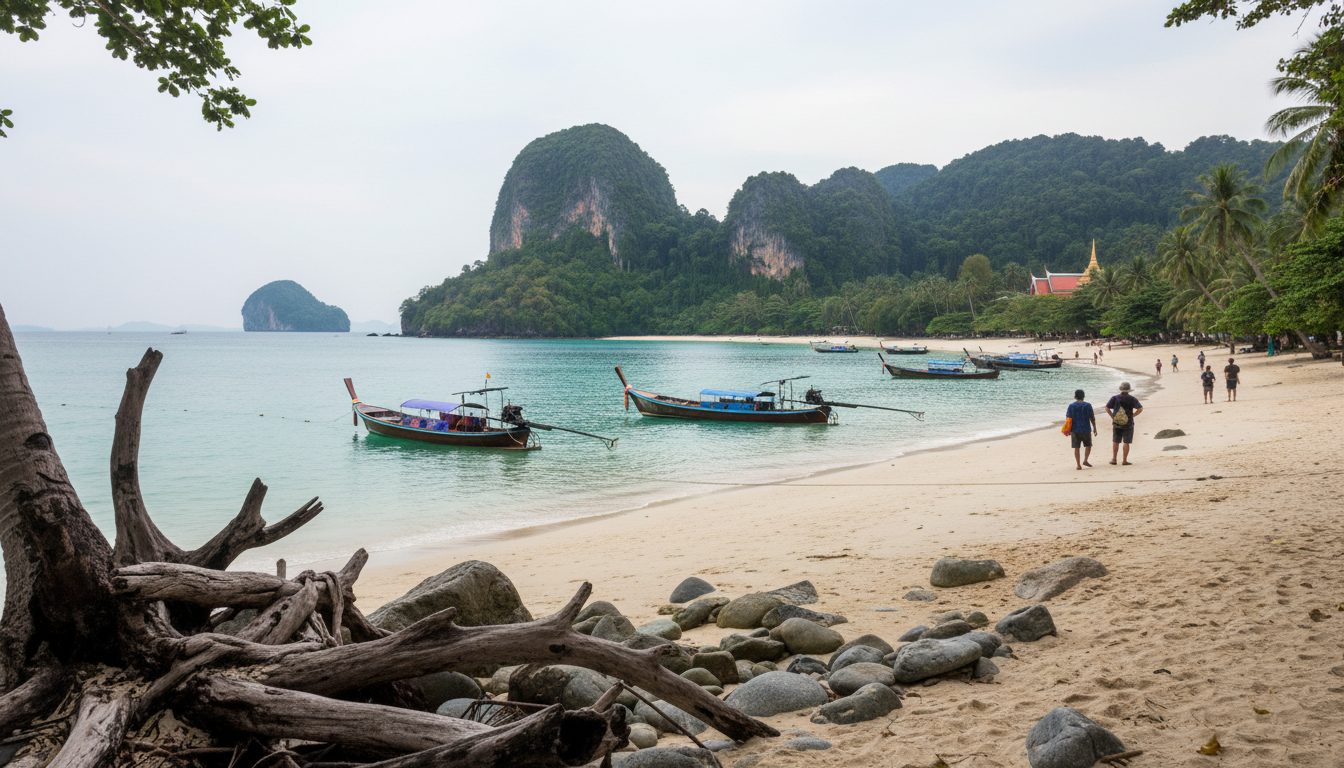
Lipa Noi occupies the western flank of Koh Samui, a gentler, flatter landscape than the hillier interior, with coconut plantations running almost to the waterline in places. The beach itself stretches for several kilometres, backed by casuarina trees and the odd fishing boat pulled up on the sand rather than a line of sunbeds – a landscape that still looks like somewhere people actually work, not just holiday.
Just beyond the headland sits Lipa Noi Pier, the main cargo and passenger crossing to the mainland, and watching the ferries load cars and motorbikes is, oddly, one of the more entertaining free activities on this stretch of coast. Inland, quiet lanes run through smallholdings and modest village homes, a reminder that Samui’s tourist economy, while significant, has not swallowed every corner of the island whole. For contrast, the busier northern beach of Mae Nam and the livelier south coast around Maret are both within easy driving distance, should Lipa Noi’s stillness start to feel a touch too still.
Things to Do in Lipa Noi: Mostly, Very Little
The main activity in Lipa Noi is doing considerably less than you planned, and doing it well. Long beach walks at low tide, when the water retreats to reveal wide flats of warm shallow sea, are the local pastime of choice, as is simply sitting facing west with a drink at the correct hour. Beyond the beach, the pier itself is worth a visit even if you are not catching a ferry, both for the working-harbour atmosphere and for watching the daily choreography of trucks, motorbikes and foot passengers.
Day trips elsewhere on the island are easily arranged from here, with Nathon Town’s shops and market a short hop away, and the rest of Koh Samui’s temples, viewpoints and busier beaches all reachable within 30 to 45 minutes by car. Travellers wanting livelier evenings tend to drive over to Maret or Mae Nam for the night and return to Lipa Noi’s quiet afterwards, which is, frankly, the correct way round to do it.
Outdoor and Adventure Activities in Lipa Noi: Low-Key by Design
This is not an adrenaline coastline, and anyone arriving with diving tanks and kitesurfing gear may find themselves slightly over-equipped. The shallow, calm waters that make the beach unsuitable for serious watersports make it rather good for gentle paddleboarding, kayaking along the shoreline, and swimming that does not require much courage. Cycling the flat coastal roads through the coconut groves is a pleasant way to spend a cooler morning, particularly before the midday heat sets in properly.
For more active pursuits – diving, snorkelling trips, boat excursions – the operators tend to be based elsewhere on the island, meaning a short drive is usually required. Lipa Noi works best as the place you return to after the adventure, not where the adventure itself takes place, and there is a certain honesty in a destination that doesn’t pretend otherwise.
Lipa Noi for Families: Shallow Water, Short Patience
Families with younger children tend to do well here, largely thanks to the beach’s shallow, gently shelving water, which allows toddlers and nervous swimmers to wade out a long way without disappearing from view. The quiet roads and absence of a heaving beachfront strip also mean less traffic and fewer crowds to manage with small children in tow. Teenagers, by contrast, may find the lack of nightlife or organised activity mildly maddening after the second day, so pairing a Lipa Noi stay with a day or two in a livelier spot like Maret is worth considering for families with older kids.
Practical notes: pharmacies and larger supermarkets are concentrated in Nathon Town rather than along the Lipa Noi coast road itself, so it is worth stocking up on essentials on the way through. A car is close to essential for families, both for reaching restaurants and for the inevitable mid-afternoon ice cream emergency.
History and Culture of Lipa Noi: A Working Coastline
Lipa Noi’s identity has long been tied to the sea and the land rather than to tourism – a community of fishing families and coconut farmers whose daily rhythms, around the pier and the groves, still shape the area more than any hotel brochure would suggest. The pier’s role as a cargo and passenger crossing to Surat Thani province has made it a genuine working hub rather than a purely scenic one, and that sense of a place with a job to do gives it a texture the more polished resort beaches sometimes lack.
Small local temples dot the inland lanes, serving the resident community rather than tour groups, and visitors are welcome provided the usual courtesies are observed – covered shoulders, removed shoes, and a quiet voice. Festivals and local ceremonies here tend to be modest, village-scale affairs rather than staged spectacles, which is either a disappointment or a relief depending on what you came looking for.
Shopping in Lipa Noi: Bring a Bigger Bag Elsewhere
Shopping along the Lipa Noi coast road itself is limited to small local stores selling basics, snacks and the odd piece of handmade craft – useful rather than aspirational. For anything resembling a proper shopping trip, Nathon Town, just 15 minutes away, offers a more substantial market with fresh produce, household goods and small tailoring shops, alongside the usual tourist souvenirs. It is a sensible stop on arrival or departure rather than a dedicated day out.
What’s worth bringing home from this part of the island tends to be edible rather than ornamental – locally grown coconut products and the dried, preserved fruits sold at roadside stalls travel well and taste considerably better here than reconstituted in a suitcase three weeks later.
Where to Stay in Lipa Noi: Quiet West, Livelier Elsewhere
Lipa Noi itself suits travellers who have come specifically for the quiet – couples, honeymooners and families who value calm water and long sunsets over proximity to restaurants and nightlife. Staying directly on this stretch means accepting that a car is necessary for most evenings out, and that the pace of life slows considerably after dark.
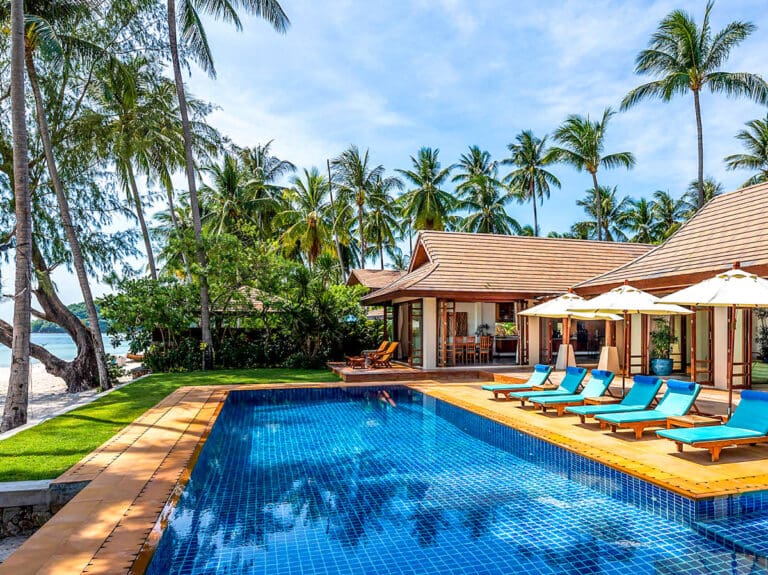
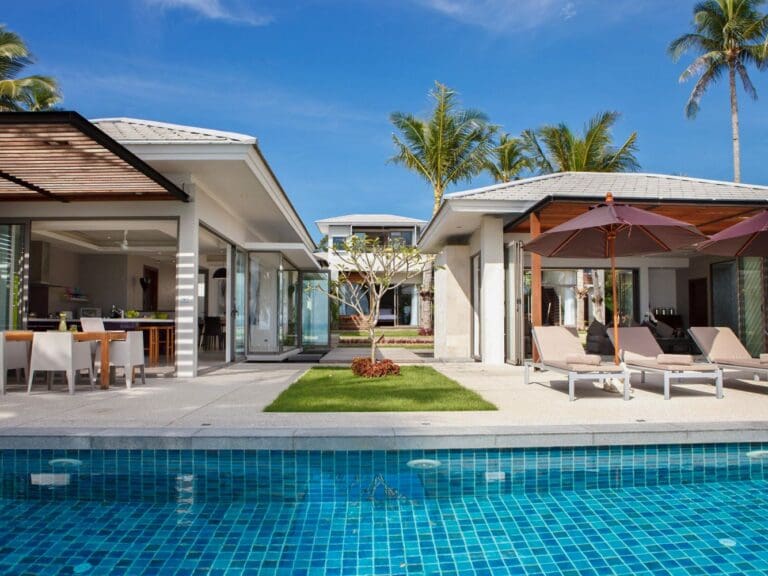
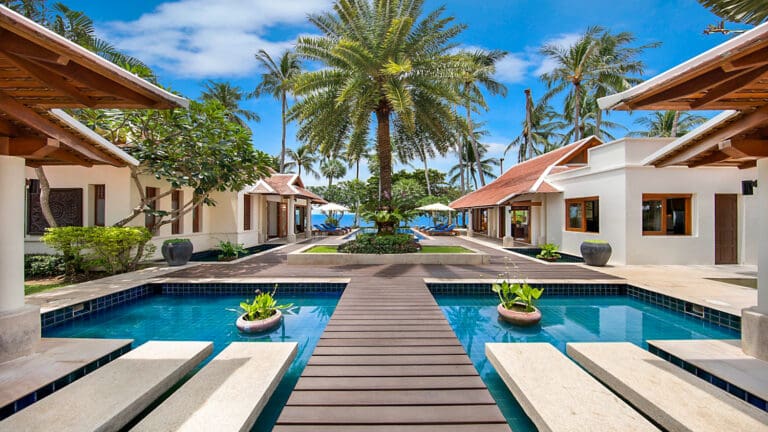
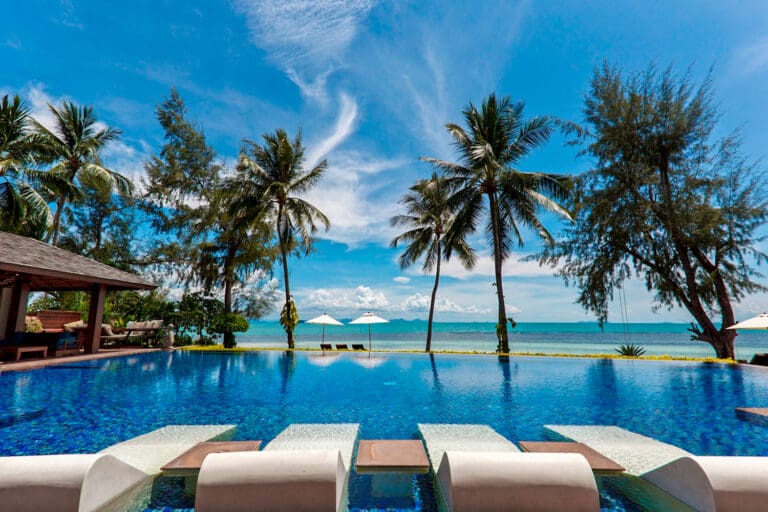
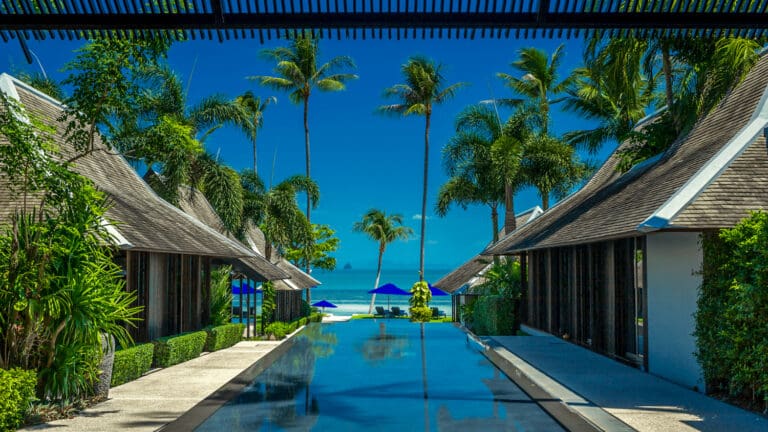
Those who want a touch more infrastructure without losing the relaxed character of the west coast often base themselves slightly further north around Mae Nam, which offers a wider spread of restaurants and shops while remaining calmer than Samui’s east coast resorts. Travellers who want nightlife and a livelier beach scene are generally better served basing themselves around Maret instead, using Lipa Noi only as a day trip or a ferry connection point. For those set on staying in Lipa Noi itself, private villas in Lipa Noi are a practical way to base yourself close to the beach and the pier.
Practical Tips for Visiting Lipa Noi: What to Know Before You Go
Thailand’s currency is the Thai Baht, and while larger establishments accept cards, small roadside kitchens and markets generally prefer cash. Thai is the local language, though English is widely spoken in tourist-facing businesses; a few basic Thai phrases go a long way in the smaller family-run places. Tipping is not obligatory but appreciated – rounding up or leaving small change is the local norm rather than a fixed percentage.
Lipa Noi is a quiet, generally safe area, though the usual precautions around road traffic and scooter hire apply, particularly for visitors unused to Thailand’s driving conventions. Modest dress is expected at temples, and a respectful tone is appreciated generally, given how much of daily life here is still genuinely local rather than performed for visitors. Worth booking ahead: ferry tickets during peak season and holiday periods, car rental in advance of arrival, and any restaurant with limited seating during the busier December to April window.
Lipa Noi FAQs
What is the best time to visit Lipa Noi?
The best time to visit Lipa Noi is between December and April, during the dry season when seas are calm and skies clear. January and February offer the most comfortable overall weather, while March is the sunniest month, with around 8 hours of sunshine daily. November is the rainiest month and worth avoiding if possible.
How do I get to Lipa Noi?
Most visitors fly into Koh Samui Airport (USM), around 30-40 minutes by road from Lipa Noi. Alternatively, travellers can fly into Surat Thani Airport, transfer to Donsak Pier, and take the Raja Ferry directly to Lipa Noi Pier, a journey of roughly 3.5 hours in total.
What is Lipa Noi known for?
Lipa Noi is known for its ferry pier connecting Koh Samui to the Thai mainland, its long shallow west-facing beach, particularly striking sunsets, and a quieter, more local atmosphere than the island’s eastern resorts.
How many days do you need in Lipa Noi?
Two to three days suits most travellers, enough time to enjoy the beach and sunsets while using day trips to explore the rest of Koh Samui. Longer stays work well for those specifically seeking rest rather than sightseeing.
Is Lipa Noi good for families?
Yes, particularly for families with younger children, thanks to the shallow, gently shelving beach and quieter roads. Families with teenagers may want to combine a stay here with time in a livelier area such as Maret.
Where is the best place to stay in Lipa Noi?
Lipa Noi itself suits those wanting quiet and calm water, Mae Nam suits travellers wanting slightly more restaurants and shops without losing a relaxed pace, and Maret suits those wanting livelier nightlife, with Lipa Noi visited as a day trip.
Do you need a car in Lipa Noi?
Yes. There is no public bus network along this stretch of coast, and taxis are limited, so a rental car or scooter is recommended for reaching restaurants, shops and the rest of the island.
Where to stay
Villas in Lipa Noi
A selection from our 6 luxury villas in Lipa Noi.